 Birch Bay
 Birch Bay Village and the Coastal Whatcom County Climate
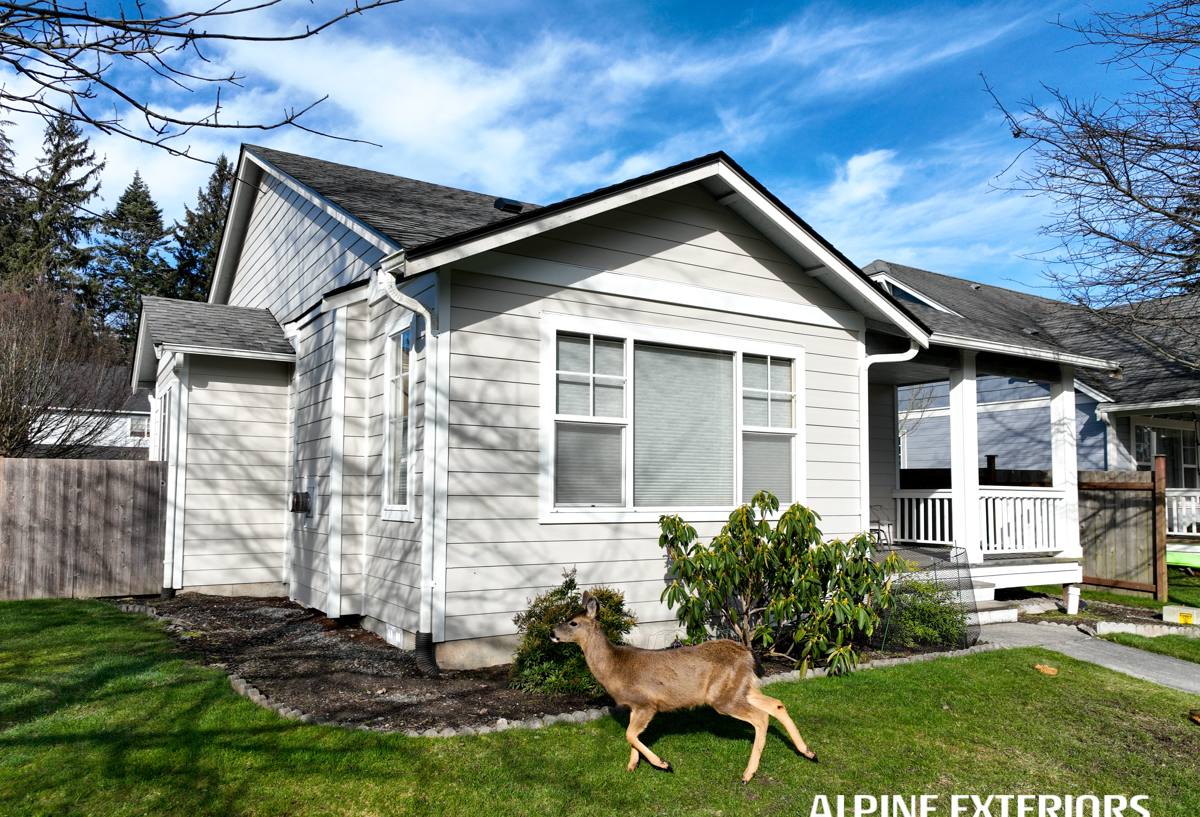
Birch Bay Village sits along the Whatcom County coastline, close enough to the water that salt-laden air is simply part of daily life. Homes here face a different set of demands than houses fifteen or twenty miles inland in Bellingham or Ferndale. The siding, trim, roofing, and windows on a Birch Bay Village home aren't just dealing with rain and cold — they're dealing with salt, near-constant humidity, and a growing season for moss and algae that barely pauses between October and June.
We work on homes up and down this stretch of coast, and the patterns repeat: south and west-facing walls that take the brunt of wind-driven rain, north-facing walls that stay damp and shaded long enough to grow a green film, and trim details around windows and doors that fail years before the rest of the siding because water found a way in and never fully dried out. None of this is unusual for the area. It's just what a marine climate does, and it's why the material and installation choices on a Birch Bay Village home matter more than they would somewhere drier.
Why Salt Air Is Harder on a House Than People Expect
Salt air doesn't just smell different — it behaves differently against building materials. Airborne salt is hygroscopic, meaning it pulls moisture out of the air and holds it against whatever surface it lands on. On metal fasteners, flashing, and hardware, that means accelerated corrosion. On wood-based siding products, it means the wood-facing surface stays damp longer after every rain, which speeds up rot at seams, edges, and fastener penetrations.
This is one of the main reasons we don't install products like primed spruce panel siding or untreated cedar in a location like Birch Bay Village. Both can look good going up, but both depend on paint film and caulking to keep water out of wood fiber that swells, checks, and rots once moisture gets past that surface layer. In a marine environment, that surface layer is under constant stress from salt, wind-driven rain, and UV — and once it starts to fail, the wood underneath doesn't recover.
What Salt Exposure Typically Damages First
- Exposed fasteners and metal flashing, especially where dissimilar metals meet
- Butt joints and seams on lap siding, where water gets trapped between boards
- Paint and caulk lines around trim, windows, and corner boards
- Lower courses of siding closest to grade, splashback, and landscaping
The Long Moss Season and What It Does to a House
Birch Bay Village's mix of coastal humidity, tree cover in many yards, and mild winters adds up to a moss and algae season that runs most of the year. On roofs, moss holds moisture against shingles and lifts tabs over time, shortening roof life even when the shingles themselves are otherwise sound. On siding, algae staining shows up first on north-facing and shaded walls, and on porous or absorbent siding surfaces it can work its way into the material itself rather than sitting on top where it can be washed off.
This is a maintenance issue as much as a material issue. A homeowner who wants to stay ahead of moss and algae growth needs a siding surface that sheds water instead of absorbing it, roofing that's ventilated and maintained, and gutters that are actually moving water away from the walls rather than overflowing onto them during a heavy Pacific storm.
Why We Install Only James Hardie Fiber Cement Siding
We made the decision years ago to install James Hardie fiber cement exclusively, and a coastal environment like Birch Bay Village is exactly the kind of place that decision was made for. Fiber cement is non-combustible and dimensionally stable — it doesn't swell, warp, or absorb water the way wood-based products can, and it holds up to sustained damp conditions far better than wood fiber siding options.
Hardie's ColorPlus factory-applied finish also matters here more than it might inland. Field-applied paint on any siding material starts breaking down the moment it's exposed to UV, salt air, and moisture cycling, and repainting a house on the coast tends to come around faster than the paint can quite believe. ColorPlus is baked on in a controlled factory process and backed by its own finish warranty, which means the color and the protective layer are more consistent and hold up longer under exactly the conditions Birch Bay Village throws at a house.
Hardie also engineers specific product lines for different climate exposures. For a location this close to the water, that climate-specific engineering is a real advantage over a one-size-fits-all siding product — it's built with moisture and weather exposure in mind rather than adapted after the fact.
What This Means in Practice
- No swelling or soft spots at butt joints and fastener points over time
- A factory finish that resists fading and chalking better than field-applied paint
- Non-combustible material, which matters for insurance and wildfire-adjacent risk even on the coast
- A strong, transferable manufacturer warranty when the product is installed to Hardie's spec
Roofing, Windows, and Decks in the Same Environment
Siding doesn't work in isolation, and on a Birch Bay Village home it's usually not the only thing showing wear from the marine climate. We handle roofing, window replacement, and decks alongside siding work because they all face the same exposure and need to work together as a system.
Roofing in this area needs attention to ventilation and moss resistance, not just shingle quality — a poorly ventilated attic traps moisture that works its way back out through the roof deck and accelerates the exact moss growth homeowners are trying to avoid. Windows near the coast see more condensation cycling and need flashing details that account for wind-driven rain, not just a straightforward nail-fin install. Decks, especially ones facing open water or wind, take a beating from UV and moisture simultaneously, and the fasteners and structural connections matter as much as the decking material itself.
Coordinating these trades under one crew means the flashing, water management, and material choices are consistent across the whole exterior, instead of a roofer, a window installer, and a siding crew each assuming someone else handled the transition points.
What Correct Installation Looks Like on the Coast
Fiber cement siding performs the way it's supposed to only when it's installed to manufacturer specification, and that matters more in a marine environment where installation mistakes get exposed faster. Proper clearance from grade and roof lines, correctly sealed and flashed butt joints, appropriate fastener spacing, and a functioning water-resistive barrier behind the siding are what actually keep water out — the siding material is only one part of the system.
We see homes where the fiber cement itself is fine but a shortcut somewhere in the flashing or the house wrap is letting water in behind it. That's a workmanship issue, not a product issue, and it's a big part of why we think the crew installing the product matters as much as the product itself.
Typical Cost Factors for a Birch Bay Village Exterior Project
| Factor | Why It Affects Cost |
|---|---|
| Wall exposure and elevation | South and west walls facing wind-driven rain may need extra flashing and sealing detail |
| Existing siding removal | Tear-off of failing wood-based siding adds labor versus installing over sound sheathing |
| Trim and window count | More openings mean more flashing and detail work, which is where water intrusion usually starts |
| Access and site conditions | Sloped lots, tree cover, and limited staging space near the water can affect labor time |
| Scope bundling | Combining siding with roofing, window, or deck work can reduce redundant setup and staging costs |
What to Ask When Hiring a Contractor in This Area
A contractor unfamiliar with coastal exposure can do technically fine work that still fails early simply because they didn't account for salt air, wind-driven rain, or the moss cycle. Homeowners in Birch Bay Village are better served asking specific questions before signing a contract.
- Do you have current experience installing on homes with direct coastal or marine exposure?
- What flashing and water-resistive barrier details do you use around windows and butt joints?
- Are you a manufacturer-recognized installer, and does that affect the warranty coverage?
- How do you handle existing moisture damage found once old siding comes off?
- Can you coordinate roofing, window, or deck work into the same project if needed?
A Local Crew That Knows This Coastline
Whatcom County's coastal communities, Birch Bay Village included, aren't interchangeable with inland neighborhoods when it comes to exterior work. Knowing which walls take the worst of the weather, how fast moss establishes itself on a shaded roof slope, and what installation details actually hold up against salt air isn't something that transfers automatically from general contracting experience elsewhere. It comes from working on houses in this specific environment, season after season.
If you're planning a siding, roofing, window, or deck project for a home in Birch Bay Village, we're happy to take a look and talk through what your house actually needs. Reach out for a free, no-pressure estimate using the form below.