 Birch Bay
 Exterior Work for Cottonwood Beach Homes
Cottonwood Beach sits along the Birch Bay shoreline in Whatcom County, and homes here live under a different set of pressures than houses ten miles inland. Salt-laden air moves off the water and settles on every exterior surface. Wind-driven rain finds its way into seams and laps that would stay dry on a more sheltered lot. And the long gray stretch of fall through spring keeps siding, trim, and roofing damp for weeks at a time, which is exactly the kind of environment where moss and algae take hold. We work on homes throughout this stretch of the bay, and the patterns repeat from house to house: south and west-facing walls take the worst of the weather, north-facing surfaces stay shaded and damp longer, and anything close to grade or landscaping holds moisture the longest.
This page covers how we approach siding, roofing, windows, and decks for houses in this specific setting, and why the material choices we make here are different from what a contractor might recommend in a drier part of the state.
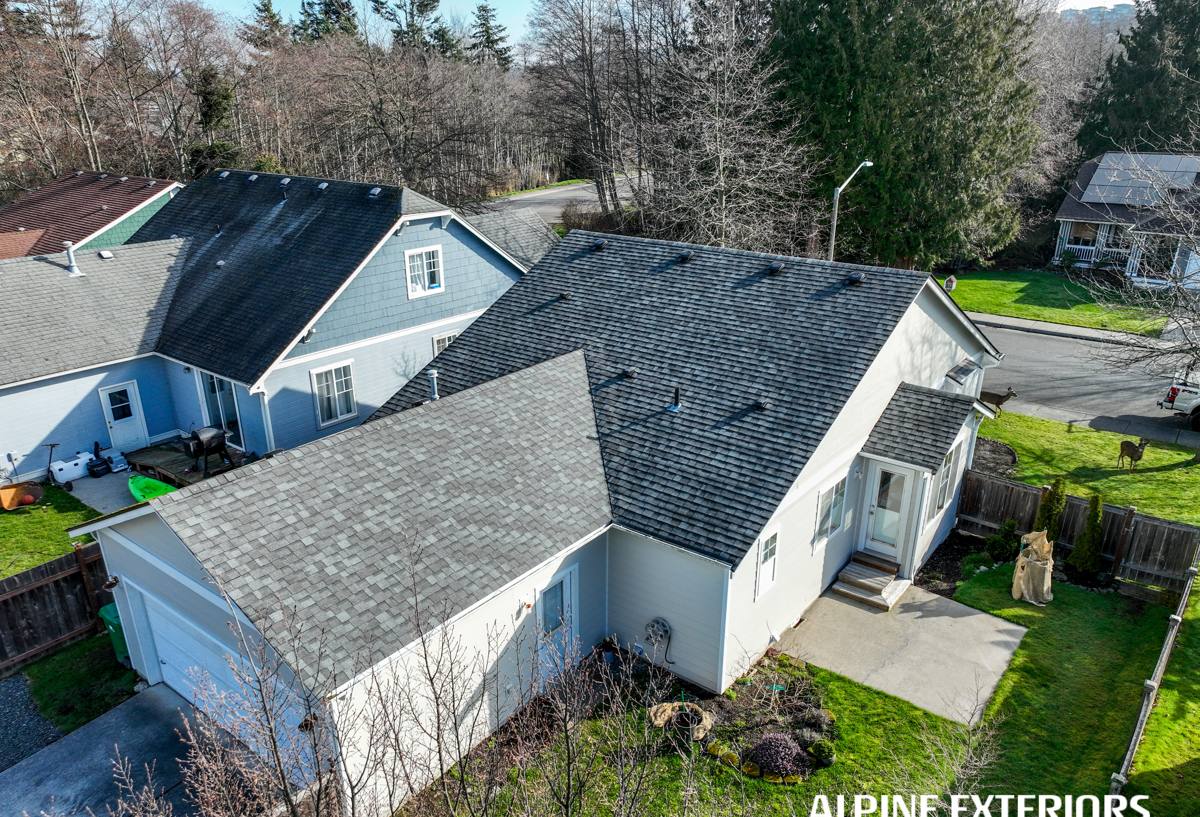
What Coastal Whatcom County Weather Does to a Home
Salt Air and Corrosion
Salt air is corrosive to fasteners, metal flashing, and lower-quality trim products. Over years, it can also degrade the surface of some siding materials faster than manufacturers' general climate ratings would suggest, since most product testing isn't done specifically for marine exposure. Homes closer to the water tend to show more wear on caulking, paint, and metal components than homes even a short distance inland.
Driving Rain and Wind Exposure
Birch Bay and Cottonwood Beach get direct exposure off the Strait of Georgia, which means wind doesn't just bring rain straight down — it drives it sideways into siding laps, window flanges, and roof-to-wall transitions. Installation details that would be fine in a calmer inland neighborhood can fail here if they're not built for wind-driven moisture: under-lapped siding courses, undersized flashing, or trim that isn't properly back-primed and sealed.
Moss, Algae, and the Long Wet Season
Western Washington's damp season stretches long, and shaded or north-facing exterior surfaces can stay wet for extended periods. That's ideal growing conditions for moss and algae, which hold moisture against the surface underneath them. On roofs this shows up as green-black streaking and moss clumps at shaded valleys and under tree cover. On siding it shows up as dark staining, especially near ground level, under eaves, and anywhere water sheets down from above without a clean path to drain.
Siding: Why We Only Install James Hardie Fiber Cement
We install James Hardie fiber cement siding exclusively. We don't install vinyl, LP SmartSide, Cemplank, Allura, primed spruce, or cedar, and that's a deliberate standard, not a limitation of what we're capable of doing. Here's the reasoning, specific to a coastal environment like Cottonwood Beach:
- Moisture behavior: Fiber cement doesn't absorb and swell the way wood-based or wood-composite products can when they take on repeated moisture exposure. In a location with a long wet season and salt air, that matters over the life of the siding.
- Non-combustible material: Hardie siding is a cement-based product, which is a meaningful difference from vinyl (which can deform or melt under heat) or wood-based products.
- Factory-applied finish: ColorPlus finish is baked on at the factory under controlled conditions, rather than field-painted, which gives more consistent coverage and a longer service life on the color coat than most field-applied paint jobs achieve.
- Climate-engineered product lines: Hardie makes HZ10 and HZ5 formulations engineered for different climate zones. For the Pacific Northwest, that means a product built with this kind of weather in mind, rather than a one-size-fits-all formulation.
- Warranty structure: Hardie's warranty coverage is transferable and well-established in the market, which matters to homeowners who may sell within the life of the siding.
We're honest that other products have their own advantages — vinyl is inexpensive and low-maintenance in mild climates, cedar has a natural look some homeowners love, LP SmartSide is engineered wood with real strengths. But when we weigh those trade-offs against what a marine, high-moisture environment like Cottonwood Beach does to a home over ten, twenty, thirty years, fiber cement is what we're willing to put our name behind.
What Correct Installation Looks Like Here
Material choice only gets you halfway. In a wind-driven-rain environment, installation detail is what actually keeps water out:
- Proper weather-resistive barrier and flashing integration behind every course
- Correct lap dimensions and fastener placement per Hardie's installation specifications
- Sealed and back-primed cut edges, especially at corners and penetrations
- Rainscreen or drainage gap detailing where the site conditions call for it
- Careful flashing at windows, doors, and any roof-to-wall intersections
Roofing for a Damp, Mossy Climate
Roofing in this area has to account for both wind exposure and moss growth. We look at ventilation, underlayment quality, and flashing detail as closely as we look at the shingle or roofing product itself, because a roof that traps moisture underneath the surface will fail from the inside regardless of what's on top. Shaded valleys, north slopes, and areas under overhanging trees are where we pay the closest attention, since those are the spots that hold moisture longest and where moss tends to establish first.
Regular inspection matters more here than in a drier inland climate. Catching a compromised flashing detail or an area of moss buildup early is far less costly than dealing with the water damage that follows once it's had a season or two to work its way under the roofing material.
Windows: Sealing Out Wind-Driven Moisture
Window replacement in a coastal setting is as much about the installation as the window unit itself. Flashing integration around the window flange, proper sealant detail, and correct integration with the surrounding siding are what actually stop wind-driven rain from finding its way behind the frame. We pay close attention to sill pan flashing in particular, since a poorly built sill is one of the more common sources of hidden water intrusion around window openings in this kind of climate.
Energy performance is also worth factoring in. Homes exposed to steady wind off the water lose more heat through older, leaky window units than homes in more sheltered locations, so the efficiency gain from a properly sealed replacement window tends to be noticeable here.
Decks: Built for Salt Air and Standing Moisture
Decks near the water face their own version of the same problems — salt exposure on fasteners and hardware, and standing moisture on any horizontal surface that doesn't drain and dry properly. Fastener and hardware selection matters more here than inland, since standard fasteners can corrode faster under salt air exposure. Proper spacing between deck boards, correct ledger board flashing where the deck attaches to the house, and a substructure that allows airflow underneath all help a deck hold up through the wet season rather than trapping moisture against the framing.
Cost Factors to Weigh
| Factor | Why It Matters in Cottonwood Beach |
|---|---|
| Siding material | Fiber cement costs more upfront than vinyl but holds up better against salt air and driving rain over the long term |
| Flashing and moisture detailing | Wind-driven rain exposure means flashing quality has an outsized impact on long-term performance |
| Roof ventilation and underlayment | Damp climate increases the importance of proper moisture management beneath the roofing surface |
| Fastener and hardware grade | Salt air accelerates corrosion on standard-grade fasteners, especially on decks and lower siding courses |
| Site shading and tree cover | Shaded, damp areas need extra attention for moss and algae prevention |
Why a Local Crew Matters
A crew that works Whatcom County's coastline regularly knows which walls on a Cottonwood Beach house take the worst weather, which details tend to fail first in this climate, and how to sequence a project around the wet season rather than fighting it. That local pattern recognition doesn't come from a general contracting background — it comes from working houses in this exact kind of exposure, season after season.
It also means someone answers the phone locally if a question comes up after the work is done, rather than a homeowner trying to reach a company based somewhere else entirely.
Maintenance Homeowners Can Handle Themselves
- Rinse siding periodically to remove salt residue and surface grime, especially on walls facing the water
- Keep gutters clear so water isn't overflowing onto siding or pooling near the foundation
- Trim back vegetation that shades walls or roof sections and keeps them damp longer than necessary
- Watch for moss buildup on roofing, especially in shaded valleys, and address it before it spreads
- Inspect caulking and sealant around windows and trim annually, since coastal exposure can break it down faster than inland conditions
Getting Started
Every home along Birch Bay and Cottonwood Beach faces this climate a little differently depending on its orientation, shading, and age. If you're noticing moss buildup, staining, drafty windows, or a deck that's showing its age, we're happy to take a look and give you an honest assessment of what's going on and what it would take to fix it. Reach out for a free, no-pressure estimate — there's a form below to get started.