 Birch Bay
 Bellingham's Exterior Problem: It's Never Just One Thing
Homes in and around Bellingham don't fail because of one dramatic event. They wear down from the steady combination of conditions that define Whatcom County's marine climate: salt-tinged air moving in off Bellingham Bay and the greater Puget Sound, driving rain that comes in sideways during winter storms, and a long, damp shoulder season where moss and algae get a real foothold on anything that stays wet too long. Any one of those on its own is manageable. Together, over years, they're what turns an exterior from "fine" to "failing" faster than homeowners expect.
We work on homes throughout the Bellingham area regularly, and the pattern is consistent. Siding that isn't dimensionally stable swells and shrinks with the moisture cycles. Paint that isn't factory-cured chalks and peels sooner than the can promised. Wood trim that isn't sealed on every cut edge starts absorbing water at the first nail hole. None of this is a Bellingham-specific mystery — it's ordinary Pacific Northwest weather doing what it always does to exterior materials that weren't built for it.
Why We Standardized on James Hardie Fiber Cement
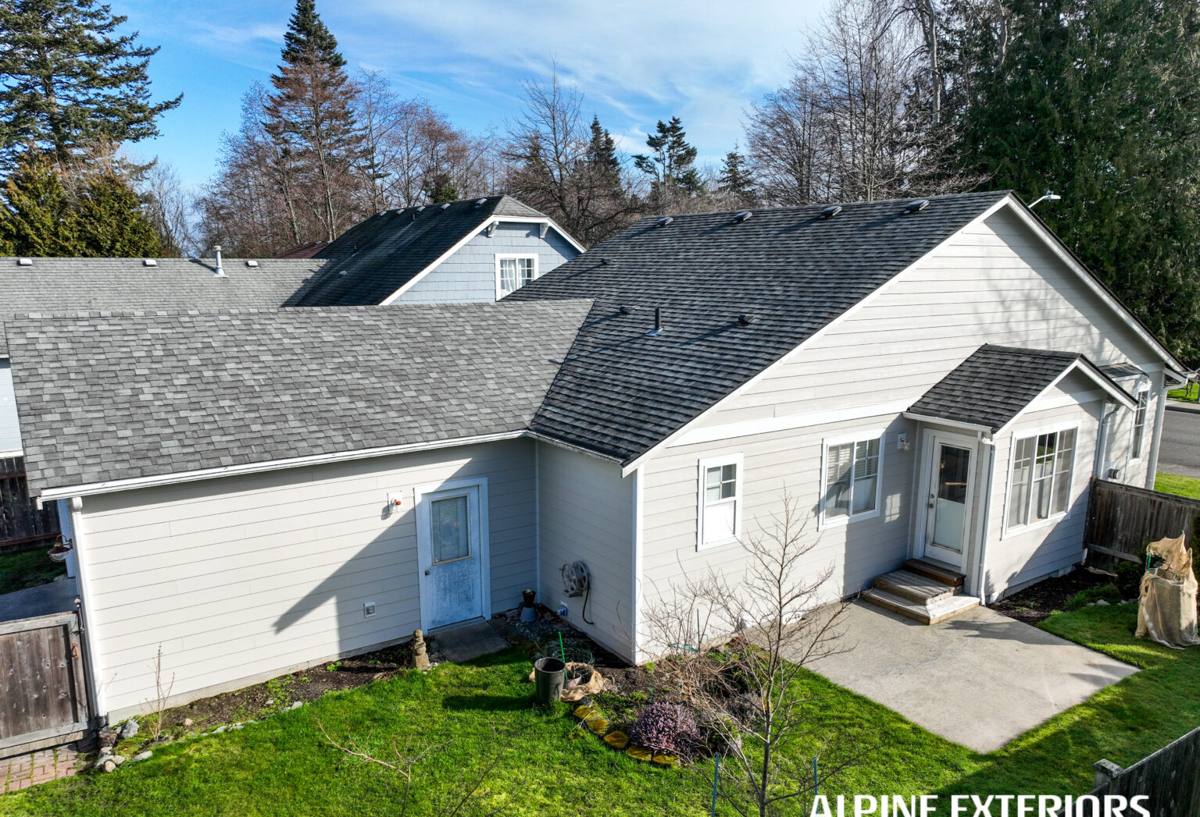
We install James Hardie fiber cement siding exclusively. We don't offer vinyl, LP SmartSide, Cemplank, Allura, primed spruce, or cedar as alternatives, and that's a deliberate professional standard, not a lack of options. Each of those products has legitimate uses somewhere — our position is that none of them hold up as well as Hardie does under the specific combination of conditions Whatcom County homes face year after year.
Fiber cement is made from cement, sand, and cellulose fibers, which makes it dimensionally stable in a way wood-based and polymer-based sidings aren't. It doesn't swell with humidity the way engineered wood products can if a seam or cut edge gets exposed. It doesn't soften, warp, or become a food source for the fungal growth that thrives in a wet, mild climate. It's also non-combustible, which matters more each year as wildfire smoke and dry-season fire risk become part of the conversation even in a historically wet region like this one.
ColorPlus Technology
Most Hardie siding we install uses ColorPlus factory-applied finish rather than field-applied paint. It's baked on in a controlled environment, cures fully before it ever reaches a job site, and resists the fading and chalking that job-site paint jobs are prone to — especially on south- and west-facing walls that take the brunt of sun and salt air. That's fewer repaint cycles over the life of the siding, which matters on a coastal property where repainting isn't a weekend job.
Climate-Engineered Product Lines
James Hardie makes region-specific HZ product lines engineered for different climate zones. The versions we install here are formulated for the wet, moderate Pacific Northwest — different from what would go on a home in the arid Southwest or the humid Southeast. That distinction sounds minor, but it affects how the product handles moisture cycling over decades, which is exactly the stress Bellingham homes are under most of the year.
What We Actually Do: Siding, Roofing, Windows, and Decks
Siding is our specialty, but we look at a home's exterior as one connected system, because that's how water actually moves through it. A roof that's shedding granules, a window that's lost its seal, or a deck ledger that's trapping moisture against the house all create the same kind of problem siding alone can't fix — they let water in behind the wall assembly, where it does the most damage before anyone notices.
- Siding: James Hardie lap, shingle, and panel systems installed to manufacturer spec, including correct flashing and clearances at every penetration.
- Roofing: Roof replacement and repair, with attention to how the roofline sheds water onto the walls below it — a detail that gets overlooked more often than it should.
- Windows: Replacement windows installed with proper flashing integration into the siding system, since a poorly flashed window is one of the most common sources of hidden water intrusion.
- Decks: Deck construction and repair, including ledger board attachment and flashing where the deck meets the house — a notorious rot point in wet climates.
Handling all four under one roof means fewer handoffs and fewer gaps where one contractor assumes another one covered a detail. On a house dealing with salt air and constant rain, those gaps are exactly where problems start.
Why a Local Crew Matters Here
Whatcom County's climate isn't identical to Seattle's, and it's not identical to coastal Oregon either. A crew that works this specific area regularly knows what actually shows up on Bellingham-area homes — where moss tends to establish first, which wall orientations take the worst of the wind-driven rain, how long a given siding product realistically holds its finish this close to salt water. That knowledge comes from doing the work here repeatedly, not from a general contractor's playbook written for a different region.
It also means we're not disappearing after the install. Warranty work, a follow-up question a few years down the line, a referral for something outside our scope — all of that is easier with a contractor who's staying in the area, not one who worked a job here once and moved on.
Signs Your Bellingham Home's Exterior Needs a Look
Most exterior problems in this climate are gradual, so it helps to know what to watch for before small issues become expensive ones.
- Green or black staining on siding, especially on north-facing or shaded walls that don't get much direct sun to dry out
- Paint that's chalking, peeling, or visibly faded, particularly compared to less-exposed parts of the house
- Soft spots, visible swelling, or delamination in wood-based or engineered wood siding
- Persistent moss buildup on siding or trim, not just the roof
- Caulking that's cracked or pulled away around windows, doors, or trim joints
- Visible gaps or warping at siding seams and corner boards
- Musty smells or discoloration on interior walls that back up to exterior siding
- A roof nearing or past the end of its expected service life, especially before a full siding project
Any one of these on its own might be minor. Several at once, or any sign of actual water intrusion, is worth a professional look before it's addressed piecemeal.
What the Process Looks Like
We start with an on-site assessment of the existing siding, trim, and any related roofing, window, or deck conditions that affect the work. From there we walk through product selection — profile, color, and any trim details — and put together a clear scope and timeline before anything starts. Installation follows manufacturer specifications for fastening, clearances, and flashing, because those details determine how well the siding performs over the following decades, not just how it looks the day it goes up.
Table: Cost Factors on a Bellingham Siding Project
| Factor | Why It Affects Cost |
|---|---|
| Home size and wall complexity | More square footage and more corners, gables, and dormers mean more material and labor |
| Existing siding removal | Tear-off and disposal of failing wood or vinyl siding adds labor beyond a straightforward re-side |
| Underlying damage | Rotted sheathing or framing found once old siding comes off needs repair before new siding goes on |
| Product line and profile | Lap, shingle, and panel Hardie products vary in material and installation cost |
| Trim and detail work | Corner boards, window trim, and fascia detailing add labor time |
| Access and site conditions | Steep lots, limited access, or multi-story walls affect equipment and labor needs |
Every home is different, which is why we quote based on an actual site visit rather than a generic per-square-foot number pulled from a phone call.
Living With Fiber Cement Siding: Maintenance Reality
James Hardie siding is lower-maintenance than the alternatives we chose not to install, but "lower-maintenance" isn't "zero-maintenance," especially this close to Bellingham Bay. A periodic rinse to clear salt residue and organic buildup, prompt attention to any caulking that's failed at trim joints, and keeping gutters clear so water isn't sheeting down the wall face all go a long way. ColorPlus finish means you're not signing up for a repaint cycle every few years, but the siding still benefits from a homeowner who keeps an eye on it rather than ignoring the exterior until something looks obviously wrong.
The same logic applies to the rest of the exterior. A roof that's shedding water properly, windows with intact seals, and a deck without trapped moisture at the ledger all reduce the load on the siding itself. Treating the exterior as one system, rather than a set of unrelated components, is what actually extends the life of the whole house in a climate like this one.
Get an Honest Look at Your Home
If you're noticing moss buildup, fading paint, or you're just planning ahead for a home in Bellingham's marine climate, we're glad to take a look and give you a straightforward assessment — no pressure, no generic sales pitch. Reach out for a free estimate using the form below, and we'll walk you through what your home actually needs.