 Birch Bay
 Exterior Siding in Sumas, Washington
Sumas sits at the far northern edge of Whatcom County, close enough to the water and the marine air patterns that move through this corner of the Pacific Northwest that homes here deal with the same slow, grinding moisture exposure as the rest of the county. It's not dramatic weather most of the year — no hurricanes, no hailstorms — but it's relentless. Damp air, driving rain that comes in sideways during winter storms, and long stretches of gray, humid weather that keep surfaces wet for days at a time. That combination is exactly what wears out the wrong exterior products and exactly what a properly installed fiber cement system is built to handle.
This page covers what homeowners in Sumas should know about siding performance in this climate, how we approach exterior work in this area, and why our company only installs James Hardie fiber cement siding rather than the wider range of products most contractors offer.
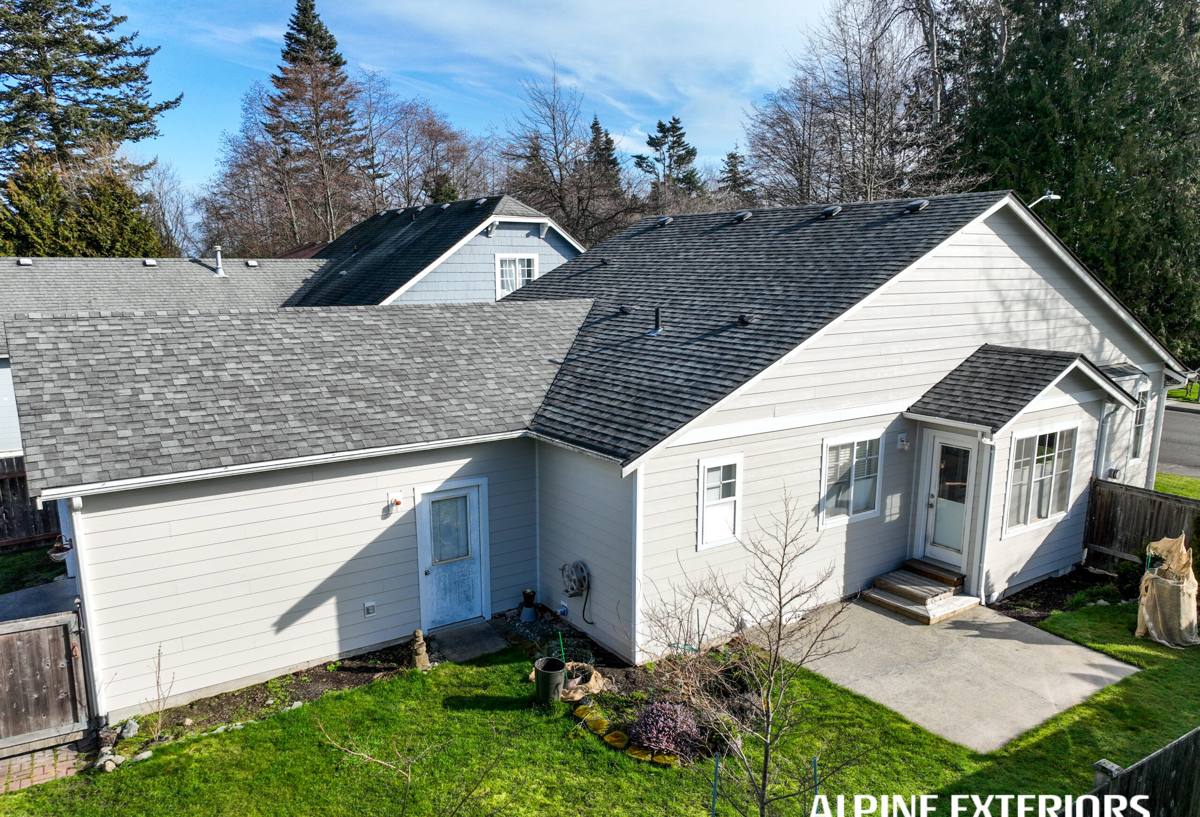
What Whatcom County Weather Does to a House
Whatcom County's climate is defined by moisture more than temperature. Summers are mild and mostly dry, but from fall through spring, homes here sit under a near-constant blanket of humidity, fog, and rain. A few specific patterns matter most for exterior surfaces:
Salt Air and Coastal Moisture
Proximity to Puget Sound and the Salish Sea means a lot of homes in this part of the county get some degree of salt-laden air, especially on north and west-facing walls that catch prevailing weather. Salt air accelerates corrosion of metal fasteners and trim, and it works against paint and finish coatings faster than dry inland air does.
Driving Rain
Winter storms here don't just drop rain straight down — wind-driven rain gets pushed horizontally into wall assemblies, working its way behind poorly flashed trim, loose caulking, and butt joints that weren't sealed correctly. Over years, that's how water finds its way into sheathing and framing even when the siding itself looks fine from the street.
Moss, Algae, and Extended Dampness
Shaded walls, north exposures, and anything under tree cover in this region can stay damp for weeks during the wet season. That's ideal growing conditions for moss and algae, which hold moisture against the siding surface and accelerate whatever degradation process is already underway. Wood-based and wood-derived products are especially vulnerable here because organic growth feeds directly on the material.
None of this makes Sumas unusual for the region — it's a normal Pacific Northwest exposure profile. But it does mean the siding choice matters more here than it would in a drier climate, because the margin for error with moisture-sensitive products is smaller.
Why We Only Install James Hardie Fiber Cement
We get asked regularly why we don't offer vinyl, LP SmartSide, cedar, or other primed wood products. The honest answer is that we used to install a broader range, and we made the decision to standardize on James Hardie fiber cement because it's the product that consistently performs in exactly the conditions Whatcom County throws at it.
Non-Combustible Material
James Hardie siding is fiber cement — primarily sand, cement, and cellulose fibers — and it doesn't burn the way wood-based products do. That's a meaningful difference in wildfire-adjacent areas of Washington, and it's simply a safer long-term material choice regardless of fire risk in any given neighborhood.
Engineered for This Climate
Hardie's HZ5 product line is specifically engineered for regions with harsher moisture and freeze-thaw cycling, which fits the Pacific Northwest profile better than a one-size-fits-all siding product. It resists moisture absorption, doesn't swell or rot the way engineered wood products can when water gets behind a seam, and holds paint and factory finishes far longer than wood-based alternatives.
ColorPlus Factory Finish
Most of what we install uses Hardie's ColorPlus finish — a factory-applied, baked-on finish that's more UV- and moisture-resistant than field-applied paint, and it comes backed by its own finish warranty separate from the substrate warranty. That matters in a climate where damp conditions make on-site paint jobs harder to get right and faster to fail.
Transferable Warranty
Hardie backs its siding with a strong, transferable limited warranty. For homeowners who may sell within the warranty period, that's real value that follows the house, not just the original owner.
What We're Choosing Not to Install, and Why
To be fair to the alternatives: vinyl siding is inexpensive and low-maintenance in the sense that it doesn't need repainting, and LP SmartSide has real engineering behind its strand-based construction. Cedar has a look some homeowners genuinely prefer. These aren't bad products across the board. But each comes with trade-offs that, in our experience doing exterior work throughout this county, cause more problems here than they're worth:
- Vinyl siding can warp or become brittle with temperature swings, and it relies heavily on correct installation to shed water rather than trap it behind the panels — a bigger risk in a driving-rain climate.
- LP SmartSide and other engineered wood products are wood-based at the core. If moisture gets past the finish — through a cut edge, a fastener hole, or a failed caulk joint — the strand material can swell and deteriorate, and that kind of damage is often hidden until it's advanced.
- Cedar and primed spruce require ongoing maintenance — refinishing, caulking, moisture monitoring — that a lot of homeowners underestimate going in, and that maintenance burden only grows in a climate this damp.
- Cemplank and Allura are also fiber cement products and share some of Hardie's core advantages, but we've standardized on one manufacturer so our crews install to one spec, one flashing detail, and one warranty process, which reduces installation error across every job.
Our position isn't that these products are junk. It's that after years of exterior work in this climate, we settled on the one system that gives homeowners the best combination of longevity, low maintenance, and honest warranty backing — and we'd rather install one product well than several products inconsistently.
Comparing Common Siding Materials
| Material | Moisture Resistance | Maintenance | Fire Rating | Typical Lifespan |
|---|---|---|---|---|
| James Hardie Fiber Cement | High — engineered for wet climates | Low — occasional wash, no repainting with ColorPlus | Non-combustible | 30+ years |
| Vinyl | Moderate — depends heavily on installation | Low, but can crack or fade | Combustible | 20–30 years |
| LP SmartSide / Engineered Wood | Moderate — vulnerable if finish fails | Moderate — finish upkeep needed | Combustible | 20–30 years with maintenance |
| Cedar / Primed Spruce | Lower — absorbs moisture without upkeep | High — regular refinishing required | Combustible | 15–25 years with diligent care |
How We Approach Siding Work in Sumas
Because we work across Whatcom County, we see the same failure points repeat from house to house — and most of them trace back to installation details rather than the siding material itself. On every project, our crews pay particular attention to:
Flashing and Water Management
Correct flashing at windows, doors, and roof-to-wall transitions is what actually keeps driving rain out of the wall assembly. Hardie siding performs as designed only when it's flashed and gapped correctly behind the surface — that's a workmanship issue as much as a product issue.
Fastener and Joint Detail
Butt joints, corner details, and fastener placement all follow Hardie's published installation instructions. Skipping these details is one of the fastest ways to void a warranty and invite water intrusion, regardless of how good the siding material is.
Ventilation Behind the Cladding
A rainscreen or drainage gap behind the siding gives any moisture that does get past the surface a way to dry out instead of sitting against the wall. In a climate as damp as this one, that detail is not optional.
We also handle roofing, windows, and decks, which matters on siding projects because so many leak points and moisture problems start at the transitions between systems — a roofline, a window flashing, a deck ledger board tied into the wall. Having one crew that understands how all of these systems interact reduces the chance that a problem in one area shows up as damage in another.
Why a Local Crew Matters
A siding installer who works primarily in drier or more temperate parts of the country doesn't necessarily know how to detail a wall assembly for Pacific Northwest conditions. Whatcom County's moisture load, moss growth, and driving-rain wind patterns call for specific flashing and drainage decisions that aren't universal best practice everywhere. Working in this region regularly means we're applying those details as a matter of habit, not as an afterthought, and we're around locally if a warranty question or a maintenance question comes up years down the road.
Signs Your Current Siding May Be Failing
Homeowners in Sumas and the surrounding area often wait too long to address siding problems because the early warning signs are easy to dismiss. Worth checking for:
- Soft or spongy spots when you press on the siding surface, especially near the bottom edge or around windows
- Paint that's bubbling, peeling, or failing faster than it should on one side of the house
- Visible gaps or separation at butt joints and corners
- Persistent moss or algae growth that keeps returning after cleaning
- Warping, cupping, or swelling, particularly on wood-based or engineered wood siding
- Musty odors or visible staining on interior walls that back up to exterior siding
What Affects the Cost of a Siding Project
Every home is different, but the major cost factors on a Sumas siding project are fairly consistent: the size and complexity of the home's exterior, how much of the existing siding and sheathing needs to be removed versus reused, the Hardie product line and finish selected, trim and detail work around windows and doors, and any repairs needed to framing or sheathing that get uncovered once the old siding comes off. We walk through all of this during an on-site estimate rather than quoting blind, because the condition behind the existing siding is often the biggest variable.
Get a Local Estimate
If you're weighing a siding project in Sumas or elsewhere in Whatcom County, we're happy to take a look, explain what we're seeing on your specific home, and walk you through the Hardie product options that fit your budget and style. There's no pressure and no obligation — just a straightforward assessment from a crew that works in this climate every day. Fill out the form below to request a free estimate.