 Birch Bay
 Exterior Work in the Nooksack Area
Nooksack sits inland from the water compared to the Birch Bay shoreline itself, but it shares the same weather system that defines exterior work across this part of Whatcom County. Moist Pacific air moves through the lowlands most of the year, rainfall is frequent rather than intense, and the cool, damp stretch from fall through spring gives moss, algae, and mildew months to establish themselves on anything that stays wet. Homes here don't usually fail because of one big storm. They fail slowly, from siding, trim, and roofing that never got a real chance to dry out between rain events.
That slow-failure pattern is exactly why the exterior products and installation details matter more here than they would in a drier climate. A product or a nailing pattern that's marginal in Arizona can be a real problem in Whatcom County after a decade of wet winters.
Where Homes in This Area Actually Show Damage First
After years of siding, roofing, window, and deck work around Birch Bay and the surrounding communities, we see the same failure points repeat on house after house:
- North- and west-facing walls that stay damp longer and grow moss or algae film first
- Butt joints and seams in lap siding where caulk has failed and water has tracked behind the cladding
- Roof-to-wall intersections and step flashing that were never properly integrated with the siding above them
- Bottom courses of siding sitting too close to grade, decks, or roof lines, staying wet far longer than the rest of the wall
- Window and door trim where the original flashing and sealant have aged out, letting moisture into the wall assembly
- Deck ledger boards and support posts that hold water against wood siding or framing
Almost none of these are dramatic. They're small, ongoing moisture problems that compound over 10 to 20 years, and they show up hardest on homes where the original exterior work cut corners on flashing, gaps, and material choice.
Moss Season Isn't Just Cosmetic
Moss and algae growth on siding and roofing gets treated as a cleaning problem, but it's really a moisture-retention problem. A surface holding moss is a surface staying wet longer, and a surface staying wet longer is a surface that ages faster — paint fails sooner, wood swells and checks, fasteners corrode. In a climate with a moss season that can run several months, the material underneath that growth matters as much as how often it gets cleaned.
Why We Install Only James Hardie Fiber Cement Siding
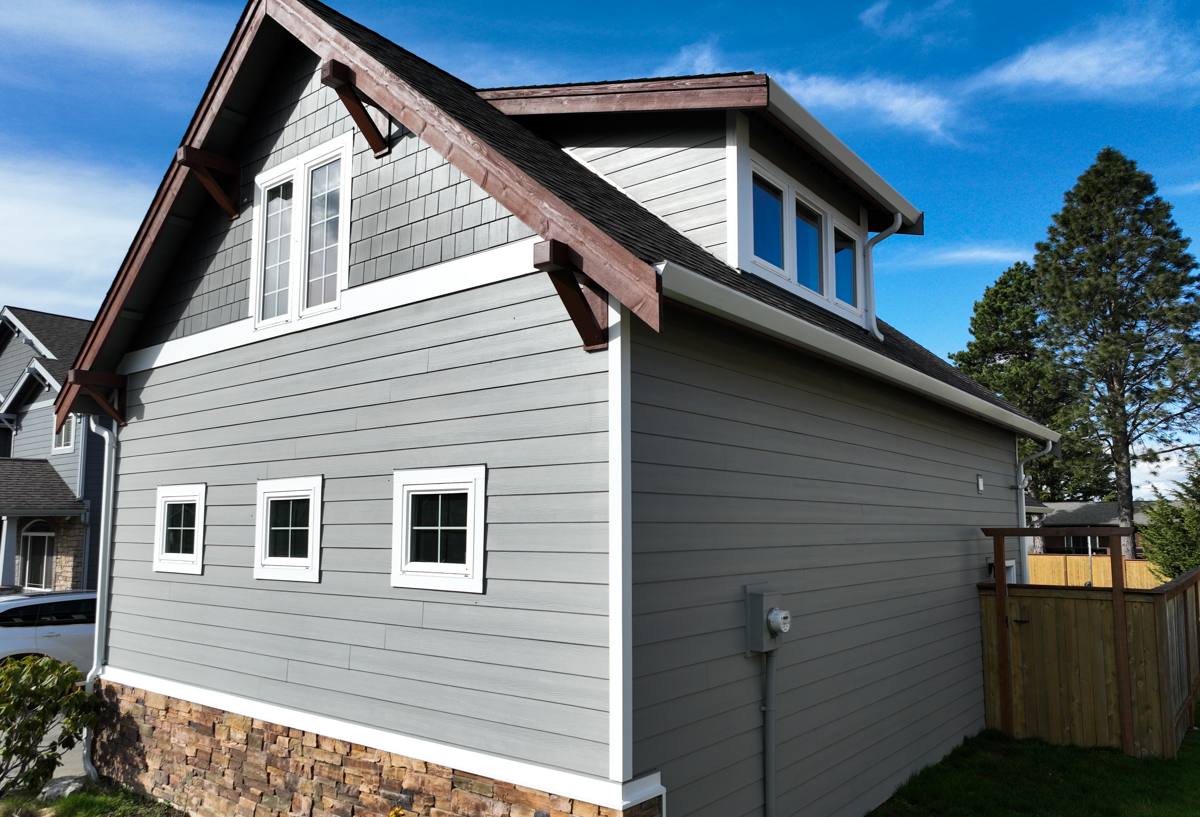
We made a decision as a company to install one siding product: James Hardie fiber cement, in the HZ formulations engineered for wetter climate zones. We don't install vinyl, LP SmartSide, Cemplank, Allura, primed spruce, or cedar. That's not a marketing position — it's a standard we set because of what we've seen play out on real homes in this climate over time.
Fiber cement is non-combustible and doesn't rely on paint film alone to survive moisture cycling the way wood-based products do. James Hardie's ColorPlus finish is baked on at the factory under controlled conditions, which gives it a more consistent, longer-lasting bond than field-applied paint. The HZ5 product line is specifically formulated for climates like ours, with freeze-thaw and moisture exposure in mind. And Hardie backs the product with a long, transferable warranty that reflects confidence in how it performs over decades, not just years.
None of that means fiber cement is maintenance-free or installer-proof. It has to be installed to Hardie's specifications — correct clearances, correct fastening, correct flashing — or it won't deliver the lifespan the material is capable of. That installation discipline is where a lot of the real-world difference between a good siding job and a problem siding job actually comes from.
What Correct Installation Looks Like Here
Clearance and Drainage
Siding needs a gap above roof lines, decks, and grade — typically an inch or more, per manufacturer specification — so water has somewhere to go besides the bottom edge of the board. In a climate that rains often, this detail alone prevents years of hidden rot at the base of walls.
A Drainage Plane Behind the Siding
A weather-resistive barrier and rainscreen gap behind the cladding lets any moisture that does get past the surface drain and evaporate instead of sitting against the wall sheathing. This is standard practice on our installations, not an upgrade.
Flashing at Every Penetration
Windows, doors, hose bibs, light fixtures, and roof intersections all need proper flashing integrated with the siding and the weather barrier — not just caulk. Caulk is a maintenance item; flashing is a permanent water-management detail. We install both, in the right order.
Fastening to Spec
James Hardie specifies fastener type, spacing, and placement for a reason — get it wrong and you get panel cracking, blow-off in wind, or premature wear at the fastener heads. We follow the manufacturer's installation manual, not a shortcut version of it.
Roofing That Works With Your Siding, Not Against It
Siding failures often start at the roofline. Step flashing, kickout flashing at roof-to-wall transitions, and proper underlayment all determine whether water is directed away from your siding or funneled straight behind it. We handle roofing as well as siding, which means when we're on a home we're looking at the whole water path from the ridge down to the foundation, not just one component in isolation. A roof-wall detail that's wrong is one of the more common reasons we find rot behind siding that otherwise looks fine from the ground.
Windows: The Weak Point Where Siding Meets Glass
Window openings are cut into the wall assembly, which makes them one of the highest-risk spots for water intrusion no matter how good the siding around them is. Old, poorly flashed windows are a common source of the hidden rot we find when we open up a wall during a siding project. When we replace windows, we integrate the flashing with the surrounding siding and weather barrier as one continuous system, rather than treating the window as a separate job that gets caulked into place after the fact.
Decks in a Wet Climate
Decks take the same moisture exposure as siding, plus standing water on horizontal surfaces and the added complication of ledger board connections into the house. A ledger that's improperly flashed is a direct path for water into the rim joist and wall framing behind it. When we build or repair decks, we treat the ledger connection with the same water-management standard we apply to siding penetrations, because a deck problem left unaddressed doesn't stay a deck problem — it becomes a wall problem.
Comparing Exterior Siding Options for This Climate
Homeowners in the Nooksack and Birch Bay area often ask why we don't offer lower-cost alternatives. Here's an honest comparison of how the main options generally perform in a wet, moss-prone coastal climate:
| Material | Moisture behavior | Finish durability | Fire performance | Typical maintenance |
|---|---|---|---|---|
| James Hardie fiber cement | Stable, doesn't swell or rot; engineered HZ lines for wet climates | Factory-baked ColorPlus finish, long fade/wear resistance | Non-combustible | Occasional wash; repaint only at very long intervals if ever |
| Vinyl | Doesn't rot, but can warp/buckle with heat and doesn't stop moisture at seams | Color molded in but can fade; not repaintable easily long-term | Combustible, can melt/deform near heat | Low, but seams and J-channels trap debris and moisture |
| LP SmartSide / engineered wood | Treated to resist moisture, but wood-based core is still vulnerable at cut edges and damage points | Factory finish, but edge sealing is critical and easy to miss | Combustible | Moderate; edge and joint inspection matters |
| Cedar / primed spruce | Natural wood movement, absorbs moisture, prone to rot without diligent upkeep | Paint/stain needs recoating on a regular cycle | Combustible | Highest; regular refinishing expected |
Every product on that list has a legitimate use case somewhere. In a climate defined by long wet stretches and a real moss season, we've settled on fiber cement as the material that holds up with the least ongoing burden on the homeowner.
What to Ask Before You Hire an Exterior Contractor
Whether you go with us or someone else, these are the questions that separate a solid exterior job from a problem waiting to happen:
- Will they install a rainscreen/drainage gap behind the siding, or just nail it directly to the wall?
- Do they follow the manufacturer's written installation manual for clearances and fastening, and will they show it to you?
- How do they handle flashing at windows, doors, and roof-wall intersections — flashing first, or caulk as the main defense?
- Are they a local crew who will be around in five or ten years if a warranty issue comes up?
- Do they carry current licensing and insurance, and can they provide proof without being asked twice?
Why a Local Crew Matters Here
Whatcom County's exterior conditions — the salt-influenced air moving in off the water, the frequency of rain, the length of moss season — aren't the same as what a crew based somewhere drier deals with day to day. A local team that works this area regularly knows which details actually matter here: where moss builds up fastest, which wall orientations need the most attention, and how local roofing and siding intersections tend to be built on homes in this part of the county. That local knowledge shows up in the small decisions made on-site, not just in the sales pitch.
Get a Straightforward Estimate
If you're dealing with moss buildup, aging siding, a roof-wall detail that looks questionable, or windows and decks that have seen better winters, we're happy to take a look and walk you through what we see — no pressure, no obligation. Fill out the form below for a free estimate on siding, roofing, windows, or decks for your home in the Nooksack and Birch Bay area.