 Birch Bay
 Decks in Birch Bay Village Face a Different Set of Conditions
Birch Bay Village sits close enough to the water that salt air is part of daily life, not an occasional nuisance. Combine that with Whatcom County's long, wet winters and the shoulder-season drizzle that can linger for weeks, and you have an environment that is genuinely harder on outdoor structures than most inland decks ever have to deal with. A deck built with generic, catalog-standard methods may look fine for a season or two, then start showing corrosion streaks, soft spots, or slick green growth well before it should. Building correctly here isn't about upgrading for the sake of it — it's about matching the materials and the assembly to what this specific location actually does to wood, metal, and fasteners over time.
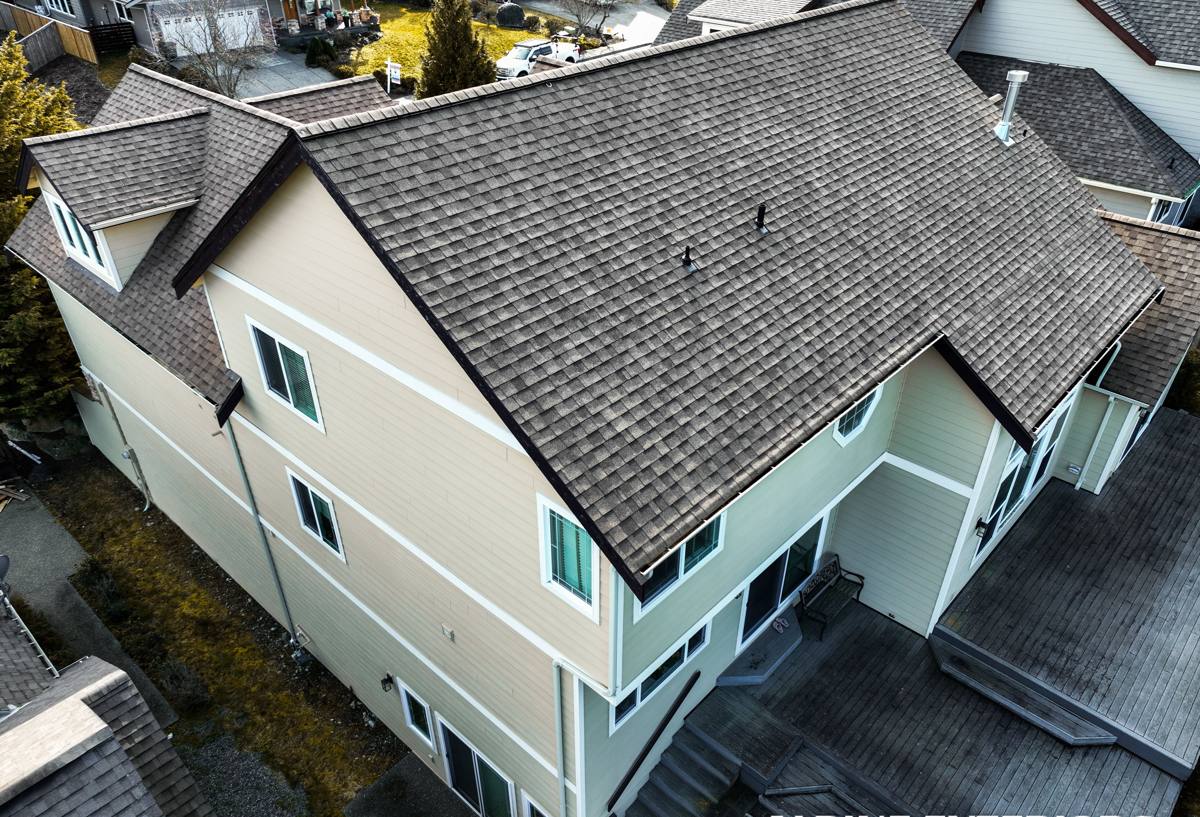
What Birch Bay Village Homes Are Up Against
Salt Air and Corrosion
Airborne salt doesn't need direct ocean spray to do damage — it travels on the wind and settles on any exposed metal, where it accelerates rust and pitting. On a deck, that means hardware, fasteners, and any exposed brackets are under constant low-grade attack. Standard zinc-coated screws and joist hangers that would be perfectly adequate forty miles inland can start corroding within a few years this close to the bay.
Driving Rain and Standing Water
Whatcom County storms frequently come with wind-driven rain that gets pushed sideways into ledger connections, stair stringers, and any gap where water can collect instead of shed. A deck that isn't detailed for driving rain — proper flashing, correct slope, drainage that actually drains — will trap moisture in exactly the places where rot starts and stays hidden the longest, behind the ledger board or under the top surface board.
Moss, Algae, and Shade
Long moss season is a real design factor here, not just a maintenance chore. Shaded sides of a house, areas under mature trees, and low-airflow spots under the deck itself stay damp for extended stretches, which is exactly what moss and algae need to take hold. Beyond looking bad, a mossy deck surface is a slip hazard and, on wood, a sign that moisture is sitting on the board longer than it should.
Choosing the Right Decking Material for This Environment
There is no single "best" decking material for every homeowner — budget, maintenance tolerance, and how the deck will be used all matter. But in a marine climate like Birch Bay's, some trade-offs matter more than they would elsewhere.
| Material | How It Handles This Climate | Maintenance | General Cost Position |
|---|---|---|---|
| Pressure-treated lumber | Affordable, but end grain and fastener points are vulnerable to moisture intrusion if not sealed and maintained | Annual cleaning and periodic re-sealing | Lowest upfront cost |
| Cedar | Naturally rot- and insect-resistant, but still needs finish maintenance to resist moss and graying in this humidity | Regular cleaning, refinishing every 2-3 years | Mid-range |
| Composite decking | Doesn't absorb moisture like wood, resists rot, but surface can still grow algae or moss if airflow underneath is poor | Periodic washing, no sealing or staining | Higher upfront, lower lifetime labor |
| PVC/capped polymer | Most resistant to moisture absorption and staining; performs well in coastal, high-moisture settings | Occasional washing | Highest upfront cost |
Whatever material a homeowner chooses, we don't push one product line as the only right answer. We'll walk through how each one actually behaves in a Birch Bay setting — including the honest maintenance commitment — so the decision fits the budget and the amount of upkeep the owner actually wants to do.
Why We're Selective About Certain Products
Some decking and railing products on the market are more sensitive to installation conditions than others — tight tolerances for expansion gaps, specific fastener requirements, or hidden fastening systems that perform poorly if installed even slightly off-spec. In a climate with this much moisture cycling, small installation errors show up faster than they would in a dry climate. That's why we stick to products and methods we've installed enough times locally to trust, rather than chasing every new material on the market.
What a Correctly Built Deck Involves Here
Footings Set for Local Soil and Frost
Footings need to be sized and set to local frost depth and soil conditions, not a generic minimum. Undersized or shallow footings are one of the more common causes of a deck that starts to feel bouncy or uneven within a few years.
Corrosion-Resistant Framing Hardware
Given the salt air exposure, we use fasteners and structural connectors rated for coastal or high-corrosion environments rather than standard-grade hardware. It costs more up front and is invisible once the deck is finished, but it's the single biggest factor in how long the structural frame lasts underneath a deck that looks fine on the surface.
Ledger Board Flashing
The ledger board — where the deck attaches to the house — is the single most common failure point on decks in wet climates. Correct flashing detail keeps driving rain from working its way behind the board and into the house's rim joist. This is a step that's easy to shortcut and impossible to inspect once the deck is finished, which is exactly why it needs to be done right the first time.
Airflow and Drainage Underneath
A deck built low to the ground or against a shaded wall needs enough airflow underneath to let the framing dry out between rain events. We plan clearance, drainage slope, and where practical, under-deck drainage systems, specifically to reduce the standing moisture that feeds rot and moss.
Our Process for a Birch Bay Village Deck Project
- On-site visit to assess sun exposure, drainage, existing structure (if replacing a deck), and how the space will actually be used
- Design and material conversation, including a straightforward look at maintenance expectations for each option
- Permitting — we handle the Whatcom County or local permit and inspection requirements that apply to the project
- Demolition of the old structure if applicable, done to protect surrounding landscaping and siding
- Framing and footings, inspected before decking goes down
- Decking, railing, and stair installation with attention to fastening details specific to this climate
- Final walkthrough covering how to care for the specific materials installed
Keeping a Birch Bay Village Deck in Good Shape
No deck material is maintenance-free in this climate — the difference is how much and how often. A short seasonal routine goes a long way toward avoiding early repairs.
- Sweep debris and standing leaves off the surface regularly, especially in shaded areas prone to moss
- Wash the deck surface at least once or twice a year to remove algae and salt residue before it builds up
- Check railing posts and stair connections annually for looseness, a common early sign of fastener corrosion
- Keep gutters and downspouts near the deck clear so runoff isn't dumping extra water onto or under the structure
- Re-seal wood decking on the manufacturer's recommended schedule rather than waiting until it visibly grays
- Trim back vegetation that shades the deck and slows drying after rain
Why It Matters That We Already Work in Birch Bay Village
A crew that only occasionally works this close to the water tends to build to generic specs and let the homeowner discover the gaps later. Working regularly in Birch Bay and the surrounding Whatcom County coastline means we already know which hardware grades hold up, how local building and permit requirements apply to deck projects, and what kind of exposure a given lot actually gets based on its orientation to the wind and water. That local pattern recognition is the difference between a deck that's built to a checklist and one that's built for the specific conditions of the property.
What a Custom Deck Project Typically Costs
Pricing depends heavily on size, framing complexity, decking material, and railing choice, so any number without seeing the site is a rough guide at best. In general terms, straightforward wood decks sit at the lower end of the cost range, composite and PVC decking sit higher due to material cost, and features like multi-level designs, built-in seating, or elevated framing over sloped ground add cost on top of the base square footage. We'll always give a detailed, itemized estimate rather than a vague ballpark once we've seen the site and talked through the design.
Get a Straightforward Estimate
If you're planning a new deck or replacing one that's showing its age in Birch Bay Village, we're happy to take a look and talk through what makes sense for your property and budget — no pressure, no upsell. Use the form below to request a free estimate.