 Birch Bay
 Exterior Contractors Serving Blaine, WA
Blaine sits at the far northwest corner of Whatcom County, right on the water and close enough to the Strait of Georgia that salt air is simply part of daily life. Homes here take on a different set of stresses than houses even a few miles inland — more wind-driven moisture, more salt exposure on siding and trim, and a moss season that can run most of the year in shaded, north-facing spots. We work throughout the Birch Bay and Blaine area regularly, and we've built our approach around what actually happens to exterior materials in this specific stretch of coastline, not a generic Pacific Northwest playbook.
As a local siding, roofing, window, and decking contractor, we see the same patterns on Blaine homes year after year: siding that's failed at the bottom courses first, trim that's soaked up water at end grain and started to swell, and moss creeping across north and east-facing roof and wall sections. None of that is bad luck. It's what happens when materials that aren't suited to marine exposure get installed here anyway.
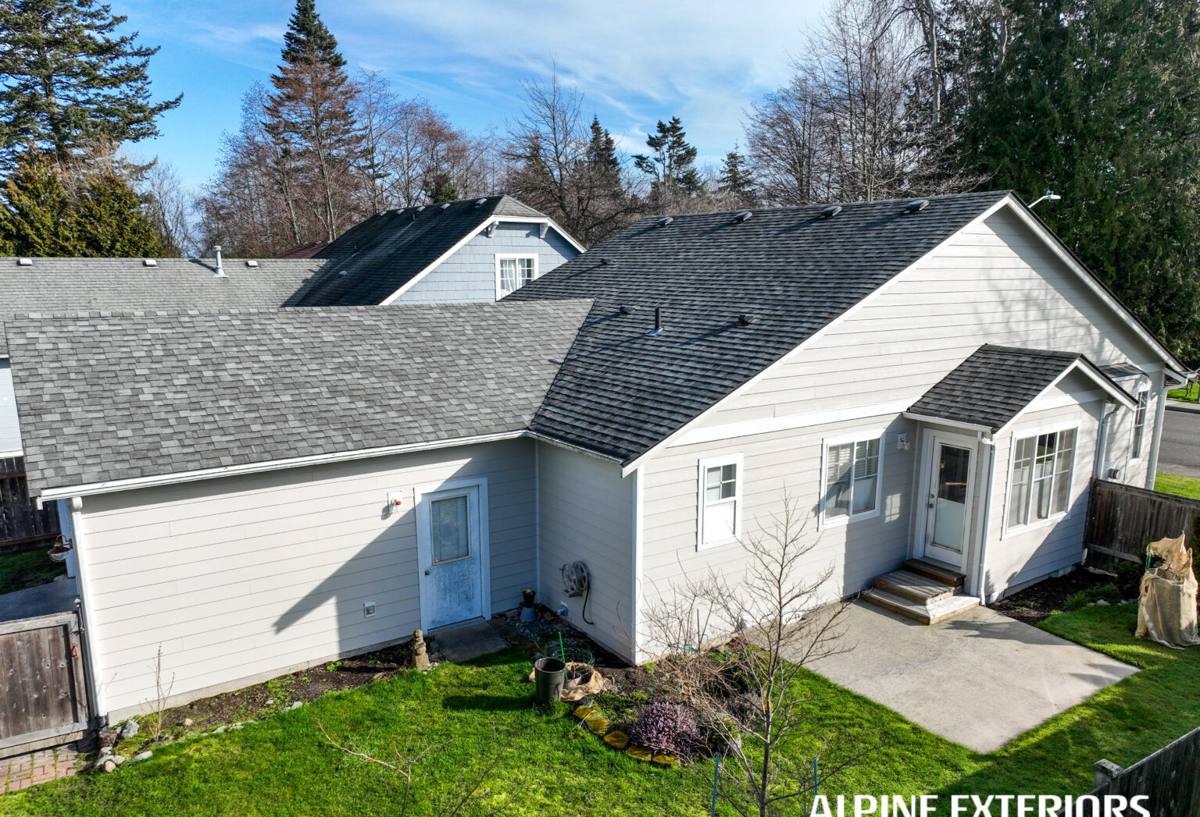
What Blaine's Climate Actually Does to a House
Salt Air and Wind-Driven Rain
Proximity to the water means Blaine homes deal with a steady, low-grade dose of salt in the air, carried further inland on windy days than most people expect. Salt is corrosive to exposed fasteners and hardware, and it accelerates the breakdown of paint films and coatings that aren't built to handle it. Combine that with driving rain that comes in sideways off the Strait during winter storms, and you get moisture pushed into joints, laps, and seams that would stay dry in a calmer climate. Siding and trim on the windward side of a Blaine house are working harder than the same materials on a home twenty miles inland.
The Long Moss Season
Whatcom County's cool, damp climate keeps moisture sitting on north- and shade-facing surfaces for long stretches, and moss doesn't need much more than that to take hold. On roofs it's mostly cosmetic until it isn't — moss holds water against shingles and accelerates granule loss. On siding, moss and algae growth on porous or wood-based products isn't just an appearance problem; it signals that the surface is retaining moisture longer than it should, which is exactly the condition that leads to rot underneath.
Freeze-Thaw and Temperature Swings
Blaine doesn't get brutal winters, but it does get enough freeze-thaw cycling that any water already trapped in siding, trim, or decking has a chance to do damage. Water that's soaked into a porous material and then freezes expands, which stresses joints, paint film, and fastener holes over repeated cycles each winter.
Why We Only Install James Hardie Fiber Cement Siding
We made a decision a while back to standardize on James Hardie fiber cement siding and stop installing everything else — no vinyl, no LP SmartSide, no Cemplank, no Allura, no primed spruce or cedar. That's not a marketing position, it's a practical one, built around what holds up in coastal Whatcom County conditions specifically.
Fiber cement is non-combustible and doesn't rely on a wood substrate that can absorb and hold moisture the way engineered wood products do. James Hardie's ColorPlus finish is baked on at the factory rather than field-applied, which matters directly here: a factory finish resists the salt-air fading and coating breakdown that hits field-painted trim and siding hardest in marine environments. Hardie also engineers regional HZ5 product lines specifically for wetter, harsher climates like ours, rather than selling one formulation everywhere.
We're not going to tell you every other product is worthless — vinyl is inexpensive and low-maintenance in mild climates, and engineered wood has real fans for its workability. But in a place where salt air, driving rain, and sustained moisture are the norm rather than the exception, those trade-offs stop looking good to us. We'd rather install one product we trust completely than several we have reservations about.
How the Common Alternatives Hold Up Here
| Product | Main Trade-Off in Blaine's Climate |
|---|---|
| Vinyl siding | Can warp or crack in temperature swings; seams are a moisture entry point in driving rain |
| LP SmartSide / engineered wood | Wood-strand substrate is vulnerable if moisture gets past the finish, especially at cut edges |
| Primed spruce or cedar | Needs consistent repainting and sealing to keep salt air and rain from reaching raw wood |
| James Hardie fiber cement | Non-combustible, factory-cured finish, engineered for high-moisture regional exposure |
Siding Installation and Repair in Blaine
Correct installation matters as much as the product choice, maybe more. James Hardie publishes detailed installation specifications — proper clearances above rooflines and decks, correct fastener patterns, flashing details at every window and door penetration, and specific gaps at butt joints to allow for expansion. On a house exposed to wind-driven rain, a flashing detail done wrong or a clearance gap skipped is exactly where water gets in. We install to those specifications, not around them.
For homes with existing siding that's failing — whether it's rot at the bottom courses, cracked or buckling panels, or paint that won't hold anymore — we assess whether repair makes sense or whether it's time for a full replacement. Localized rot around windows and at ground level is common on older Blaine homes, and catching it before it spreads into the wall assembly saves money down the line.
Roofing That Handles Moss and Coastal Weather
Roofing in Blaine has to deal with the same moisture load as siding, plus direct exposure to wind and, in shaded areas, sustained moss growth. We look at ventilation, underlayment, and flashing details as closely as the roofing material itself, since a roof that traps moisture underneath the shingles will fail from below regardless of what's on top. Where moss is an ongoing issue, we can talk through zinc or copper strip options and maintenance intervals that actually fit a Blaine roof's shade pattern, rather than a one-size-fits-all schedule.
Windows Built for Wind and Moisture
Window failures near the coast are almost always about the seal and flashing, not the glass. Wind-driven rain finds gaps at the window-to-wall transition faster here than in more sheltered locations, so we pay close attention to flashing integration with the siding system during both new installs and replacements. Energy performance matters too — older single-pane or poorly sealed windows let in more of Blaine's damp cold air than most homeowners realize until they're replaced.
Decks That Survive Salt Air and Rain Exposure
Decks in Blaine take a beating from the same conditions as siding: salt in the air, standing moisture from rain, and freeze-thaw cycling in winter. Fastener corrosion is a bigger issue here than inland, so we pay attention to hardware specification, not just decking material. Proper drainage and gapping between boards matters more in a climate where rain doesn't let up for days at a stretch — a deck that can't shed water fast enough stays wet longer and ages faster.
Why Hire a Local Crew for Blaine Projects
A crew that works Whatcom County's coastline regularly already knows which details matter here — how far inland salt exposure actually reaches, which sides of a house take the worst of the driving rain, and where moss tends to establish first on a given lot orientation. That's the kind of knowledge that shows up in better flashing decisions and material choices, not something you can fully get from a spec sheet. It also means someone local is available if a warranty question or a maintenance issue comes up later.
What to Check When Hiring an Exterior Contractor in Blaine
- Ask whether they install to the manufacturer's written specifications, not just "to code"
- Confirm they carry current licensing and insurance for Washington State work
- Ask how they handle flashing at windows, doors, and roof-to-wall transitions specifically
- Ask about their experience with coastal/marine-exposure homes, not just general siding work
- Get a written scope that specifies product lines, not just "fiber cement" or "siding replacement"
- Ask what the warranty actually covers — material, labor, or both, and for how long
Planning a Siding, Roofing, Window, or Deck Project
Whether you're dealing with siding that's showing its age, a roof that needs attention before moss does more damage, windows that let in more of Blaine's damp air than they should, or a deck that's due for replacement, the right first step is an honest look at what's actually happening on the house. We'd rather tell you a repair will hold for a few more years than sell you a replacement you don't need yet — and when replacement is the right call, we'll explain why James Hardie is what we recommend for a Blaine property specifically.
If you'd like a free, no-pressure estimate on your Blaine home, fill out the form below and we'll take a look.