 Birch Bay
 Why Birch Bay Village Siding Wears Out Faster Than It Should
Birch Bay Village sits close enough to the water that salt-laden air is a constant, low-grade stress on every exterior surface in the neighborhood. Combine that with the wind-driven rain that rolls in off the Strait and the long, damp moss season that Whatcom County is known for, and you have a climate that is genuinely harder on siding than most inland parts of the state. It is not one dramatic event that ruins siding here — it is the slow accumulation of moisture cycling in and out of the wall assembly, salt residue holding humidity against the surface, and shaded, north-facing walls staying wet for days after everyone else's yard has dried out.
Homes here often show the same failure pattern: siding that looks fine from the street but is soft, delaminating, or hiding rot at the bottom courses, around window trim, and behind shrubs and fences that block airflow. By the time paint failure or visible warping shows up, moisture has usually been working on the wall for a while.
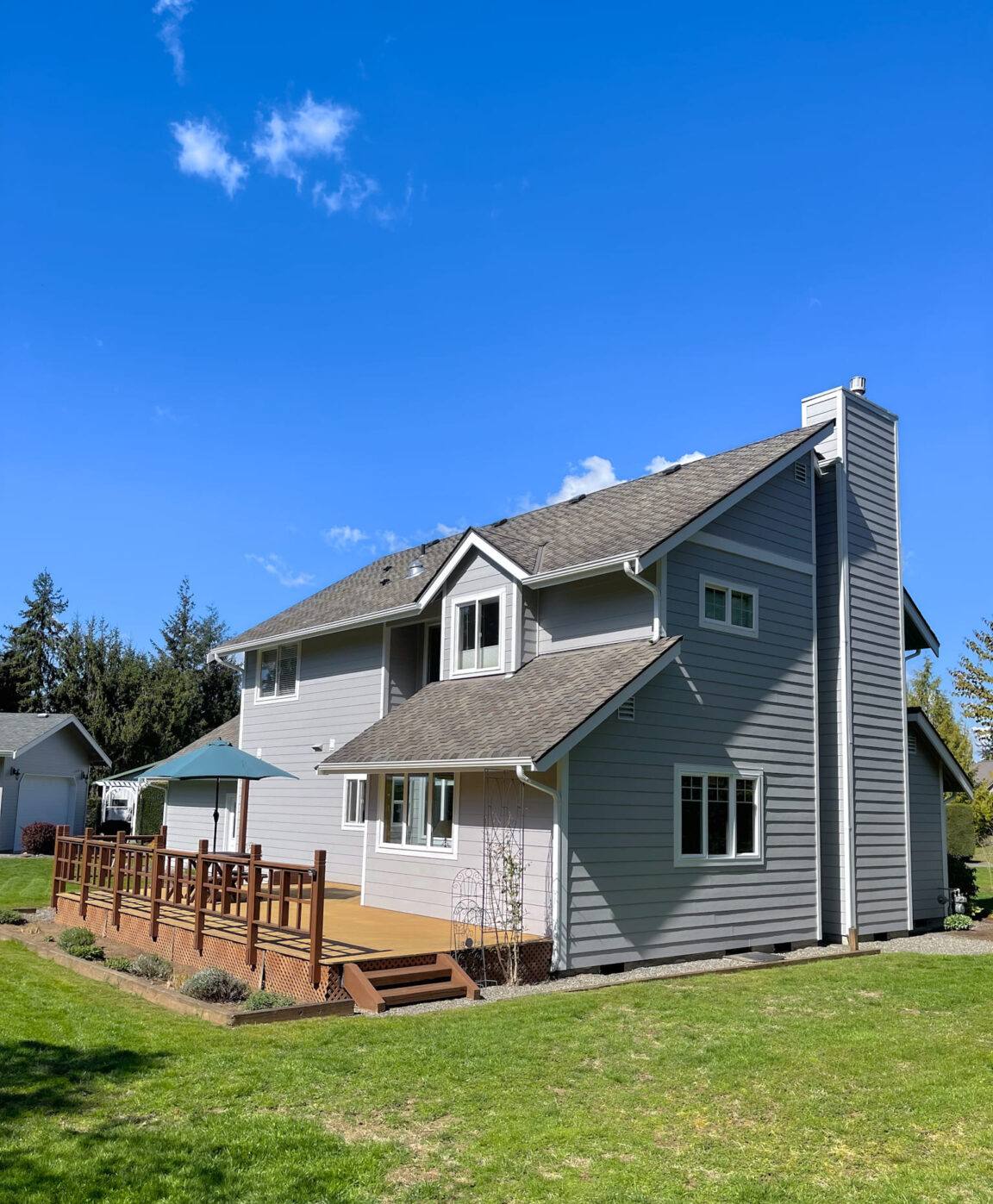
What Birch Bay Village Homes Actually Need From Their Siding
A siding replacement in this neighborhood has to do three jobs at once, and a lot of installs only do one or two of them:
- Shed wind-driven rain — proper lap exposure, flashing, and house wrap detailing matter more here than in a sheltered inland lot, because rain doesn't just fall straight down near the water.
- Resist salt-air degradation — fasteners, trim, and the siding material itself need to hold up to airborne salt without corroding or breaking down over time.
- Handle sustained moisture and moss without rotting — shaded and north-facing walls stay damp longer, so the material underneath needs to tolerate that without softening.
This is the reason we standardized on James Hardie fiber cement siding and don't install vinyl, LP SmartSide, primed spruce, cedar, or other fiber cement brands. Hardie's HZ5 product line is engineered specifically for climates with high moisture exposure, and fiber cement as a material doesn't absorb water the way wood-based products can or degrade under UV and salt exposure the way some other claddings do over a long ownership period. It's not the cheapest siding on the market, but for a coastal Whatcom County property, it's the material that actually matches the conditions.
Signs It's Time to Replace, Not Patch
Patching siding buys time, but on a coastal property it often buys less time than homeowners expect, because the moisture problem that caused the original failure is usually still present. Before recommending a full replacement, we look for:
- Soft or spongy spots when pressed, especially near the bottom of walls and around window and door trim
- Visible warping, buckling, or gaps between siding boards
- Paint that's failing repeatedly in the same spots even after repainting
- Moss or algae growth that keeps coming back on shaded or north-facing walls within a season of cleaning
- Rust streaking from fasteners, or visible corrosion on trim and hardware
- Interior signs — musty smells, discoloration, or soft drywall on exterior walls — that suggest moisture is already past the siding
If two or three of these show up together, that's usually a sign the wall assembly underneath needs attention, not just the visible siding.
When a Repair Actually Makes Sense
Isolated damage — a cracked board from an impact, a small area of fastener failure — can sometimes be repaired without a full replacement, especially if the rest of the siding is sound and reasonably current. We'll tell you honestly when that's the case rather than pushing a full job that isn't needed yet.
What a Correct Siding Replacement Job Involves
The siding itself is only part of the system. A replacement done right in a salt-air, high-moisture environment includes:
- Full removal and inspection of the old siding down to the sheathing, so hidden rot or moisture damage gets addressed instead of covered up.
- Sheathing repair or replacement where water has already compromised the substrate — this is the step that gets skipped most often on lower-bid jobs.
- A properly lapped weather-resistive barrier installed to shed water down and out, not trap it against the wall.
- Correct flashing at windows, doors, and every horizontal trim transition, since this is where wind-driven rain finds its way in.
- James Hardie fiber cement panels or lap siding, installed at the manufacturer's specified nailing pattern, clearance, and fastener type — stainless or hot-dip galvanized fasteners matter in salt air, where standard fasteners corrode faster.
- Factory-applied ColorPlus finish where color matching allows, which holds up to UV and salt exposure better than field-applied paint and comes with its own finish warranty.
Skipping any one of these steps is how a siding job looks good for two or three years and then fails in the exact same way the original siding did.
Material Comparison for a Coastal Whatcom County Property
| Material | Moisture/Salt Resistance | Typical Lifespan Here | Maintenance Burden |
|---|---|---|---|
| James Hardie fiber cement | Engineered for high-moisture climates (HZ5 line); doesn't rot or absorb water like wood | 30+ years with proper install | Low — factory finish, occasional wash |
| Vinyl siding | Doesn't rot, but can warp/crack in temperature swings and doesn't stop moisture reaching sheathing | Variable, often shorter in high-wind coastal areas | Low, but repairs are visually obvious |
| LP SmartSide (engineered wood) | Treated, but wood-based core is more vulnerable to sustained moisture than fiber cement | Shorter than fiber cement in wet climates | Moderate — edge sealing and monitoring needed |
| Cedar / primed spruce | Natural wood; absorbs moisture, prone to rot and moss retention without diligent upkeep | Shortest without frequent refinishing | High — regular repainting/staining |
This table reflects why we made the call we did: on a property exposed to salt air and driving rain, the material with the lowest long-term maintenance burden and the best moisture resistance is the one worth recommending, even if it isn't the cheapest option up front.
Cost Factors for a Birch Bay Village Siding Replacement
Every home is different, but the same variables drive cost on most jobs in this neighborhood:
| Factor | Why It Matters |
|---|---|
| Extent of sheathing damage found underneath | Rot repair adds material and labor beyond the siding itself |
| Home size and number of stories | More wall area and access complexity (scaffolding, staging) increase labor time |
| Trim and detail work | Window/door surrounds, corner boards, and fascia detailing add finish time |
| Siding profile chosen | Lap siding vs. panel systems vs. specialty trims price differently |
| Color/finish option | Factory ColorPlus finish vs. field painting affects both cost and long-term durability |
We give a written estimate after an in-person look at the home, not a phone quote — the sheathing condition especially can't be judged accurately without removing a section of existing siding or doing a close inspection.
Why a Crew That Already Works Birch Bay Village Matters
Siding installation isn't uniform across Whatcom County. A crew that mostly works drier, inland jobs can do solid work and still under-detail the moisture barrier and flashing for a coastal property, simply because it hasn't been the deciding factor on most of their jobs. Working regularly in Birch Bay and along the bay means we default to the wind-driven-rain detailing, the corrosion-resistant fastener choices, and the moss-season maintenance guidance as standard practice, not an upsell.
It also means fewer surprises during the project — knowing what local permitting requires, how weather windows typically run through the year, and what condition to expect when old siding comes off a bay-exposed wall.
What to Expect From Our Process
- In-person assessment — we look at the whole exterior, not just the obviously damaged areas, since moisture problems often extend beyond what's visible.
- Written estimate — a clear scope, material selection, and price before any work starts, with sheathing repair addressed as a known possibility, not a change-order surprise.
- Removal and inspection — old siding comes off, sheathing gets assessed, and you see what we find before we close the wall back up.
- Correct installation — weather-resistive barrier, flashing, and James Hardie siding installed to manufacturer spec with appropriate fasteners for a coastal environment.
- Final walkthrough — so you know what maintenance, if any, the new siding needs going forward.
Living With Your New Siding: Moss and Salt Air Maintenance
James Hardie siding is low-maintenance, not zero-maintenance. In Birch Bay, that mostly means an occasional gentle wash to keep salt residue and moss spores from building up on shaded walls, and keeping vegetation trimmed back from the siding so air can circulate and walls can dry between rain events. None of this compares to the sanding, caulking, and repainting cycle that wood-based sidings need — it's closer to periodic upkeep than ongoing work.
If your siding is showing its age or you just want a straight answer about what's really going on underneath it, we're happy to take a look. The estimate is free, there's no pressure to move forward, and you'll get a clear explanation of what we find — use the form below to get started.