 Birch Bay
 California Creek: A Neighborhood That Sits Close to the Water
California Creek is one of the low-lying, wooded pockets on the edge of Birch Bay, where homes back up to drainage corridors, second-growth timber, and marine air rolling straight off the water. It's a quieter stretch than the main Birch Bay commercial drag, but the exterior conditions are the same ones every home in this corner of Whatcom County has to deal with: salt-laden wind, long stretches of wet weather, and shade that keeps things damp longer than homeowners expect. If you own a home near California Creek, your siding is doing more work than siding on a home fifteen miles inland, even if it doesn't look that way from the street.
We've worked on homes throughout Birch Bay and the surrounding Whatcom County shoreline communities, and the pattern is consistent: houses close to the creek corridor and the bay itself age faster on their south and west-facing walls, and slower-draining, shaded sides develop moss and mildew problems that sunnier lots rarely see. None of this is unusual or alarming — it's just what marine-influenced Pacific Northwest exteriors face, and it's exactly the kind of condition that should drive material and installation decisions from day one.
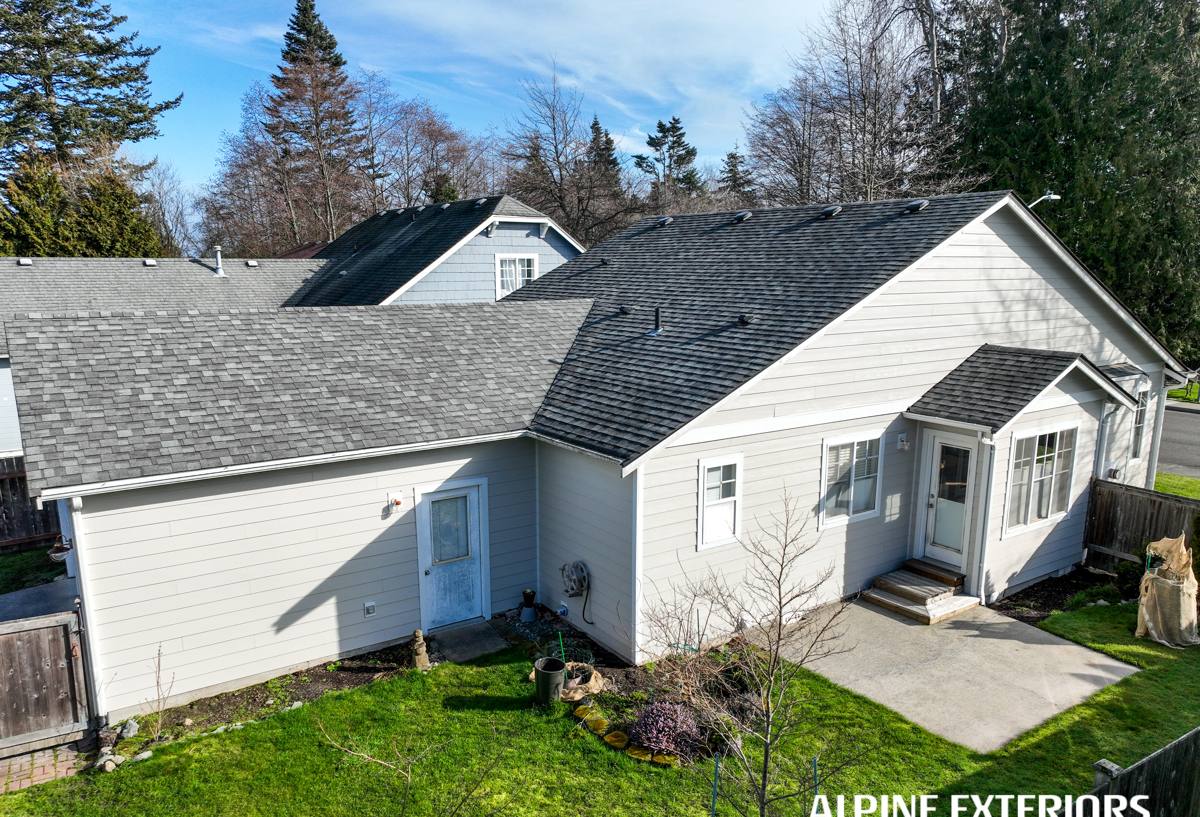
What the Local Climate Actually Does to Siding
Salt Air
Birch Bay sits directly on Puget Sound, and California Creek is close enough to the water that airborne salt is a real factor, not a theoretical one. Salt accelerates the breakdown of paint films, corrodes exposed metal fasteners and flashing, and speeds up the weathering of any siding material that isn't built to handle a marine environment. Over years, homes closer to the water tend to show chalkier, more faded finishes on their west and southwest walls than homes just a mile or two inland.
Driving Rain
Whatcom County doesn't get the heaviest rainfall totals in the state, but it gets a lot of wind-driven rain off the Sound, and wind-driven rain behaves very differently than a straight-down shower. It gets pushed sideways into laps, seams, and butt joints, and it finds its way behind poorly caulked trim and undersized flashing. Siding systems that rely on paint alone to keep water out, rather than on the material itself resisting moisture, are the ones that struggle here first.
Moss and Mildew Season
Between the tree cover common around California Creek and the number of overcast, damp days Whatcom County sees from fall through spring, moss and mildew have a long runway every year. Shaded walls and anything under overhanging branches stay wet longer after a rain event, and that extended damp period is what actually drives biological growth — not just total rainfall. Siding that absorbs moisture, or that has seams and edges where organic material can collect, will show green and black staining years before an equivalent non-absorptive material does.
Why Material Choice Matters More Here Than in Drier Climates
In a dry inland climate, a homeowner can get away with a wider range of siding products and installation shortcuts because the exterior simply doesn't get tested as often. That's not the situation in California Creek. Every gap in a lap joint, every under-flashed window head, and every spot where paint film has worn thin becomes a moisture entry point multiple times a year here, not once or twice a decade.
This is why we install only James Hardie fiber cement siding, and why we don't offer vinyl, LP SmartSide, Cemplank, Allura, primed spruce, or cedar as alternatives. It's not that every one of those products is unusable everywhere — some of them perform reasonably well in drier, milder climates. But we've made a standard for the homes we put our name on, and in a marine environment like this one, the trade-offs of those other materials show up faster and cost homeowners more over the life of the siding.
- Vinyl expands and contracts with temperature swings and can distort or blow off in the wind gusts that come off the Sound; it also can't be painted a darker color without risk of warping.
- LP SmartSide and other engineered wood products are wood-based, and wood-based siding depends entirely on an unbroken paint or coating seal to keep moisture out — a seal that's harder to maintain in a climate this wet.
- Primed spruce and cedar are natural wood, which means they're more susceptible to swelling, cupping, and rot when exposed to repeated wetting and drying cycles, exactly the cycle a shaded, damp lot near a creek corridor produces.
- Cemplank and Allura are also fiber cement, and fiber cement as a category is the right call for this climate — but we've standardized on Hardie specifically for its factory finish warranty, engineered product lines, and manufacturing consistency.
James Hardie fiber cement is non-combustible, doesn't absorb water the way wood-based products do, and its ColorPlus factory finish is baked on under controlled conditions rather than field-applied, which matters enormously in a climate where field-painted surfaces are fighting rain more days than not.
James Hardie Product Lines That Fit This Area
Hardie builds region-specific product lines, and the HZ5 line is engineered for wetter, colder climates like ours — it's formulated to perform through freeze-thaw cycles and sustained moisture exposure. For a California Creek home, that's not a marketing distinction, it's the actual product spec that matters.
| Hardie Product | Common Use | Why It Fits This Climate |
|---|---|---|
| HardiePlank lap siding | Primary wall siding | Traditional profile, factory-finished, resists moisture absorption on exposed walls |
| HardiePanel | Board-and-batten look, accent walls | Clean vertical lines, holds up well on gable ends exposed to wind-driven rain |
| HardieTrim | Window and corner trim | Dense, moisture-resistant trim that won't rot the way wood trim does at joints |
| HardieSoffit | Eaves and overhangs | Vented options help manage moisture in the attic and roofline, important under heavy tree cover |
ColorPlus finishes also matter more here than in a dry climate, because a factory-cured finish resists the fading and chalking that salt air and UV cause faster near the water. And because it's baked on rather than brushed on, it holds up to the repeated wet-dry cycling this area sees every single week for months at a time.
How We Approach a California Creek Job
A siding job near the water isn't just about swapping one material for another. The details around the material are what actually determine whether the new siding lasts fifteen years or forty.
Moisture Management First
Before any siding goes up, we look at the house's drainage plane: house wrap condition, flashing at every window and door, kickout flashing at roof-wall intersections, and clearances at grade. In a climate this wet, a drainage plane that isn't continuous is the single most common reason siding fails early, regardless of what material was used.
Fastening and Joint Detail
Hardie siding has to be fastened and gapped to manufacturer spec, with joints properly flashed or caulked with the right product, not just caulked and painted over. In a marine environment, corrosion-resistant fasteners aren't optional — the wrong fastener will bleed rust through the finish within a few years.
Ventilation and Airflow
Shaded lots near the creek corridor benefit from siding installed with proper rainscreen or ventilation gaps where the house design allows it, since airflow behind the siding helps it dry out between rain events instead of staying damp against the sheathing.
Roofing, Windows, and Decks Work Together
Siding doesn't work in isolation. A roof with poor flashing at a wall intersection will dump water directly onto new siding and undo the benefit of a quality installation. Windows with failed seals let moisture into the wall cavity from the inside out. And a deck built tight against the house without proper ledger flashing is one of the most common sources of hidden rot we find behind siding during replacement jobs. We handle all four — siding, roofing, windows, and decks — because in a climate like this, treating them as separate problems leads to callbacks and repeat damage.
Signs a California Creek Home May Need Attention
- Soft or spongy spots when you press on siding, especially near the bottom courses or around window trim
- Persistent green or black staining that returns within weeks of cleaning, particularly on shaded or tree-covered walls
- Paint that's peeling, bubbling, or chalking heavily on south and west-facing walls
- Visible gaps or separation at butt joints and corner trim
- Warped, bowed, or buckled panels, especially on walls that get direct wind exposure off the water
- Rust streaks below fasteners or trim, a sign of corroding hardware underneath
- Musty smell or visible mold near baseboards on exterior walls, which can indicate moisture getting in behind the siding
Any one of these on its own isn't necessarily an emergency, but in this climate they tend to compound quickly once they start, so it's worth having them looked at rather than waiting.
What Affects the Cost of a Siding Project Here
| Factor | Why It Matters |
|---|---|
| Home size and wall complexity | More corners, gables, and dormers mean more trim, more cutting, and more labor |
| Extent of hidden damage | Rotted sheathing or framing found once old siding comes off adds repair scope |
| Siding profile and accessories | Lap width, trim style, and soffit/fascia work all affect material and labor cost |
| Access and site conditions | Tree cover, slope, and tight lot lines near the creek corridor can affect staging and labor time |
| Tear-off vs. overlay | Full tear-off of old siding costs more up front but lets us properly address the drainage plane underneath |
| Paired work | Bundling siding with roofing, window, or deck work in one project can reduce total disruption and sometimes total cost |
We don't publish flat pricing because every one of these factors changes the number, but we walk every home in person before giving an estimate, and we'll tell you plainly if we find something during that walk-through that changes the scope.
Why a Local Crew Matters for This Kind of Work
Whatcom County's marine climate isn't something you can fully appreciate from a spec sheet. A crew that mostly works drier inland regions may not think twice about a detail that's critical here — a missed kickout flashing, an under-lapped joint, a fastener that isn't corrosion-resistant — because in their normal working environment, that mistake might not show up for a decade. Near California Creek and the bay, it shows up in two or three wet seasons.
We work this specific stretch of Whatcom County regularly, which means we've seen how homes here actually age, not just how a manufacturer's brochure says they should perform. That local pattern recognition shapes real decisions on your job: where we pay extra attention to flashing, which walls get prioritized, and what we flag as an issue worth fixing now rather than later.
Maintenance That Actually Extends the Life of Your Siding
Even the right material installed correctly benefits from basic seasonal attention in this climate:
- Rinse siding annually, especially shaded and north-facing walls, to keep moss and mildew from establishing
- Keep gutters clear so water isn't overflowing directly onto siding below
- Trim back branches and vegetation that keep walls shaded and damp longer than necessary
- Check caulking at trim and window joints every couple of years and recaulk where it's cracked or pulled away
- Walk the exterior after major windstorms to check for loosened panels or trim, common after the wind events that come off the Sound
James Hardie siding with a ColorPlus finish needs far less of this than painted wood products, but "less maintenance" doesn't mean "no maintenance," and a few minutes a couple of times a year goes a long way toward getting the full lifespan out of the material.
Getting Started
If you're noticing any of the warning signs above, or you're just planning ahead for a home near California Creek, we're happy to come take a look. We'll walk the exterior with you, point out anything we find, and give you a straightforward, no-pressure estimate based on what your home actually needs — no scare tactics, no inflated scope. Use the form below to request a free estimate and we'll get in touch to set up a time.