 Birch Bay
 Birch Bay Village Sits in a Tough Climate for Exterior Siding
Birch Bay Village homes deal with a combination of weather stresses that most siding products were never designed to handle well over the long term. The community sits close enough to Birch Bay and the Strait of Georgia that salt-laden air is a constant, low-grade presence on exterior surfaces. Add Whatcom County's wind-driven winter rain and the deep shade cast by mature Pacific Northwest tree cover, and you get a climate that pushes moisture into every gap, seam, and fastener hole a siding job leaves exposed.
None of this is dramatic weather. It's slow, cumulative exposure — and that's exactly what separates a siding job that looks fine for two years from one that still looks and performs well after fifteen. Getting the installation right matters more here than in a drier, more sheltered inland location.
Salt Air and Metal Fasteners
Airborne salt accelerates corrosion on anything metal — nail heads, flashing, trim fasteners, and hardware. When a siding installer uses the wrong fastener grade or leaves fastener heads exposed instead of properly seated and sealed, corrosion shows up as rust streaking, loosened boards, and eventually water paths straight into the wall assembly. In a coastal-influenced area like Birch Bay, fastener selection isn't a minor detail — it's one of the first things that determines whether a siding job holds up.
Moss, Shade, and Trapped Moisture
Wooded lots and filtered sunlight keep north-facing and shaded wall sections damp for extended stretches, especially through the fall and winter months. Moss and algae take hold on any surface that stays wet longer than it should, and once established, they hold additional moisture directly against the siding surface. On products that swell, delaminate, or absorb water, that's a slow path to rot. On a properly installed, moisture-resistant siding system, it's a cosmetic issue that a rinse and a little airflow management can control.
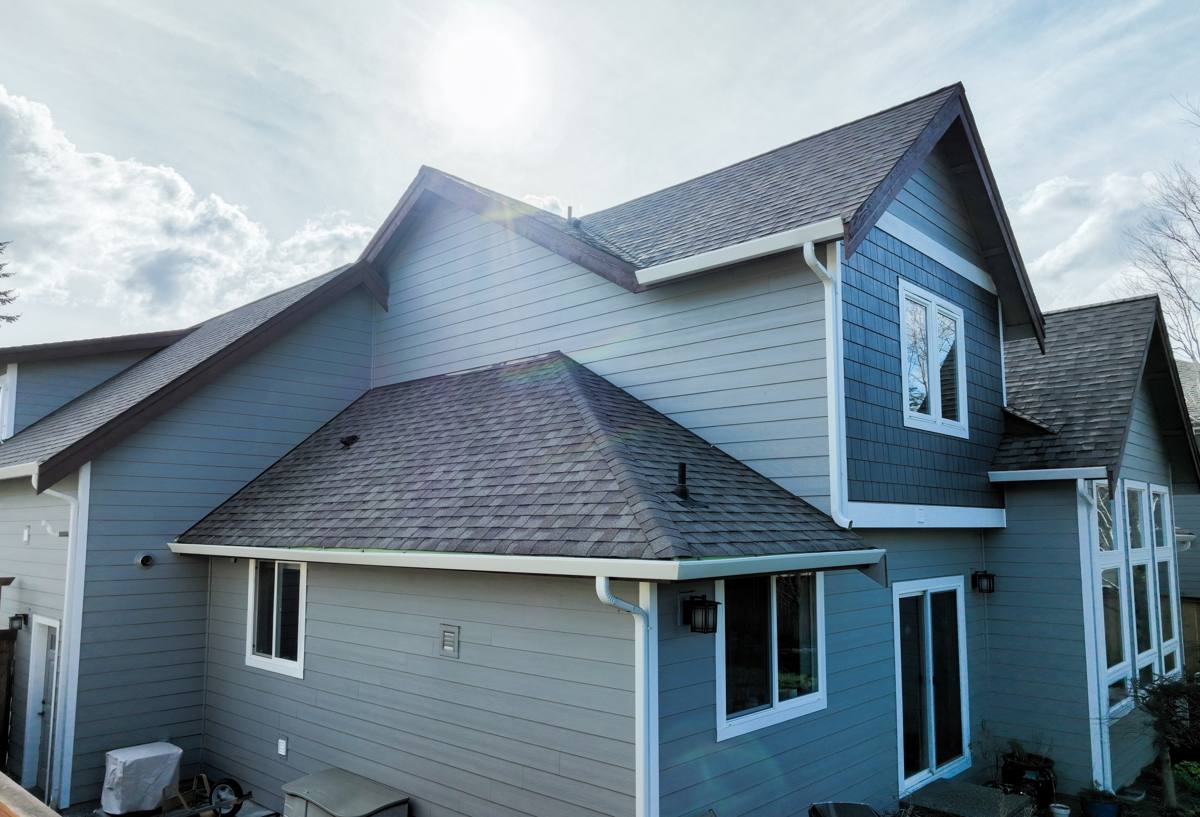
What a Correct Siding Installation Actually Involves Here
A siding job that's going to perform in Birch Bay Village's conditions is built in layers, not just fastened to the wall. Skipping or shortcutting any one of these layers is where most premature siding failures start.
Drainage Plane and Rain Screen Gap
Behind the siding, there needs to be a continuous water-resistive barrier and, ideally, a rain screen gap that lets any moisture that gets past the siding drain and dry out instead of sitting against the sheathing. In a climate with this much sustained rainfall, that gap is what keeps incidental moisture from becoming trapped moisture.
Flashing at Every Vulnerable Point
Window heads, door heads, deck ledgers, roof-to-wall intersections, and butt joints all need flashing detailed to shed water outward, not just caulk applied over a gap. Caulk fails; properly lapped flashing doesn't rely on that failure point.
Fastener Type and Pattern
Corrosion-resistant fasteners, driven at the manufacturer's specified pattern and depth, keep boards secure without over-driving (which crushes the material and opens a water path) or under-driving (which leaves boards loose and prone to wind lift in coastal gusts).
Clearances That Actually Get Followed
Minimum clearances from siding to grade, to roof surfaces, and to decks or patios aren't a formality — they're what keeps splash-back, snow load, and roof runoff from sitting against the bottom edge of the siding, which is the single most common place we find rot on older homes in this area.
Why We Install Only James Hardie Fiber Cement Siding
We standardized on James Hardie fiber cement and don't install vinyl, LP SmartSide, cedar, or primed wood siding. That's a deliberate professional standard, not a marketing position. Fiber cement doesn't absorb water and swell the way engineered wood products can, it won't warp or buckle under Whatcom County's temperature swings the way vinyl can, and it's non-combustible — a real advantage during Washington's dry summer wildfire smoke seasons even in a coastal, generally wet community like Birch Bay.
James Hardie's HZ5 product line is engineered specifically for climate zones like ours, with a moisture and mold resistance profile built for the Pacific Northwest rather than a generic national spec. The factory-applied ColorPlus finish is baked on and warranted against fading and cracking, which matters directly here: constant salt air exposure is one of the fastest ways to break down field-applied paint. A factory finish that isn't relying on a paint job holding up in salt air is a meaningful difference, not a marketing detail.
We're not going to tell you vinyl or LP SmartSide is junk — plenty of homes have them and get reasonable service life. What we will say is that after years of doing exterior work in exactly this climate, we've made a professional call: for the moisture load, salt exposure, and moss pressure a Birch Bay Village home deals with, fiber cement gives homeowners the best long-term value and the least maintenance headache, and it's the only product we're willing to put our name on here.
Our Installation Process for Birch Bay Village Homes
- On-site assessment. We look at your existing siding, sheathing condition, and any signs of past moisture intrusion — especially at north-facing walls, deck ledgers, and window openings.
- Tear-off and sheathing inspection. Old siding comes off and the sheathing underneath gets inspected and repaired before anything new goes up. Covering damaged sheathing is how small problems become expensive ones.
- Water-resistive barrier and rain screen. A continuous WRB goes on first, with a drainage gap behind the new siding so incidental moisture has somewhere to go.
- Flashing installation. Every window, door, roof line, and penetration gets flashed before siding covers it — not caulked over after the fact.
- James Hardie installation to manufacturer spec. Boards or panels go up with the correct fastener type, spacing, and clearances for our climate zone.
- Caulking, touch-up, and trim work. Joints get sealed with exterior-grade sealant compatible with the ColorPlus finish, and factory-cut edges get touched up as needed.
- Final walk-through. We go over the finished job with you before calling it done, including basic care guidance specific to your property's sun and shade exposure.
Choosing the Right Hardie Product for a Salt-Air, Moss-Prone Property
Not every Hardie product is the right fit for every part of a home. Here's how the main options typically compare for a property in this kind of environment:
| Product | Best Use | Why It Fits Birch Bay Village |
|---|---|---|
| HardiePlank Lap Siding | Primary wall surfaces | Proven moisture and impact resistance for the most exposed elevations |
| HardiePanel Vertical Siding | Accent walls, gable ends | Fewer horizontal seams where water and moss can collect |
| HardieTrim Boards | Corners, window and door trim | Matches the fiber cement moisture performance of the field siding instead of mixing in wood trim that can rot first |
| HardieShingle Siding | Accent gables, dormers | Cedar shingle look without the maintenance burden of real cedar in a damp, shaded climate |
Cost Factors for Siding Installation in Birch Bay Village
Every home is different, but the same handful of factors drive most of the cost variation we see on siding jobs in this area:
| Factor | Why It Moves the Price |
|---|---|
| Home size and wall complexity | More square footage and more corners, gables, and dormers mean more material and labor |
| Existing sheathing condition | Moisture-damaged sheathing found during tear-off needs repair before new siding goes on |
| Product line and texture selection | Lap widths, vertical panels, and shingle-style accents carry different material and install costs |
| Trim and accent detailing | Corner boards, window trim, and gable accents add labor time beyond the flat wall areas |
| Site access | Wooded lots, steep grades, or tight setbacks can affect staging and equipment access |
We give straightforward, itemized estimates rather than round numbers pulled out of thin air, so you can see exactly what's driving your project's cost.
Caring for New Siding After Installation
James Hardie siding installed correctly is low-maintenance, not no-maintenance. A few habits go a long way in this climate:
- Rinse salt residue and general grime off exterior walls once or twice a year, especially on sides facing open water or prevailing wind.
- Trim back tree limbs and shrubs that keep siding shaded and damp longer than the surrounding walls.
- Check caulking at trim joints, window edges, and penetrations annually and have any cracked or missing sealant redone promptly.
- Watch shaded, north-facing sections for early moss or algae growth and clean it off before it spreads.
- Keep gutters clear so overflow doesn't run down the siding face or pool at the base of a wall.
- Confirm your product warranty terms and register your installation with James Hardie if required.
Why Hiring a Crew That Already Works in Birch Bay Village Matters
Siding crews that mostly work drier, more sheltered inland areas don't always default to rain screen assemblies, upgraded flashing details, or coastal-grade fasteners unless a homeowner specifically asks for them. A crew that already works this stretch of Whatcom County builds those details in as standard practice, because we've seen what happens on the homes where they were skipped.
If your neighborhood has architectural guidelines around siding color, style, or material, we're used to working within those requirements as part of the estimate and planning process rather than treating them as an afterthought. Local familiarity also means fewer surprises on permitting and inspection timelines specific to Whatcom County.
If you're weighing a siding project for your Birch Bay Village home, we're glad to walk the property, look at what your specific exposure and shade conditions are dealing with, and put together a clear, no-pressure estimate — just fill out the form below to get started.