 Birch Bay
 Roofs in Birch Bay Village Take a Different Kind of Beating
Birch Bay Village sits close enough to the water that salt air is a daily fact of life for anything on a roof — nails, flashing, vent caps, gutter hangers. Add the wind-driven rain that comes off the Strait during winter storms and the long, damp moss season that Whatcom County is known for, and you've got three separate forces working against a roof at the same time, year-round. A roofing system that holds up fine forty miles inland can wear out early here simply because it wasn't detailed for this exposure.
That doesn't mean Birch Bay Village needs exotic materials or a radically different roof. It means the details that are easy to skip — fastener choice, flashing laps, ventilation balance, underlayment coverage — actually matter here in a way they might not somewhere drier and calmer. A correct replacement accounts for that from the start instead of trying to catch up with repairs later.
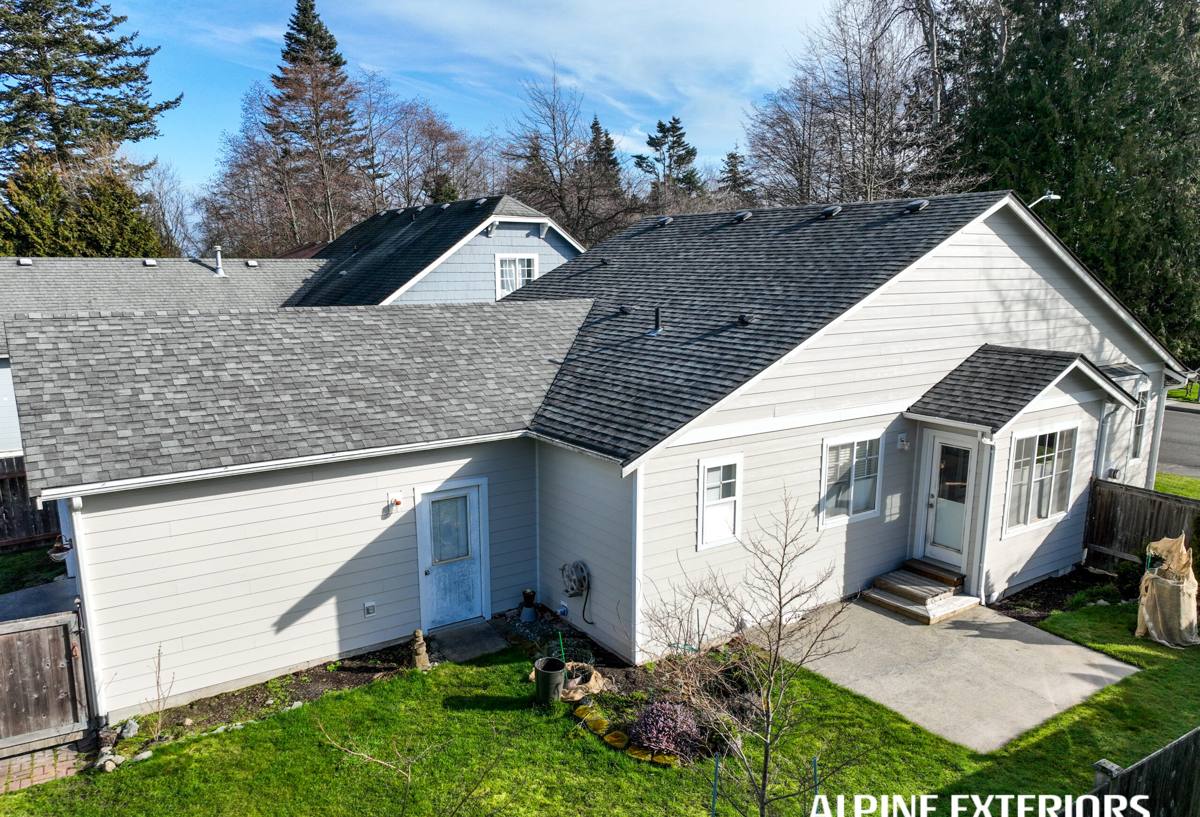
Signs a Repair Won't Cut It Anymore
Most roofs don't fail all at once. They give warning signs for a season or two before a full replacement becomes the honest answer instead of another patch. In Birch Bay Village, the pattern we see most often is a roof that's been repaired in the same two or three spots repeatedly — usually near a valley, a chimney, or a north-facing slope that never dries out.
- Granule loss heavy enough that you can see bare asphalt on the shingles, especially on the slopes that face the water
- Moss established at the ridge or in valleys that keeps coming back within a season or two of cleaning
- Soft or spongy decking felt underfoot in the attic, or daylight visible through the roof boards
- Shingles that are curling, cracking, or lifting at the edges, which lets wind-driven rain get underneath
- Flashing around chimneys, skylights, or sidewalls that's rusted, separated, or was never properly stepped and counter-flashed
- Interior staining on ceilings or in the attic that shows up or worsens after storms with strong onshore wind
- A roof that's already 20+ years old and on its original underlayment, regardless of how it looks from the ground
Any one of these on its own might still be a repair. Two or three together, especially on an older roof, usually means the underlying materials are past the point where patching makes financial sense.
Choosing a Roofing System for This Exposure
There's no single "best" roofing material for Birch Bay Village — the right choice depends on the home's structure, the budget, and how much maintenance the owner wants to take on. What we do insist on is matching the material to the exposure honestly, including the parts of the trade-off that get glossed over in sales pitches.
| Material | How It Handles Salt Air & Rain | Moss Resistance | Maintenance Load |
|---|---|---|---|
| Architectural asphalt shingle | Good, with corrosion-resistant fasteners and proper flashing | Better with algae-resistant (copper/zinc-infused) granules, but still needs periodic cleaning | Moderate — expect occasional moss and gutter maintenance |
| Standing seam metal | Very good when fasteners and flashing are marine-rated | High — moss struggles to hold on a smooth, sloped metal surface | Low, but panel and fastener quality matters more here than almost anywhere |
| Wood shake/shingle | Poor in this climate without heavy, ongoing maintenance | Low — wood holds moisture and feeds moss and rot | High — not something we recommend for this exposure as a practical matter |
| Composite/synthetic shake | Good — doesn't absorb moisture like real wood | Moderate to good, depending on the product's surface texture | Moderate |
We steer most Birch Bay Village homeowners toward either a quality algae-resistant asphalt shingle or standing seam metal, depending on roof pitch, budget, and how the home looks best. Wood shake isn't something we push here — not because it can't be a nice-looking roof, but because the maintenance burden in a damp, salt-air, moss-prone environment is real, and we'd rather be upfront about that before you buy the material than after.
Underlayment and Ice-and-Water Barrier
The shingle or panel is what you see, but the underlayment is what keeps a roof dry when wind drives rain sideways under the primary roofing. In this area we favor synthetic underlayment over old-style felt for its tear resistance and consistency in wet installs, with self-adhering ice-and-water barrier extended further up valleys, eaves, and around every penetration than a bare-minimum install would use. Given how often this area gets sustained horizontal rain, that extra coverage at vulnerable points isn't optional upgrade — it's the difference between a roof that sheds water and one that occasionally lets it in.
What a Correct Tear-Off and Replacement Involves
Tear-Off and Deck Inspection
A full tear-off strips the roof down to bare decking so we can actually see what's underneath — not guess at it. This is where hidden problems from years of moss and moisture show up: soft plywood, rusted-through nail heads, or rot around old penetrations. Any compromised decking gets replaced before anything new goes down. Roofing over a bad deck just hides the problem for a couple of years and hands it back to you worse.
Flashing Details
Flashing failures cause more leaks than worn-out shingles do. Every chimney, skylight, sidewall, and roof-to-wall transition gets new step and counter-flashing, not a bead of caulk over the old metal. In a salt-air environment, we use flashing and fasteners rated to resist corrosion rather than standard galvanized product that can start rusting within a few years this close to the water.
Ventilation Balance
A roof needs balanced intake at the eaves and exhaust at the ridge to keep the attic dry and temperate. Get this wrong and you trap moisture in the attic, which speeds up rot, feeds mold, and shortens the life of the new roof from underneath — often the exact problem the replacement was supposed to fix. We check and correct ventilation as part of every replacement, not as an upsell.
Our Process, Start to Finish
- On-site inspection and honest assessment of whether the roof needs full replacement or targeted repair
- Written estimate that breaks out material, labor, and any decking or flashing contingencies in plain language
- Material selection walk-through, including the trade-offs above, so you're choosing with full information
- Scheduling built around Whatcom County weather windows rather than jamming the job in around a storm system
- Tear-off, deck inspection and repair, and full underlayment installation
- New roofing installed with corrosion-resistant fasteners and properly detailed flashing throughout
- Site cleanup, including a magnetic sweep for stray nails and hauling away all old material
- Final walkthrough so you can see the finished work and ask questions before we consider the job done
Living With the Roof Afterward: Moss and Gutter Care
No roofing material in this part of Whatcom County is entirely moss-proof — the combination of shade, moisture, and mild temperatures is simply too favorable to moss for any roof to stay untouched forever. What changes with a correctly installed roof is how much maintenance it needs and how forgiving it is when that maintenance slips a season. A clean, algae-resistant shingle or a smooth metal panel with good drainage will hold off moss far longer than an aging roof with granule loss and clogged valleys.
Keeping gutters and valleys clear of needles and debris going into fall, and having moss treated or gently removed before it gets established rather than after, does more for a roof's lifespan here than almost any other single habit. We're happy to point out the areas of your specific roof that are most prone to moss buildup so you know what to watch.
Why Local Experience in Birch Bay Village Matters
A roofing crew that regularly works Birch Bay Village already knows which slopes catch the worst of the wind-driven rain, how fast moss reestablishes on a shaded north face this close to the water, and which flashing details tend to fail first in this exposure. That's not something you can fully substitute with a generic install checklist — it comes from doing the work here repeatedly and seeing how different systems actually hold up a few winters later.
It also means straightforward answers about permitting and inspection through Whatcom County, realistic scheduling around the wetter months, and a crew that isn't learning the local climate's quirks on your roof for the first time.
Estimate Checklist: What to Have Ready
- Rough age of the current roof, if known
- Any known leak locations or interior staining, even if minor
- Whether moss or algae has been a recurring problem
- Any planned changes, like adding skylights or solar in the near future
- General timeline and any scheduling constraints on your end
If you're weighing a repair versus a full replacement, or just want a clear-eyed look at where your roof actually stands, we're glad to come out to Birch Bay Village and take a look. The estimate is free, there's no pressure attached to it, and you'll get a straight answer either way — use the form below to get started.