 Birch Bay
 Why Metal Roofing Makes Sense in Birch Bay Village
Birch Bay Village sits close enough to the water that salt-laden air, wind-driven rain, and long stretches of damp shade are just part of owning a home here. Asphalt shingle roofs in this pocket of Whatcom County tend to show their age faster than the same product would inland — granule loss from driving rain, moss creeping in under the shade of mature conifers, and fasteners that corrode sooner than the warranty paperwork suggests. Metal roofing was built for exactly this kind of exposure. Done correctly, it sheds wind-driven rain instead of absorbing it, resists the kind of moss colonization that eats into shingle mat, and holds its finish through decades of coastal weather without the recoating or patch cycles asphalt eventually demands.
That said, "metal roofing" covers a wide range of products and installation quality, and not every metal roof performs the same in a marine environment. This page covers what actually matters for homes in Birch Bay Village specifically — not generic marketing claims about metal roofing in general.
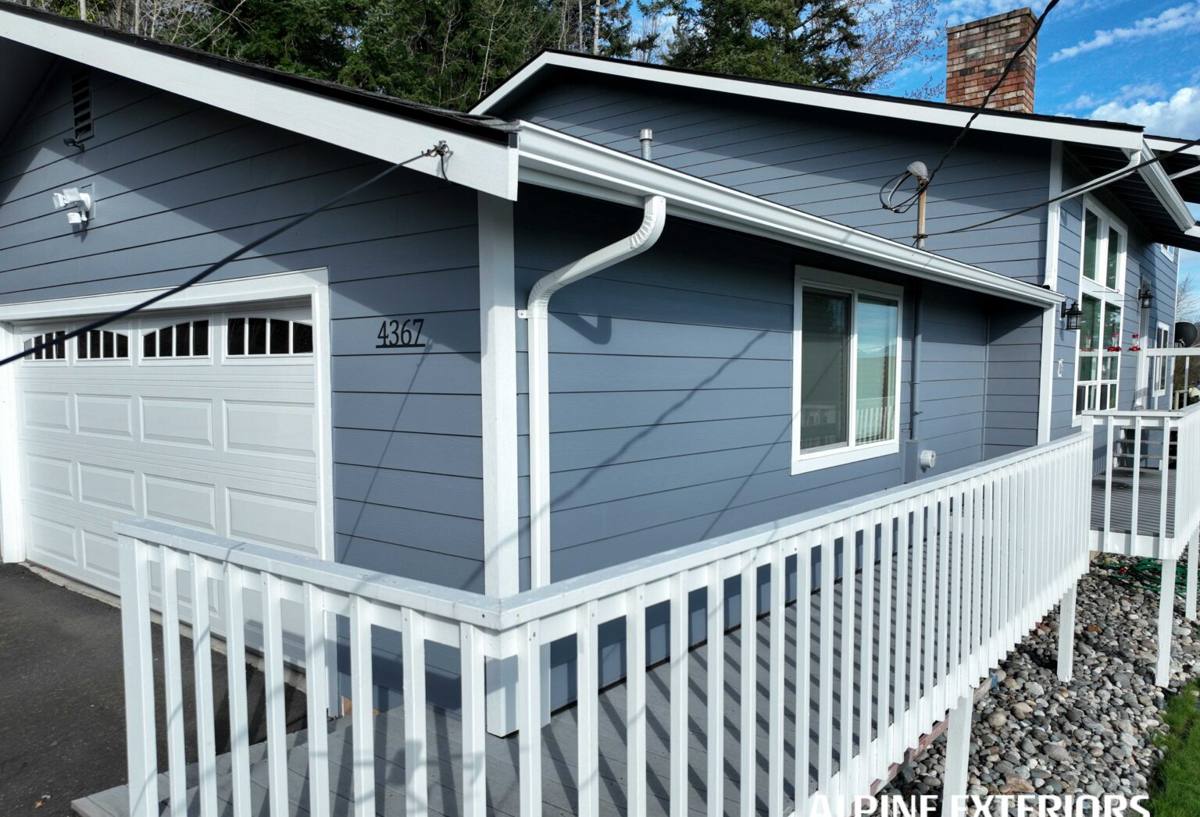
What Salt Air and Coastal Exposure Actually Do to a Roof
Whatcom County's coastline brings a steady dose of airborne salt, and that salt doesn't stay at the beach — wind carries it inland and deposits it on every exterior surface, roofs included. On a standard roofing system, salt exposure accelerates corrosion at any exposed metal: nail heads, flashing, gutter fasteners, and vent stacks. Over years, that corrosion becomes the entry point for water intrusion long before the roofing material itself fails.
Combine that with Whatcom County's rainfall pattern — frequent, sustained, wind-driven rather than short and heavy — and you get a roof that's rarely fully dry. Persistent moisture is what allows moss and lichen to establish, and once moss takes hold under tree cover, it holds water against the roof surface and works its way under shingle edges. A roof in Birch Bay Village isn't dealing with one seasonal stress; it's dealing with salt, rain, and shade-driven moss more or less year-round.
Why This Matters for Material Choice
A roofing system here needs three things working together: corrosion-resistant fasteners and flashing, a surface that doesn't give moss anything to grip, and a profile that actually sheds water under wind pressure instead of letting it wick sideways under the seams. Metal roofing checks all three boxes when it's specified and installed correctly — but the specification details matter more here than they would on a dry, inland roof.
Metal Roofing Options for Birch Bay Village Homes
Not every metal roofing product is a good fit for direct coastal exposure. We steer homeowners toward systems with proven marine-grade coatings and fastening hardware rated for salt air, and we're upfront when a lower-cost option would mean more maintenance down the road rather than less.
| Roofing Type | Coastal Suitability | Maintenance Burden | Typical Lifespan |
|---|---|---|---|
| Standing seam steel (concealed fasteners) | Excellent — no exposed fastener heads for salt to attack | Low | 40–60+ years with proper coating |
| Exposed-fastener metal panels | Good, but fastener gaskets need periodic inspection | Moderate — gaskets and fasteners age faster near salt air | 25–40 years |
| Aluminum panel systems | Excellent — naturally corrosion-resistant, good for direct marine exposure | Low | 40–50+ years |
| Standard asphalt shingle (for comparison) | Fair — granule and fastener wear accelerated by salt and moisture | Higher — moss treatment, patching, earlier full replacement | 15–25 years in this exposure |
We typically recommend standing seam or aluminum panel systems for homes with direct or near-direct exposure to the bay, and we specify stainless or coated fasteners regardless of panel type. On more sheltered lots within the Village, an exposed-fastener system can still make sense as a budget-conscious option, as long as the homeowner understands the maintenance trade-off.
Coating and Finish Matters as Much as the Metal
The base metal is only part of the story — the factory finish is what actually fights salt corrosion and UV fading over time. We look for panels with a quality baked-on finish rated for coastal or marine environments, not a generic mill finish. A weak coating will chalk, fade unevenly, and expose bare metal to corrosion years before the panel itself would otherwise fail.
What a Correct Installation Involves Here
Metal roofing failures we're called out to repair almost always trace back to installation shortcuts, not the material itself. In a driving-rain, salt-air environment like Birch Bay Village, a handful of details separate a roof that performs for decades from one that leaks within a few years.
- Underlayment rated for wind-driven rain, not just standard felt — self-adhered synthetic underlayment at eaves, valleys, and any low-slope transitions
- Fasteners and flashing matched to the panel metal to avoid galvanic corrosion between dissimilar metals
- Proper panel overlap and seam direction relative to prevailing wind and rain exposure on the specific side of the house facing the water
- Ventilation at ridge and soffit sized correctly so moisture doesn't get trapped under the panels from the inside
- Flashing details at every penetration — vent stacks, chimneys, skylights — sealed and mechanically fastened, not just caulked
- Ice-and-water shield or equivalent membrane in valleys and around penetrations, even though hard freezes are infrequent here, because wind-driven rain finds the same weak points
Skipping any one of these doesn't usually show up as a leak in year one. It shows up in year five or eight, after enough freeze-thaw cycles, wind events, and moss growth have worked on a weak point. That's why we treat these as non-negotiable steps on every metal roof we install, not optional upgrades.
Moss, Tree Cover, and Roof Design in the Village
Much of Birch Bay Village sits under mature tree cover, which keeps roofs shaded and slower to dry after rain — ideal conditions for moss and lichen. Metal roofing's smooth, non-porous surface gives moss far less to grip than shingle granules do, but panel design and roof geometry still matter. Valleys, low-slope sections, and areas that collect fallen needles and debris are where moisture lingers longest, and where moss is most likely to establish even on a metal surface over time.
When we design or replace a roof under heavy tree cover, we pay particular attention to valley flashing width, gutter sizing, and panel seam placement so that debris and standing water move off the roof rather than collecting at a seam. We'll also talk through whether zinc or copper strips at the ridge make sense for a given property — a low-maintenance way to discourage moss regrowth on a shaded roof without chemical treatments.
Our Process, Start to Finish
We walk every roof in person before quoting anything — photos and satellite measurements don't tell us how a specific roofline handles wind off the water, or how much shade a particular section gets. From there, our process is straightforward:
- On-site inspection and measurement, including a look at existing decking, ventilation, and any current moisture damage
- A written estimate that specifies panel type, coating, fastener hardware, and underlayment — not just a square-footage price
- Tear-off and deck inspection, repairing or replacing any compromised sheathing before a single panel goes down
- Installation following the details outlined above, with flashing and penetrations addressed as we go, not left for a final walk-through
- Final inspection and cleanup, including a magnetic sweep for stray fasteners around the property
We don't subcontract the panel installation out to whoever's available that week. The crew that measures your roof is the crew that installs it, which matters when the difference between a 40-year roof and a 15-year roof comes down to seam and flashing details.
What to Expect for Maintenance
One of the real advantages of metal roofing in this climate is how little ongoing maintenance it needs compared to shingles — but "little" isn't "none." A short annual routine keeps a metal roof performing at its best in Birch Bay's salt air and moss season:
- Clear gutters and valleys of needles and debris before the fall rains set in
- Do a visual check of fasteners and flashing at penetrations once a year, especially after any significant windstorm
- Rinse off any moss or lichen buildup in shaded valleys before it has a chance to establish — a soft wash, not pressure washing, which can damage panel coatings
- Watch for any scuffed or scratched finish where a ladder, branch, or debris has contacted the panel, and touch up promptly to prevent localized corrosion
- Confirm attic or roof-deck ventilation isn't blocked, particularly if insulation has shifted or been added since installation
None of this requires a specialist visit every year — most of it is a homeowner with a pair of binoculars and a clear gutter. We're happy to walk through what to look for the first time, and to handle it directly if you'd rather not get on a ladder.
Why It Matters That We Already Work This Neighborhood
Roofing decisions in Birch Bay Village aren't identical to the same decisions ten miles inland. Wind exposure varies block to block depending on tree cover and proximity to the water, drainage patterns depend on the specific lot's grading, and moss pressure depends on how much afternoon sun a given roofline actually gets. A crew that already works in this specific area brings that context to the estimate instead of applying a generic Whatcom County spec sheet to every job.
We're a siding and exterior contractor based in this region, and metal roofing is part of how we protect the whole building envelope — not a side offering we subcontract out. That matters when flashing details need to tie into siding and trim correctly, and when a homeowner wants one crew accountable for how the roof and walls work together against the same weather.
Get a Straightforward Estimate
If your roof in Birch Bay Village is showing moss, granule loss, or fastener corrosion, or you're planning ahead for a replacement, we're glad to take a look and give you an honest read on what it needs. Fill out the form below for a free, no-pressure estimate — no scare tactics, just a clear look at your options and what they'd cost.