 Birch Bay
 Two Different Materials, One Job
When homeowners in Birch Bay start comparing siding options, two products usually end up on the short list: fiber cement (James Hardie) and engineered wood, most commonly sold under the LP SmartSide brand. Both are marketed as durable, low-maintenance upgrades from old cedar or worn vinyl. Both come primed or pre-finished, both install in lap or panel form, and both are a real step up from the siding they usually replace.
But they are not the same material solving the same problem the same way. Fiber cement is cement, sand, and cellulose fiber pressed and cured into a dense board. Engineered wood is wood strands bonded with resin under heat and pressure, then coated. That difference in composition is the whole story of why we chose one to put on every home we side, and why we don't install the other.
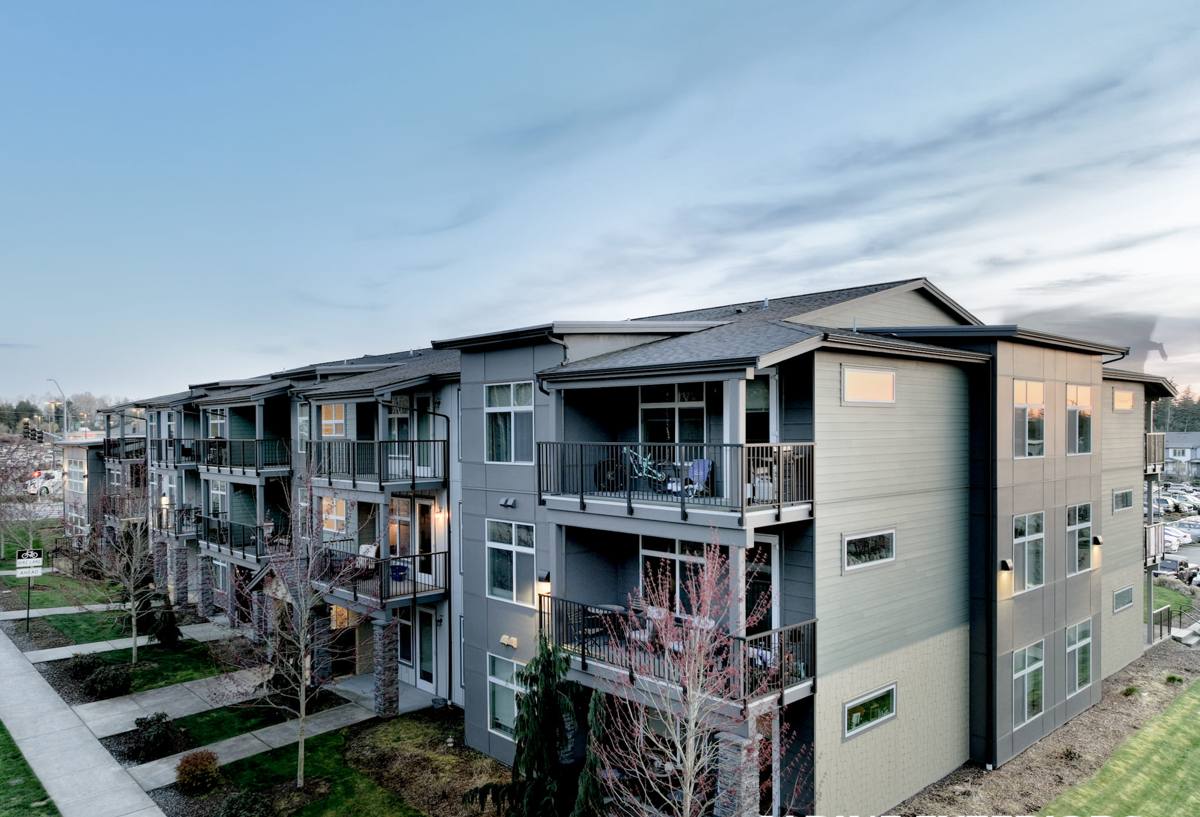
What Engineered Wood Gets Right
We'll say this plainly: LP SmartSide is a legitimate product, and it's not the flimsy hardboard siding that gave engineered wood a bad name in the 1990s. Modern engineered wood has real advantages worth naming.
- It's lighter than fiber cement, which can mean faster installation and less strain on crews working tall walls.
- It takes a fastener easily and doesn't require the same blade changes or dust control that cutting fiber cement does.
- The factory treatment (usually a zinc borate process) does genuinely improve resistance to fungal decay and insects compared to untreated wood products.
- It's generally less expensive than fiber cement, which matters on a tight budget.
If we were rating engineered wood against a dry, low-humidity climate, this would be a much closer call. That's not the climate we work in.
Where the Comparison Changes in Whatcom County
Birch Bay sits right on the water, which means every wall on every home here deals with salt-laden air, wind-driven rain coming off Georgia Strait, and a moss season that can run eight months of the year in shaded or north-facing exposures. Engineered wood's core weakness — that it is still, fundamentally, wood — is exactly what this climate is built to exploit.
Wood-based siding manages moisture by staying sealed. As long as the factory coating and every cut edge, seam, and fastener penetration stay properly sealed and caulked, it performs reasonably well. The problem is that "as long as" is doing a lot of work in that sentence, for the entire life of the siding, not just the installation day.
How Moisture Actually Gets In
Engineered wood siding doesn't usually fail on the face of the board. It fails at the edges — cut ends at trim and corners, butt joints between courses, and fastener holes where the factory seal has been broken. Once ambient moisture works into the wood-strand core through one of those points, the material can swell, delaminate, or soften from the inside out. In a climate with consistent driving rain and salt-laden humidity, those edges are under more constant pressure than they would be inland.
This is compounded by moss. Moss and algae thrive in the same damp, shaded wall sections that are slowest to dry after a storm, and organic growth sitting against a wood-based product for months at a time is not a neutral condition — it holds moisture against the surface longer than an open, dry wall would. Homeowners without a hardscape or landscape care problem should not have to maintain a wash-and-reseal schedule to keep their siding out of trouble, but with engineered wood in this climate, they effectively do.
None of this means every engineered wood installation fails. Plenty perform fine for years. But performance is heavily dependent on installer discipline at every seam and cut, and on the homeowner keeping up with caulk and touch-up paint indefinitely. That's a maintenance and installation-quality bet we're not willing to make on someone else's house.
What Fiber Cement Does Differently
James Hardie fiber cement is not a treated organic material trying to resist moisture — it's an inorganic composite that isn't structurally affected by moisture the way wood is. It doesn't swell, rot, or support fungal growth in its core, and it doesn't feed insects. Cut edges and fastener penetrations still need to be handled correctly (Hardie is explicit about back-priming cut edges and proper fastener placement), but a small installation slip on a fiber cement board doesn't carry the same structural failure risk that the same slip carries on a wood-strand product.
Hardie also builds region-specific product engineering into its lineup. The HZ5 formulation, which we install throughout Whatcom County, is formulated for wetter, harsher climates — a direct acknowledgment that siding performance isn't one-size-fits-all across the country. That regional engineering is a big part of why we standardized on this product rather than a generic fiber cement board.
Fire Behavior Is Part of the Decision Too
It's worth naming plainly: fiber cement is non-combustible. Engineered wood, even with factory treatment, is still a wood product and carries a wood product's fire behavior. For homes near Birch Bay's wooded lots and brush, that difference is a legitimate factor in a material decision, not just a marketing point.
Side-by-Side Comparison
| Factor | Engineered Wood (LP SmartSide) | Fiber Cement (James Hardie) |
|---|---|---|
| Core material | Wood strands + resin, factory coated | Cement, sand, cellulose fiber |
| Moisture behavior | Resists moisture if seal stays intact; can swell/delaminate at breached edges | Not structurally affected by moisture in the core |
| Fire behavior | Combustible wood product | Non-combustible |
| Weight / installation | Lighter, generally faster to install | Heavier, requires fiber-cement-rated tools and technique |
| Upfront cost | Generally lower | Generally higher |
| Ongoing maintenance | Periodic caulk/seam/edge inspection and touch-up | Minimal; factory finish holds color and seal |
| Typical manufacturer warranty | Prorated coverage, often shorter effective term | Long-term, often non-prorated and transferable on the coating |
Installation Sensitivity: The Part Nobody Advertises
Every siding product's real-world performance depends on installation quality, but wood-based products are more forgiving of good installation and less forgiving of mediocre installation than fiber cement is. A slightly loose flashing detail or a caulk joint that fails five years in matters more against a wood-strand core than against cement board. That means the material itself is putting more of the long-term risk on the installer's attention to detail, year after year, seam after seam.
We install a lot of siding on homes exposed to driving rain straight off the water. We'd rather commit to a material where the margin for a missed detail is wider, and put our installation discipline into doing every flashing and joint correctly on top of that — not as the only thing standing between a wall and moisture intrusion.
Cost and Warranty, Honestly
Engineered wood typically costs less per square foot installed than fiber cement, and we won't pretend otherwise. If budget is the deciding factor, that's a real trade-off homeowners are entitled to weigh. What we'd ask homeowners to weigh against it is the total cost of ownership: repainting cycles, caulk maintenance, and the risk of localized repair or replacement if an edge or seam does take on moisture, versus a factory-finished ColorPlus product that's built to hold its finish for decades without repainting.
Hardie's ColorPlus finish carries a long-term, transferable limited warranty on the coating itself, in addition to the product warranty — which matters if the home changes hands before the siding does. That combination of upfront cost, maintenance cost, and warranty structure is why, over time, fiber cement tends to be the better value here, not just the more expensive option.
What We Recommend Homeowners Check
- Ask any contractor what specific siding product line they install, and why — not just "fiber cement" or "engineered wood" as a category.
- Ask how cut edges, corners, and butt joints are treated on the specific product being quoted, since that's where most long-term failures start.
- Get the manufacturer's climate-specific product recommendation for coastal Whatcom County in writing, not just a general national spec sheet.
- Compare warranty terms directly — length, what's prorated, and whether it transfers to a future buyer.
- Factor in a realistic maintenance schedule (caulk inspection, repainting) for engineered wood into the true lifetime cost, not just the installed price.
- Walk the home's exposure — north-facing, shaded, or moss-prone walls deserve extra scrutiny regardless of material chosen.
Why We Only Install James Hardie
We made a decision years ago to install one siding system, correctly, rather than offer every product on the market and let installation quality vary by budget. James Hardie's fiber cement — specifically the HZ5 climate-engineered line, factory-finished in ColorPlus — is the product we've found holds up to salt air, sustained rain, and moss season with the least ongoing burden on the homeowner. It's not the cheapest option on day one, and we're upfront about that. It's the option we're comfortable standing behind for the life of the siding, not just the installation.
If you're weighing siding materials for a home in Birch Bay or elsewhere in Whatcom County, we're happy to walk your specific exposure with you, explain what we'd install and why, and give you a straightforward, no-pressure estimate.