 Birch Bay
 Why We Made James Hardie Our Only Product
Every siding contractor eventually has to decide what they're willing to put their name behind. We install James Hardie fiber cement siding exclusively — not because we're chasing a manufacturer rebate or a marketing badge, but because after years of tear-offs and re-siding jobs around Whatcom County, it's the one product we've seen consistently hold up to what this coastline throws at a house.
Birch Bay sits right on the water, which means salt-laden air, wind-driven rain that gets pushed sideways into wall assemblies, and a wet season that runs long enough to grow moss on roofs, fences, and siding alike. That combination is hard on building materials in ways that don't always show up in year one or two. It shows up in year eight or twelve, when the wrong product starts to swell, delaminate, or feed mold behind a coat of paint that looked fine at installation. We got tired of watching that happen on other companies' work — and eventually on our own, back when we installed more than one product line. Standardizing on Hardie was a business decision built on repeated field evidence, not brand loyalty.
What James Hardie Fiber Cement Actually Is
James Hardie siding is fiber cement: a mix of Portland cement, sand, and cellulose fiber, formed under pressure and cured. It is not a wood product, and it is not vinyl. That matters in a marine climate because the material itself doesn't absorb water the way wood-based sidings do, and it doesn't expand and contract with temperature swings the way vinyl does. It's also non-combustible, which is a real factor as wildfire smoke and ember exposure have become a more common late-summer concern even here in the northwest corner of the state.
The HZ5 Engineering Detail
James Hardie doesn't make one generic product for the whole country. Their HardieZone system rates products by climate exposure, and HZ5 is engineered for regions with more moisture, freeze-thaw cycling, and humidity swings — which describes Whatcom County's marine west coast climate well. The HZ5 formulation is built to resist moisture-related expansion and to hold paint and factory finish adhesion under repeated wet-dry cycles, which is exactly the stress pattern Birch Bay's climate produces month after month.
ColorPlus Factory Finish vs. Field-Applied Paint
One of the most practical advantages of the Hardie system is ColorPlus Technology — a factory-applied, baked-on finish rather than paint rolled or sprayed on-site after installation. Field-applied finishes are only as good as the weather conditions on the day they're applied, the number of coats, and how well the substrate was prepped. A factory finish is applied in a controlled environment, cured properly every time, and backed by its own finish warranty separate from the substrate warranty.
In a coastal environment where salt air accelerates finish breakdown, that consistency matters. We've pulled siding off homes near the water where field-applied paint had failed in patches within five or six years, well before the substrate underneath was anywhere near end of life. ColorPlus doesn't eliminate maintenance entirely, but it moves the first repaint conversation out much further.
Color and Texture Options
- Lap siding in multiple exposure widths, with smooth or cedar-textured finishes
- Shingle-style panels for accent gables or full elevations
- Board and batten for a modern vertical look
- Trim, soffit, and fascia products designed to match the siding system
- A curated ColorPlus palette plus primed options for custom field color when a homeowner wants something outside the standard range
How James Hardie Performs Against Salt Air and Driving Rain
Two climate factors do most of the damage to siding in Birch Bay: chloride exposure from salt air, and wind-driven rain that gets forced up under laps and around penetrations instead of just running down the face of the wall. Fiber cement doesn't corrode the way some fastener and trim materials can, and it doesn't wick and hold moisture the way engineered wood products do at cut edges and butt joints. That second point is the one that trips up a lot of installations, regardless of product — which is why installation quality matters as much as the material itself. We'll cover that below.
Moss and algae growth is the other constant issue here. Fiber cement's dense, non-porous surface gives organic growth less to grab onto compared to porous or textured wood-fiber substrates, and the factory finish resists the staining that comes with prolonged moss and lichen contact. It won't stop moss from landing on a north-facing wall that never sees sun, but it makes that wall far easier to clean without damaging the surface underneath.
Comparing Siding Materials on the Factors That Actually Matter
| Factor | James Hardie Fiber Cement | Engineered Wood (LP SmartSide) | Vinyl |
|---|---|---|---|
| Moisture/swelling risk at cut edges | Low — cement-based, not wood-based | Moderate — wood strand core, edges need sealing | Low, but panels can warp from heat |
| Finish durability in salt air | Factory-baked ColorPlus, separate finish warranty | Factory-primed, field or factory paint varies by product | Color molded through, but fades and chalks over time |
| Fire rating | Non-combustible | Combustible (wood-based) | Combustible, can deform near heat sources |
| Impact/hail resistance | High — dense cement composition | Moderate | Lower — can crack in cold weather |
| Typical installed lifespan when done to spec | 30+ years, often longer | 15-30 years depending on maintenance | 20-30 years, finish fades sooner |
This isn't a claim that the alternatives are junk — LP SmartSide and vinyl both have legitimate roles and manufacturers that stand behind them. Our decision to install only Hardie comes down to which product profile best matches the specific stresses of a Birch Bay exterior: sustained moisture, salt exposure, and long shaded, moss-prone wall sections that don't dry out quickly between rain events.
Why Correct Installation Matters More Than the Brand Name
Fiber cement siding, including James Hardie, is unforgiving of installation shortcuts in a wet climate. The material itself resists moisture well, but a wall assembly is a system — house wrap, flashing, fastener pattern, clearances, and caulking all have to work together. A few installation details we hold every job to:
- Correct nailing pattern and fastener depth — over-driven nails crack the board's edge and create a water entry point
- Minimum clearance from grade, roof lines, and decks per Hardie's published instructions, so splashback and standing water don't sit against the bottom course
- Properly lapped and sealed house wrap and flashing at every window, door, and penetration before the first board goes up
- Butt joints backed and sealed, not just caulked at the face
- Factory-cut edges used wherever possible; field cuts sealed per manufacturer spec to protect the ColorPlus finish
A misinstalled Hardie job can fail early despite the material being sound, and a well-installed job on a lesser product can still underperform because the substrate wasn't built for this climate. Product and installation are both non-negotiable in our view — that's part of why we don't split our crews' expertise across multiple siding systems.
The Hardie Warranty Structure
James Hardie backs its fiber cement products with a non-prorated limited warranty (30 years on most siding products, with specific terms varying by product line), and ColorPlus finishes carry their own separate finish warranty. Coverage is transferable to a subsequent homeowner within the warranty terms, which is a real factor for resale value in a market like Birch Bay where a meaningful share of buyers are weighing exterior condition and remaining product life as part of the purchase decision. We register every installation with James Hardie as part of the project close-out, and we keep our own installation records in case a warranty question ever comes up down the road.
What This Costs Compared to Alternatives
James Hardie siding typically carries a higher material and installed cost than vinyl, and is often comparable to or somewhat higher than engineered wood siding, depending on the specific product line, trim package, and color option chosen. We won't quote a number here because every home's square footage, story count, trim detail, and existing substrate condition changes the math — but we're upfront in every estimate about where the cost goes: material, factory finish, and the labor time correct installation actually takes. Homeowners comparing bids should ask what's included in each — trim, house wrap, flashing detail, and cleanup are often where lower bids cut corners.
Is Your Home a Good Candidate for a Hardie Re-Side?
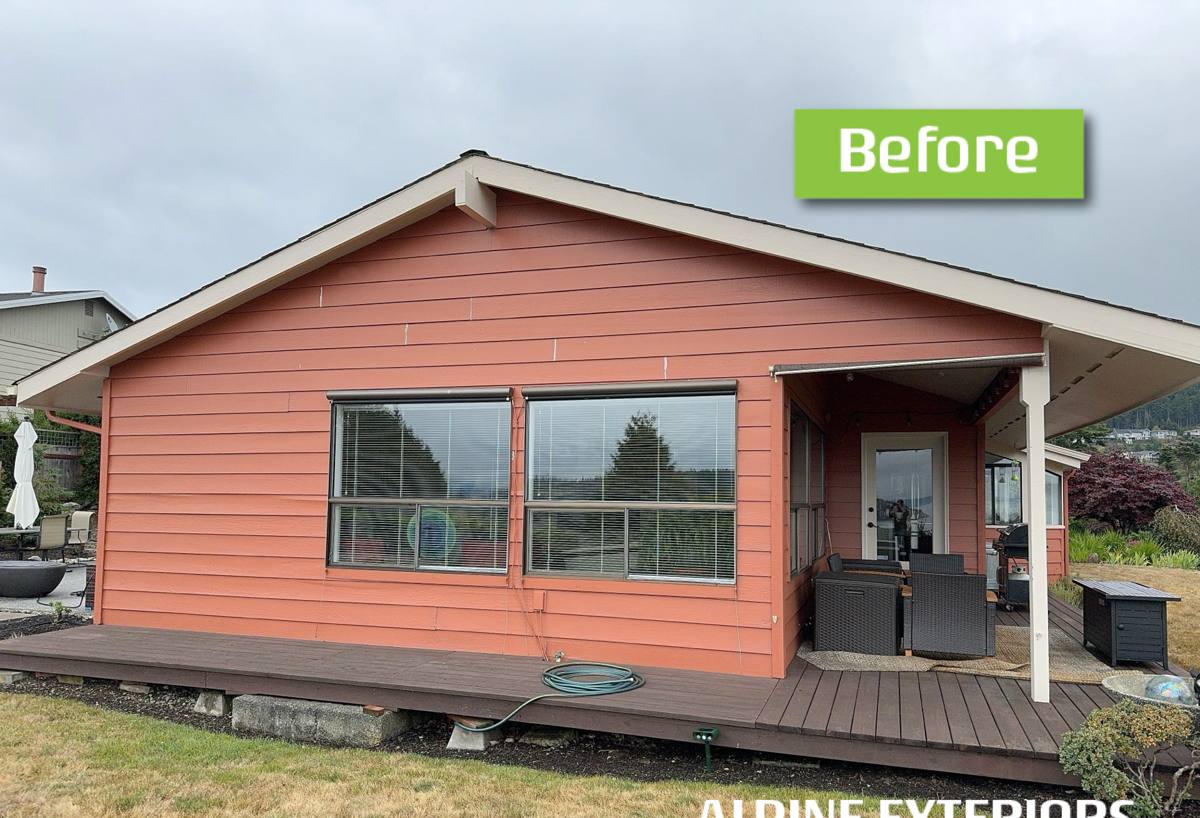
Not every project is a full re-side. Some homes need spot repair, some need a partial elevation replaced where moisture damage is concentrated, and some are ready for a full tear-off. A few signs worth a closer look:
- Visible swelling, soft spots, or delamination at board edges or seams
- Persistent moss or dark staining that doesn't clean off and keeps returning
- Paint that's chalking, peeling, or has needed repainting more than once in under ten years
- Visible gaps at trim, corners, or window flashing
- Siding installed more than 20-25 years ago on the water-facing or north-facing elevations
If you're seeing any of these, it's worth having someone look at the wall assembly, not just the siding surface — problems often start behind the board, not on it.
If you'd like an honest look at what's happening with your current siding and what a James Hardie re-side would involve for your home, we're happy to come out for a free, no-pressure estimate — no obligation, just a straight assessment.