 Birch Bay
 Why Two Birch Bay Homes Can Get Wildly Different Quotes
Ask three siding contractors to price the same Birch Bay house and you'll often get three different numbers — sometimes thousands of dollars apart. That's not necessarily a sign someone is padding a bid or someone else is lowballing. Siding replacement costs are built from a stack of separate variables, and each one moves independently. Understanding what those variables actually are lets you read a quote intelligently instead of just looking at the bottom line and guessing.
This page walks through the real cost drivers in roughly the order they matter, with honest ranges where ranges are useful, and flags the Birch Bay-specific factors — salt air off the Strait, driving rain, and a moss season that runs longer here than it does twenty miles inland — that change the calculation for Whatcom County homes specifically.
The Core Cost Drivers, In Order of Impact
1. Total square footage and wall complexity
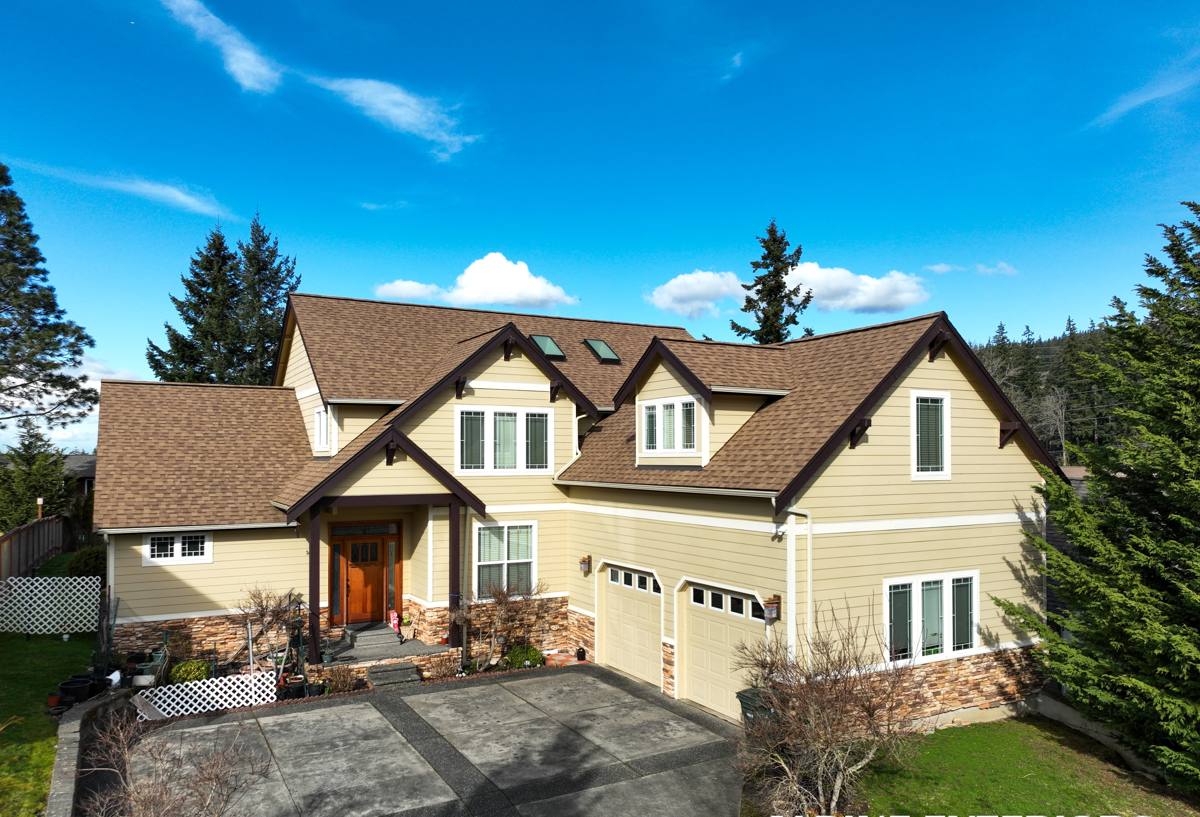
Square footage is the obvious one, but complexity matters almost as much as size. A simple rectangular ranch with few corners costs less per square foot to side than a house with dormers, multiple gables, bump-outs, and a lot of trim detail — because every inside corner, outside corner, and transition takes labor time that a flat wall doesn't.
2. Tear-off and what's underneath
Removing old siding down to the sheathing costs more than siding over an existing layer (which we generally don't recommend, for reasons below). Once the wall is open, what the crew finds underneath — soft sheathing, old moisture damage, out-of-date house wrap — becomes its own line item. This is the single biggest source of "surprise" costs on older Birch Bay homes, and it's discussed in more detail further down.
3. Material
Material is where the widest cost spread lives, and it's the decision homeowners have the most control over. It's covered in its own section below because it deserves real explanation, not just a price tag.
4. Trim, accessories, and details
Corner boards, window and door trim, fascia, soffit work, and any custom detailing (board-and-batten accents, shake-style gable treatments) all add to the total. These are often where a house's final look is decided, and they're rarely optional if you want a finished appearance rather than a patched one.
5. Labor and crew experience
Correct installation — proper flashing, fastening pattern, clearances, caulking at the right joints and not others — takes more time than a rushed job, and it costs more up front. It also determines whether the siding performs for its full expected lifespan or starts failing at seams and penetrations in year five.
What Material Choice Does to the Number
Every siding material has a different upfront cost, a different labor cost to install correctly, and a different long-term maintenance bill. Judging a material on the upfront number alone is how homeowners end up repainting, patching, or replacing siding again sooner than they expected.
| Material | Typical upfront cost | What drives the long-term bill |
|---|---|---|
| Vinyl | Lowest | Cracks and fades over time; damaged panels are often discontinued and hard to match; can warp near heat sources |
| LP SmartSide (engineered wood) | Low-to-mid | Wood-based core is more moisture-sensitive than fiber cement; relies heavily on caulking and paint maintenance staying current |
| Primed spruce / cedar | Mid-to-high | Natural wood needs ongoing painting or staining and is the most exposed to rot and insect damage in a wet climate |
| James Hardie fiber cement | Mid-to-high | Factory ColorPlus finish holds color for years without repainting; non-combustible; engineered for wet, coastal climates |
We only install James Hardie fiber cement siding, and it's worth being straightforward about why, since it directly affects any quote we give. Vinyl and LP SmartSide aren't bad products in every application — they have real advantages in the right climate and budget. But for a coastal Whatcom County home taking on salt air and sustained rain exposure year after year, we've seen enough of the maintenance and moisture trade-offs that we don't put our name on installs using them anymore. Hardie's fiber cement core doesn't absorb moisture the way wood-based products can, it carries a strong transferable warranty, and the factory-applied ColorPlus finish means you're not budgeting for a repaint cycle the way you would with primed wood or field-painted trim. That upfront cost difference is real — but it needs to be weighed against what you'd otherwise spend on repainting, caulk maintenance, and earlier replacement.
What Birch Bay's Climate Adds to the Equation
Siding cost estimates that don't account for local climate are estimates for a different house in a different place. Birch Bay sits right on the water, and that proximity changes how siding ages here compared to siding twenty miles inland in Bellingham or Lynden.
- Salt air: Airborne salt accelerates corrosion on fasteners, flashing, and any exposed metal trim — which is why fastener and flashing spec matters more here than it does further from the water.
- Driving rain: Wind-driven rain off the Strait of Georgia pushes water sideways into wall assemblies, not just down. That makes correct house wrap, flashing at every penetration, and proper lap sequencing more important than they'd be on a sheltered inland lot.
- A long moss season: Northwest Washington's damp, mild winters give moss and algae a long window to establish on north-facing and shaded walls. Some materials resist this better than others, and it affects how often a wall needs cleaning to keep its finish looking right.
None of this changes the basic cost drivers listed above, but it does change which corners are worth paying to get right. A budget install that skips a rainscreen gap or uses minimal flashing might look identical to a correct install on the day it's finished — the difference shows up two or three winters later.
Tear-Off Surprises: The Cost Homeowners Don't See Coming
The most common reason a siding job costs more than the original estimate isn't a change of mind on materials — it's what the crew finds once the old siding comes off. On older Birch Bay homes, especially those that have had one layer of siding installed over another at some point, tear-off can reveal:
- Soft or delaminated sheathing that needs to be replaced before new siding goes on
- Old or missing house wrap that isn't doing its job anymore
- Water staining or minor rot around window and door openings from years of undetected leaks
- Outdated or damaged flashing at roof-wall intersections and other transitions
A reputable contractor should build a contingency allowance into the estimate for this kind of finding rather than treating it as a total surprise, and should be willing to walk you through exactly what was found before doing extra work. If a quote has zero allowance for the possibility of sheathing repair on a 30- or 40-year-old house, ask why.
Labor Quality: The Line Item You Can't See in a Quote
Two contractors can spec the identical Hardie product line and color and still hand you very different long-term outcomes, because installation quality is invisible on the day the job wraps up. Correct fastening patterns, proper clearances from grade and roof lines, correctly lapped and caulked joints only at the joints that should be caulked, and correct flashing integration are what determine whether siding performs for its full rated lifespan or starts showing problems at seams and corners years early. This is labor time you're paying for even though it doesn't show up as a separate line on the invoice — it's baked into the install price, and it's usually the real difference between a low bid and a mid-range one.
Upfront Price vs. Total Cost of Ownership
The lowest bid on paper isn't always the lowest cost over the life of the siding. A fair way to compare quotes is to think in terms of total cost of ownership, not just the number on page one.
| Consideration | Why it affects total cost |
|---|---|
| Repainting or refinishing cycle | Field-painted wood siding typically needs repainting on a recurring cycle; factory-finished fiber cement generally doesn't |
| Caulk and joint maintenance | Wood-based products depend more heavily on caulk staying intact to keep moisture out |
| Warranty structure | Transferable warranties add resale value; some material warranties are prorated or void if maintenance lapses |
| Expected service life | A material replaced at year 15 costs more over 30 years than one that lasts the full 30, even if its upfront price was lower |
A Checklist for Comparing Siding Quotes
When you're evaluating estimates from different contractors, this is worth walking through line by line:
- Does the quote specify the exact material, product line, and finish — not just "siding"?
- Is tear-off to bare sheathing included, or is the quote assuming an over-existing install?
- Is there a contingency allowance for sheathing repair or moisture damage found during tear-off?
- Does the quote specify house wrap and flashing details, or leave them unstated?
- Are trim, corner boards, and soffit/fascia work included or priced separately?
- What's the warranty — on the material, and separately, on the labor?
- Is the contractor licensed and insured in Washington, and can they confirm it in writing?
Getting a Number for Your Own Home
General ranges are useful for understanding what's driving a cost, but they can't tell you what your specific Birch Bay home will actually cost — that depends on its size, condition, complexity, and what's underneath the existing siding. If you'd like an honest, no-pressure look at your home and a clear breakdown of what's driving your number, we're happy to walk the property with you and put together a real estimate using James Hardie fiber cement, explained in plain terms with no surprises buried in the fine print.