 Birch Bay
 Deck Repair Built for Birch Bay Village Conditions
Decks in Birch Bay Village don't fail the way decks do further inland. The combination of salt-laden air off Birch Bay, long stretches of driving rain through the fall and winter, and moss that gets a foothold anywhere shade and moisture linger creates a specific set of problems for outdoor structures. A deck that would hold up fine in a drier part of Whatcom County can develop soft spots, corroding fasteners, and slick, moss-covered surfaces years ahead of schedule here. Repairing a deck in this neighborhood means understanding those pressures, not just patching whatever looks bad on the surface.
We work on decks throughout Birch Bay Village regularly, which means we're not guessing at how a particular framing style or ledger detail is holding up after a decade of coastal exposure — we've already seen it a few doors down.
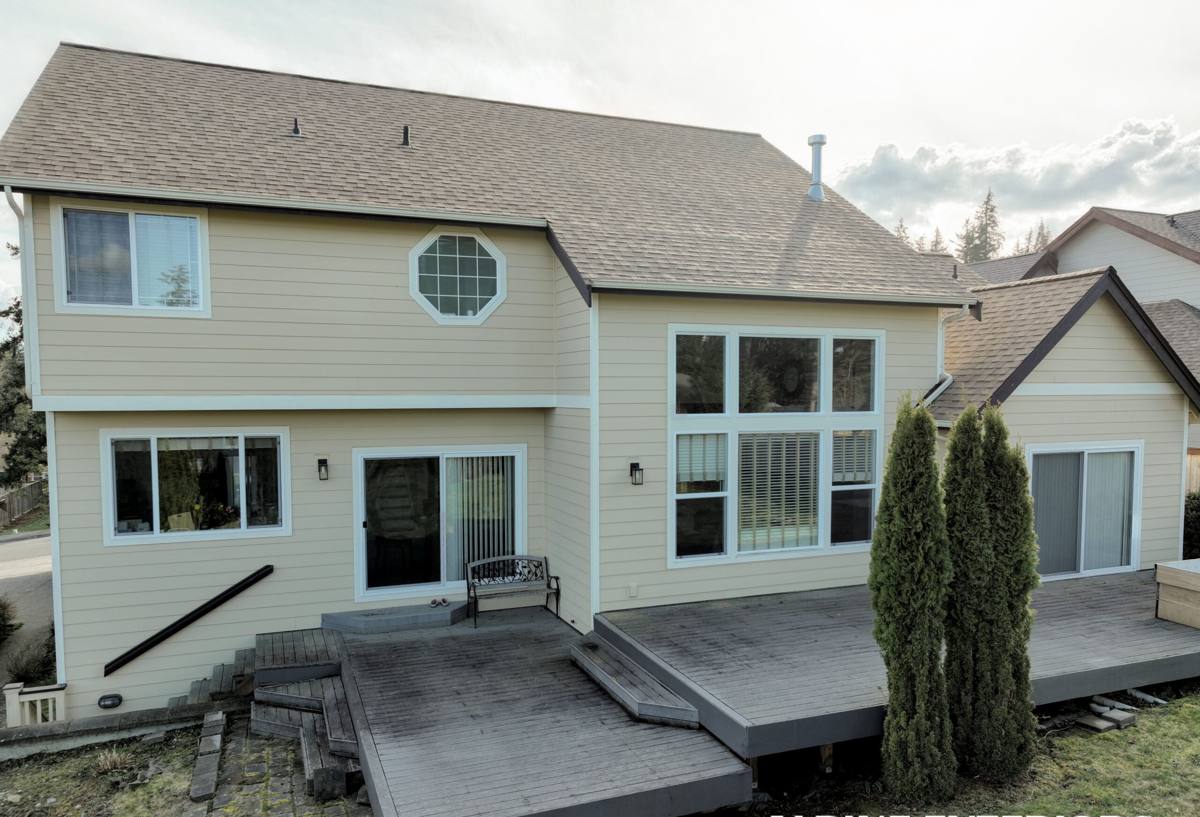
What Birch Bay's Climate Does to a Deck
Salt Air and Metal Fasteners
Airborne salt from Birch Bay accelerates corrosion on anything metal — nails, screws, joist hangers, and structural connectors. Once a fastener starts rusting, it loses holding strength well before it looks obviously bad. This is one of the most common hidden problems we find: a deck surface that looks fine but is fastened with hardware that's quietly failing underneath.
Driving Rain and Water Intrusion
Wind-driven rain off the water doesn't just fall straight down — it gets pushed sideways into ledger boards, stair stringers, and any spot where two pieces of wood meet. Over time this drives moisture into joints that were never designed to shed water from that angle, leading to rot that starts from the inside of a connection rather than the surface.
Moss and Prolonged Dampness
Birch Bay's long moss season means decking boards, especially on the shaded or north-facing side of a home, stay damp far longer after a rain than boards in full sun. That extended dampness is what actually causes decay — moss itself is more of a symptom and a slip hazard than the root cause, but left alone it holds moisture against the wood and speeds everything up.
Signs Your Deck Needs Repair, Not Just Cleaning
- Boards that feel spongy, springy, or noticeably softer underfoot in one area than the rest of the deck
- Visible rust streaks running down from screw heads or metal hardware
- Gaps opening up where the deck ledger meets the house
- Railings or posts that wiggle more than they used to
- Persistent moss or black staining that comes back within weeks of cleaning
- Stair stringers that flex, crack, or show splitting near the base
- Discoloration or swelling around fastener heads on composite decking
- A musty smell coming from underneath the deck structure
Any one of these on its own might just need a targeted fix. Several at once usually means the underlying structure has been dealing with moisture longer than the surface lets on.
What a Correct Deck Repair Actually Involves
A repair that just replaces the boards that look bad and calls it done tends to fail again within a couple of seasons in a climate like this. A repair that holds up starts underneath the decking, not on top of it.
Structural Inspection First
Before we replace anything cosmetic, we check the framing: joists, beams, posts, and especially the ledger board connection to the house, since that's the single most common point of hidden water damage on any deck. We also check footings for movement or rot at the post base, which is easy to miss from above.
Hardware Matters More Here Than Almost Anywhere
Given the salt exposure in Birch Bay, we use fasteners and structural connectors rated for coastal or high-corrosion environments. Standard galvanized hardware that's fine 20 miles inland can start rusting noticeably faster this close to the water. This is a place where cutting a corner on materials shows up early, not years down the road.
Proper Flashing and Drainage Details
Water needs a planned path off the deck and away from the house. That means correct flashing where the ledger meets the siding, proper board spacing for drainage and airflow, and grading or gaps that keep water from pooling against posts and framing. These details rarely show up in a quick visual inspection, but they're usually the difference between a repair that lasts and one that doesn't.
Common Deck Repair Scenarios We Handle
| Issue | Typical Cause in This Area | Repair Approach |
|---|---|---|
| Soft or spongy decking boards | Prolonged moisture from shade, poor drainage, or moss buildup | Replace affected boards, address drainage/airflow underneath |
| Rusting or popped fasteners | Salt air corrosion on standard-grade hardware | Re-fasten with corrosion-resistant hardware rated for coastal exposure |
| Loose or wobbly railings | Post rot at the base or fastener failure | Sister or replace posts, reinforce with proper structural connectors |
| Ledger board separation | Wind-driven rain intrusion behind flashing | Remove and re-flash ledger connection, seal properly to code |
| Cracked or splitting stair stringers | Repeated wet/dry cycling and foot traffic stress | Replace stringers, upgrade to treated or composite where appropriate |
| Recurring moss and staining | Shaded orientation, limited airflow under boards | Clean, treat, and improve spacing/ventilation to reduce recurrence |
Repair vs. Replacement: An Honest Look
Not every deck problem calls for a full rebuild, and not every deck is worth patching indefinitely. We give homeowners a straight answer based on what we actually find in the framing, not just what sells the bigger job.
- Repair usually makes sense when the framing and posts are structurally sound and the damage is isolated to specific boards, fasteners, or a section of railing.
- Replacement is usually the better call when rot has reached multiple structural members, when the ledger connection has been compromised for an extended period, or when a deck was undersized or under-fastened for coastal conditions from the start.
- A hybrid approach — replacing framing and hardware while keeping sound decking, or vice versa — is often the most cost-effective path when damage is mixed.
Broadly, straightforward board and hardware repairs tend to be a modest expense measured in a few hundred dollars per affected area, while structural work involving framing, posts, or ledger reconstruction runs meaningfully higher. We'll walk through the specific cost drivers for your deck during the estimate rather than quoting a number sight unseen.
Decking Material Considerations for This Environment
When boards need replacing, the material choice matters more in a coastal, moss-prone climate like Birch Bay's than it does in drier parts of the state.
Pressure-Treated Wood
Cost-effective and widely used, but it requires regular cleaning and re-sealing to hold up against near-constant moisture exposure here. Skipping maintenance is the single biggest reason treated wood decks age poorly in this area.
Composite Decking
Composite resists rot and doesn't need staining, which appeals to a lot of homeowners dealing with Birch Bay's damp conditions. The trade-off is that it can still get slick with algae or moss buildup in shaded, low-airflow areas, so proper spacing and ventilation underneath still matter even with a low-maintenance material.
Cedar and Other Natural Woods
Naturally rot-resistant to a degree, but still benefits from sealing in a climate with this much sustained moisture. We're upfront that "low maintenance" claims for any wood product need to be weighed against what actually happens after a few wet Whatcom County winters.
Our Repair Process
- On-site assessment — we inspect the full structure, not just the visibly damaged area, including framing, posts, footings, and the ledger connection
- Straight explanation — we walk you through what we found, what's causing it, and what your realistic options are, including what happens if it's left alone
- Written scope and estimate — a clear breakdown of what's being repaired or replaced and why
- Repair work — using corrosion-resistant hardware and proper flashing/drainage details suited to this climate, not just cosmetic patching
- Final walkthrough — we check the work with you before we consider the job done
Why Hire a Crew That Already Works Birch Bay Village
A contractor who works this specific area regularly already knows which orientations tend to hold moisture longest, which older construction styles in the neighborhood are more prone to ledger issues, and what hardware actually holds up against this much salt air over time. That's not something you get from a general contractor who occasionally drives up from further inland. It also means we're not learning on your deck — we're applying what's already worked, and what hasn't, on similar homes nearby.
If your deck in Birch Bay Village has soft boards, rusting hardware, a wobbly railing, or moss that keeps coming back no matter how often it's cleaned, we're happy to take a look and give you a straight assessment. Reach out for a free, no-pressure estimate using the form below.