 Birch Bay
 Why Siding Fails Faster in Birch Bay
Birch Bay sits right on the water, and that location is exactly what makes siding maintenance different here than it is twenty miles inland. Salt-laden air drifts off the bay and settles on exterior walls year-round, driving rain off the Strait of Georgia hits west- and south-facing elevations hard during fall and winter storms, and the long, damp Whatcom County shoulder seasons give moss and algae months to establish themselves before a good drying stretch ever shows up. None of that means siding is doomed here — it means the warning signs show up sooner, and homeowners who know what to look for can catch problems while they're still cheap to fix.
This page walks through the early signs that matter, what they usually mean, and how they differ depending on what your siding is made of.
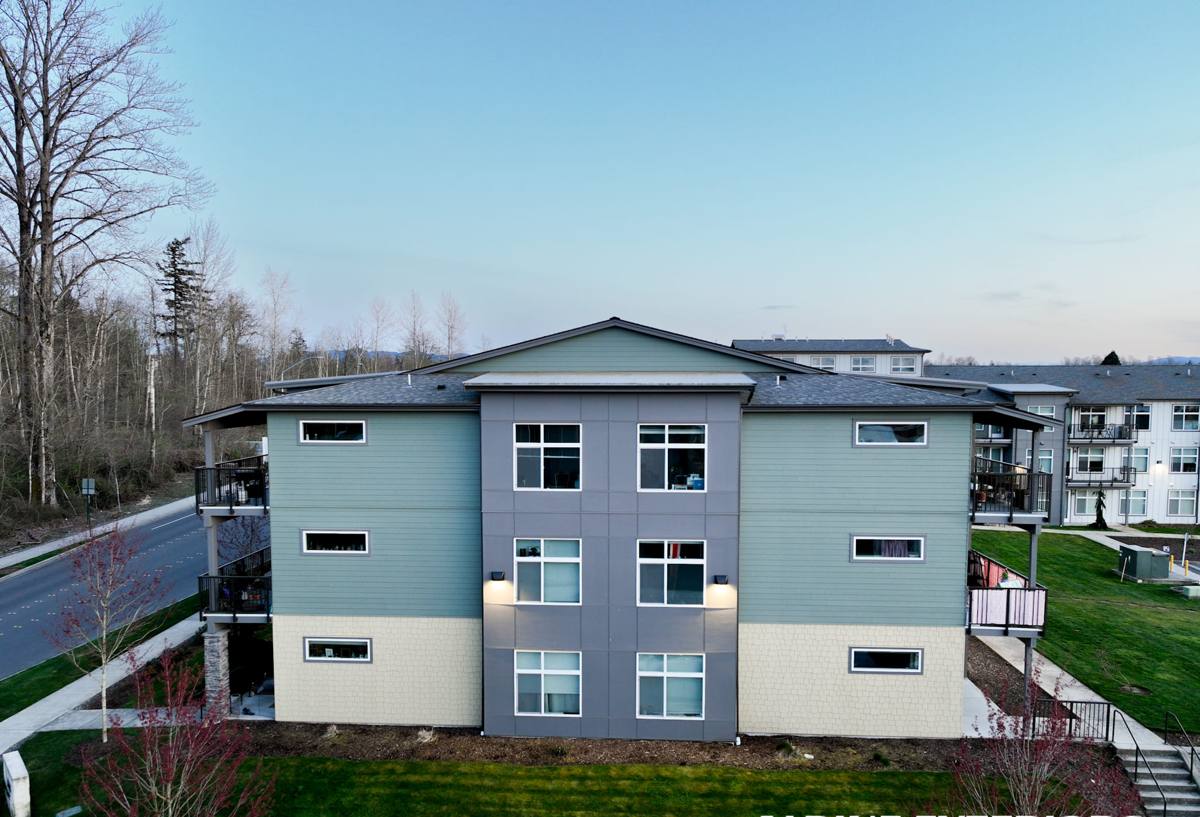
Warning Signs You Can Spot From the Ground
Cracking, Warping, and Buckling
Hairline cracks in lap siding, panels that have started to cup or bow, and boards that no longer sit flat against the wall are all signs the material is reacting to moisture cycling — swelling when wet, shrinking when it dries out, over and over. On engineered wood and untreated wood products this cycling happens faster in a marine climate than manufacturers' lab testing usually accounts for. A crack that lets water behind the siding is a much bigger problem than the crack itself.
Paint and Finish Failure
Peeling, bubbling, or chalky paint is a maintenance issue on its own, but it's also a messenger. Paint usually fails first at the spots where moisture is getting trapped — under window trim, along butt joints, near the ground. If you're repainting the same section every few years while the rest of the house holds up fine, that section is telling you something the rest of the wall isn't.
Staining and Streaking
Dark streaks running down from seams, nail heads, or trim joints usually mean water is finding a path through the siding system rather than shedding off the face of it. Rust-colored streaks around fasteners point to corroding nails or staples, which is common on older installations that weren't detailed for a coastal environment.
Signs at the Seams, Trim, and Joints
Most siding failures don't start in the middle of a flat panel — they start at a transition: where two pieces butt together, where siding meets a window or door, where a wall meets the roofline. These are the places water is designed to be shed away from, and they're the first places to check.
- Gaps opening up at butt joints where boards used to sit tight together
- Caulk that has cracked, shrunk, or pulled away from the edge of trim
- Soft or spongy trim boards, especially at the base of corner boards
- Visible daylight or shadow lines where flashing should be tucked behind siding
- Nail heads popping out or leaving raised bumps under paint
Any one of these on its own might be minor. Several showing up together, especially on the same wall, usually means the whole section deserves a closer look rather than a caulk-gun fix.
Moisture Damage You Can't See From the Yard
Soft Spots and Give
Press gently on siding near the bottom of a wall, around hose bibs, and below window sills. If it flexes, feels spongy, or gives more than the surrounding material, moisture has likely been sitting in there for a while. On wood-based products this is often the first physical confirmation of rot that started months earlier as something invisible.
Interior Clues
Siding problems often show up inside the house before they're obvious outside. Watch for musty smells in an exterior-facing closet, a faint discoloration on interior drywall near a window, or trim that feels cool and damp to the touch compared to the rest of the wall. These are worth investigating even if the exterior siding still looks fine from the driveway — by the time interior signs appear, water has usually been getting in for some time.
Moss, Algae, and Mildew: Cosmetic or Structural?
Birch Bay's long damp season is genuinely rough on siding surfaces. Green or black growth on north-facing walls, under eaves, and near tree cover is extremely common here and, by itself, is mostly a cosmetic issue — it can usually be washed off without damage if it's caught early and the surface underneath is sound.
The distinction that matters is whether the growth is sitting on top of the siding or growing into it. Moss that has a foothold in cracked or delaminating material, or algae staining that keeps coming back within weeks of cleaning, is a sign the surface itself is degrading and holding moisture rather than shedding it. That's no longer a cleaning problem — it's a siding-condition problem.
Warning Signs Vary by Material
What counts as an early warning sign, and how much time you have to act on it, depends heavily on what the siding is made of. Wood and engineered wood products are more moisture-sensitive by nature, vinyl fails differently, and fiber cement behaves differently again. Here's a general comparison of what to watch for.
| Siding Material | Common Early Warning Sign | What It Usually Means |
|---|---|---|
| Cedar / primed spruce | Cupping, checking, soft edges at butt joints | Moisture absorption faster than the finish can handle |
| Engineered wood (e.g. LP-type products) | Swelling at cut edges, bottom-edge softness | Exposed wood fiber wicking moisture, often at field cuts |
| Vinyl | Warping, buckling, brittle cracking in cold snaps | Thermal movement issues or impact damage; seams can let water behind the panel |
| Fiber cement (James Hardie) | Caulk/paint wear at joints, minor efflorescence | Usually a maintenance item — the panel itself resists moisture absorption and rot |
This isn't a claim that any one product is immune to problems — installation quality matters as much as material choice. But it does explain why the same-looking symptom, like a soft spot at the bottom of a wall, can mean a quick repair on one material and a much bigger tear-out on another.
What to Do When You Spot a Warning Sign
A methodical walk around your home twice a year, spring and fall, catches most problems while they're still small. Use this as a starting checklist:
- Walk the full perimeter and look at each wall from a few feet back, not just up close
- Press-test any area that looks discolored, stained, or slightly swollen
- Check all four corners of every window and door for gaps or soft trim
- Look up under eaves and roof-to-wall intersections where flashing is easy to miss
- Note any area where moss or algae returns quickly after cleaning
- Check the bottom few feet of walls facing the water and prevailing storms
- Take photos each time so you can compare season to season
If you find something, don't wait for it to get worse before calling someone. A five-minute look from a contractor at an early-stage issue is a very different conversation than a full wall replacement after water has been getting in for a year or two.
When It's a Repair and When It's a Replacement
Isolated issues — a cracked board, failed caulk at one window, a section of popped nails — are almost always repairable without touching the rest of the wall. What tips a project from repair into replacement is usually one of three things: the damage is spread across multiple areas of the same wall, the underlying water-resistive barrier has been compromised for long enough that framing is affected, or the siding material itself has reached the point where patched sections visibly mismatch the rest (common with faded or discontinued vinyl and wood profiles). A contractor who inspects in person can usually tell you which category you're in within a short visit — it doesn't require guesswork from a photo.
Why We Only Install James Hardie Fiber Cement
After years of repairing and replacing siding across Whatcom County's coastal communities, our crews standardized on James Hardie fiber cement for one straightforward reason: it holds up to exactly the conditions that cause most of the warning signs above. It's non-combustible, it doesn't absorb moisture the way wood-based products do, and it carries a factory-applied ColorPlus finish that resists the fading and paint failure that's so common on salt-exposed walls. We don't install vinyl, LP-style engineered wood, or bare cedar — not because those products can't work anywhere, but because we've seen how they age in a marine climate like Birch Bay's, and we'd rather stand behind one system we trust than sell several we'd have to caveat.
If you're noticing any of the signs covered here, or you just want a second set of eyes on your home before the next storm season, we're happy to come take a look. The estimate is free, there's no pressure, and you'll get a straight answer about what you're actually dealing with.