 Birch Bay
 Building Decks in a Climate That Doesn't Forgive Shortcuts
Birch Bay Village sits close enough to the water that homes here deal with a different set of conditions than decks built ten miles inland. Salt-laden air off the bay works on fasteners, railing hardware, and any exposed metal year-round. Driving rain, often pushed sideways by wind, gets up under railings and into ledger connections that a calmer climate would never test. And Whatcom County's long, damp shoulder seasons mean moss and algae get a real head start on any deck surface that doesn't shed water and dry out quickly.
None of this makes decking impossible here — it just means the standard build assumptions that work in a drier part of the state don't automatically hold up in Birch Bay Village. The framing details, fastener choices, and even the way a deck is oriented and ventilated matter more here than in most parts of the country.
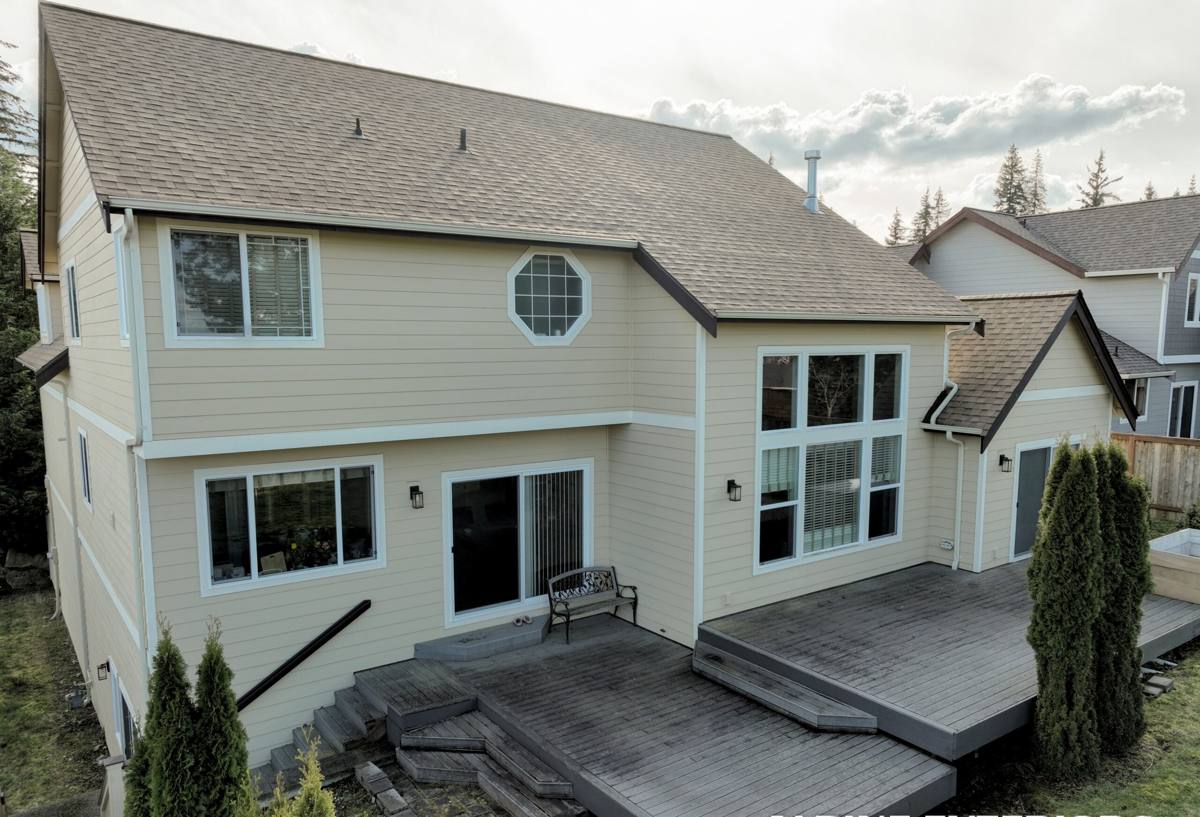
What "Composite Decking" Actually Covers
Composite decking isn't one product — it's a category, and the differences between products in that category matter a lot in a marine climate. Most composite boards are made from a blend of wood fiber and plastic, formed under heat and pressure into a board that resists rot better than solid wood. Within that category, there are two broad types worth understanding before you choose a product:
- Uncapped composite — the wood-plastic blend is exposed on all sides. It resists rot but the surface can still absorb some moisture and is more prone to staining, fading, and surface mold over time, especially in a humid, moss-prone environment.
- Capped composite (including PVC-capped boards) — a polymer shell is bonded around the wood-plastic core, sealing it from moisture, staining, and most surface mold. This is the tier we recommend for anything near the water, including Birch Bay Village.
Manufacturers like Trex, TimberTech, and Fiberon all offer both tiers, and the price difference between them is usually smaller than homeowners expect once you account for how much less maintenance the capped product needs over its life. We'll walk you through the actual options and trade-offs for your project rather than pushing one brand.
What a Correct Composite Deck Build Requires Here
Composite decking is more forgiving than wood in some ways and less forgiving in others. The board itself resists rot, but composite decking is heavier than wood and behaves differently with temperature swings, which changes what the framing and fastening underneath it need to do correctly.
Framing and Fastening
Composite boards typically need tighter joist spacing than wood decking — most manufacturers call for 16 inches on center, and some require 12 inches on center for boards installed at an angle or in curved layouts. Using wood-decking joist spacing under composite boards is one of the most common corner-cutting mistakes we see, and it leads to noticeable bounce and, eventually, board sag between joists. Hidden fastener clip systems are the standard now for capped composite — they avoid face screws that can back out or leave rust streaks in salt air, and they give a cleaner surface for water to run across.
Flashing and Airflow
Where the deck attaches to the house — the ledger board — is the single most important detail on any deck in this climate. Driving rain off the bay will find any gap in flashing at that connection, and once water gets behind the ledger it's working on your home's framing, not just the deck. Correct ledger flashing, proper standoff from the siding, and code-compliant fastening at that joint aren't optional details — they're the difference between a deck that lasts and a hidden moisture problem behind your wall. Airflow underneath the deck matters too: composite doesn't rot, but the framing underneath it usually is still wood, and trapped moisture under a low, poorly ventilated deck is exactly the environment moss and mold need to take hold.
Composite vs. Wood vs. PVC — What Actually Holds Up
There's no universally "best" decking material — it depends on what you're willing to maintain and how close you are to the water. Here's how the three most common options compare for a Birch Bay Village property:
| Factor | Pressure-Treated Wood | Wood-Plastic Composite | Capped Composite / PVC |
|---|---|---|---|
| Moisture & rot resistance | Moderate — depends on ongoing sealing | Good | Best |
| Moss & surface mold resistance | Low without regular treatment | Moderate | High |
| Ongoing maintenance | Annual cleaning, sealing, or staining | Periodic cleaning | Occasional washing |
| Typical lifespan | 10–15 years with upkeep | 20–25 years | 25–30+ years |
| Upfront material cost | Lowest | Mid-range | Highest |
| Appearance over time near salt air | Grays, splinters, checks | Fades gradually, can stain | Holds color and finish best |
For most Birch Bay Village homeowners, the deciding factor isn't the sticker price — it's how much time and money you want to spend maintaining the deck over the next 15 years in a climate that's actively working against untreated wood.
Our Process From Estimate to Finished Deck
We approach every composite deck project the same structured way, whether it's a full rebuild or new construction:
- Site and structure assessment — we check existing framing, ledger condition, grade, and drainage before recommending anything.
- Material walkthrough — we go over composite tiers, colors, and railing options based on your budget and how exposed the deck's location is to wind and rain.
- Permitting — we handle or guide you through the local permit process where one applies, so the project is built to code from the start.
- Demolition and prep — if we're replacing an existing deck, we tear out and inspect the substructure for hidden rot before building on top of it.
- Framing and flashing — joists set to the correct spacing for your chosen board, ledger flashed and fastened correctly at the house connection.
- Decking, railing, and fascia installation — hidden-fastener systems where the product supports it, railing set and leveled, all trim and fascia finished.
- Final walkthrough and cleanup — we check the whole deck with you before we consider the job done, and we clean the site fully.
Living With a Composite Deck Through Whatcom County's Moss Season
A well-built capped composite deck needs far less upkeep than wood, but "low maintenance" doesn't mean "no maintenance" — especially with the amount of moisture Birch Bay Village sees for a good part of the year. A short seasonal routine keeps a good deck looking and performing the way it should:
- Sweep off leaves, needles, and organic debris regularly — trapped organic matter is what feeds moss and surface algae.
- Wash the deck surface with mild soap and water once or twice a year, more often in shaded or low-airflow areas.
- Keep gutters and downspouts directing water away from the deck surface and substructure, not onto it.
- Trim back overhanging branches and shrubs to let air and light reach shaded sections of the deck.
- Use a soft-bristle brush rather than a pressure washer at close range — capped composite resists moss well, but aggressive pressure washing can still damage the cap layer.
- Check railing posts, fasteners, and any metal hardware annually for corrosion given the salt content in the air here.
What Drives the Cost of a Composite Deck Project
Every deck is priced around its own combination of size, structure, and materials, but the main variables we walk homeowners through are consistent. Broadly, composite deck projects in our area run somewhere in the range of $30 to $70+ per square foot installed, with the spread coming from these factors:
- Decking tier — base composite vs. capped composite vs. premium PVC boards.
- Substructure condition — whether existing framing can be reused or needs partial or full replacement.
- Railing material — composite, aluminum, cable, or glass railing systems all price differently.
- Footprint and layout — multiple levels, angled or picture-frame board patterns, and stairs all add labor.
- Site access — how easily materials and equipment can reach the build location on your lot.
- Permitting requirements — deck height, attachment to the home, and footprint can all affect what's required locally.
We give a firm, itemized quote after the site assessment — not a rough guess based on square footage alone.
Why Hiring a Crew That Already Works Birch Bay Village Matters
Decking crews that mainly work drier, inland areas don't always build with this climate's specific failure points in mind — ledger flashing, joist spacing for composite in a wet environment, and airflow underneath the structure get treated as afterthoughts instead of the details that determine whether a deck lasts 10 years or 25. Working in and around Birch Bay Village regularly means we've seen how salt air, wind-driven rain, and long moss seasons actually affect decks here over time, not just on install day.
It also means we're a known, local presence if a question or an issue comes up after the build — not a crew that finished the job and moved on to a different region. For a structure that's exposed to the weather every single day, that ongoing accountability is worth as much as the installation itself.
Get a Straight Answer on Your Deck Project
If you're weighing composite decking options for a home in Birch Bay Village, we're happy to take a look at your site, talk through what the space and structure actually need, and give you a clear, no-pressure estimate. Use the form below to get started.