 Birch Bay
 Siding, Roofing, Windows, and Decks for Point Roberts Homes
Point Roberts sits in a strange spot on the map. It's part of Whatcom County and part of Washington State, but you can't drive there without crossing into Canada twice. That geography shapes everything about the community — and it shapes what a home on that peninsula has to put up with year-round. Surrounded on three sides by water, exposed to wind off the Strait of Georgia and Boundary Bay, Point Roberts homes deal with a level of salt exposure and driving rain that most inland Whatcom County properties never see.
We're based in Birch Bay and work throughout the surrounding area, including Point Roberts. We install James Hardie fiber cement siding exclusively, along with roofing, windows, and decking. This page covers what the climate does to exterior materials out on the point, and what we actually do about it.
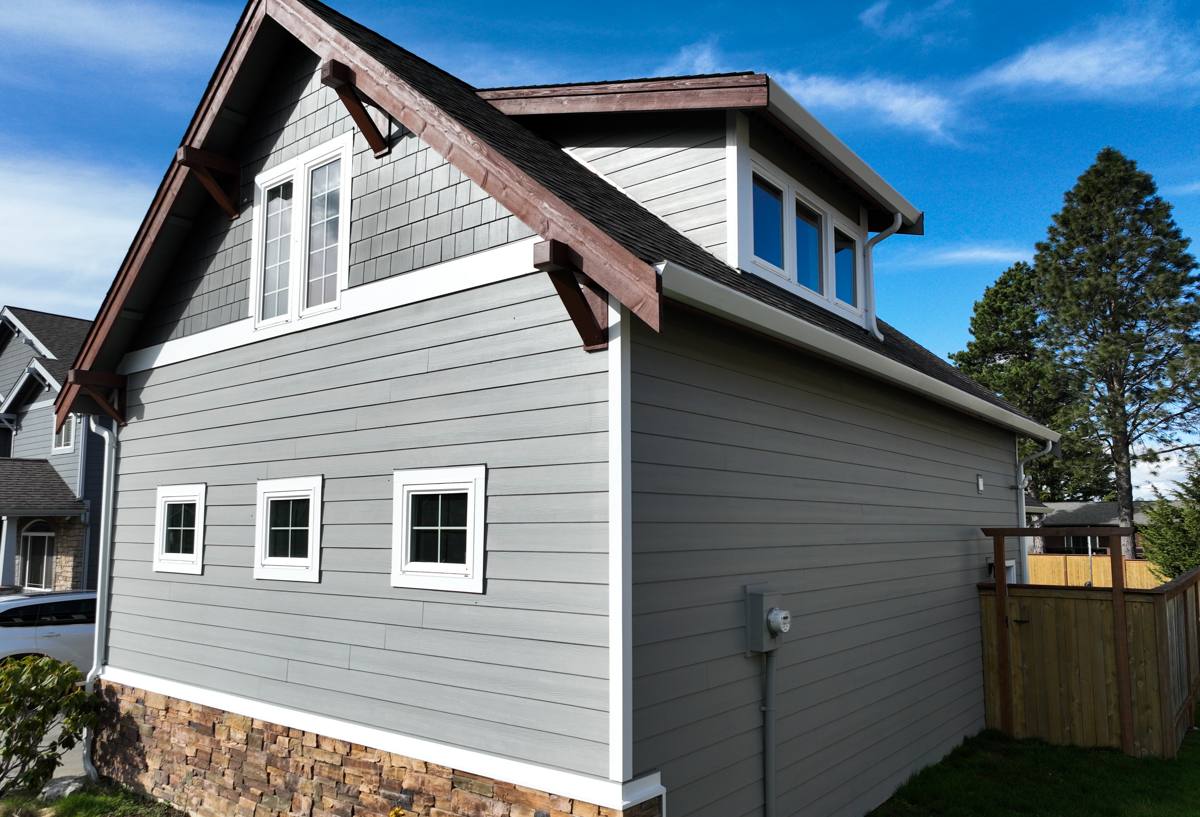
What the Point Roberts Climate Does to a Home's Exterior
Salt Air, Every Day
Being a peninsula means Point Roberts homes are almost never more than a few blocks from saltwater. Salt-laden air corrodes fasteners, pits and chalks paint finishes, and accelerates the breakdown of materials that aren't built to handle it. Over years, homes on exposed lots — especially anything facing open water — take a visibly harder beating than the same house would take twenty miles inland.
Driving Rain and Wind-Driven Moisture
Storms coming off the Strait of Georgia don't just drop rain straight down — wind pushes it sideways, into siding laps, trim joints, and window flashing. Wind-driven rain finds every weak point in a building envelope. Siding that isn't dimensionally stable, or that wasn't installed with the right flashing and clearances, ends up taking on moisture it was never designed to shed.
A Long Moss and Mildew Season
Like most of the coastal Pacific Northwest, Point Roberts gets long stretches of damp, low-light weather where moss, algae, and mildew get a real foothold — on roofs, on north-facing siding, in shaded corners of a lot where things never fully dry out. Materials that hold moisture stay wetter longer, which means more time for organic growth to take hold and start breaking a surface down.
Why We Only Install James Hardie Fiber Cement Siding
We made a decision as a company to install one siding system: James Hardie fiber cement. Not vinyl, not LP SmartSide, not primed wood, not cedar. That's a deliberate standard, not a lack of options, and on a peninsula like Point Roberts the reasoning holds up especially well.
- Fiber cement doesn't rot or feed organic growth the way wood-based products can. Hardie board is cement, sand, and cellulose fiber — it doesn't provide the same food source or moisture retention that wood-based sidings do in a damp marine climate.
- It's dimensionally stable. Hardie board doesn't swell and shrink with moisture the way wood or wood-composite products do, which matters when a home is absorbing wind-driven rain for days at a stretch.
- The ColorPlus factory finish is baked on, not field-applied. In a salt-air environment, a factory-cured finish holds up to UV and moisture cycling far better than paint applied on site, and it comes with its own finish warranty.
- It's non-combustible. That's not a climate-specific point for Point Roberts, but it's part of why we standardized on Hardie everywhere we work.
We're not going to tell you every other siding product is worthless — that's not honest. Vinyl is inexpensive and low-maintenance in mild climates. Cedar looks great when it's maintained on a strict schedule. LP SmartSide has its fans. But we've made a professional call that on homes exposed to sustained salt air, driving rain, and heavy moss pressure, Hardie's fiber cement composition and factory finish are worth the cost difference over the life of the siding. That's the product we stand behind, so it's the only one we install.
Choosing the Right Hardie Line and Color
James Hardie makes several plank and panel profiles, and picking the right one comes down to the home's exposure and the look you're after, not just what's cheapest.
| Hardie Product | Best Fit | Notes |
|---|---|---|
| HardiePlank Lap Siding | Most homes, traditional or modern | Widest range of textures and reveal widths |
| HardiePanel Vertical Siding | Modern builds, accent walls, gables | Clean vertical lines, often paired with board-and-batten trim |
| HardieShingle | Cottage or craftsman-style homes | Shingle look without the maintenance of cedar shakes |
| HZ10 vs HZ5 engineered lines | Wet, marine, and freeze-prone climates | Whatcom County coastal properties, including Point Roberts, generally call for the HZ10 formulation |
ColorPlus finishes come in a range of factory colors that hold up to UV and salt exposure better than field-applied paint. We'll walk through the options and talk about which finishes tend to hold their color best in direct water-facing exposure versus more sheltered lots.
Roofing, Windows, and Decks — the Rest of the Envelope
Siding is only part of what keeps a Point Roberts home dry. We also handle roofing, window replacement, and deck construction, because a home's exterior only performs as well as its weakest component.
Roofing
Moss growth on roofs is a chronic issue in this climate, especially on north-facing slopes and anywhere overhung by trees. A roof system with good ventilation and the right underlayment sheds moisture and resists moss far better than an aging roof that's already holding water at the seams.
Windows
Window flashing and sealant integration is where a lot of wind-driven-rain leaks actually start, not the glass itself. When we replace siding, window integration is part of the plan — flashing that ties properly into the new siding's water management, not just caulk over old trim.
Decks
Decks facing open water take direct salt spray and sun, on top of the general PNW moisture load. Fastener choice and board spacing matter more out here than on a sheltered inland deck.
Working on a Peninsula: Why Local Logistics Matter
Point Roberts isn't like a typical service call. Reaching it means crossing the border twice each way — into Canada through the Peace Arch or Pacific Highway crossing, then back into the U.S. at the Point Roberts port of entry. Materials, crew, and equipment all have to make that same trip. A contractor who doesn't plan for that reality can turn a straightforward siding job into a scheduling headache, with delays stacking up every time a border crossing eats into the workday.
We're based in Birch Bay, close enough to plan Point Roberts jobs realistically — batching material deliveries, scheduling crew time to account for crossing delays, and not treating the peninsula as an afterthought tacked onto a Blaine or Ferndale route. That local familiarity is part of what makes a project run on schedule out there instead of dragging.
What to Expect From a Point Roberts Siding Project
- An on-site inspection of your current siding, trim, and any moisture or moss damage before we recommend anything
- A written estimate that spells out the Hardie product line, color, and installation scope
- Attention to flashing, house wrap, and window integration — not just board replacement
- Realistic scheduling that accounts for border-crossing logistics and material delivery timing
- A crew that follows James Hardie's published installation specifications, which is what keeps the manufacturer warranty valid
Cost Factors on a Point Roberts Project
| Factor | Why It Matters Here |
|---|---|
| Home exposure to open water | Water-facing sides may need extra attention to flashing and fastener choice |
| Existing siding removal and any rot repair | Long-term moisture exposure can mean hidden sheathing damage under old siding |
| Hardie product line and profile chosen | Lap, panel, and shingle profiles vary in material and labor cost |
| Access and logistics | Border crossing and material delivery scheduling factor into project timelines |
| Scope — siding only vs. siding plus roofing, windows, or decking | Bundling exterior work can reduce overall disruption and sometimes overall cost |
A Straightforward Approach
We're not going to push a product line just because it's cheaper to install or easier to sell. We install James Hardie fiber cement because we've seen how it holds up in exactly the kind of marine, moss-heavy, salt-exposed climate that Point Roberts sits in. If you want a straight answer about what your home's exterior actually needs — not an upsell — that's the conversation we'll have with you.
If you're weighing a siding, roofing, window, or deck project for a Point Roberts home, we're happy to come take a look and put together a free, no-pressure estimate.