 Birch Bay
 Why Birch Bay Village Homes Need Windows Built for This Climate
Birch Bay Village sits close enough to the water that its homes deal with a different set of stresses than houses even a few miles inland in Whatcom County. Salt-laden air off the bay, wind-driven rain during winter storms, and a moss season that can run eight or nine months out of the year all work against ordinary windows in ways that aren't always obvious until a homeowner is dealing with a fogged pane, a drafty room, or a sash that won't seal anymore. Energy-efficient windows aren't just about lower heating bills here, though that matters too. They're about choosing materials and installation methods that actually hold up against what this specific location throws at a house year after year.
A window that performs fine in a dry, sheltered inland neighborhood can underperform quickly in Birch Bay Village if it wasn't selected and installed with coastal exposure in mind. That's the gap we focus on closing.
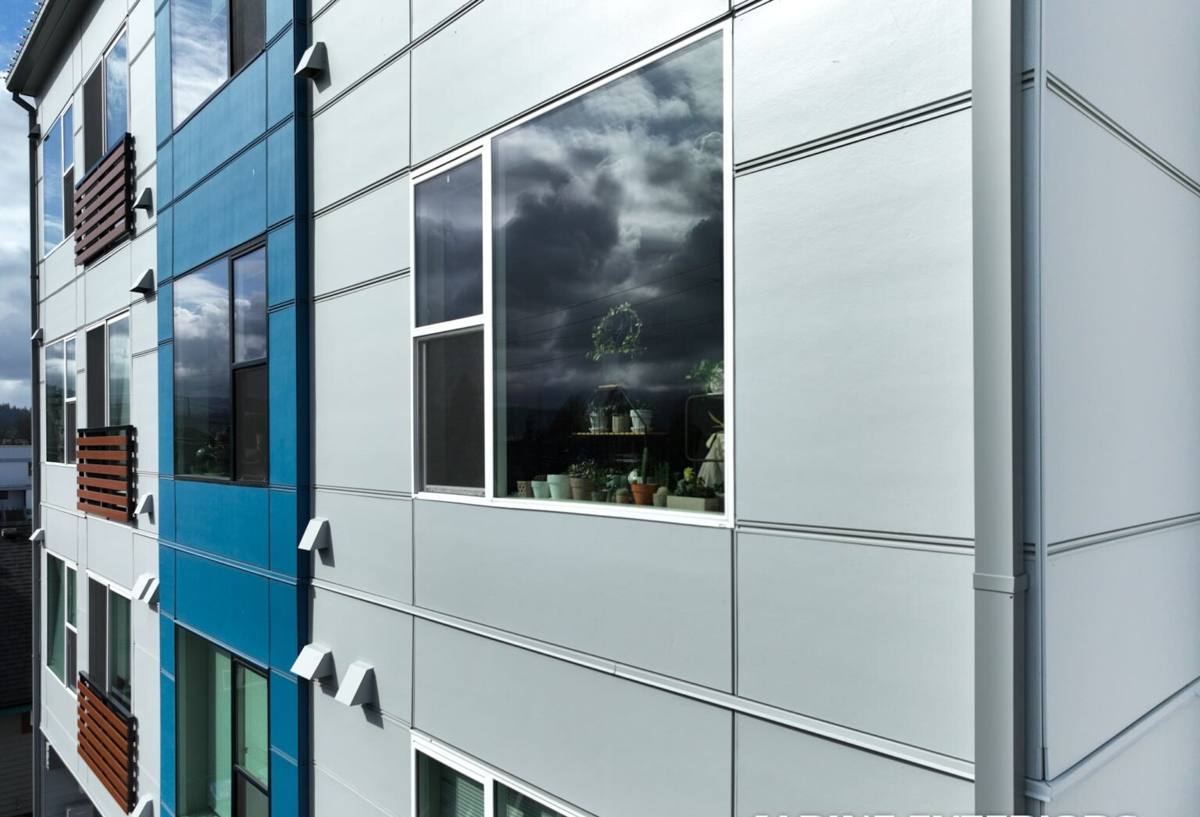
What Salt Air and a Long Moss Season Do to Windows
Salt air is corrosive to exposed metal. Window hardware, hinges, balance systems, and lower-grade fasteners can start showing pitting or corrosion years before they would inland. Cheaper aluminum components are especially vulnerable, and once hardware starts to fail, seals get stressed and the whole unit's efficiency drops even if the glass itself is fine.
The long wet season that Whatcom County's coastal communities see brings a second problem: sustained moisture sitting against sills, tracks, and frame joints for months at a time. That's exactly the environment moss and algae need to take hold. Once moss establishes on a sill or a north-facing frame, it holds moisture against the material even longer, which accelerates wood rot in wood-frame windows and can degrade caulking and weatherstripping faster than a homeowner would expect.
Add in wind-driven rain, which is common during winter storms in this part of the county, and you get water being pushed at the window rather than just falling on it. That kind of exposure finds any weak point in flashing, sealant, or the window's own weep system. A window that's a step below excellent on any of those fronts tends to show it here sooner rather than later.
The energy-efficiency side of the equation
All of that moisture and hardware stress also has a direct energy cost. A seal that's compromised by corrosion or rot doesn't just let in water — it lets in air, which means the furnace runs more in winter to make up for the draft. Fogged double-pane glass (a sign the seal between panes has failed) loses most of its insulating value even though the window still looks intact from the outside. In a lot of older Birch Bay Village homes, the original windows were never rated for this level of coastal exposure to begin with, so efficiency losses show up well before the glass looks obviously bad.
What a Correct Energy-Efficient Window Installation Actually Involves
Replacing a window is more than swapping one unit for another. Done right, it's a system of decisions that all have to work together — frame material, glazing package, and how the unit is sealed and flashed into the wall.
Frame and Glazing Choices That Hold Up Here
For a location like Birch Bay Village, we look at how a frame material handles sustained moisture and salt exposure, not just its insulating value on paper. Vinyl and fiberglass frames generally resist corrosion and rot better than bare wood or lower-grade aluminum, which matters more here than it would in a drier inland setting. On the glazing side, double-pane units with a low-E coating and an argon or krypton gas fill are the standard efficiency package for this region's mix of cool, wet winters and mild summers. The specific U-factor and Solar Heat Gain Coefficient we recommend depend on which direction a window faces and how exposed that wall is to wind and rain.
Flashing and Moisture Management
This is the part that gets skipped on rushed jobs and it's the part that matters most in a wind-driven-rain climate. Proper installation means flashing tape and building paper integrated correctly with the window's nailing flange, a sloped sill pan so any water that does get past the outer seal drains back out instead of pooling, and weep holes kept clear so the frame can shed moisture instead of holding it. Sealant is a backup layer, not the primary defense — if a window is relying on a bead of caulk to keep water out, it's already one failure away from a leak. We treat the flashing and drainage details as the actual weatherproofing, with sealant finishing the job rather than doing it.
Comparing Window Frame Materials for Coastal Whatcom County
| Frame Material | Salt Air / Moisture Resistance | Maintenance | Typical Fit for Birch Bay Village |
|---|---|---|---|
| Vinyl | Good — won't rust or rot, minimal upkeep | Low | Solid all-around choice for most exposures, strong value |
| Fiberglass | Very good — dimensionally stable, resists warping in temperature swings | Low | Well suited to the most wind- and rain-exposed walls |
| Wood (unclad) | Poor in direct exposure without diligent upkeep | High | Only recommended on sheltered elevations with a maintenance plan |
| Wood-clad (vinyl or aluminum exterior) | Good on the exterior face; interior wood still needs normal care | Moderate | Good option when a wood interior look is wanted |
| Aluminum (standard, non-thermally-broken) | Fair — prone to corrosion and heat/cold transfer over time | Moderate | Generally not our first recommendation for this location |
None of these materials is universally "best" — the right call depends on which wall is being replaced, how sheltered it is, and what the homeowner wants to maintain over time. We walk through this trade-off during the estimate rather than defaulting to one product for every job.
Our Installation Process
We keep the process straightforward because the details matter more than the sales pitch:
- On-site assessment. We look at each window opening individually — sun exposure, wind exposure, current condition of the framing and any existing rot or hardware corrosion.
- Measurement and product selection. Exact measurements are taken for each opening, and frame material and glazing package are matched to that specific window's exposure rather than a single spec applied across the whole house.
- Removal and prep. Old units are removed carefully so we can inspect the framing underneath for hidden moisture damage before anything new goes in.
- Flashing, sealing, and installation. New flashing, sill pans, and weatherstripping are installed to current best practice, then the window unit is set, shimmed level and square, and secured.
- Interior and exterior finish work. Trim, caulking, and insulation around the frame are finished so the window performs as a complete system, not just a pane of glass.
- Walkthrough and cleanup. We test operation on every window and clean up the work area before we consider the job done.
A Homeowner's Pre-Replacement Checklist
Before deciding whether to repair, reseal, or replace, it helps to actually look at what's happening at each window. A few signs worth checking for around Birch Bay Village homes specifically:
- Fogging or moisture between panes (a failed seal, not a cleaning issue)
- Visible corrosion or stiffness in hardware, hinges, or balance mechanisms
- Moss, algae, or dark staining building up on sills or lower frame sections
- Soft or discolored wood at the sill or where the frame meets the wall
- Noticeable drafts or a cold spot near the window even when it's fully closed
- Difficulty opening, closing, or locking a window that used to operate smoothly
- Condensation forming on the interior glass regularly during cold, wet weather
Any one of these on its own might just need attention rather than full replacement. Several of them on the same window, especially on a wall that takes direct wind and rain, usually means the unit is past the point where repair makes financial sense.
Why a Crew That Already Works Birch Bay Village Matters
A contractor who works this specific stretch of Whatcom County regularly knows which walls in Birch Bay Village take the worst of the wind and salt spray, how much of a factor the moss season actually is on a given property, and what timing works around the weather patterns here for a clean, dry installation. That's different from general knowledge of Pacific Northwest weather — it's familiarity with this particular shoreline community, house by house. It also means being available for a follow-up check or a warranty question without a long drive, which matters more here than it would with an out-of-area crew that isn't likely to be back in the neighborhood anytime soon.
We're not going to tell you every window on your house needs replacing if it doesn't. Part of doing this work honestly in a community we're in regularly is giving homeowners a straight assessment — sometimes that means new windows on the exposed side of the house and just better maintenance on the sheltered side.
Get a Free, No-Pressure Estimate
If you're noticing drafts, fogged glass, sticking sashes, or moss buildup around your windows in Birch Bay Village, it's worth having someone take a direct look rather than guessing from the inside. We offer free estimates with no pressure attached — just an honest read on what your windows need and what it would take to fix it right. The form below is the easiest way to get that started.