 Birch Bay
 Exterior Work on Lummi Island: A Different Kind of Job
Lummi Island sits out in the Salish Sea, reachable only by a short ferry crossing from the Whatcom County mainland. That single fact shapes almost everything about how exterior work gets done out there. Materials, crews, and equipment all have to be staged and timed around the ferry schedule, and homes on the island face a more concentrated version of the weather that the rest of Whatcom County deals with — more direct salt exposure, more wind, and a longer stretch of the year spent damp. If you own a home on Lummi Island, your siding, roofing, windows, and decks are doing harder work than the same materials would on a sheltered inland lot.
We work out of Birch Bay and cover this stretch of coastline regularly, so we're familiar with what island and shoreline properties in this part of the county actually need — not just what a general contractor from out of the area might assume.
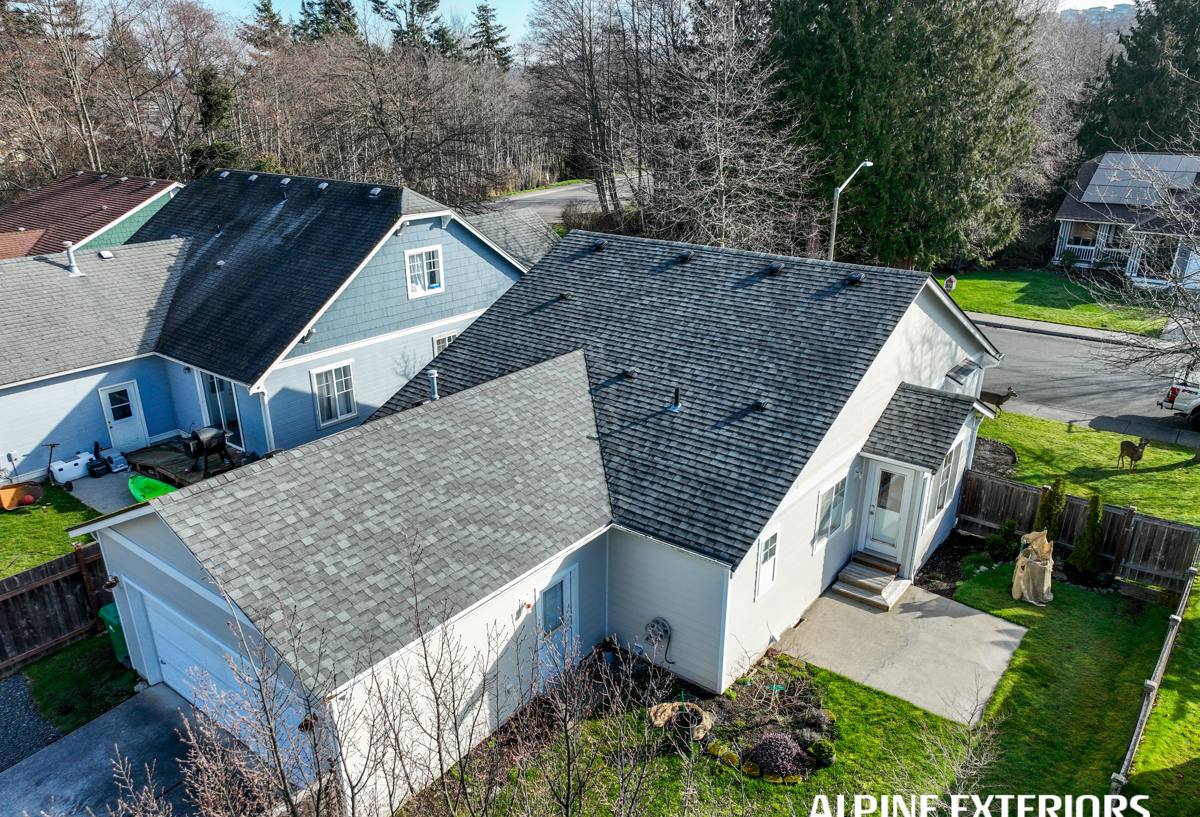
What the Climate Does to a House Out Here
Salt Air and Slow Corrosion
Homes close to the water pick up airborne salt that settles on siding, trim, fasteners, and flashing. Over years, that salt film holds moisture against the surface longer than it would on a dry inland wall, accelerates corrosion on unprotected metal, and breaks down finishes that weren't built to handle it. Paint film fails faster near open water. Cheap or exposed fasteners rust and streak. It's a slow process, but it's constant, and it doesn't take a break in the winter the way some other wear-and-tear does.
Driving Rain and Wind-Driven Moisture
Island exposure means less windbreak than a lot of mainland properties get from trees, hills, or neighboring development. When storms roll through the Salish Sea, rain doesn't just fall — it drives sideways into walls, corners, and window and door openings. That kind of wind-driven rain finds every weak seam in a building envelope: gaps in flashing, poorly caulked trim joints, siding installed without proper clearance. A material or installation that would hold up fine on a calm inland street can start showing problems within a few seasons out here.
Moss, Algae, and the Long Wet Season
Whatcom County's marine climate already runs damp for much of the year, and island properties tend to stay shaded and moisture-retentive even longer thanks to surrounding tree cover and cooler air off the water. That's a long runway for moss, algae, and mildew to take hold on any siding surface that absorbs moisture or has vulnerable seams. Once organic growth gets established on a wall, it holds even more water against the surface, which speeds up whatever damage the salt air and rain have already started.
Why We Standardized on James Hardie Fiber Cement
We install James Hardie fiber cement siding exclusively. We don't install vinyl, LP SmartSide, Cemplank, Allura, or wood products like primed spruce or cedar. That's not a marketing position — it's a decision built around what actually holds up in this climate over decades, not just the first few years after installation.
Fiber cement is non-combustible, dimensionally stable, and doesn't absorb and swell with moisture the way wood-based siding can. James Hardie's ColorPlus factory-applied finish is baked on under controlled conditions, which gives it better fade and wear resistance than field-applied paint — a real advantage on a wall that's taking constant salt spray and UV off open water. Hardie also engineers specific product lines (its HZ5 and HZ10 climate zones) for regions with more moisture and temperature swing, which matters directly for a place like Lummi Island.
How the Alternatives Compare
| Material | How it handles salt air & rain | Maintenance burden | Why we don't install it |
|---|---|---|---|
| Vinyl siding | Doesn't absorb water, but can warp, crack, or fade under UV and temperature swings | Low, but panels are hard to color-match once faded and easy to crack in wind events | Limited durability against wind-driven debris; seams and fastening are less forgiving on exposed sites |
| LP SmartSide (wood strand) | Engineered wood core is moisture-resistant when intact, but any breach lets water in | Moderate to high — edges and cut ends need diligent sealing and upkeep | Wood-based core carries more risk in a chronically damp, salt-exposed environment |
| Cedar / primed spruce | Natural material, moves with moisture, needs a sound finish to perform | High — regular refinishing, caulking, and inspection | Ongoing maintenance commitment is steep in a marine climate; finish failure exposes wood quickly |
| James Hardie fiber cement | Non-combustible, doesn't swell or rot, factory finish resists salt and UV fade | Low — periodic washing and caulk checks | This is what we install |
What Correct Installation Looks Like Here
Fiber cement siding only performs the way it's designed to when it's installed to Hardie's published specs — proper clearances, correctly lapped and sealed joints, the right fastener pattern, and flashing detailed for wind-driven rain rather than just vertical drainage. On an island property, we also plan around:
- Ferry scheduling for materials and crew, so the job runs on a realistic timeline instead of stalling mid-project
- Staging enough material on-site at once to avoid repeat crossings that stretch out the schedule
- Extra attention to flashing and trim details around windows, doors, and corners where wind-driven rain concentrates
- Fastener selection and treatment appropriate for a higher-corrosion environment
- Sequencing work around tide and weather windows, since exposed sites lose good working weather faster than sheltered ones
Roofing, Windows, and Decks: The Same Exposure Applies
Siding is rarely the only thing showing wear on an island home. The same salt air, wind, and moisture cycle that stresses siding also ages roofing materials, degrades window seals and frames, and breaks down deck boards and fasteners faster than on a typical inland property. We handle roofing, windows, and decks alongside siding because these systems all depend on each other — a roof that's shedding water improperly, or windows with failed flashing, will undermine even well-installed siding underneath. Looking at the whole exterior together, rather than one component in isolation, is usually how problems actually get caught before they turn into repairs.
Why a Local Crew Matters for a Property Like This
A contractor unfamiliar with Lummi Island's logistics can underestimate how much the ferry schedule, site exposure, and material staging affect a project's timeline and cost. Working this stretch of Whatcom County regularly means we're not guessing at what a shoreline or island property needs — we've seen how salt exposure and moss show up on real walls in this area, and we plan the job accordingly instead of treating it like any other siding install.
What to Ask Before Hiring for Island or Shoreline Work
- Has the crew worked on island or waterfront properties in this county before, and do they factor ferry logistics into the schedule?
- What fastener and flashing details do they use for wind-driven rain exposure?
- Is the siding manufacturer's installation spec being followed, or just "standard practice"?
- What does the warranty actually cover — material, labor, or both — and who's responsible if a detail fails?
- Will they walk you through moisture and drainage planning, not just the finish color?
Maintaining Coastal Siding Once It's Installed
Even the most durable siding benefits from a bit of routine attention in this climate. A short annual checklist goes a long way toward protecting the investment:
- Rinse siding periodically to clear salt film, especially on walls facing open water
- Check caulked joints around windows, doors, and trim for cracking or separation
- Look for early moss or algae growth in shaded, damp corners and address it before it spreads
- Inspect fasteners and flashing for rust staining or gaps after major storms
- Keep gutters and downspouts clear so water isn't dumping directly onto siding or foundation areas
What Affects the Cost of a Siding Project on Lummi Island
| Factor | Why it matters here |
|---|---|
| Home size and complexity | More corners, dormers, and trim details mean more flashing and cutting time |
| Existing siding removal | Tear-off of failing wood or vinyl adds labor and disposal logistics that include the ferry |
| Site access | Tight lots, slopes, or limited staging space affect crew efficiency and material handling |
| Product line and finish | Hardie's climate-specific lines and ColorPlus finish options vary in price by profile and color |
| Scope beyond siding | Bundling roofing, window, or deck work can improve efficiency versus separate projects |
We give straightforward, honest estimates based on the actual condition and exposure of your home rather than a generic per-square-foot number — a wall facing open water with heavy moss growth is a different job than a sheltered one, even on the same street.
Get a Free Estimate
If you're weighing a siding, roofing, window, or deck project on Lummi Island, we're happy to take a look and give you a straight answer on what your home needs and why. There's no pressure and no obligation — just an honest assessment from a crew that works this coastline regularly. Fill out the form below to get started.