 Birch Bay
 Birch Bay Village Roofs Work Harder Than Most
Birch Bay Village sits close enough to the water that the air itself is part of the maintenance problem. Salt-laden air off Birch Bay corrodes exposed fasteners and flashing faster than it would ten or fifteen miles inland, driving rain off the water gets pushed sideways into laps and seams that were never designed to take wind-driven moisture head-on, and the tree cover and marine humidity across Whatcom County keep roofs damp enough, long enough, that moss gets a foothold almost every year. None of that is dramatic on its own. It's the combination, repeated winter after winter, that turns small weaknesses into real damage.
That's the backdrop for this page. We're not talking about roof replacement in general — we're talking specifically about what happens when a storm exploits one of those existing weaknesses, and what it actually takes to repair it correctly on a Birch Bay Village home.
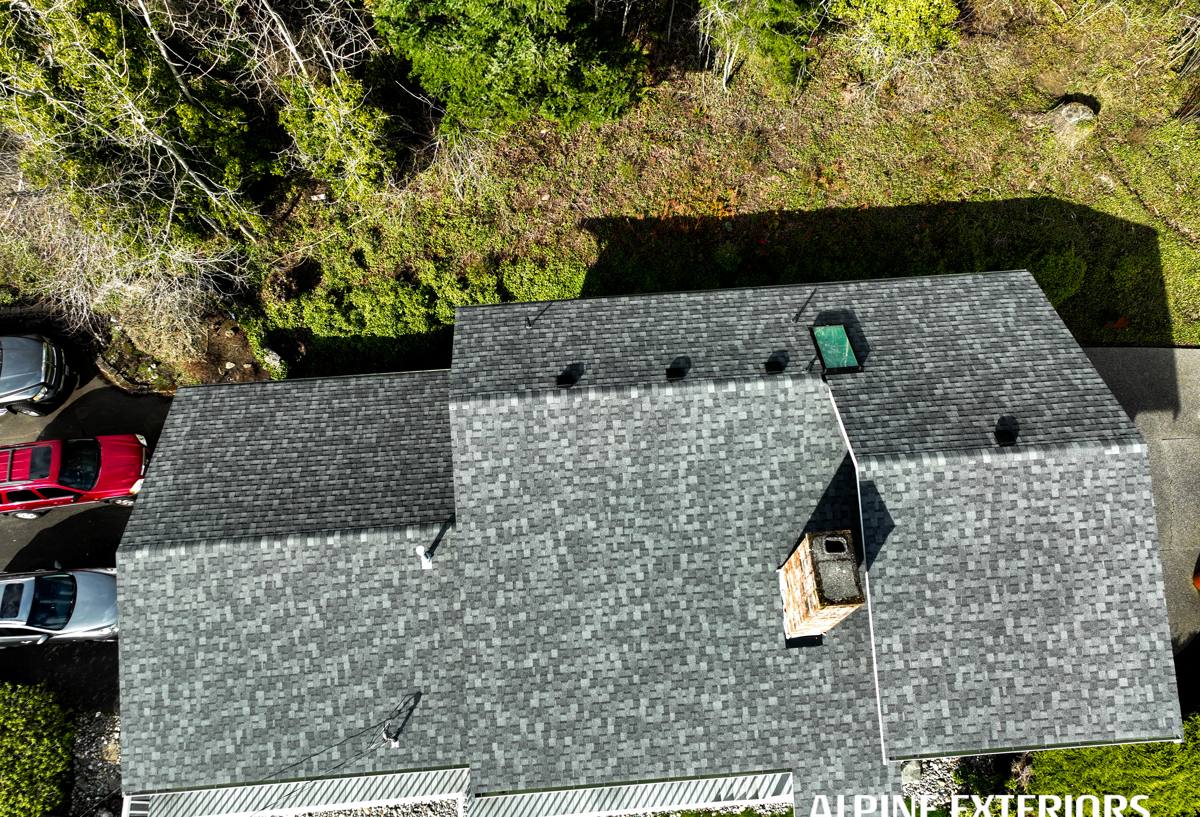
What Storm Damage Actually Looks Like Here
Homeowners often picture storm damage as a tree branch through the roof, and sometimes it is. More often, it's less obvious:
- Wind-lifted shingles or panels — edges peeled up by gusts, sometimes creased or cracked but not torn off entirely, which makes them easy to miss from the ground
- Flashing pushed loose around chimneys, vent pipes, and roof-to-wall transitions, where wind pressure works metal back and forth until sealant fails
- Driving-rain intrusion at laps, valleys, and low-slope transitions that hold up fine in a normal rain but leak under sideways wind gusts
- Granule loss or surface wear from wind-blown debris, which doesn't leak immediately but shortens the roof's remaining life
- Localized impact damage from branches, debris, or falling limbs, which can crack decking as well as the roof covering
The tricky part is that several of these can sit quietly for weeks before a homeowner notices a stain on a ceiling or ballooned drywall. By the time the leak is visible inside, the water has usually already been getting into the attic or wall cavity for a while.
Why Salt Air and Moss Make It Worse
A storm doesn't create damage out of nothing — it usually finds and exploits a spot that was already compromised. On Birch Bay Village roofs, that's frequently a fastener or flashing edge that's corroded from salt exposure, or a section under a moss mat that's been holding moisture against the roofing material long enough to soften it. A storm that a healthy, well-maintained roof would shrug off can tear straight through a section that's already weakened. That's part of why we treat storm repair and long-term roof health as connected, not separate jobs.
What a Correct Repair Actually Involves
A quick patch over a visible hole is not the same thing as a correct repair, and the difference matters most in a climate like this one. A repair that looks fine from the driveway but skips a few steps tends to fail again in the next storm season — sometimes worse than the first time, because water has already gotten underneath.
A correct storm repair on a Birch Bay Village home typically includes:
- Checking the decking, not just the surface. If water got past the roofing material, the plywood or OSB underneath may be soft, delaminating, or already growing mold. Covering that over instead of replacing it just buries the problem.
- Matching materials, not improvising. Mismatched shingle types, colors, or profiles patch a leak but create a visibly and functionally weaker spot — and can affect how a manufacturer or insurer views the repair later.
- Re-flashing, not just re-sealing. Caulk over failed flashing is a temporary fix at best. If the metal itself is compromised or was installed with the wrong lap direction, it needs to come out and be reinstalled correctly.
- Underlayment continuity. The underlayment is the backup layer that's supposed to catch water if the surface fails. A repair that doesn't tie the new underlayment properly into the old, with correct overlap, leaves a gap right where the damage happened.
- Ventilation check. Storm repairs are a good moment to confirm attic ventilation wasn't also compromised — poor airflow accelerates both moss growth and moisture damage from the inside.
Our Process for a Storm Repair Call
When a Birch Bay Village homeowner calls after a storm, here's what to expect:
1. Fast, Honest Assessment
We get eyes on the roof — from the ground, the attic, and up top when it's safe to walk — and tell you plainly what we're seeing. If it's a straightforward flashing or shingle repair, we say so. If we find soft decking or damage that goes beyond what's visible, we show you, not just tell you.
2. Temporary Protection First, If Needed
If there's an active leak or an opening exposed to weather, stopping further water intrusion comes before anything else. That might mean a tarp or temporary seal while we schedule the permanent repair, especially if more weather is on the way.
3. Documentation
We photograph the damage before we touch anything. If you're filing an insurance claim, this documentation is often more useful than anything taken after the repair, since it shows the damage as the storm left it.
4. The Repair Itself
We do the work described above — decking, flashing, underlayment, matched surface material — not just the visible patch. We'll walk you through what we found and what we did before we leave.
5. Cleanup and Final Check
Debris, old material, and fasteners get cleared from the yard and gutters, and we do a final check for anything we might have missed nearby, since storm damage often isn't confined to one single spot.
Repair or Replace? An Honest Comparison
Not every storm-damaged roof needs replacing, and not every roof is worth repairing again. The right call depends on a few factors we walk through with you directly rather than pushing one answer by default.
| Factor | Leans Toward Repair | Leans Toward Replacement |
|---|---|---|
| Age of roof | Under roughly half its expected lifespan | Already near or past expected lifespan |
| Extent of damage | Isolated to one area or slope | Spread across multiple areas or slopes |
| Decking condition | Solid, no rot or delamination found | Soft, stained, or rotted in multiple spots |
| Prior moss/moisture history | Minimal, roof was well-maintained | Long-standing moss coverage or repeat leaks |
| Material availability | Matching material still available | Discontinued or badly weathered mismatch |
We'd rather do an honest $600 repair than talk you into a roof you don't need yet — and we'd rather tell you plainly when a roof is past the point where another patch makes financial sense.
The Moss and Salt Air Problem Doesn't End When the Repair Does
Fixing storm damage without addressing why that section was vulnerable in the first place is a short-term win. If moss was building up around the damaged area, or corrosion was already eating at nearby fasteners, that same spot — or the one right next to it — is likely to fail again in a future storm. Where it makes sense, we'll flag simple, practical steps: moss treatment or removal, improved attic ventilation, or corrosion-resistant fastener and flashing choices for future work. None of this is upselling for its own sake — it's the difference between a repair that holds for years and one you're calling us about again next winter.
Right After a Storm: What to Check and Do
- Look for water stains, sagging, or bubbling on interior ceilings and upper-floor walls
- Check the attic (if accessible) for damp insulation, daylight through the roof deck, or musty smell
- Walk the yard for shingle pieces, granules in the gutters, or bent flashing on the ground
- Check gutters and downspouts for debris or damage that could cause backup during the next rain
- Photograph anything visible from the ground before cleanup — useful for insurance regardless of who repairs it
- Avoid climbing onto a wet or storm-damaged roof yourself — call for an inspection instead
- If there's an active leak, place a container to catch water and note the time it started
Insurance Claims: What We Can and Can't Do
We're not insurance adjusters and we won't pretend to be, but we've been through enough storm claims with Whatcom County homeowners to know what helps. We can provide photo documentation, a written description of the damage and cause, and a repair estimate that itemizes materials and labor — the kind of paperwork most adjusters want to see. What we won't do is inflate a damage report to help a claim get approved; an honest assessment protects you better in the long run than one that doesn't match what's actually on the roof.
Why Working With a Crew That Already Knows Birch Bay Village Matters
A roofing crew that's worked this specific stretch of Whatcom County coastline already knows what tends to fail here and why — which flashing details hold up against wind off the bay, where moss builds up fastest given the tree cover and shade patterns typical of the area, and what a normal repair timeline looks like once fall storms start rolling through. That familiarity means fewer surprises mid-repair and a more accurate first estimate, instead of a crew discovering local conditions for the first time on your roof.
If a storm has left your roof leaking, missing material, or just looking worse for wear, we're glad to take a look and give you a straight answer about what it needs. Reach out for a free, no-pressure estimate using the form below.