 Birch Bay
 Sandy Point's Exterior Climate Challenge
Sandy Point sits close enough to the water that homes here take on a different kind of weather than houses even a few miles inland in Whatcom County. Salt-laden air moves off the water and settles on siding, trim, fasteners, and roofing day after day. Add Birch Bay's long, wet fall-through-spring stretch of driving rain and the mild, damp temperatures that let moss and algae thrive for most of the year, and you have an exterior environment that is genuinely harder on building materials than the regional average. None of this means a house here can't hold up beautifully for decades — it means the materials and installation details matter more than they would in a drier, inland climate.
Salt Air and Corrosion
Airborne salt is mildly corrosive and it doesn't need direct ocean spray to do its work — a steady coastal breeze carries enough of it to slowly attack exposed metal fasteners, cheap trim flashing, and any siding product that wasn't engineered with moisture and mineral exposure in mind. Over years, that shows up as rust streaking, corroded nail heads telegraphing through paint, and premature failure at joints and seams.
Driving Rain and Wind-Driven Moisture
Storms coming off the water don't just drop rain straight down — wind pushes it sideways into wall assemblies, especially around windows, corners, and anywhere siding laps or seams aren't detailed correctly. A siding system's real test isn't a calm afternoon shower, it's a January system pushing rain horizontally into a wall for six hours straight. Weak points that would never show themselves in Spokane or Yakima show up fast on Birch Bay's exposed sides.
Moss, Algae, and a Long Wet Season
Whatcom County's marine climate keeps surfaces damp for extended stretches, which is exactly what moss, algae, and mildew need to establish themselves. North-facing walls, shaded elevations, and anywhere tree cover blocks sun and airflow are especially vulnerable. Untreated wood and lower-grade composite products can take on a greenish, streaked look within a couple of seasons if the material and finish aren't suited to it.
What This Means for Sandy Point Homeowners
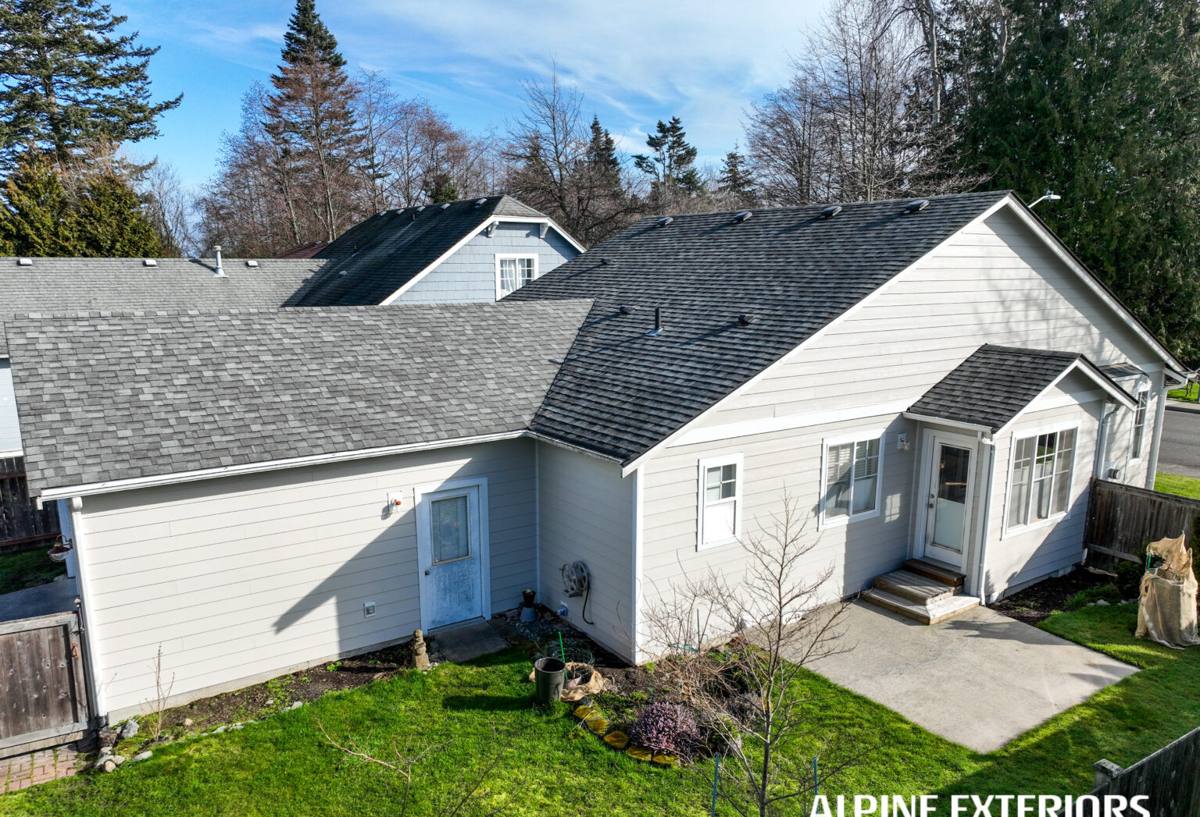
Homes near the water in this area tend to fall into a few categories: older cabins and cottages converted to year-round residences, mid-century homes with original wood or early vinyl siding well past its service life, and newer construction that still needs a durable, low-maintenance exterior to make sense of the location. In all three cases, the siding, trim, and finish need to be chosen for what this specific stretch of coastline throws at a house, not for what performs fine on a typical inland lot. A siding job done right here should shrug off salt exposure, resist moisture intrusion at every seam and penetration, and not turn into a moss farm on the shaded side of the house.
Our Full Exterior Service for Sandy Point
We work as a local exterior contractor covering siding, roofing, windows, and decks — the systems that all have to work together to keep water out of a home. Treating these as separate, disconnected projects is how homes end up with mismatched flashing details and recurring leaks. We look at the whole envelope.
- Siding: Full siding replacement and repair using James Hardie fiber cement, installed to manufacturer specification for this climate zone.
- Roofing: Roof replacement and repair with attention to how roof-to-wall flashing interacts with new siding — a common failure point on older Birch Bay homes.
- Windows: Window replacement with correct flashing and integration into the wall assembly, since a poorly flashed window is one of the most common sources of hidden water damage near the coast.
- Decks: Deck construction and repair built to handle constant damp exposure and salt air, with materials and fasteners chosen accordingly.
Because we handle all four, we can spot problems that a single-trade contractor might miss — a roof-to-wall transition that's been leaking behind old siding for years, or a deck ledger board that's compromising the wall it's attached to.
Why We Only Install James Hardie Fiber Cement Siding
We made a deliberate decision to install James Hardie fiber cement siding exclusively, and we don't install vinyl, LP SmartSide, Cemplank, Allura, primed spruce, or cedar. That's not a marketing position — it's a standard we hold because of what we've seen these materials do over time in exactly this kind of marine climate.
Vinyl siding is affordable and low-maintenance in mild climates, but it softens and warps in direct sun exposure and can become brittle in cold snaps; wind-driven rain finds its way behind loose panels more easily than most homeowners expect, and it isn't fire-resistant. LP SmartSide and other engineered wood products perform reasonably well when installed and maintained meticulously, but they're wood-based, which means any breach in the factory coating or caulking creates an entry point for moisture to swell and eventually rot the substrate — a real risk given how much damp time this area gets. Primed spruce and cedar are traditional, attractive choices, but raw or minimally finished wood products require far more homeowner upkeep — recoating, caulking, and moisture monitoring — to survive a climate like this one, and even then they're more vulnerable to the salt-and-moisture combination than a cement-based product.
James Hardie fiber cement is non-combustible, dimensionally stable, and factory-finished with its ColorPlus coating, which resists fading and chipping far better than field-applied paint. Its HZ5 product line is engineered specifically for climates with more moisture and freeze-thaw exposure — the kind of profile Whatcom County's marine environment fits. It also carries a strong transferable warranty, which matters to homeowners who may sell in the years ahead.
Material Comparison
| Material | Moisture Resistance | Maintenance Needed | Fire Resistance | Typical Lifespan |
|---|---|---|---|---|
| Vinyl | Moderate; panels can loosen or warp | Low, but repairs are visible | Poor | 15-25 years |
| LP SmartSide | Good if coating stays intact | Moderate — caulk and coating checks | Fair | 20-30 years |
| Cedar / Primed Spruce | Fair; wood is moisture-sensitive | High — regular refinishing | Poor | 15-30 years, upkeep-dependent |
| James Hardie Fiber Cement | Excellent; engineered for wet climates | Low — factory finish holds up | Excellent, non-combustible | 30-50+ years |
The Installation Process We Follow
Fiber cement siding performs the way it's supposed to only when it's installed correctly, and installation quality is where a lot of siding failures actually originate — not the material itself. Our process for Sandy Point homes includes:
- Removing old siding and inspecting the wall sheathing and framing underneath for any hidden rot or moisture damage before covering it up again.
- Installing a code-compliant weather-resistive barrier and correctly lapped, sealed flashing at every window, door, and penetration.
- Maintaining proper clearance between the bottom of the siding and grade, decks, and roof lines so water doesn't wick up into the material.
- Using corrosion-resistant fasteners appropriate for a coastal environment rather than standard interior-grade hardware.
- Following James Hardie's specified nailing pattern, joint treatment, and caulking details so the manufacturer's warranty stays intact.
Skipping any one of these steps is how homeowners end up with premium siding that still fails early — the material gets blamed when the real issue was a shortcut in the install.
Roofing, Windows, and Decks in the Same Coastal Conditions
The same salt air, driving rain, and moss pressure that affect siding affect every other exterior system on a Sandy Point home. A roof with degraded flashing lets water track down behind the siding, which can rot sheathing long before the siding itself shows a problem. Windows that weren't flashed correctly during a past renovation are one of the most common hidden leak sources we find. Decks exposed to constant damp and salt air need fasteners and ledger connections built for that exposure, not standard inland specs. When we're on site for siding work, we look at how these systems interact — because a new siding job installed over a leaking roof-to-wall detail just hides the problem instead of fixing it.
Maintenance Expectations by Season
| Season | What to Watch For |
|---|---|
| Fall | Clear gutters and downspouts before the wet season starts; check caulking around windows and trim. |
| Winter | Watch for standing water or ice near the foundation and deck ledger; note any new streaking or staining after storms. |
| Spring | Inspect for moss or algae growth on shaded walls and roof valleys; wash gently if needed rather than pressure-washing siding. |
| Summer | Good window for any repairs, recoating, or replacement work while conditions are driest. |
Choosing a Contractor for Sandy Point Work
Coastal exterior work isn't the place to hire on price alone. A few things worth confirming before signing anything:
- Are they licensed and insured to work in Washington, and can they provide proof without hesitation?
- Do they have specific experience with coastal Whatcom County homes, not just general regional work?
- Will they explain their flashing and moisture-barrier details in plain language, not just "we'll handle it"?
- Do they stand behind both the material warranty and their own workmanship separately?
- Can they speak knowledgeably about why they chose the specific siding product they're recommending?
Why a Local Crew Matters Here
A contractor who works Whatcom County's coastline regularly has already seen what happens when the wrong material or a shortcut installation meets this specific combination of salt, rain, and prolonged dampness. That local pattern recognition is hard to replace with a crew that mostly works drier, inland jobs and treats Sandy Point as just another stop. Knowing which elevations need extra attention, which older construction methods tend to hide problems, and how this particular stretch of coast behaves through a full year of weather is the kind of knowledge that only comes from doing the work here repeatedly.
If you're weighing a siding, roofing, window, or deck project for a Sandy Point home, we're happy to take a look and talk through what we're seeing — no pressure, no obligation. Use the form below to request a free estimate.