 Birch Bay
 Roof Repair Built for Birch Bay Village Conditions
Birch Bay Village sits close enough to the water that salt air, driving rain off the Strait of Georgia, and long, damp winters all work on a roof at the same time. None of that is unusual for this part of Whatcom County, but it does mean a roof here ages differently than one twenty miles inland. Fasteners corrode faster near the shoreline. Wind-driven rain finds gaps that would never leak in a calmer climate. And the moss season here runs long enough that a roof left unchecked for a couple of years can end up with real moisture damage underneath, not just a cosmetic green tint.
We repair roofs in Birch Bay Village on a regular basis, which matters more than it sounds like it should. A roofer who mostly works dry, inland neighborhoods tends to under-flash valleys and vents for this climate, or skip underlayment upgrades that this area genuinely needs. We don't have that gap to close — we already build for it.
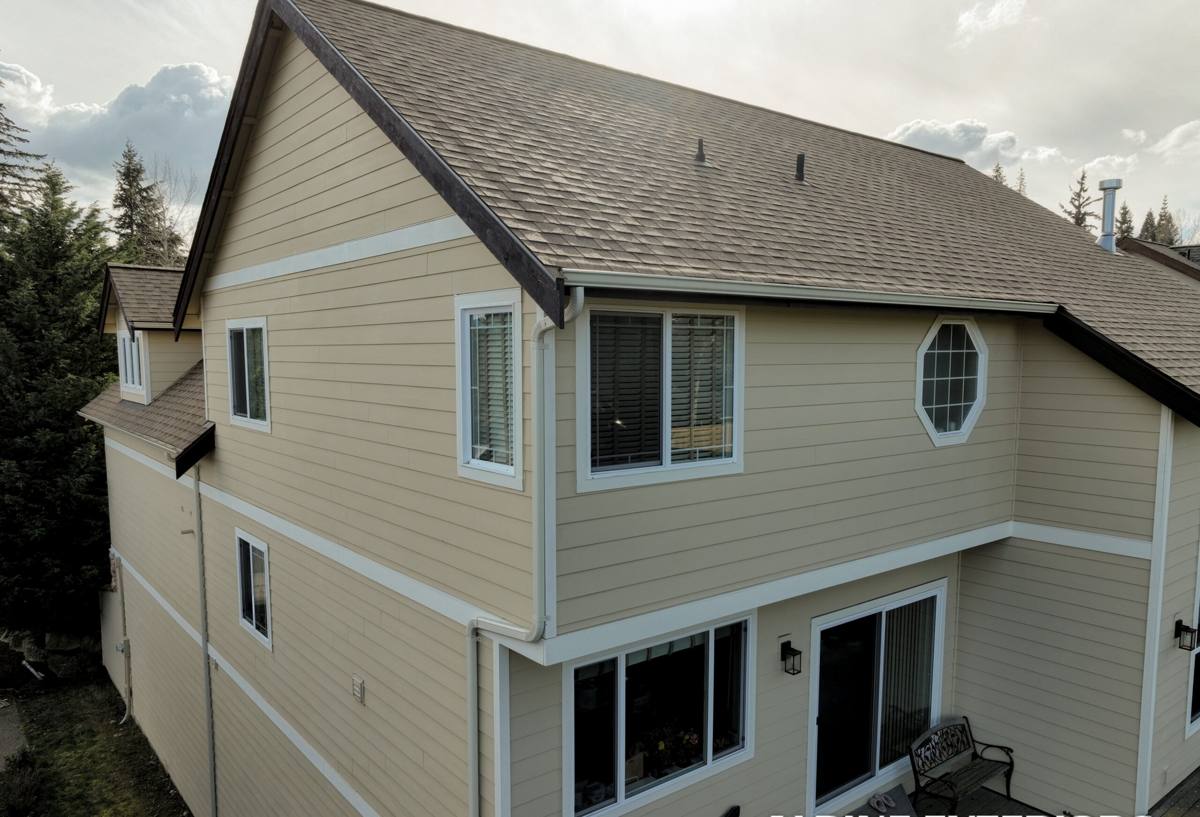
What This Climate Actually Does to a Roof
Salt Air and Metal Fatigue
Roofing fasteners, flashing, vent boots, and drip edge are almost all metal, and metal near the water corrodes faster than the manufacturer's warranty paperwork assumes. Galvanized nails can rust and back out years before they would inland. Flashing seams that were fine when installed can pit and thin over a decade of salt-laden air. When we're diagnosing a leak in this area, we check fastener and flashing condition even in spots where the shingles or panels themselves still look fine, because the metal is often the first thing to fail.
Wind-Driven Rain
Rain that comes in sideways off the water doesn't behave like rain falling straight down. It gets pushed up under shingle tabs, into vent flashing, and along ridge caps that would shed a normal downpour without issue. A lot of the "mystery leaks" we get called out for in Birch Bay Village aren't from a hole in the roof — they're from wind-driven rain exploiting a flashing detail or a shingle seal that was never built for lateral water pressure.
Moss and Trapped Moisture
North-facing slopes, roofs under tree cover, and anything that stays shaded most of the day grow moss here on a schedule you can set your watch by. Moss itself isn't just unsightly — it holds moisture against the roofing material, lifts shingle edges as it grows, and can work its way under flashing over time. A roof that's been growing moss for a couple of seasons without attention usually has more going on underneath than a simple surface cleaning will fix.
Signs a Birch Bay Village Roof Needs Repair
- Water stains on ceilings or upper walls, especially after a windy rainstorm rather than a calm one
- Moss buildup on shaded slopes, valleys, or anywhere debris collects
- Granules collecting in gutters or at downspout outlets (a sign of shingle wear)
- Lifted, curled, or missing shingle tabs, particularly on the side of the house facing prevailing wind
- Rusted or visibly pitted flashing around chimneys, vents, and skylights
- Daylight visible through the attic roof deck, or damp insulation below the roofline
- Sagging areas, which can indicate deck rot beneath the roofing material
What a Correct Repair Involves
A roof repair that actually holds up in this climate isn't just swapping out a few damaged shingles. We look at the whole assembly at the repair site — decking, underlayment, flashing, and the roofing material itself — because a leak is rarely caused by just one thing.
Diagnosis Before Repair
We trace leaks back to their actual source rather than patching where the stain shows up inside the house. Water can travel along rafters or decking before it drips somewhere visible, so the stain and the entry point are often several feet apart. Getting this wrong means the "fix" doesn't fix anything.
Flashing and Underlayment
Given how much wind-driven rain this area sees, flashing details around valleys, chimneys, skylights, and roof-to-wall intersections get extra attention. Where it makes sense, we use self-adhered underlayment at vulnerable transitions — valleys, eaves, and around penetrations — as a second line of defense behind the visible roofing material.
Matching Materials
For patch repairs, matching the existing shingle or panel profile, color, and exposure matters both for appearance and for how the repair sheds water. A mismatched patch can create a small dam where water backs up instead of running off, which causes a new problem while solving the old one.
Deck Repair When Needed
If moisture has been sitting under the roofing material for a while, the plywood or board decking underneath can soften or delaminate. We replace damaged decking rather than roofing over it, because fastening new shingles to soft decking doesn't hold and doesn't solve the underlying moisture problem.
Repair vs. Replacement: How We Help You Decide
Not every roof issue in Birch Bay Village needs a full replacement, and we don't push one when a repair will genuinely hold. The honest answer depends on the roof's age, how widespread the damage is, and what's happening underneath.
| Factor | Leans Toward Repair | Leans Toward Replacement |
|---|---|---|
| Roof age | Under roughly 15 years, or well within expected lifespan for the material | Near or past the material's typical service life |
| Extent of damage | Isolated to one section, valley, or penetration | Spread across multiple slopes or the whole roof |
| Decking condition | Solid, no rot found during inspection | Widespread soft spots or rot in the deck |
| Moss/moisture history | Recent growth, caught early | Long-term moss with signs of underlying moisture damage |
| Granule loss | Minor, localized | Heavy loss across most of the roof surface |
We'll tell you plainly which category your roof falls into, including when a repair is the right call even though a replacement would be a bigger job for us.
Our Repair Process
- Inspection: We walk the roof (or use a lift/ladder access as conditions require) and check the attic from below when accessible, looking at decking, insulation, and ventilation, not just the surface.
- Diagnosis and estimate: We explain what we found, what's causing it, and what a proper fix requires — in plain terms, with an honest cost range, before any work starts.
- Repair: We address the root cause first — flashing, underlayment, decking — then restore the visible roofing material to match as closely as possible.
- Cleanup: Old material, debris, and any moss removed during the process are hauled off. We don't leave granule piles or nails in the yard.
- Follow-up: If a repair doesn't fully resolve an issue, we come back and make it right rather than treating the invoice as the end of the relationship.
Roofing Materials and Honest Trade-Offs
Most homes in Birch Bay Village are roofed in asphalt composition shingles, with some metal roofing in the mix. Both hold up fine here when installed and flashed correctly for the local conditions.
Where we're cautious is with low-slope membrane repairs done as quick patches rather than proper seam and flashing work — a membrane roof near the coast needs seams and terminations done to spec, because a shortcut there tends to show up again within a season or two, not years down the road. That's a maintenance-burden and installation-sensitivity issue more than a product flaw, and it's why we're upfront about what a given repair approach will and won't hold up to over time.
Moss and Maintenance: Reducing Repeat Repairs
A lot of the roof repair calls we get in this area are preventable with basic seasonal maintenance. It won't eliminate moss entirely on a shaded, coastal roof, but it slows it down and catches problems before they become leaks.
- Keep gutters and valleys clear of needles and leaf debris, which hold moisture against the roof
- Trim back overhanging branches to reduce shade and debris buildup on north-facing slopes
- Have moss physically removed rather than just treated, since dead moss still holds water against the roof
- Check flashing and vent boots every couple of years for rust, cracking, or lifted edges
- Address small leaks promptly — a stain the size of a dinner plate today can mean rotted decking in two years
Why a Local Crew Matters for This Job
Roof repair is one of those jobs where local experience shows up directly in the outcome. A crew that regularly works Birch Bay Village knows which roof orientations grow moss fastest in this specific stretch of coastline, which flashing details actually stand up to wind-driven rain off the water, and how fast we can realistically get back out to check a repair after a storm. That's not something a crew commuting in from well inland can match on short notice, and it's part of why we focus our roofing and siding work in this area rather than spreading thin across the whole county.
Get a Straightforward Estimate
If you've noticed a stain, moss buildup, or a spot that just doesn't look right on your roof, it's worth getting it looked at before the next round of driving rain finds the gap. We offer free, no-pressure estimates for roof repair in Birch Bay Village — use the form below to get one scheduled.