 Birch Bay
 Why Birch Bay Village Roofs Take a Different Kind of Beating
Homes in Birch Bay Village sit close enough to the water that roofs here deal with a combination most inland Whatcom County houses don't: near-constant onshore moisture, salt-laden air off Birch Bay, and long stretches of gray, wet weather that never quite lets a roof fully dry out between storms. Add in the tree cover common to this part of the county and you get the third piece of the puzzle — shaded, north-facing slopes that stay damp for days after a rain and turn into prime real estate for moss and algae.
None of that means a roof here has to fail early. It means the installation has to account for those conditions from the start, instead of using the same generic approach a contractor might use on a dry, sun-exposed roof forty miles inland. Fasteners, flashing, ventilation, and underlayment choices all matter more here than they would in a drier climate, because any weak point gets tested by moisture almost every week of the year.
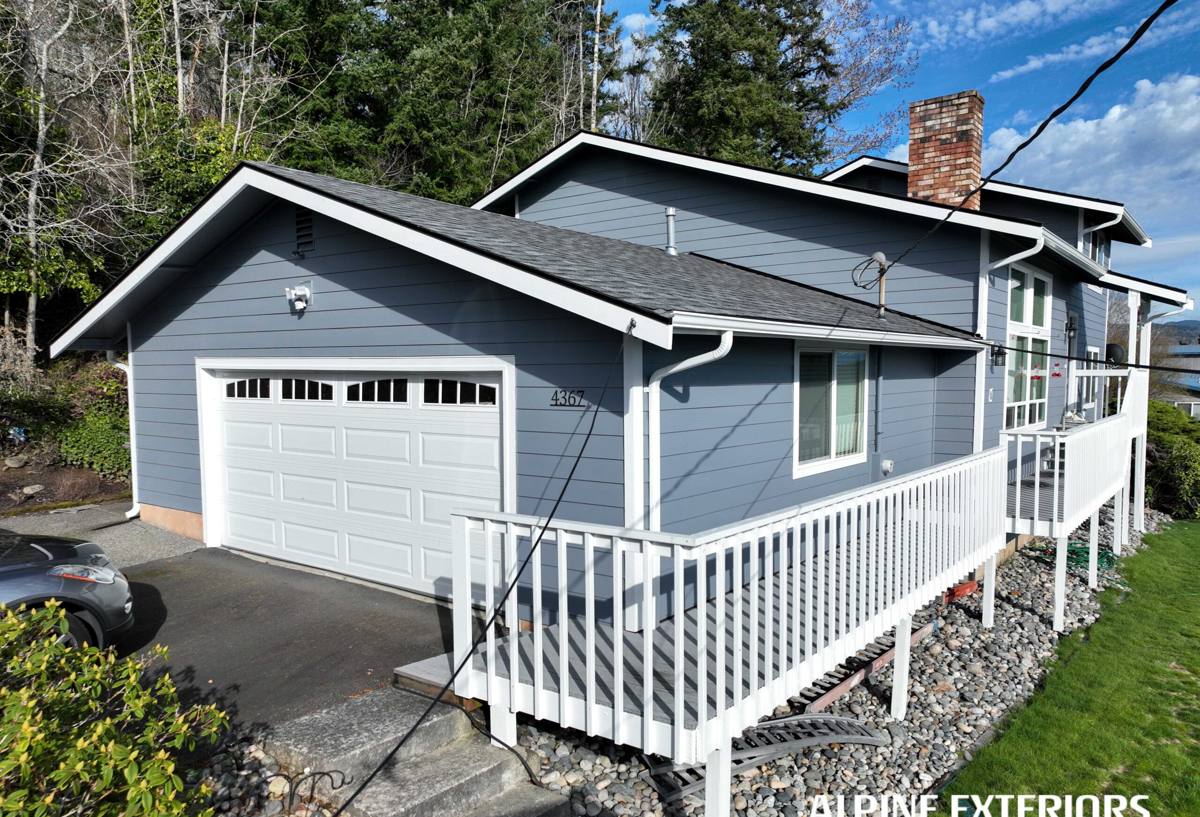
What a Correct New Roof Installation Involves Here
A "correct" install isn't about upgrading everything to the most expensive option — it's about not skipping the parts of the job that don't show up in a driveway photo but decide whether the roof lasts 15 years or 30.
Underlayment and Water-Resistant Barrier
Given how much rain Birch Bay Village sees over a typical year, we don't treat underlayment as an afterthought. A synthetic underlayment with a strong wet-grip rating holds up far better than old-style felt paper if a storm hits mid-install, and we run self-adhered ice-and-water barrier at eaves, valleys, and any low-slope transitions — the spots where wind-driven rain is most likely to work its way backward under shingles.
Ventilation That Actually Balances
A roof deck that can't breathe traps moisture from the inside, which is just as damaging as rain from the outside. We size and balance intake (soffit) and exhaust (ridge or box vents) together rather than adding vents piecemeal. On homes with additions or roof lines that were altered over the years, this often means correcting a ventilation setup that was never right to begin with.
Flashing and Penetrations
Chimneys, plumbing vents, skylights, and wall-to-roof transitions are where the vast majority of leaks start — not in the open field of shingles. We install new step flashing, counter-flashing, and pipe boots with every roof rather than reusing old metal, because salt air accelerates corrosion on flashing faster than most homeowners expect.
Choosing a Roofing Material for This Coastline
There's no single "best" roofing material for Birch Bay Village — it depends on your budget, how long you plan to stay in the home, and how much upkeep you're willing to do. Here's how the common options actually compare under local conditions.
| Material | How It Handles Salt Air & Moisture | Moss/Algae Behavior | Typical Lifespan Here |
|---|---|---|---|
| Architectural asphalt shingle | Good, with corrosion-resistant fasteners and flashing | Prone to moss without upkeep; algae-resistant granules help | 20–30 years |
| Standing seam metal | Excellent when specified with a coastal-rated finish and stainless fasteners | Sheds moss well due to smooth, sloped surface | 40–50+ years |
| Cedar shake | Traditional look but needs regular maintenance in this moisture level | Highest moss/algae risk without diligent upkeep | 20–25 years with upkeep |
| Synthetic/composite shake | Good; resists moisture absorption better than real wood | Lower moss risk than cedar, still benefits from cleaning | 30–40 years |
We don't push cedar shake on homes this close to the water. It's a fine-looking product in the right setting, but the maintenance burden — regular treatment, more frequent moss removal, and closer monitoring for moisture intrusion — is a real cost that shows up over time, not just at installation. That's a trade-off we lay out honestly rather than something we sell around.
Our Installation Process, Step by Step
- On-site inspection and measurement. We look at the existing roof deck, flashing, ventilation, and any signs of past moisture damage before quoting anything.
- Material selection and written estimate. You get a clear breakdown of material, labor, and any deck repair allowance — no vague lump-sum guessing.
- Permit and scheduling. We handle the paperwork and plan the tear-off around a realistic weather window, which matters more here than in drier climates.
- Tear-off and deck inspection. Old roofing comes off down to the deck so we can actually see what's underneath — soft spots, old leaks, and rot don't hide once the shingles are gone.
- Deck repair as needed. Any damaged sheathing gets replaced before anything new goes down; installing over a compromised deck just hides a problem, it doesn't fix it.
- Underlayment, flashing, and ventilation installation. This is the step that determines how the roof performs in year 10, not just how it looks on day one.
- Final roofing material installation. Shingles, metal panels, or synthetic shakes go on to manufacturer spec, with attention to nailing patterns and exposure — both of which affect wind performance.
- Cleanup and final walkthrough. Magnetic sweep for nails, debris removal, and a walkthrough so you know exactly what was done and where.
Living With Moss, Algae, and Salt Air After Installation
A new roof isn't maintenance-free in this part of Whatcom County, and any contractor who tells you otherwise isn't being straight with you. A little seasonal attention goes a long way toward protecting the investment.
- Keep overhanging branches trimmed back so shaded roof sections get more light and air movement, which slows moss growth.
- Clean gutters at least twice a year — clogged gutters back water up under the roof edge, which is one of the more common causes of edge rot.
- Have moss physically removed (not just chemically treated) every year or two on shaded slopes rather than letting it build up and hold moisture against the shingles.
- Consider zinc or copper control strips near the ridge on new installs; rainwater carrying trace metal downhill helps suppress regrowth over time.
- Watch for granule loss in gutters or downspouts, which can signal a shingle roof is aging faster than expected.
Signs Your Birch Bay Village Home Needs a New Roof, Not a Patch
Not every roof problem calls for full replacement, and we'll tell you when a repair is the honest answer. But certain signs usually mean patching is just delaying the inevitable:
- Shingles that are curling, cupping, or losing granules across large sections rather than one isolated spot.
- Daylight visible through the roof deck from the attic, or damp insulation after storms.
- Multiple past repairs in different areas — a pattern that usually points to a deck or underlayment issue, not a shingle issue.
- Moss or algae so established that it's lifting shingle edges rather than just discoloring the surface.
- A roof already past, or close to, its expected material lifespan combined with any of the above.
Cost Factors for a New Roof in Birch Bay Village
We won't quote a number without seeing the roof, but these are the factors that actually move the price up or down on most jobs in this area:
| Factor | Why It Matters Here |
|---|---|
| Roof size and pitch | Steeper or larger roofs mean more material, labor time, and safety setup. |
| Number of layers to remove | Tearing off multiple old layers costs more than a single-layer tear-off. |
| Deck condition | Rot or soft sheathing discovered mid-tear-off adds repair cost, but skipping it costs far more later. |
| Material choice | Metal and synthetic shakes cost more upfront than asphalt but can lower long-term maintenance. |
| Ventilation corrections | Adding or rebalancing intake/exhaust vents on an older roof is a smaller add-on cost with a real payoff in roof lifespan. |
| Access and site conditions | Tree cover, steep lots, or limited driveway access can affect labor and disposal logistics. |
Why a Crew That Already Works Birch Bay Village Matters
Roofing crews that mostly work drier, inland areas sometimes underspec ventilation or skip the extra flashing detail because it's never bitten them before. A crew that regularly works this stretch of the Whatcom County coastline treats salt-air corrosion, moss pressure, and driving rain as the baseline, not the exception — because that's what actually shows up on service calls year after year.
There's also a practical side: familiarity with local permitting expectations, realistic scheduling around the wetter months, and knowing which details on a Birch Bay Village roof tend to get overlooked by out-of-area crews. That local pattern recognition is worth more than it sounds like on paper — it's the difference between a roof that's built to the letter of a spec sheet and one that's built for what actually happens on this coastline.
If your roof is showing its age or you're planning ahead rather than waiting for a leak, we're happy to take a look and give you an honest read on where things stand. Request a free, no-pressure estimate using the form below.