 Birch Bay
 Rot Rarely Starts on the Surface
By the time a homeowner notices a soft spot, a stain, or a section of siding that's visibly bowing, the damage has usually been building for years — behind the wall, out of sight. Siding is the visible layer of a much more important system: the water-resistive barrier, the flashing, the sheathing, and the framing behind it. When that system is compromised, the siding itself is often the last thing to show it.
In Birch Bay, that hidden damage tends to move faster than it would somewhere inland. Salt-laden air off the water, wind-driven rain that comes at the wall sideways instead of straight down, and a moss season that stretches for much of the year all shorten the timeline between "small problem" and "open up the wall and see how bad it is."
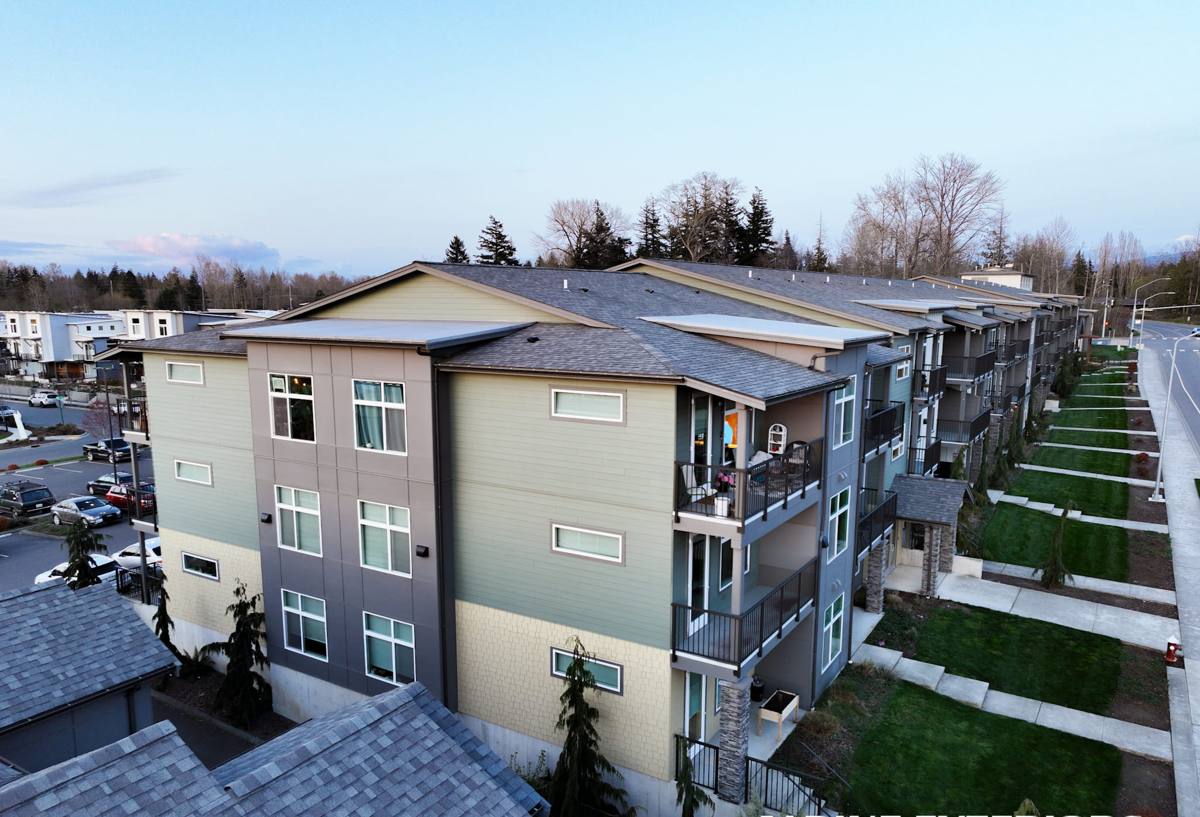
The Regional Climate Factor
Whatcom County gets a lot of rain, but Birch Bay's exposure adds a few extra variables that inland siding jobs don't deal with as much.
Salt Air
Homes near the water are exposed to airborne salt that settles on siding, trim, and fasteners. Salt is hygroscopic — it pulls moisture out of the air and holds it against the surface it's sitting on. On siding, that means surfaces stay damp longer than they would a few miles inland, even on days without rain. On fasteners and metal flashing, it accelerates corrosion, which is one of the more common hidden failure points behind coastal siding.
Driving Rain
Wind off the Strait of Georgia doesn't just bring rain — it drives it horizontally into the wall. Siding systems are generally designed to shed water moving downward. Wind-driven rain finds the gaps that gravity alone wouldn't reach: lap joints, butt seams, trim intersections, and fastener penetrations that would be fine in a calm rain but become entry points under wind pressure.
A Long Moss Season
Shade, moisture, and mild temperatures make Birch Bay a good environment for moss and algae growth on north- and west-facing walls for much of the year. Moss holds water against the siding surface and, over time, works into seams and laps. It also disguises problems — a wall covered in moss and green growth can hide cracking, gapping, or caulk failure underneath.
How Water Actually Gets Behind the Siding
Siding failure is almost never one dramatic event. It's a slow accumulation of small entry points that add up.
Common Entry Points
- Cracked or shrunken caulk at trim boundaries, window and door casings, and butt joints
- Nail and fastener holes that were never properly sealed, or that have backed out over time
- Missing or poorly lapped flashing at windows, doors, and roof-to-wall intersections
- Gaps in the water-resistive barrier (house wrap) behind the siding, often from original installation shortcuts
- Siding installed too close to grade, decking, or hardscape, allowing splash-back and standing water contact
- Failed kick-out flashing where a roofline meets a wall, dumping roof runoff directly down the siding
Bulk Water vs. Trapped Moisture
There are two different problems that get lumped together as "moisture damage." Bulk water intrusion is water actively getting in through a gap or failure point. Trapped moisture is water (or humid air) that gets behind the siding and then can't dry out because there's no drainage path or airflow to release it. A wall can handle occasional bulk water fine if it can dry. It's the combination of both — water getting in and having nowhere to go — that causes the real damage.
What's Actually Happening Behind the Wall
Once moisture is trapped, it doesn't sit still. It moves through the wall assembly and causes different kinds of damage depending on what it contacts.
| Location | What Happens | Why It Matters |
|---|---|---|
| Sheathing (OSB or plywood) | Swelling, delamination, soft rot | Sheathing is structural — it ties the wall together and holds the siding fasteners |
| Framing / sill plate | Wood rot, fungal decay | Structural framing damage is the most expensive category of repair |
| Insulation | Compression, mold growth, loss of R-value | Wet insulation stops insulating and can become a mold reservoir |
| Interior finishes | Staining, bubbling paint, musty odor | Often the first sign homeowners actually notice, and usually means the damage is already advanced |
This is why a stain on an interior wall or a soft spot you can push a finger into from outside is rarely an isolated issue. It's a visible symptom of something that's been developing for a while.
Material Behavior: Why the Siding Itself Matters
Not every siding material handles moisture exposure the same way, and that difference matters a lot in an environment like Birch Bay's. This isn't about any one product being "bad" — it's about understanding the trade-offs before you commit to a material for a coastal wall.
| Material | Moisture Behavior | Coastal Considerations |
|---|---|---|
| Wood / engineered wood (e.g., primed spruce, LP-type panels) | Wood fiber can absorb moisture at cut edges and fastener points; performance depends heavily on maintaining the factory coating | Requires consistent caulking, painting, and edge sealing to keep water out over time |
| Vinyl | The material itself doesn't absorb water, but it isn't a water barrier — water can pass behind panels through seams and laps | Doesn't stop moisture reaching the wall assembly; the WRB behind it is doing all the real work |
| Fiber cement (James Hardie) | Cement-based composition doesn't absorb and swell like wood fiber; factory-applied finish resists moisture at the surface | Still requires correct flashing and installation — no siding material overcomes a bad water-management detail |
That last line is worth repeating for every material in that table: the siding is one layer of a system. Even the most moisture-resistant panel on the market will fail early if it's installed without proper flashing, clearance, and a functioning drainage plane behind it. Material choice reduces risk — it doesn't eliminate the need for correct installation.
Warning Signs Worth Checking
Most of these can be checked from the ground or with a ladder, without opening anything up.
- Soft, spongy, or bouncy spots when you press on the siding
- Visible gaps, cracking, or separation at seams, corners, and trim joints
- Peeling or bubbling paint, especially on wood-based siding
- Dark staining or streaking running down from a joint, window, or flashing point
- Moss or algae buildup concentrated in one area rather than spread evenly across the wall
- Musty smell or visible staining on interior walls that share an exterior with the affected area
- Siding that sits directly against soil, mulch beds, or hardscaping with little to no clearance
Any one of these on its own isn't necessarily an emergency. Several of them together, or any sign paired with interior staining, is worth having looked at before the next wet season.
What Correct Water Management Looks Like
Whether we're replacing siding outright or repairing a damaged section, the goal is the same: give water a way in that never happens, and give any moisture that does get behind the cladding a way to dry out or drain away.
The Basics of the System
- A continuous, properly lapped water-resistive barrier behind the siding
- Correctly integrated flashing at every window, door, and roof-to-wall intersection — installed so water sheds outward at each layer, not just caulked over
- Adequate clearance between the bottom of the siding and grade, decks, roofs, and hardscaping
- A drainage gap or rainscreen behind the siding on exposures that need it, so bulk water and incidental moisture have somewhere to go
- Fasteners and trim details sized and placed to manufacturer specification, not just "close enough"
None of this is visible once the job is finished, which is exactly why it's the part that gets shortcut on lower-bid jobs. It's also the part that determines whether a siding job lasts fifteen years or fifty.
When Repair Makes Sense vs. When It Doesn't
Isolated damage — a rotted section around one window, a small area of compromised sheathing — can often be repaired without replacing the whole wall, as long as the surrounding material and structure are sound. Widespread moisture damage, especially anything involving structural framing or damage that shows up in multiple areas of the same wall, usually means the underlying water-management system has failed broadly, not just in one spot. In that case, patching the visible symptom without addressing the system behind it tends to buy a year or two before the same problem resurfaces somewhere else on the same wall.
This is the point where we'd recommend fiber cement for the rebuild. It's not about one material being flawed — it's that once a wall is already open, it's the right moment to install a cladding that won't add wood-fiber moisture absorption to the list of variables you have to manage going forward, backed by a factory finish and a strong transferable warranty.
Get a Straight Answer on What's Going On
If you're seeing any of the warning signs above, or you just want a second set of eyes on a section of siding that doesn't look right, we're happy to take a look. A free estimate includes an honest read on whether you're dealing with a surface issue, an isolated repair, or something that points to a bigger water-management problem behind the wall — no pressure, no upsell, just what we'd actually recommend if it were our own house.