 Birch Bay
 Storm Damage Looks Different on Lummi Island Than It Does Inland
A roof on Lummi Island takes a different beating than one twenty miles inland. Storms coming off the Strait of Georgia and Rosario Strait bring wind-driven rain that hits roofs sideways, not straight down, which pushes water under shingles and flashing that would stay dry in a normal downpour. Add near-constant salt air off the water, heavy tree cover in a lot of the island's older neighborhoods, and a moss season that can run most of the year in Whatcom County's damp climate, and you get roofs that fail in ways a generic "storm damage" checklist doesn't cover well.
We work storms up and down the Birch Bay area and out to Lummi Island regularly, so we've seen what actually goes wrong here versus what homeowners assume went wrong. That distinction matters, because the wrong repair on a coastal roof either fails again in the next windstorm or quietly rots the deck underneath while the surface looks fine.
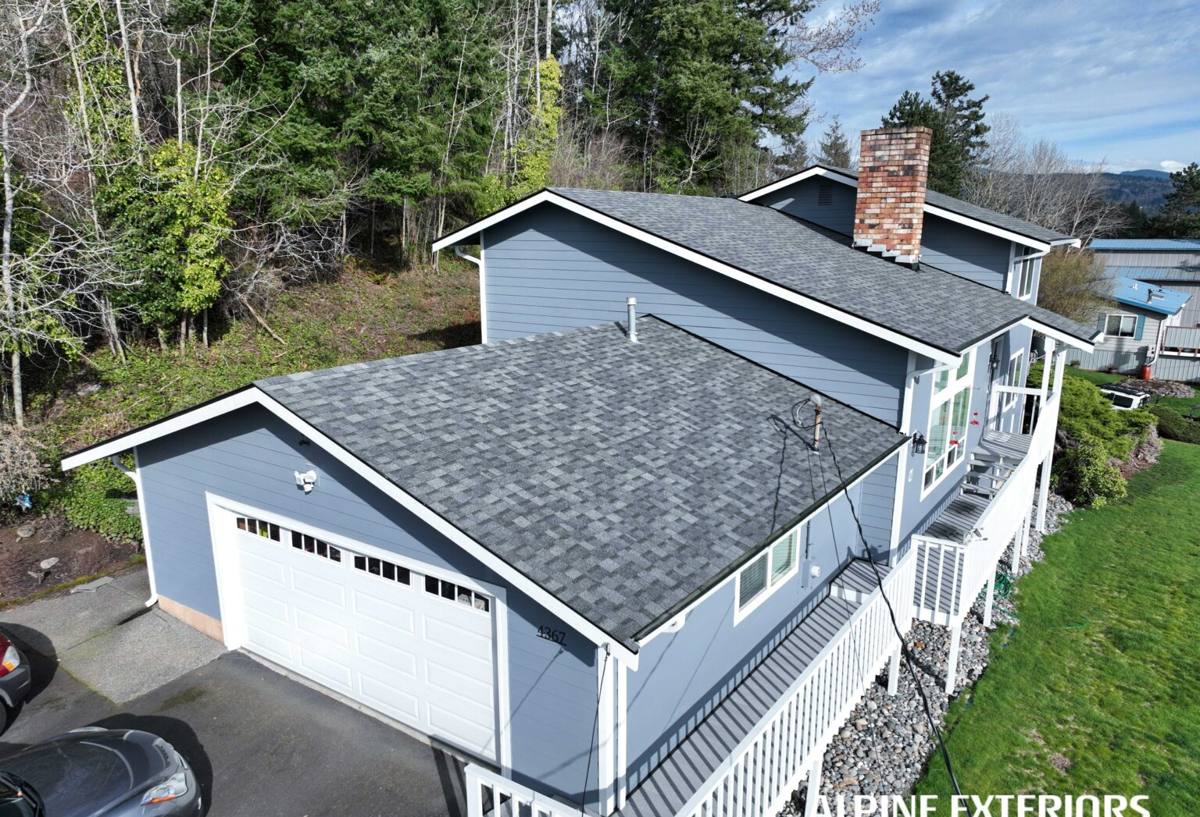
What Coastal Storms Actually Do to a Roof
Most storm damage calls fall into a handful of categories, and each one needs a different fix:
Wind-Lifted or Torn Shingles
Sustained coastal wind gets under the shingle tab, breaks the adhesive seal, and either tears the shingle off entirely or leaves it creased and loose. A creased shingle that's still nailed down often looks fine from the ground but has lost its wind rating and its ability to shed water at that spot.
Flashing Failure
Flashing around chimneys, skylights, and roof-to-wall transitions is usually the first thing to fail in a wind-driven rain event, because it depends on lap and seal geometry that horizontal rain defeats. Once flashing lifts or the sealant cracks, water gets behind it even without any missing shingles.
Moss and Debris-Related Rot
This one isn't a single storm event but it shows up as "storm damage" after a big blow, because wind knocks branches and needles into moss mats that have been holding moisture against the roof deck for months. The storm doesn't cause the rot — it just breaks the compromised area and makes the leak obvious.
Impact Damage
Falling limbs are common on tree-covered Lummi Island lots. Impact can crack shingles, dent metal roofing, or punch straight through decking depending on branch size and roof age.
Why Access and Timing Matter Here
Lummi Island is ferry-accessible, and that's a real factor in storm response that a mainland roof repair doesn't have to account for. Getting a crew, a tarp, and materials onto the island quickly after a storm means planning around ferry schedules rather than just driving over. We build that into how we quote and schedule emergency tarping and repair work out there — the goal is to get a roof watertight the same day damage is found whenever possible, not to let a gap sit open for a tide cycle or two while water keeps getting in.
Delay is the real enemy with storm damage. A roof that's temporarily protected within hours costs a repair. A roof that sits open for a few days of on-and-off coastal rain often turns into a deck replacement, insulation replacement, and sometimes interior drywall and paint work too.
What a Correct Storm Repair Actually Involves
A quick patch and a correct repair can look identical from the driveway. The difference is underneath.
1. A Full Inspection, Not Just the Obvious Spot
We check the whole roof plane, not just where the homeowner saw a leak, because wind damage on one side of a roof often has a matching weak spot on the leeward side where uplift pressure did quieter damage. We also check attic or roof deck moisture where we can access it, since staining and soft decking tell us more than the shingle surface does.
2. Temporary Protection Done Right
A tarp that's improperly anchored just adds a second failure point in the next windstorm. We anchor tarps to framing, not just to the roof surface, and we make sure water is directed off the roof, not pooled behind a poorly lapped edge.
3. Deck Repair Before Anything Goes Back On
If the sheathing underneath is soft or delaminated, replacing shingles over it without fixing the deck is a cosmetic fix that fails again, usually within a season or two. We replace compromised decking before any new roofing material goes down.
4. Flashing and Underlayment That Match Coastal Conditions
Given the salt air and wind-driven rain this area sees, we don't cut corners on flashing details or underlayment quality on storm repairs, even small ones. A cheap underlayment or an undersized flashing lap might pass on an inland roof; it's the first thing to fail here.
5. Matching the Existing Roof Where Possible
We try to match shingle color, profile, and where reasonable, age-appropriate wear so a repair doesn't stand out as an obvious patch. When an exact match isn't available because the original product is discontinued or too weathered to blend, we'll tell you that honestly upfront rather than promise a seamless match we can't deliver.
Repair or Replace? How We Make That Call
Not every storm-damaged roof needs full replacement, and not every roof is worth patching. We walk homeowners through the actual factors rather than defaulting to the most expensive option:
| Factor | Leans Toward Repair | Leans Toward Replacement |
|---|---|---|
| Roof age | Under roughly 12-15 years, especially asphalt | Near or past expected material lifespan |
| Extent of damage | Localized to one plane or section | Spread across multiple planes or the whole roof |
| Deck condition | Sound, dry, no soft spots | Soft, delaminated, or repeatedly wet decking |
| Moss/organic history | Light moss, roof otherwise sound | Long-term moss damage across large areas |
| Prior repair history | First storm event on this roof | Multiple past patches stacking up |
| Insurance scope | Claim covers targeted repair adequately | Adjuster scope already supports full replacement |
We'll give you a straight answer based on what we actually find during inspection, including when a repair is genuinely the right call and full replacement would be more work and cost than the roof needs.
Materials That Hold Up in This Climate
Salt air and constant moisture change how roofing materials perform compared to a drier inland climate. A few standards we hold to on coastal storm repairs:
- Corrosion-resistant fasteners and flashing metal, since standard-grade metal pits and stains faster this close to the water
- Synthetic underlayment over older felt products in most repair scenarios, for better tear resistance and consistent water resistance during the time between tarp and permanent repair
- Proper ventilation checked as part of any repair, since trapped moisture combined with coastal humidity accelerates moss growth and deck rot from the inside
- Sealants and adhesives rated for the temperature and moisture range this area actually sees, not just a generic all-climate product
None of this is about pushing a premium upgrade on every job. It's about not repeating the repair in three years because the materials underneath weren't built for salt air and driving rain in the first place.
Working With Insurance on a Storm Claim
Most storm damage repairs on Lummi Island and around Birch Bay go through homeowners insurance, and how the documentation is handled affects whether the claim covers what it should. We photograph and document damage before any temporary repair covers it up, provide a clear written scope of what's damaged and what's pre-existing wear, and are available to walk an adjuster through the roof if that's helpful to your claim. We don't inflate scope to chase a bigger payout, and we don't shrink it to make a quick sale — the scope reflects what the storm actually did.
Signs You Should Have a Roof Checked After a Storm
Some storm damage is obvious. A lot of it isn't, especially from the ground. After any significant wind or rain event, it's worth checking for:
- Shingle granules collecting in gutters or downspout runoff
- Any shingles visibly creased, curled, or missing
- New or worsening water stains on ceilings or attic framing
- Daylight visible through the roof deck from inside the attic
- Flashing that looks lifted, bent, or separated around chimneys and skylights
- Fresh branch or debris impact marks on the roof surface
- Moss mats that shifted or tore loose during high wind
If you see any of these, or you're just not sure after a rough storm, it's worth a call before the next weather system moves through rather than after.
Our Process, Start to Finish
Storm calls get handled with urgency, but that doesn't mean skipping steps:
- Phone call to understand what happened and how urgent the exposure is
- Inspection scheduled as fast as ferry timing and weather allow, with emergency tarping the same visit when needed
- Written findings and photos covering the full roof, not just the visible problem area
- Honest repair-versus-replace recommendation with the reasoning explained
- Free estimate covering the actual scope of work
- Repair completed with matching materials and proper flashing and deck work, not just a surface patch
- Insurance documentation provided if you're filing a claim
Why Local Experience on Lummi Island Matters
A roofer who mostly works dry inland roofs will still fix a Lummi Island storm claim, but they're often solving the problem for the first time on your roof — figuring out on the fly how salt air affects fastener choice, how wind-driven rain gets past standard flashing laps, or how ferry logistics affect getting a tarp up before the next tide of rain moves in. A crew that already works this stretch of Whatcom County coastline has that figured out before they show up, which means faster response and a repair that's built for the conditions your roof actually faces, not generic conditions.
If your roof took damage in a recent storm, or you're not sure whether what you're seeing is storm-related or long-term wear, we're happy to come take a look. The estimate is free, there's no pressure to sign anything on the spot, and you'll get a straight answer about what your roof actually needs. Reach out using the form below to get on the schedule.