 Birch Bay
 Why Lummi Island Roofs Take a Different Kind of Beating
Lummi Island sits out in the salt water, and that changes what a roof has to survive. Homes here deal with a steady drift of salt-laden air off the water, wind-driven rain that gets pushed sideways under poorly flashed edges, and a shaded, damp climate for much of the year that lets moss and moisture-loving growth take hold on north-facing slopes. None of these things individually are unusual for Whatcom County. Combined, and applied year after year to the same roof, they wear out materials and details that would hold up fine in a drier, more sheltered part of the state.
A roof that's correctly installed for this environment doesn't look dramatically different from any other good roof. The difference is in the details you can't see once the job is done — the underlayment choice, the flashing sequence, the fastener spec, and the airflow path through the attic. Those are the things that decide whether a roof makes it 25-plus years out here or starts showing problems at year eight.
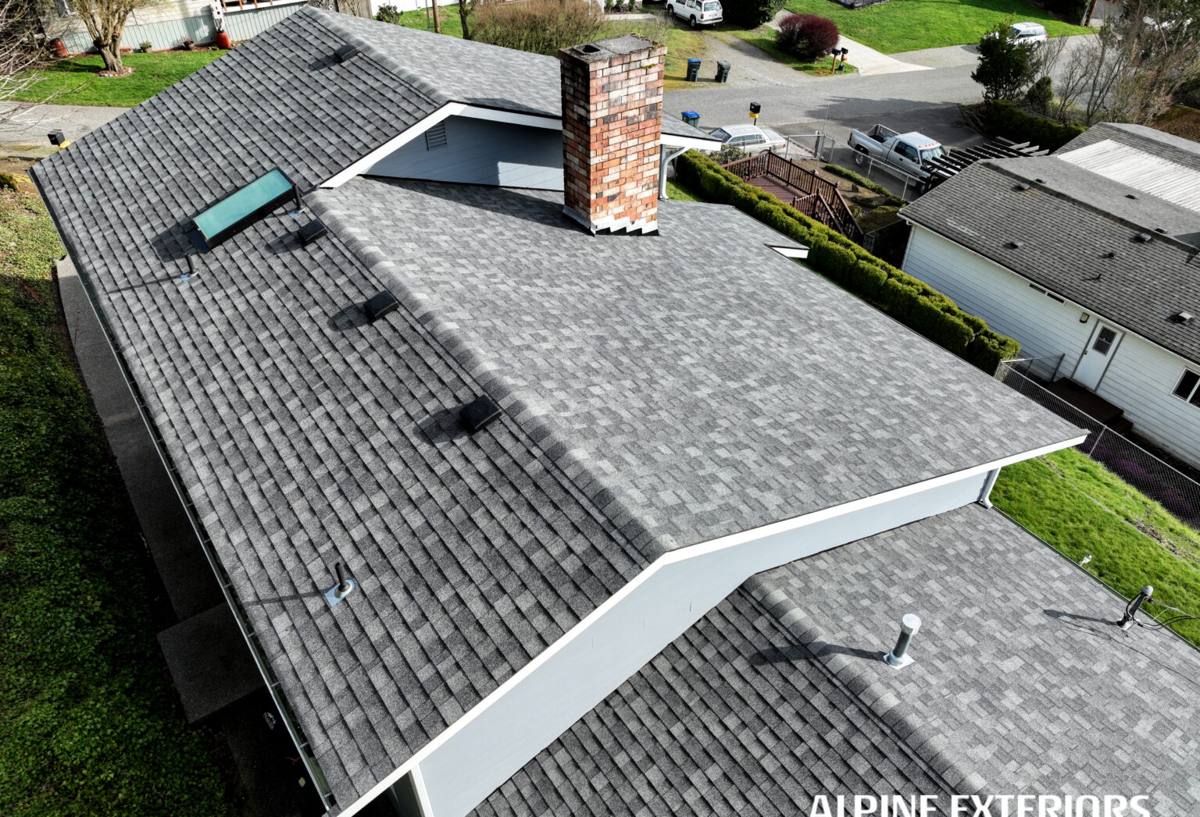
What a Correct Roof Replacement Looks Like on Lummi Island
A new roof isn't just stripping old material and nailing down new shingles. On a home exposed to salt air and driving rain, the installation has to account for a few things specifically:
Corrosion-Resistant Fasteners and Flashing
Standard galvanized fasteners and flashing can start to show rust streaking and pitting faster near salt water than they would further inland. We spec stainless steel or heavy hot-dip galvanized fasteners and flashing on roofs in this kind of exposure, because a fastener that corrodes loses its grip long before the shingle above it wears out — and a rusting flashing joint is a leak waiting to happen.
A Real Underlayment System, Not Just a Layer of Felt
Wind-driven rain doesn't always run downhill the way roofers assume it will. It can get pushed uphill under shingle tabs during a real storm. A synthetic underlayment with taped or lapped seams, plus self-adhered ice-and-water membrane at eaves, valleys, and any low-slope transitions, gives the roof a real second line of defense instead of a formality.
Ventilation Sized for a Damp Climate
A roof deck that can't breathe holds moisture, and trapped moisture is exactly what moss, mold, and premature sheathing rot need to get started. Balanced intake and exhaust ventilation matters more here than in a dry climate, because there's more moisture in the air to manage in the first place.
Choosing the Right Roofing Material for This Climate
There isn't one "correct" roofing material for Lummi Island — there's a right material for a given budget, roof shape, and how much long-term upkeep the homeowner wants to take on. Here's how the common options actually compare for a marine, moss-prone climate:
| Material | Salt Air / Corrosion Resistance | Moss Resistance | Typical Lifespan Here | Trade-offs |
|---|---|---|---|---|
| Architectural asphalt shingle | Good with stainless/coated fasteners and flashing | Moderate — benefits from copper or zinc strips | 20–30 years | Lowest upfront cost; needs periodic moss treatment on shaded slopes |
| Standing seam metal | Very good with proper coating/alloy choice | Excellent — moss struggles to grip smooth metal | 40–50+ years | Higher upfront cost; requires an installer experienced with metal detailing |
| Composite/synthetic shake | Good | Good | 30–50 years | Mid-to-upper cost; product and installation quality vary a lot by manufacturer |
| Cedar shake | Fair — needs regular maintenance in damp shade | Poor without diligent upkeep | 20–30 years with maintenance | Attractive but the highest ongoing maintenance burden in a moss-prone climate |
We're honest with homeowners about that last row. Cedar has a real appeal, but on a shaded, damp Lummi Island lot it asks for more regular cleaning and treatment than most people want to keep up with. If a homeowner wants that look, we'll talk through it — but we won't pretend it's a low-maintenance choice out here.
Our Installation Process, Start to Finish
Every roof is a little different, but the sequence we follow doesn't change:
- Inspection and estimate. We look at the existing roof, the attic, and the ventilation setup before quoting anything — not just the shingles from the ground.
- Tear-off and deck inspection. Old material comes off down to the deck, and we check the sheathing for soft spots or rot, especially around valleys and old flashing.
- Deck repair as needed. Any compromised sheathing gets replaced before anything new goes down — covering over a bad deck just hides the problem.
- Underlayment and ice-and-water membrane. Installed with attention to laps and fastening pattern, not just rolled out and stapled.
- Flashing at every penetration and transition. Valleys, chimneys, vents, skylights, and wall intersections — this is where most leaks actually start.
- Roofing material installation. Installed to manufacturer spec, with corrosion-resistant fasteners throughout.
- Ventilation check and adjustment. We confirm intake and exhaust are balanced before calling the job done.
- Final walkthrough and cleanup. Site cleared, magnetic sweep for stray fasteners, and a walkthrough so the homeowner knows what was done.
Ventilation and Moisture: The Part Homeowners Don't See
We bring this up separately because it's the piece most often skipped by rushed installs, and it's also the piece that decides whether a roof deck stays sound for decades or starts delaminating from the inside. In a climate with this much ambient moisture, warm interior air that migrates into the attic needs somewhere to go besides condensing on the underside of the roof deck. That means matched soffit intake and ridge or high-point exhaust, sized to the attic's actual square footage — not a token vent or two added as an afterthought. Get this wrong, and even a well-installed roof surface can hide a slowly rotting deck underneath it.
Working on an Island: Access, Logistics, and Scheduling
Lummi Island is reached by ferry, which means roofing jobs there need real planning, not a same-week walk-on. Material deliveries, dumpster drop-off and pickup, and crew scheduling all have to work around ferry timing, and weather windows matter more when a delay means waiting for the next available crossing rather than just tomorrow. A crew that's worked the island before knows to stage materials efficiently, plan tear-off days around the forecast, and avoid leaving a roof open and exposed overnight if it can be helped. That planning isn't glamorous, but it's the difference between a job that runs smoothly and one that turns into a headache for everyone involved.
Signs Your Lummi Island Home May Need a New Roof
Not every roof problem means a full replacement, but these are the signs worth taking seriously in this climate:
- Shingles that are cupping, curling, or losing granules faster on north- or shade-facing slopes
- Moss or dark streaking that returns quickly after cleaning
- Soft spots underfoot or visible sagging along the roofline
- Rust staining running down from flashing, vents, or fasteners
- Daylight visible through the attic sheathing or damp insulation after storms
- A roof that's 20+ years old and hasn't had a full inspection recently
- Granules collecting in gutters in noticeably increasing amounts
Any one of these on its own might just call for a repair. Several at once, or a roof that's aging out and showing them, is usually the point where replacement makes more financial sense than continuing to patch.
Cost Factors for a Lummi Island Roof Replacement
We don't quote prices sight unseen, because roof cost depends on real variables — but these are the factors that move the number most:
| Factor | Why It Matters |
|---|---|
| Roof size and pitch | More surface area and steeper slopes mean more material and labor time |
| Number of layers to remove | Tear-off of multiple old layers adds labor and disposal cost |
| Deck condition | Sheathing repair or replacement adds material and time if rot is found |
| Material choice | Asphalt, metal, and composite options span a wide cost range, as shown above |
| Roof complexity | Valleys, dormers, skylights, and chimneys each add flashing work |
| Access and logistics | Island delivery and disposal scheduling factors into project timing and cost |
Broadly, homeowners should expect asphalt shingle replacements to run toward the lower-to-middle end of typical residential roofing costs, with metal and higher-end composite systems running higher upfront in exchange for a longer service life. We'll walk through the real numbers for your specific roof during an on-site estimate rather than guessing over the phone.
Why Local Experience Matters for This Job
A roofing crew that's only worked drier, inland jobs can still install a technically correct roof on paper and still get it wrong for this environment — the wrong fastener grade, a ventilation plan sized for a different climate, or a scheduling plan that doesn't account for ferry access. Crews that already work Whatcom County's coastal communities, including Lummi Island, know to spec for salt exposure by default, plan around weather and access realistically, and know which north-facing details need extra attention against moss. That local pattern recognition doesn't show up on an estimate line item, but it shows up in how the roof performs ten and twenty years down the road.
If your Lummi Island roof is aging, showing moss, or you just want an honest opinion on whether repair or replacement makes more sense, we're happy to take a look. Reach out for a free, no-pressure estimate using the form below.