 Birch Bay
 Siding Repair Built for Lummi Island's Coastline
Lummi Island homes take a beating that inland Whatcom County houses simply don't. Sitting out in open water means constant exposure to salt-laden air, wind that drives rain sideways into wall assemblies instead of letting it run straight down, and a moss season that can stretch nearly year-round on shaded or north-facing elevations. Siding repair out here isn't just patching a damaged board — it's diagnosing why that board failed in the first place, because on this island the causes are almost always tied to water, salt, or organic growth working on a wall over years, not a single storm event.
We're a Birch Bay-based crew that already works this stretch of coastline, and we treat siding repair on Lummi Island as its own category of work, distinct from repair jobs a few miles inland. Ferry access, marine exposure, and the age of a lot of the housing stock out here all change how a repair should be scoped and executed. Getting it wrong doesn't just mean a cosmetic patch that looks off — it means water finds the same path back in within a season or two.
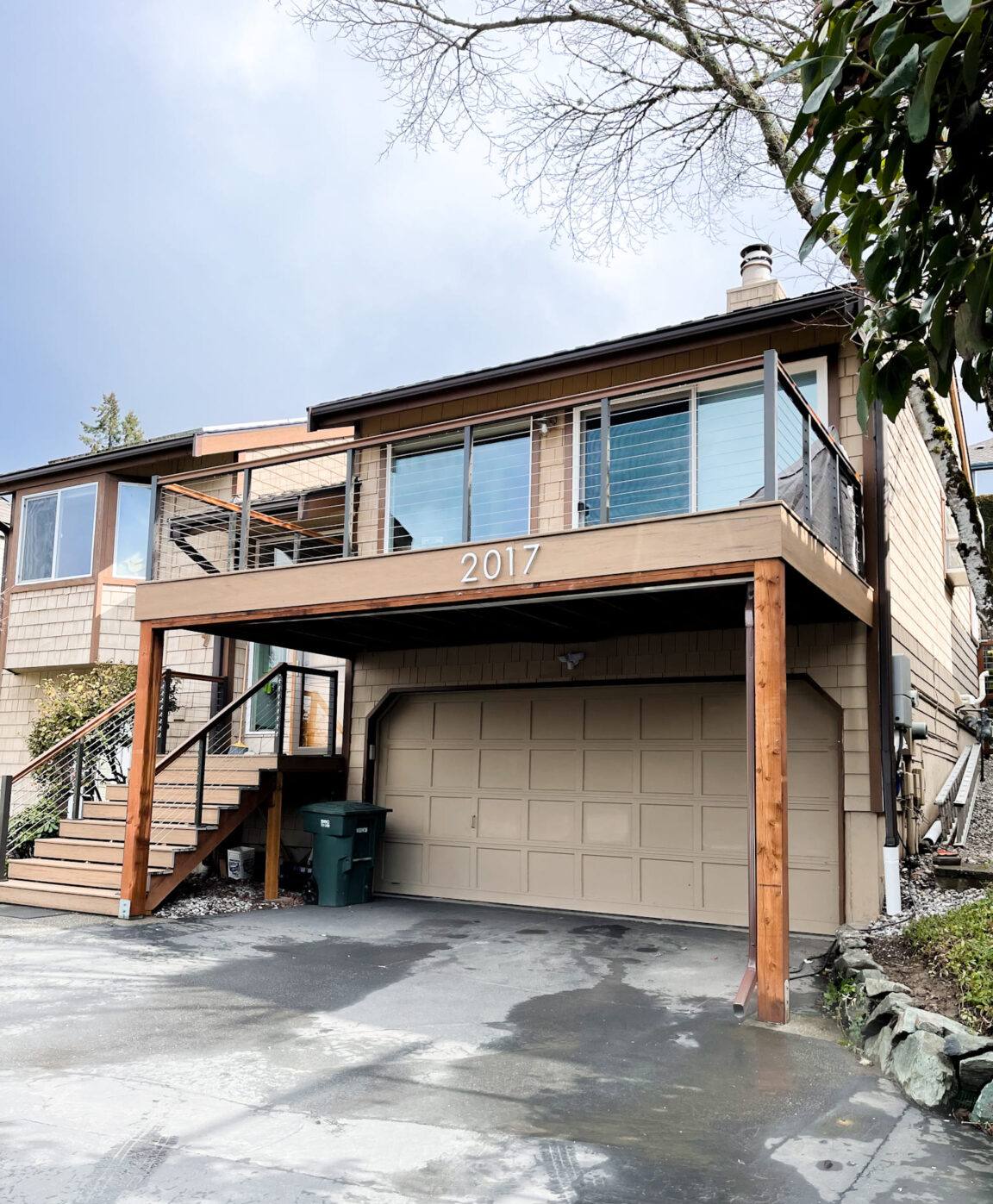
What Salt Air and Driving Rain Do to Siding Here
Corrosion at Fasteners and Trim
Salt in the air accelerates corrosion of nails, screws, and any exposed metal trim or flashing faster than it would a few miles inland. A repair that reuses corroded fasteners or ignores rusting flashing behind a damaged section of siding is a repair that's already counting down to its next failure. Every fastener and flashing detail touched during a repair needs to be evaluated on its own, not just the board that's visibly cracked or delaminating.
Wind-Driven Rain and Hidden Moisture Paths
Being fully exposed to open water means Lummi Island catches wind-driven rain that gets pushed sideways into seams, laps, and butt joints rather than simply running down the face of the wall. That's a different failure pattern than straight-down rain. Water intrusion on this kind of site often shows up several feet away from where it actually entered the wall assembly, which is exactly why a repair has to trace the moisture path back to its source instead of just replacing the board where damage is visible.
Moss, Mildew, and Long-Term Moisture Retention
Mild temperatures, shade from island tree cover, and near-constant dampness add up to a moss and mildew season that runs most of the year on shaded walls. Moss holds moisture directly against the siding surface, and any material that's even slightly porous becomes a growth surface over time. Repairs on Lummi Island frequently turn up moisture damage that was masked by moss growth for months before it became visible as cracking, staining, or a soft spot underneath.
What a Correct Siding Repair Actually Involves
A repair that just swaps out the damaged piece and calls it done is a repair that treats the symptom, not the cause. On a marine-exposed site like Lummi Island, we approach every repair call with the same sequence:
- Identify the actual water entry point — which is often not the same spot as the visible damage
- Inspect flashing, house wrap, and sheathing behind the damaged siding for hidden rot or corrosion
- Check surrounding boards and laps for early-stage moisture damage that hasn't shown visible symptoms yet
- Match replacement material correctly so the repair doesn't create a new weak point at the seam
- Re-flash and re-seal any penetration or transition involved in the original failure
- Confirm proper drainage and clearance so water sheds away from the repaired section going forward
Skipping any one of those steps is how a homeowner ends up paying for the same repair twice. On Lummi Island specifically, we pay close attention to shaded north- and west-facing walls, areas near ground contact, and any siding close to grade or landscaping where moisture sits longer.
Common Damage Patterns We See on Lummi Island Homes
Delamination and Edge Swelling
Siding materials that absorb moisture at cut ends or exposed edges tend to swell, delaminate, or separate into layers over time. This shows up most on older homes sided with wood-based products or lower-grade composites, and it's almost always worse on the water-facing elevations of the island.
Cracking and Impact Damage
Wind-driven debris, tree limbs, and general storm exposure cause more impact damage on an exposed island site than a sheltered inland lot sees. Cracked siding that isn't repaired promptly gives water a direct entry point, and on this coastline that entry point gets tested by weather far more often than it would elsewhere.
Fastener Backout and Loose Panels
Corroding or improperly set fasteners work their way loose over time, especially under sustained wind load. Loose panels flutter in wind, which widens the gap at laps and seams and lets in more water with every storm — a problem that compounds rather than staying static.
Moss-Related Staining and Substrate Damage
Heavy moss growth on shaded walls holds moisture against the siding surface long-term, and by the time staining is visible on the surface, there's often already moisture damage to the substrate underneath.
Repair vs. Replacement: How We Make the Call
Not every damaged section needs full replacement, but a lot of homeowners are surprised at how far damage has actually spread once we get behind the visible problem. We make repair-versus-replacement decisions based on scope, not on which option is more profitable for us — a small, isolated repair stays small when we catch it early.
| Situation | Typical Approach | Why |
|---|---|---|
| Isolated crack or impact damage, no hidden rot | Targeted repair, matched replacement piece | Damage hasn't spread past the visible area |
| Moisture damage traced to a single flashing or penetration failure | Repair plus re-flashing at that detail | Fixing the water source stops repeat damage |
| Multiple failure points across one elevation | Full elevation replacement | Underlying material or install issue likely affects the whole wall |
| Old wood-based or lower-grade siding showing widespread delamination | Full replacement, typically with James Hardie | Repeated spot repairs on failing material don't hold long-term |
Cost Factors to Expect
- Whether the repair is cosmetic only or involves hidden sheathing or rot repair
- Accessibility — second-story sections and steep rooflines take longer
- Whether a color or profile match is available for the existing siding
- Ferry-related scheduling and material logistics for island jobs
- Scope of flashing or moisture-barrier work needed alongside the visible repair
Why We Recommend James Hardie for Island Repair Work
When a repair involves replacing more than a small patch — or when we're matching into an aging, failing wall system — we recommend James Hardie fiber cement over other siding materials. It's a non-combustible material that doesn't absorb and swell the way wood-based or lower-grade composite sidings can, and its factory-applied ColorPlus finish holds color and resists the kind of fading and moisture staining that shaded, damp walls accelerate. Hardie's HZ5 product line is engineered specifically for wet, high-exposure climates like this one, which matters when a repair section has to perform as well as, or better than, the surrounding siding for another twenty-plus years.
We install James Hardie exclusively — not LP SmartSide, vinyl, Cemplank, Allura, primed spruce, or cedar. That's a professional standard we hold to based on what we consistently see fail on marine-exposed sites like Lummi Island: engineered wood products that swell at cut edges, vinyl that can't handle the same wind-driven rain sealing details, and painted wood siding that demands a maintenance cycle most homeowners don't want to keep up with on an island property. Hardie isn't a fix for every siding problem, but when a repair calls for new material, it's what holds up best against what this coastline actually does to a house.
Why a Local Crew Matters for Island Repair Work
Lummi Island repair work isn't the same logistical job as a mainland Birch Bay repair. Ferry schedules affect how a job gets staged and how quickly a crew can respond to an active leak. Material has to be ordered and staged correctly the first time, because making a second ferry trip for a missed detail costs real time. And a crew that already works this coastline recognizes the specific failure patterns — corrosion at fasteners, wind-driven rain paths, moss-driven moisture retention — faster than a crew unfamiliar with island exposure conditions.
We're based in Birch Bay and already work Whatcom County's waterfront communities regularly, which means Lummi Island repair calls get scoped by people who've seen this exact climate do this exact kind of damage before, not a crew learning the site conditions on the job.
Our Repair Process, Start to Finish
- On-site inspection to trace the actual water entry point, not just the visible damage
- Check behind the affected siding for hidden rot, corrosion, or compromised house wrap
- Written scope and honest recommendation — repair, targeted replacement, or full elevation replacement
- Material ordering and ferry-logistics scheduling handled on our end
- Repair executed with proper flashing, sealing, and drainage detailing — not just a board swap
- Final check to confirm the repaired section sheds water correctly and matches the surrounding wall
If you're dealing with cracked, stained, or loose siding on a Lummi Island home, we'd rather take a look and give you an honest read on what's actually going on before you spend money on a repair that won't hold. Reach out for a free, no-pressure estimate — there's a form below to get started.