 Birch Bay
 Why Lummi Island Roofs Age Differently
A roof on Lummi Island doesn't wear the way a roof does thirty miles inland. The island sits out in the marine air of Whatcom County, catching salt spray, driving rain off the water, and long stretches of shade and moisture that keep moss and moisture-loving growth active for most of the year. None of that is dramatic on its own, but stacked together over a decade or two, it shortens the useful life of a roofing system that would otherwise perform well in a drier, more sheltered setting.
We've replaced enough roofs on and around the island to see the pattern clearly: the failures we get called out for are almost never a single dramatic event. They're the slow accumulation of small, climate-driven problems — a corroded fastener here, a moss mat holding moisture there, a flashing detail that was fine on day one but never accounted for how much water this area actually sees. Understanding those specific stressors is the starting point for doing the job right the first time.
Salt Air and Corrosion
Airborne salt doesn't just affect homes right on the water. It travels with the wind and settles on exposed metal — nails, flashing, vent boots, gutter hardware — accelerating rust and corrosion well beyond what you'd see on a similar roof further inland. Once fasteners start to corrode, they lose holding power, and that's when shingles or panels begin to lift in wind events instead of staying put.
Wind-Driven Rain and Water Intrusion
Storms coming off the water don't just drop rain straight down — they push it sideways, up under shingle tabs, into ridge and hip lines, and around any flashing detail that isn't sealed and lapped correctly. A roof that would shed water fine in a calm rain can leak in a wind-driven storm if the underlayment, flashing, and fastening weren't installed with that specific exposure in mind.
Moss, Shade, and Slow-Drying Roofs
Tree cover and marine humidity mean many roofs here stay damp longer after a rain than roofs in drier, sunnier parts of the county. That extended dampness is exactly what moss and algae need to establish. Once moss takes hold, it holds water against the roofing material, works its way under shingle edges as it grows, and can lift and crack aging shingles from underneath — damage you often can't see from the ground.
Signs Your Lummi Island Roof Needs Replacement, Not Another Repair
Repairs make sense when a roof is otherwise sound and the problem is localized. Replacement becomes the honest recommendation when the underlying materials are failing broadly, or when repeated repairs are just chasing symptoms of age and exposure. On the island, we typically see full replacement become the right call when a roof shows several of the following at once:
- Granule loss heavy enough that shingles look patchy or bald in multiple areas, not just one worn section
- Curling, cupping, or cracked shingles across more than one slope
- Persistent moss or algae growth that keeps returning within a season or two of cleaning
- Rusted or corroded flashing, fasteners, or vent boots visible at eaves, valleys, or penetrations
- Soft spots, sagging, or visible deck movement when walked
- Interior staining, attic moisture, or musty odors that point to a slow, ongoing leak
- A roof approaching or past the expected service life of its material, especially if it's never had underlayment or ventilation upgrades
If a roof shows one or two of these in isolation, a targeted repair is often the more honest and cost-effective answer, and we'll tell you that directly. Replacement gets recommended when the pattern points to system-wide aging rather than an isolated defect.
What a Correct Roof Replacement Involves on Lummi Island
A roof replacement done for this environment isn't just "the same roof, new materials." The details that get skipped on a standard job are the exact details that determine whether a roof holds up to salt air and driving rain for its full expected life.
Tear-Off and Deck Inspection
We remove the existing roofing down to the deck rather than layering over it. That's the only way to actually see the condition of the sheathing underneath — soft, delaminated, or water-stained decking has to be identified and replaced before anything new goes down, or the new roof is being installed over a compromised foundation.
Underlayment and Water Protection
Given how much wind-driven rain this area sees, underlayment choice matters more here than in sheltered inland locations. We use synthetic or self-adhering underlayment products suited to the exposure, with self-adhering ice-and-water membrane at vulnerable areas — eaves, valleys, and roof-to-wall transitions — where wind-driven water is most likely to find a way in.
Ventilation
Balanced intake and exhaust ventilation keeps the attic space at a consistent temperature and moisture level, which does two things: it extends the life of the new roofing material from underneath, and it reduces the condensation that contributes to mold and rot in a damp marine climate. A roof can be installed perfectly on the outside and still fail early if the attic underneath is trapping moisture.
Fasteners and Flashing Built for Salt Exposure
This is where a lot of standard roofing jobs cut a corner that doesn't show up until years later. We specify corrosion-resistant fasteners and flashing rated for coastal and marine exposure rather than standard-grade hardware, and we make sure every flashing detail — step flashing, valley flashing, chimney and vent flashing — is lapped and sealed correctly for wind-driven rain, not just vertical rainfall.
Choosing a Roofing Material for Island Exposure
There's no single "best" roofing material for every home — the right choice depends on your home's structure, your budget, and how much long-term maintenance you're willing to take on. What we can do is lay out how the common options actually perform under salt air, moss pressure, and driving rain, so you're choosing with the real trade-offs in front of you rather than a sales pitch.
| Material | Salt Air / Corrosion Resistance | Moss Resistance | Maintenance Needs | Typical Lifespan |
|---|---|---|---|---|
| Architectural asphalt shingle | Good, with corrosion-resistant fasteners and flashing | Moderate — benefits from periodic cleaning in shaded areas | Low to moderate | 20-30 years |
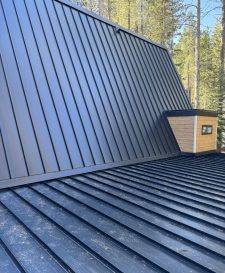
| Standing seam metal | Very good with a marine-rated coating and stainless or coated fasteners | Good — sheds moss more readily than shingle | Low | 40-50+ years |
| Cedar shake | Fair — hardware corrosion is a bigger factor than the wood itself | Requires active upkeep in damp, shaded settings | Higher — regular treatment and moss control | 20-30 years with upkeep |
| Synthetic composite shingle | Good, with correctly specified fasteners | Moderate to good depending on product | Low to moderate | 30-50 years |
For homes with heavy tree cover or north-facing slopes that stay damp longer, we'll often steer the conversation toward materials and details that resist moss more actively, since that's the maintenance burden that causes the most frustration for island homeowners over time. For homes with more open, wind-exposed roof lines, fastener and flashing specification tends to matter more than the material choice itself.
Getting Materials and Crews to the Island
Working on Lummi Island means accounting for the ferry crossing in how a project is planned, not treating it as an afterthought. Material deliveries, dumpster drop-off and pickup, and crew scheduling all have to work around ferry sailing times, which affects how a project timeline is built compared to a mainland job of the same size.
In practice, that means we order and stage materials with enough lead time to avoid a crew standing around waiting on a delivery that missed a sailing, and we plan tear-off and dry-in around weather windows more tightly than we might for a mainland job, since a rain-exposed deck on the island can't be "fixed this afternoon" the way it could be on the mainland. None of this changes the quality of the finished roof, but it changes how realistic and reliable the schedule is — and a crew that hasn't planned around ferry logistics before will often find their timeline slipping for reasons that have nothing to do with the roofing work itself.
Our Roof Replacement Process
The process itself is straightforward, but the sequence and the details within each step are where the quality of the finished roof gets decided.
- On-site inspection and estimate. We look at the existing roof, the attic and ventilation, and the specific exposure of your home's slopes before recommending a scope of work.
- Material selection. We walk through the trade-offs above based on your home's shading, wind exposure, and budget, and settle on a material and color that fits.
- Scheduling around weather and ferry logistics. We plan the job for a realistic weather window and stage materials and disposal in advance.
- Tear-off and deck inspection. Old roofing comes off completely, and any compromised sheathing is identified and replaced.
- Underlayment, flashing, and ventilation installation. This is the layer that actually determines long-term performance, and it's not rushed.
- Roofing material installation. Installed to manufacturer specification, with fastening patterns and flashing details suited to wind-driven rain.
- Final walkthrough and cleanup. We review the finished roof with you, including gutters, flashing, and ventilation, before the job is considered complete.
Why a Crew That Already Works Lummi Island Matters
Roofing crews that mostly work drier, more sheltered inland areas don't always default to marine-grade fasteners, upgraded underlayment at vulnerable areas, or moss-conscious material choices, because they don't need to on most of their jobs. On an island roof, those aren't upgrades — they're the baseline for the roof to actually last.
Having done island projects before also means we already understand the logistics: how to plan around ferry schedules, how to stage a job so a crew isn't stranded waiting on materials, and how weather windows here can differ from the mainland just a few miles away. That experience shows up as fewer surprises, a more accurate timeline, and a finished roof that's specified correctly for where it actually sits — not a generic installation that happens to be located on an island.
Maintaining Your New Roof in a Marine Climate
A correctly installed roof still benefits from some ongoing attention in this climate, and a little maintenance goes a long way toward hitting the full expected lifespan of the material.
- Keep gutters and downspouts clear so wind-driven rain has somewhere to go instead of backing up under the roof edge
- Trim back overhanging branches where practical to reduce shading and speed up drying after rain
- Have moss or algae growth addressed early, before it has time to lift shingle edges or hold moisture against the surface
- Check attic ventilation periodically, especially after any insulation or interior remodeling work
- Have flashing and fastener condition checked every few years, since corrosion in a marine environment progresses faster than most homeowners expect
A roof replacement built for this environment from the start needs less of this maintenance to hit its full lifespan, but no roof on Lummi Island is entirely maintenance-free — the salt air and moisture see to that.
Let's Talk About Your Roof
If you're weighing repair against replacement, or just want an honest read on where your roof stands, we're happy to take a look and walk you through what we find — no pressure, no sales script. Use the form below to request a free estimate, and we'll work with you on a schedule that accounts for the island's weather and ferry logistics from the start.