 Birch Bay
 Why Composite Decking Makes Sense on Lummi Island
Lummi Island sits out in the water, which means every deck on it takes a harder hit from the weather than a deck built ten miles inland. Wind-driven rain comes off the Salish Sea at angles that push moisture into places a typical deck design never has to deal with. Salt-laden air settles on every exposed surface, including the underside of railings and the heads of fasteners. And because so much of the island is wooded and shaded, boards stay damp longer after every storm, which is exactly what moss and algae need to take hold. A deck built for a dry inland yard is not built for this. Composite decking, installed correctly, is the material that holds up best against that combination.
This page is about that one job, done right, for this one stretch of Whatcom County. Not a general decking overview — the specifics of what salt air, driving rain, and a long moss season actually do to a deck, and what a contractor working this island needs to account for.
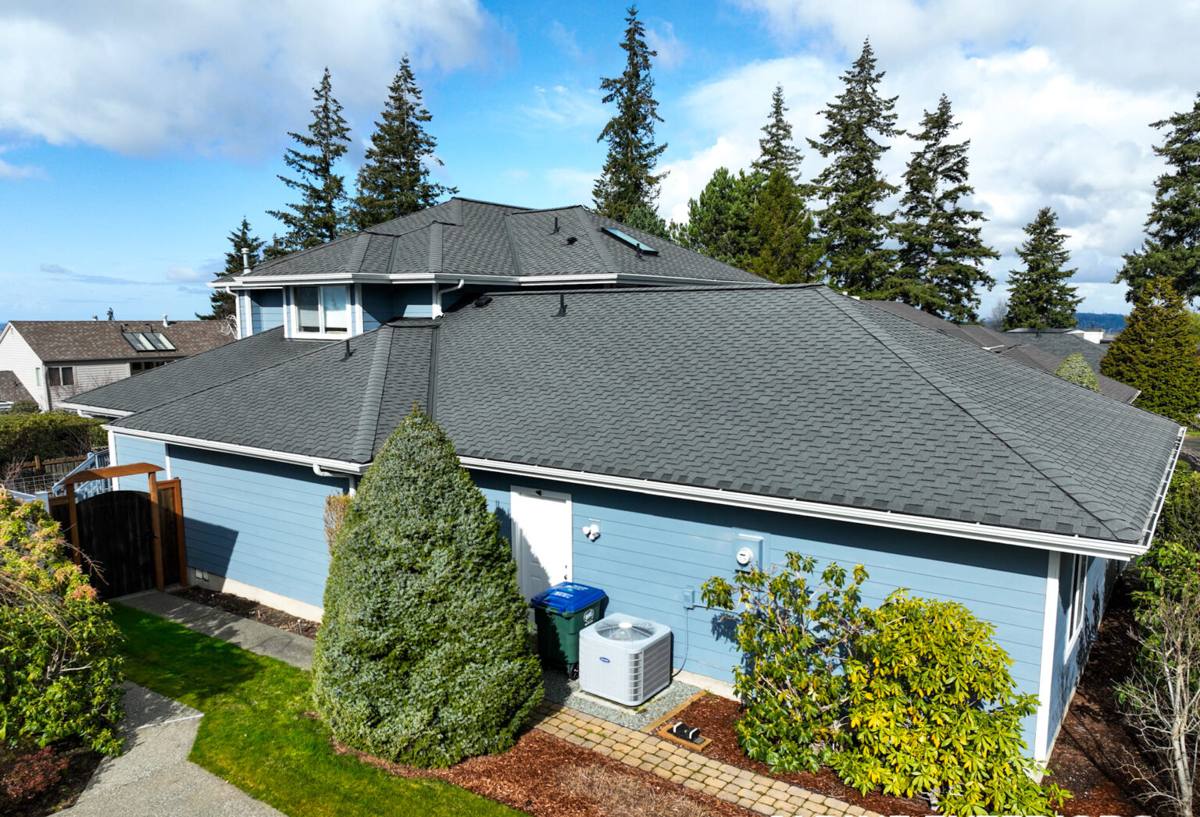
What the Marine Climate Actually Does to a Deck
Salt-Laden Air and Metal Fasteners
Airborne salt is corrosive to standard steel hardware. On a deck near open saltwater, uncoated or poorly rated screws, joist hangers, and bolts corrode faster than they would even a short distance inland. Corroded fasteners don't just look bad — they lose holding strength, and a fastener failure in a structural connection is a safety issue, not just a cosmetic one.
Moisture Trapped Beneath the Boards
Driving rain gets under railings, around post bases, and into any gap where water can collect instead of drain. If the framing beneath a deck can't shed that water and dry out between storms, you get rot in the substructure long before the surface boards show any sign of trouble. This is the part of a deck homeowners never see and contractors cutting corners never budget time for.
Moss, Algae, and Constant Shade
A long moss season means more weeks of the year where a deck surface stays damp instead of drying out in the sun. Shaded, north-facing, or tree-covered decks are the worst affected. Moss and algae aren't just a maintenance annoyance — a mossy deck surface gets slick and dangerous underfoot, especially on stairs.
Composite vs. Wood vs. PVC: Matching the Material to the Island
There's no single "best" decking material for every situation, but there is a best material for this climate and this level of exposure. Here's how the common options actually compare when salt air and constant moisture are part of the equation:
| Factor | Pressure-Treated Wood | Uncapped Composite | Capped Composite |
|---|---|---|---|
| Moisture & salt resistance | Weak — absorbs water, prone to rot and corrosion staining | Moderate — resists rot but the surface can absorb moisture | Strong — a sealed outer shell resists moisture and staining |
| Maintenance needed | Annual staining/sealing, regular inspection for soft spots | Periodic cleaning, more prone to mold in shaded areas | Occasional washing, no staining or sealing required |
| Moss & algae resistance | Low — porous surface holds moisture | Fair — better than wood but still textured/porous | Best — smooth capped surface sheds growth more easily |
| Typical structural lifespan here | Shorter in full marine exposure without diligent upkeep | Longer than wood, variable by brand | Longest of the three with proper installation |
| Upfront cost | Lowest | Mid-range | Highest per square foot |
We install capped composite decking as our standard recommendation for anything exposed to the island's salt air and rain patterns. It costs more up front than wood, but the maintenance burden and moisture behavior over the life of the deck are what actually matter for a structure sitting this close to open water.
What a Correct Composite Deck Installation Actually Involves
Framing and Drainage Slope
The substructure matters more than the decking itself. Joists need to be spaced and rated for the specific composite board being installed — composite has different span requirements than wood, and ignoring the manufacturer's spec is one of the most common installation mistakes we correct on other people's work. The frame also needs a slight, consistent slope so water runs off instead of pooling.
Fasteners and Hidden Clip Systems
Composite boards are typically installed with hidden clip fastening systems rather than face screws, which gives a cleaner look and reduces the number of penetration points where water could work its way in. Every metal component — clips, screws, structural hardware — should be rated for coastal or marine exposure, not just standard exterior-grade.
Ventilation and Ground Clearance
Airflow underneath the deck is what lets the substructure dry out between storms. Skirting, low clearance, or dense landscaping pressed right up against the frame all trap moisture underneath. We build in enough clearance and, where the site allows it, ventilation gaps that keep air moving.
Flashing at the House Connection
Where a deck attaches to the house, flashing has to be installed correctly to keep water from tracking behind siding or into the rim joist. This single detail causes more hidden rot damage than almost anything else on an attached deck, and it's invisible once the ledger board is covered — which is exactly why it has to be done right the first time.
How We Approach a Lummi Island Decking Project
On-Site Evaluation
We start by looking at sun and wind exposure, existing framing condition if it's a replacement, drainage around the site, and how much moss or shade the location deals with. That evaluation drives the material and detailing recommendations, not a one-size-fits-all package.
Material and Color Selection
Darker composite colors run hotter underfoot and can show pollen or debris differently than lighter tones — worth discussing before ordering, not after. We'll walk through board options honestly, including trade-offs in price and appearance, rather than pushing whatever has the best margin.
Scheduling Around Ferry Access
Lummi Island is reached by a short ferry crossing, which means material deliveries and crew scheduling take a bit more planning than a mainland job. We account for that up front so the project timeline reflects reality instead of getting quietly pushed back mid-job.
Build and Final Walkthrough
We build to the framing and fastening standards above, then walk the finished deck with the homeowner — railings, stair connections, drainage, and clearance — before calling the job done.
Keeping a Composite Deck Looking Right Through Moss Season
Composite decking is genuinely low-maintenance compared to wood, but "low-maintenance" doesn't mean "no maintenance" in a climate like this. A few habits go a long way:
- Rinse or sweep the deck surface regularly during the wetter months, especially in shaded areas
- Clear leaves and debris out of the gaps between boards so moisture doesn't sit trapped
- Keep gutters and downspouts clear so runoff isn't sheeting directly onto the deck surface
- Check railing posts and stair connections once a year for movement or corrosion at the hardware
- Trim back overhanging branches where possible to let more light and air reach shaded sections
- Avoid high-pressure settings on a pressure washer, which can damage a composite board's capped surface
- Have the ledger board and flashing connection inspected periodically if the deck is attached to the house
Why Hiring a Crew That Already Works Lummi Island Matters
A contractor who only works mainland jobs isn't necessarily building for the same conditions. Knowing which sides of a property take the worst wind-driven rain, which locations stay shaded and mossy longer into the season, and how ferry logistics affect a realistic project timeline all come from actually working this area, not from a general decking checklist. It also matters for permitting — Whatcom County requirements apply whether the job is on the mainland or the island, and a crew that's pulled permits here before isn't guessing at the process.
We treat every Lummi Island project as its own site evaluation rather than assuming it matches a typical Birch Bay yard. The climate exposure can vary meaningfully even within a small area, depending on how open a lot is to the water and prevailing wind.
What Composite Decking Costs on Lummi Island
Costs vary enough by project that a single number isn't honest. What actually moves the price on a job like this:
- Deck size and whether it's single-level or multi-tier
- Condition of existing framing on a replacement — new substructure work adds cost but is often necessary near saltwater
- Composite board tier (uncapped versus fully capped) and manufacturer
- Railing style and material — composite, metal, or cable systems all price differently
- Site access and material delivery logistics, including ferry scheduling
Broadly, expect capped composite decking to cost noticeably more per square foot than pressure-treated wood, with the gap narrowing over time once you account for wood's ongoing staining and repair costs. We give a firm, itemized number after seeing the actual site — not a phone estimate that changes once the crew shows up.
If you're weighing options for a deck on Lummi Island, we're glad to take a look and give you a straight, no-pressure estimate — fill out the form below and we'll get in touch.