 Birch Bay
 Lummi Island's Coastline Is Hard on Windows
Homes on and around Lummi Island sit right in the path of salt-laden wind off the Salish Sea, wind-driven rain that comes at the wall sideways instead of straight down, and a wet, shaded moss season that can run eight months out of the year in Whatcom County. Windows here don't fail the way they do further inland. They fail at the edges first — at the flashing, the sill, and the corners of the frame — long before the glass itself gives out. If you've owned a home on the island or in the surrounding Birch Bay area for more than a decade, you've probably already seen it: sashes that stick in winter, black streaking below the sill, or a musty smell in the room after a hard rain.
This page is about one job, done right, in this one place: custom window replacement and installation for Lummi Island homes. Not a national product catalog, not a generic "why replace your windows" pitch — the actual decisions that matter when the house is exposed to salt spray and sustained coastal rain for most of the year.
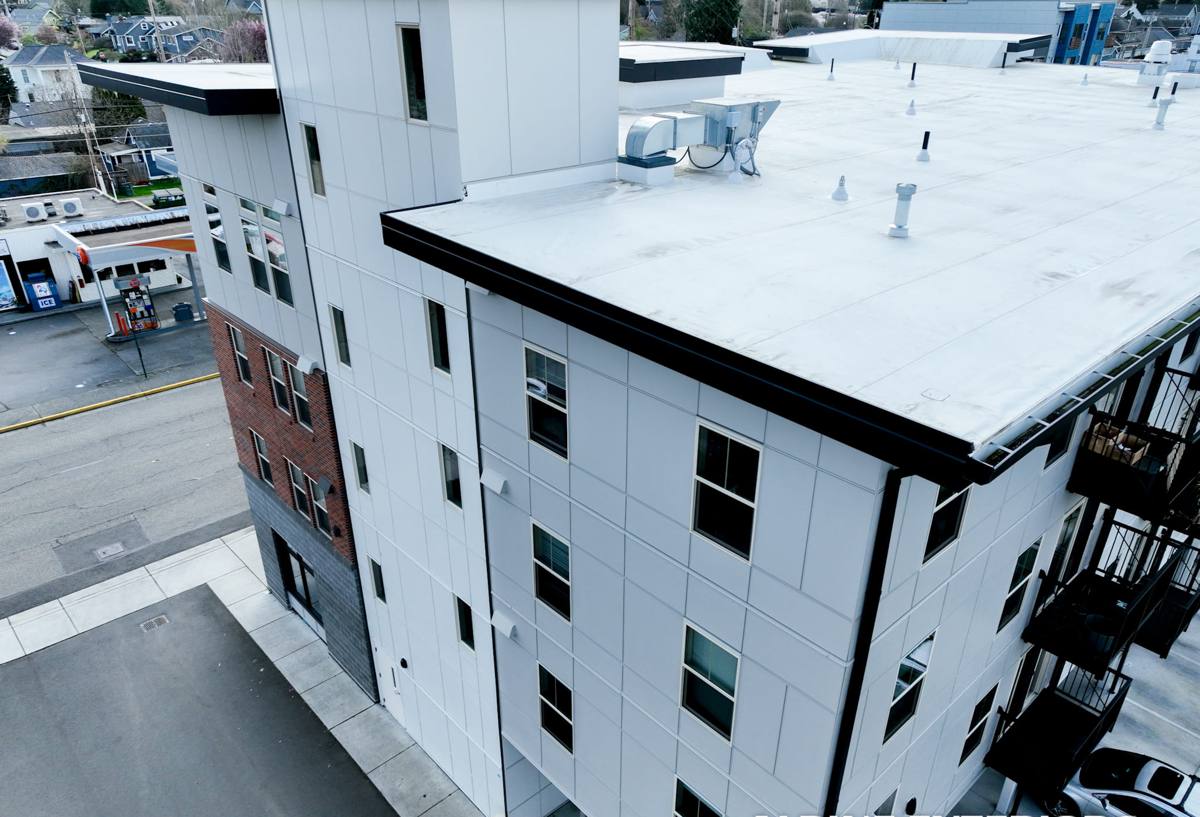
What "Custom" Actually Means Here
Custom doesn't mean fancy shapes or a showroom upgrade. On older island and coastal homes, very few window openings are still a standard factory size — decades of settling, prior remodels, or original construction that predates modern sizing standards mean the rough openings are almost always slightly out of square or off-spec. Custom windows are built to the actual opening, not the other way around. That matters more here than in a dry inland climate, because any gap filled with extra shims or excess sealant instead of a properly sized unit becomes a future water entry point.
"Custom" on this page also covers:
- Matching sightlines and grid patterns across additions or mismatched past renovations
- Choosing glazing and coatings suited to a marine, low-light climate rather than a generic package
- Adapting flashing and sill details to whichever wall assembly the home actually has — old cedar siding, newer fiber cement, or something in between
- Sizing for wind exposure, since a west- or south-facing wall catching open water gets a different load than a sheltered side yard
Why Off-the-Shelf Sizing Falls Short on Older Coastal Homes
When a stock-sized window gets forced into a non-standard opening, installers either compress the frame (which stresses the seals) or pack the gap with foam and caulk (which is the first thing salt-driven rain finds a way through). Custom sizing removes that compromise before it ever becomes a leak.
Material and Glazing Choices for Salt Air and Rain
There's no single "best" window material for a marine climate — each option trades off differently once salt air and constant moisture are part of the equation. Here's how the common choices actually compare for this specific environment:
| Frame Material | Salt Air Performance | Moisture Behavior | Maintenance |
|---|---|---|---|
| Vinyl | Does not corrode; UV-stable formulations hold color well near open water | Won't rot or absorb water; seams and welded corners are the weak point to inspect | Low — occasional rinse to clear salt film |
| Fiberglass | Very stable; expands and contracts close to glass, reducing seal stress in temperature swings | Dimensionally stable when wet or dry | Low, higher upfront cost |
| Wood / Wood-clad | Attractive but the cladding must stay fully intact — any breach exposes wood to constant moisture | Prone to rot if the exterior clad or finish is ever compromised | Highest — regular inspection and refinishing |
| Aluminum | Conducts cold and can pit or corrode over time without a marine-grade finish | Prone to condensation on the frame in a cold, humid climate | Moderate; finish quality matters more than with other materials |
For most Lummi Island homes we work on, vinyl or fiberglass ends up being the practical choice — not because wood windows can't be beautiful, but because a wood frame's long-term performance depends entirely on a clad or finish layer never failing, and in a climate this wet, that's a demanding standard to maintain for decades. We'll still install wood-clad windows when a homeowner wants that look and understands the upkeep; we just won't pretend the maintenance burden isn't real.
On glazing, dual-pane units with a low-E coating and argon fill are the baseline we recommend for this area — they cut down on the condensation that a cold glass surface invites in a humid marine climate, and they help with the west Whatcom County wind chill in winter.
Signs Your Current Windows Are Losing the Fight
Salt air and coastal rain don't cause dramatic, sudden failures — they cause slow ones. By the time a window is obviously broken, the wall behind it has often been wet for a while. Watch for:
- Sashes that stick or bind seasonally, especially after a stretch of wet weather
- A visible white or gray chalky film on frames (salt residue) that doesn't rinse off easily anymore
- Fogging or moisture between panes — a sign the seal has failed and the insulating gas is gone
- Soft or discolored trim and sill wood, or paint that keeps bubbling in the same spot
- Green or black growth on the sill or the wall just below the window
- A noticeable draft or cold spot near the frame in winter
What a Correct Installation Actually Involves
The window unit itself is maybe half the job. The other half — the part that actually determines whether you get 25 years out of it or five — is how it's tied into the wall.
Flashing and Drainage
Every opening needs a drainage path that assumes water will get behind the trim eventually, because in this climate, it will. That means proper sill pan flashing, correctly lapped house wrap or building paper around the rough opening, and a weep path so any water that does get in has somewhere to go besides the framing.
Sealant Is a Backup, Not the Plan
Caulk fails. It's meant to be a supplemental seal, not the primary defense against wind-driven rain. A window installed correctly will still perform if the sealant cracks in eight years — because the flashing and pan underneath are doing the real work. This is the single biggest difference we see between a properly installed window and one that leaks within a few winters.
Fastening for Wind Exposure
Open-water exposure on parts of Lummi Island means real wind load on window units, not just a design afterthought. Fastening schedules and shimming need to account for that, particularly on larger picture windows or units on an exposed elevation.
Our Process, Start to Finish
- On-site assessment — we look at existing window condition, wall assembly, and exposure on each elevation before recommending anything
- Honest options — material, glazing, and budget tradeoffs laid out plainly, not a single upsell path
- Precise measurement — every opening is measured individually; nothing is assumed to be standard size
- Removal and inspection — old units come out carefully so we can check the sill and framing underneath for hidden moisture damage before it's covered back up
- Correct flashing and installation — sill pan, house wrap integration, and fastening done to hold up against this specific climate, not a generic install
- Final walkthrough — operation, seals, and finish work checked with you before we consider the job done
Because Lummi Island is water-access, we plan material delivery and crew scheduling around that logistics reality up front, so a ferry schedule doesn't turn into delays mid-job.
What Drives the Cost
Every project is different, but the main cost factors on a custom window job in this area are consistent:
- Number of openings and whether they're standard or fully custom sizes
- Frame material chosen (vinyl and fiberglass typically run less than wood-clad)
- Glazing package — dual-pane low-E argon is the common baseline; upgraded coatings cost more
- Condition of the existing wall assembly — if there's hidden rot or moisture damage once old windows come out, that repair is additional
- Access and site logistics, which matter more on water-access properties than mainland ones
We'll give you a real number after we've actually seen the openings — not a phone estimate that changes once we're on site.
Why It Matters That We Already Work This Area
A crew that mostly installs windows in dry, inland conditions and occasionally takes a coastal job will often use the same details everywhere, because that's what they know. A crew that regularly works Lummi Island and the rest of the Birch Bay coastline treats flashing, drainage, and material choice differently by default, because we've seen what this specific combination of salt air, wind-driven rain, and prolonged damp weather does to a window that wasn't detailed for it. That's not a sales pitch — it's just the difference between installing a product and installing it for the place it's actually going.
Living With Coastal Windows: Simple Maintenance That Pays Off
Even a well-installed window benefits from basic upkeep in this climate. A periodic rinse to clear salt residue off frames and hardware, keeping weep holes clear of debris and moss buildup, and a yearly look at exterior caulk lines for cracking will catch small issues before they become water intrusion. None of it is complicated — it just needs to actually happen, which is easy to let slide in a climate where it rains often enough that a dirty window doesn't stand out.
If your windows are sticking, fogging, or just past their years on Lummi Island or anywhere along the Birch Bay coastline, we're happy to take a look and give you a straightforward, no-pressure estimate — use the form below to get started.