 Birch Bay
 Lummi Island's Climate Is Harder on Siding Than Most People Realize
Lummi Island sits out in the marine air of Whatcom County, and that changes what a home's exterior has to deal with year-round. Salt-laden air off the water accelerates corrosion on fasteners, trim, and anything with exposed metal. Driving rain off the Strait pushes moisture sideways into seams and laps that would stay dry on a more sheltered lot inland. And the long, wet Pacific Northwest winter gives moss and algae months to take hold on shaded, north-facing walls and anywhere tree cover keeps siding damp.
None of that is unique to any one house on the island — it's the baseline every exterior wall is up against, whether the home sits close to the water or back in the trees. Siding that isn't engineered for this combination of salt, wind-driven rain, and prolonged dampness tends to show it early: swelling seams, streaking, soft spots at the bottom courses, and paint that fails years ahead of schedule.
Why We Only Install James Hardie Fiber Cement Here
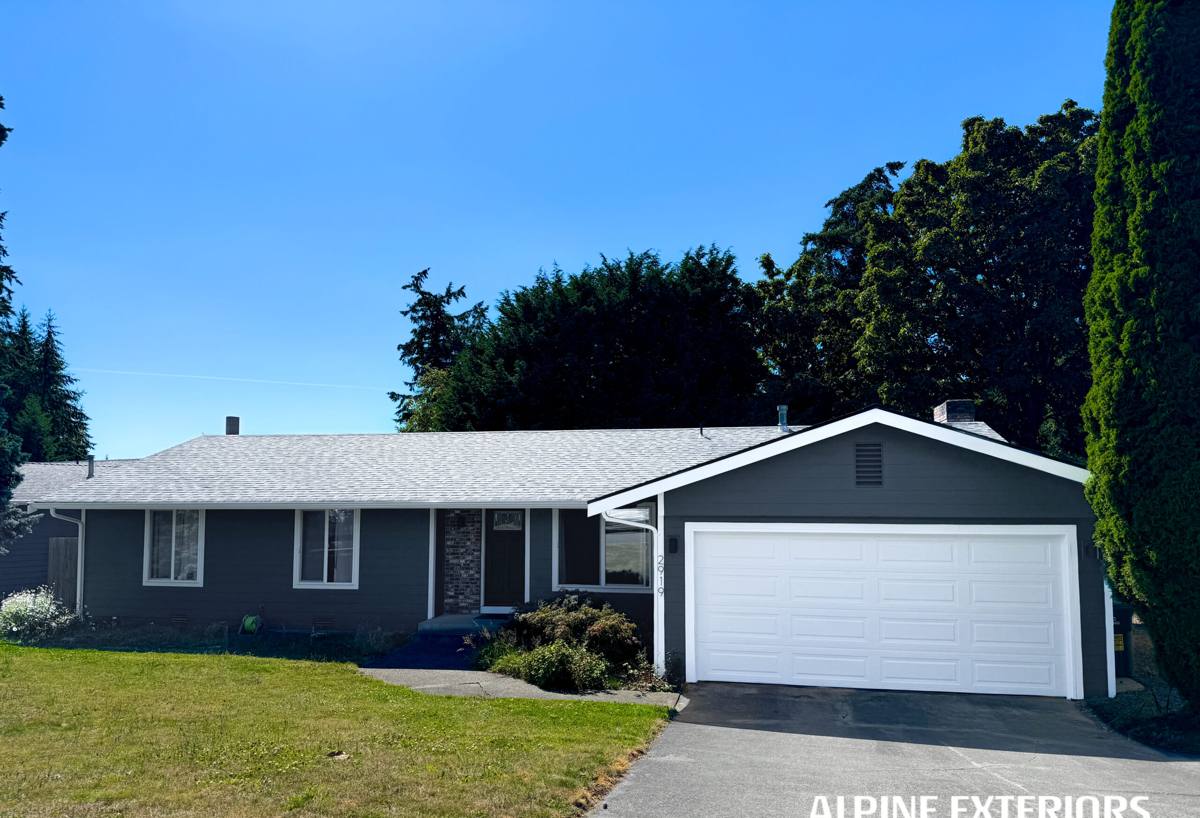
We standardized on James Hardie siding for every home we work on, including Lummi Island, because it's engineered specifically for climate zones like this one. Hardie's HZ5 product line is formulated for regions with damp, moderate winters and marine exposure — the material resists moisture absorption far better than wood-based or wood-alternative products, and it doesn't feed mold or algae the way organic wood fiber can.
It's also non-combustible fiber cement, which matters for long-term insurance and durability considerations even outside of wildfire-prone areas. And the ColorPlus factory finish is baked on under controlled conditions rather than field-painted, which means the color coat holds up better against the UV and moisture cycling that salt air and coastal weather put it through. When a product is installed to spec, Hardie backs it with a strong transferable warranty — one of the reasons we don't hedge our recommendation for island homes.
What This Means Day to Day for an Island Home
- Less swelling and cupping at butt joints exposed to wind-driven rain
- A factory finish that resists fading and chalking longer than field-applied paint
- A surface that doesn't provide the organic food source that algae and moss thrive on
- Fastener and flashing details that, done correctly, keep salt-air corrosion from working its way behind the cladding
What a Correct Installation Actually Involves
Hardie siding performs the way it's rated to only when it's installed to the manufacturer's specifications — and on a marine site like Lummi Island, the details matter more than they would on a sheltered inland lot. A rushed or generic installation is where most of the "siding failures" people blame on the product actually originate.
The details we don't skip
- Fastener selection: corrosion-resistant fasteners rated for the exposure, driven at the correct depth and spacing — not whatever was on the truck
- Clearances: proper gaps between siding and grade, roofing, decks, and other transitions so water has somewhere to go instead of sitting against the board
- Water-resistive barrier and flashing: a continuous drainage plane behind the siding, with flashing integrated at every window, door, and penetration
- Joint treatment: factory-primed or sealed cut edges, and butt joints caulked or flashed per spec rather than left to wick moisture
- Panel gapping: the small expansion gaps Hardie specifies, so the material can move with seasonal humidity swings without buckling
Skip any one of these and you can still end up with premature failure — even with the best siding material on the market. That's why we treat installation discipline as equal in importance to the product choice itself.
Our Process for a Lummi Island Project
Working on the island adds a logistics layer that mainland jobs don't have — the ferry schedule shapes how we sequence deliveries and crew days. We plan around it rather than let it become a surprise mid-project.
| Step | What Happens |
|---|---|
| Site visit and assessment | We walk the home, check current siding condition, moisture points, and exposure (waterfront, wooded, elevated, etc.) |
| Scope and estimate | Written estimate covering product line, color, trim details, and any repair work uncovered at tear-off |
| Material and ferry logistics | Materials staged and scheduled around ferry crossings so the crew isn't waiting on deliveries mid-job |
| Tear-off and substrate check | Old siding removed, sheathing inspected for rot or moisture damage before anything new goes up |
| Water-resistive barrier and flashing | New drainage plane and flashing installed at every penetration before siding starts |
| Hardie installation | Siding installed to manufacturer spec — fastening, clearances, joints, and gapping done correctly the first time |
| Final walkthrough | Punch-list review with the homeowner before we call the job done |
James Hardie Product Lines That Make Sense for This Climate
Not every Hardie product is the right fit for every home, and part of our job is matching the line to the house — its exposure, style, and how much trim detail the owner wants.
| Product | Best For | Why It Fits Lummi Island |
|---|---|---|
| HardiePlank lap siding | Most traditional home styles | Widest color and texture range; HZ5 formulation handles marine moisture well |
| HardiePanel vertical siding | Modern builds, accent walls | Fewer horizontal seams for water to find on exposed elevations |
| HardieShingle | Craftsman and cottage-style homes | Shingle look without the moisture and moss issues of real wood shingle |
| HardieTrim boards | Corners, fascia, window/door surrounds | Consistent, factory-finished trim that resists the same moisture and salt exposure as the field siding |
ColorPlus finishes come in a range of tones that hold up to UV and salt exposure without the recoat schedule field-applied paint requires. For homes with heavy tree cover, lighter and mid-tone colors tend to show algae and moss growth less readily than very dark tones, which is worth factoring into a color choice on shaded lots.
What Affects Cost on an Island Project
Every estimate is specific to the home, but a few factors consistently move the number up or down on Lummi Island jobs specifically.
| Factor | How It Affects Cost |
|---|---|
| Ferry access and scheduling | Adds logistics coordination compared to a mainland job; we plan deliveries to minimize wasted crew time |
| Current siding condition | Rot or moisture damage found at tear-off means sheathing repair before new siding goes up |
| Home size and complexity | Cut-up elevations, multiple gables, and dormers take more trim work and labor than a simple rectangular footprint |
| Product line and trim detail | Vertical panel, shingle accents, and upgraded trim profiles cost more than a straightforward lap siding job |
| Site access | Waterfront or elevated lots with limited staging space can slow material handling |
Why a Crew That Already Works Lummi Island Matters
A contractor who's never worked on the island will underestimate the ferry logistics, and that shows up as delays or rushed scheduling that puts installation quality at risk. A crew that already plans around the crossing schedule keeps the job moving at the pace it needs without cutting corners on the details that actually protect the home — flashing, fastening, and clearances.
Familiarity with the island's exposure patterns also matters. A crew that's seen how salt air and shade interact across different Lummi Island lots knows where to pay extra attention — which elevations catch the worst of the driving rain, and which shaded sides need the moss-resistant color and detailing considered up front rather than as an afterthought.
What to Look For When Vetting a Siding Contractor for the Island
- Manufacturer-recognized installation training, not just general contracting experience
- A written scope that specifies fastener type, clearances, and flashing approach — not just "install siding"
- Willingness to explain how they plan around ferry logistics and material staging
- A track record of homes actually on the island, not just the mainland side of Whatcom County
- Straight answers about warranty coverage and what voids it
Maintaining Hardie Siding Through Moss Season
Hardie siding needs far less upkeep than wood or wood-alternative products, but a little seasonal attention keeps it looking right through the wet months.
- Rinse shaded and north-facing walls periodically during the wet season to keep algae and moss from establishing
- Keep gutters clear so overflow doesn't run down the face of the siding
- Trim back vegetation and tree limbs that keep any wall in constant shade and dampness
- Check caulking at trim joints and penetrations annually — it's the first thing to age, even when the siding itself is fine
- Address any small chips or scrapes with manufacturer-matched touch-up rather than letting bare fiber cement sit exposed
Let's Look at Your Home
Every Lummi Island home carries a different mix of sun, shade, and wind exposure, and that's worth walking through in person before talking numbers. If your current siding is showing moss, streaking, or soft spots — or you're planning ahead for a home that's due — we'll come take a look and give you a straightforward, no-pressure estimate using the form below.