 Birch Bay
 Decks Built for Lummi Island's Marine Climate
A deck on Lummi Island lives a harder life than a deck twenty miles inland. The island sits out in the salt air of Whatcom County's coastline, catching wind-driven rain off the water and long stretches of gray, damp weather that keep wood and composite surfaces wet far longer than homeowners expect. Add in the shade from mature evergreens that many island lots are built around, and you get a moss season that can run from early fall through late spring. None of that means you can't have a deck that lasts — it means the deck has to be built differently than a generic backyard project, starting with material choice and continuing all the way down to the hardware.
We build and replace decks for homes across this part of Whatcom County, and Lummi Island projects get the same attention to moisture management and ferry-logistics planning every time — because both matter here in ways they don't on the mainland.
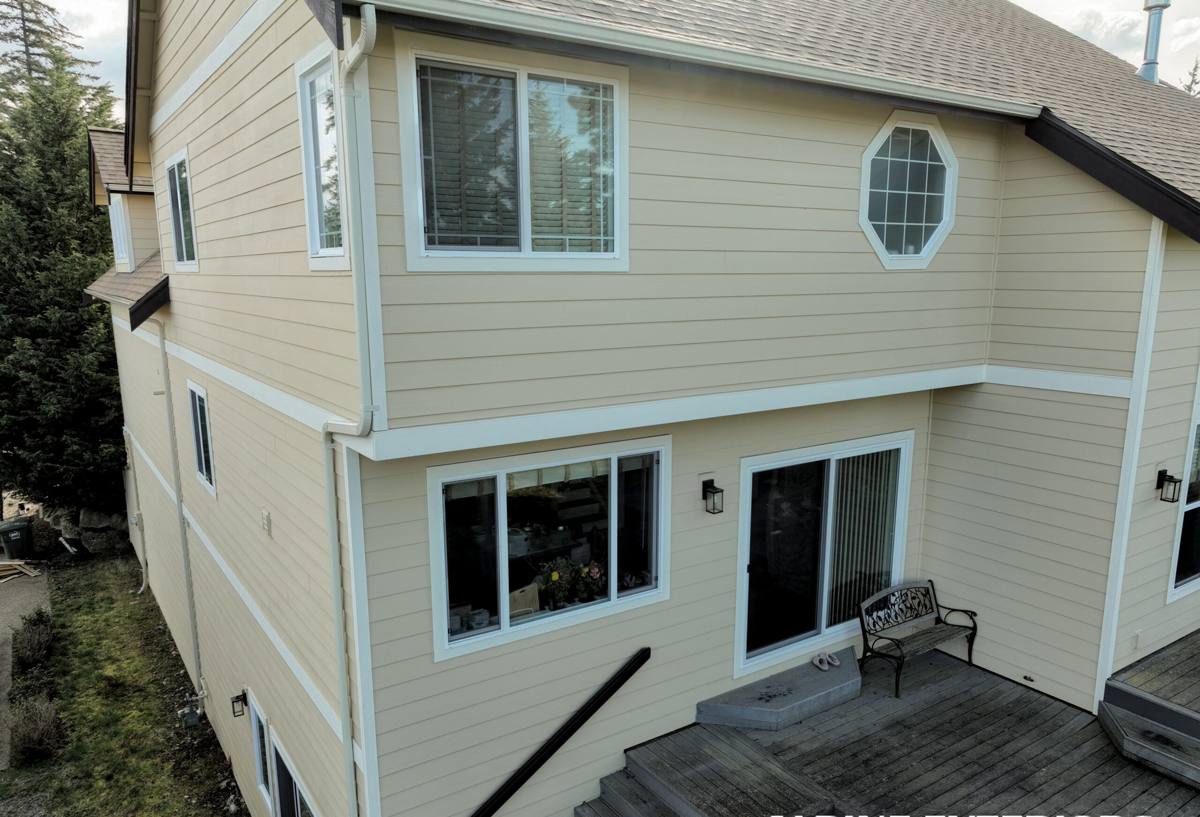
What Salt Air, Rain, and Moss Actually Do to a Deck
Understanding the failure modes helps explain why we build the way we do.
Salt Air and Corrosion
Airborne salt accelerates corrosion on any exposed metal — fasteners, joist hangers, railing brackets, and post bases. A screw or hanger rated for general outdoor use inland can start showing rust bleed within a couple of seasons this close to the water. That rust doesn't stay cosmetic; it weakens the connection itself.
Driving Rain and Trapped Moisture
Wind-driven rain doesn't just fall on a deck, it gets pushed sideways into ledger connections, under railing posts, and into any gap where end-grain wood is exposed. Decking that can't shed and dry quickly stays wet, and wet wood or poorly detailed composite is where rot, mold, and fastener failure start.
Moss and Algae Growth
Shaded, damp surfaces on the island grow moss faster than most homeowners plan for. Moss holds moisture against the decking surface, stains it, and turns it slick and dangerous underfoot — especially on stairs. A deck built with poor airflow underneath, tight board spacing, or the wrong surface texture will fight a losing battle against moss almost year-round.
Choosing the Right Decking Material
There's no single "best" decking material — there's the right material for a given budget, sun exposure, and how much upkeep the homeowner actually wants to do. Here's how the common options hold up in Lummi Island's conditions.
| Material | Moisture & Moss Resistance | Maintenance | Typical Lifespan |
|---|---|---|---|
| Pressure-treated wood | Good if sealed regularly; end grain and fasteners need attention | Annual cleaning and re-sealing recommended | 15-20 years with upkeep |
| Cedar | Naturally rot-resistant but softer surface; still needs sealing near the coast | Sealing every 1-2 years, regular moss removal | 15-25 years with upkeep |
| Composite decking | Very good — doesn't absorb water like wood, resists rot | Periodic washing to prevent surface algae/moss film | 25-30+ years |
| PVC/capped polymer | Excellent — fully sealed surface sheds water and resists staining | Occasional washing | 25-30+ years |
For Lummi Island specifically, we lean toward composite or capped polymer boards on shaded lots or anywhere close to the water, simply because they hold up to moisture cycling without the sealing schedule wood demands. That said, plenty of homeowners want the look and feel of real wood, and a well-built cedar or treated-wood deck can absolutely go the distance here — it just needs a homeowner who's willing to keep up with sealing and cleaning. We'll walk through the honest trade-offs for your specific site rather than push one product line.
Framing and Structure: What's Underneath Matters Most
The decking surface is what you see, but the framing underneath is what determines whether the deck is still safe in fifteen years. This is where we see the most corner-cutting on older island decks we're asked to inspect or replace.
- Ledger boards attached to the house need proper flashing so water is directed away from the rim joist, not trapped behind the ledger.
- Joists and beams should be sized for the actual span and load, not just "what was leftover" — undersized framing shows up as bounce and eventual sag.
- Post bases need to sit above grade on proper footings, never buried in soil or set directly on pavers, which trap moisture against the post end grain.
- Every structural connection — joist hangers, hurricane ties, post-to-beam brackets — should be rated for exterior/coastal exposure, not standard interior-grade hardware.
A deck can look finished and still have framing problems that won't show up until a board flexes underfoot or a railing post wiggles. When we quote a rebuild, we always look at what's underneath before we talk about surface material.
Our Process, Start to Finish
1. On-Site Assessment
We look at sun and shade exposure, drainage around the footprint, existing framing condition if it's a replacement, and how the deck will connect to the house. Island lots vary a lot — waterfront exposure, wooded interior lots, and sloped sites each call for different footing and framing approaches.
2. Design and Material Selection
We talk through decking material, railing style, and layout based on how the space will actually be used — entertaining, grilling, a quiet spot to sit, stairs down to a lower yard or waterfront. We give straightforward pros and cons for each material rather than steering everyone to the same product.
3. Permitting
Most new decks and many significant deck replacements in Whatcom County require a building permit, particularly for anything attached to the house or built above a certain height. We handle the permit process as part of the project so homeowners aren't left navigating that alone.
4. Materials and Site Logistics
Getting lumber, composite decking, and hardware to an island job means planning around the Whatcom County ferry schedule to Lummi Island. We build that into the project timeline up front so material deliveries don't stall the job — this is one of the practical differences between a crew that regularly works the island and one that's never had to plan around a ferry run.
5. Demolition (Replacements Only)
For a rebuild, we remove the old deck down to the framing or footings, inspect what's there, and flag anything — rot, undersized joists, failed footings — that needs to be addressed before new decking goes down.
6. Framing and Structural Work
This is where the deck's real lifespan gets decided: proper ledger flashing, correctly spaced and sized joists, coastal-rated hardware throughout, and footings set to local frost and load requirements.
7. Decking, Railing, and Finish Work
Surface boards go down with attention to spacing for drainage and airflow, railings are set plumb and secure, and stairs are built to code with consistent rise and run. We finish with any sealing or capping the material requires.
8. Final Walkthrough
We walk the finished deck with the homeowner, cover basic care for the specific material installed, and make sure everything meets the agreed design before calling the job complete.
Fasteners, Flashing, and Hardware: The Small Stuff That Prevents Big Failures
Most deck failures don't start with the decking boards — they start with a fastener or flashing detail that was wrong from day one. In a salt-air environment, that mistake shows up faster than it would inland.
We use stainless steel or coated fasteners rated for coastal/exterior exposure, proper flashing tape or metal flashing at every ledger connection, and joist hangers and structural hardware built to hold up against corrosion, not just meet a minimum interior-use standard. It costs more up front than standard hardware. It's also the difference between a deck that needs fastener repairs in five years and one that doesn't.
Maintenance Checklist for Coastal Decks
Whatever material you choose, a little regular upkeep goes a long way against Lummi Island's moss season and salt air. A basic seasonal routine:
- Sweep debris and standing organic matter off the deck surface regularly, especially under trees.
- Rinse or gently wash the deck a few times a year to knock back early moss and algae before it takes hold.
- Check railing posts and stair connections for movement once or twice a year.
- Inspect fasteners and hardware for rust bleed or loosening, particularly near the waterline of splash zones.
- For wood decking, plan on resealing every one to two years depending on sun exposure.
- Keep gutters and downspouts near the deck clear so runoff isn't dumping extra water onto or under the structure.
- Trim back overhanging branches to cut down on shade, debris, and moss growth.
Site Access and Permitting Considerations on Lummi Island
Building on an island adds a few practical wrinkles that a mainland deck project doesn't have. Ferry scheduling affects both material delivery and crew scheduling, so timelines need a bit more buffer than a comparable mainland job. Lot access can also be tighter on some older island properties, which affects how equipment and materials get staged on site. On the permitting side, Whatcom County requirements apply on Lummi Island the same as elsewhere in the county, and depending on your parcel's location and any shoreline proximity, additional review may apply. We sort out what's required for your specific property before work starts, so there are no surprises mid-project.
Why Hire a Crew That Already Works Lummi Island
A deck contractor who's never built on the island will plan the job the same way they'd plan one in a dry inland suburb — standard hardware, a standard delivery schedule, and material choices that don't account for salt air or moss. That's how you end up with a deck that needs fastener repairs or resealing far sooner than it should. Working this area regularly means we already know to spec coastal-rated hardware by default, we build the ferry schedule into project timing instead of discovering it mid-job, and we've seen firsthand how moss and shade behave on wooded island lots versus open, sunnier ones. That local familiarity translates directly into fewer surprises and a deck that's actually built for where it's going to sit.
If you're planning a new deck or need to replace one that's showing its age, we're happy to come take a look and talk through honest options for your property. Use the form below to request a free, no-pressure estimate.