 Birch Bay
 Board & Batten Siding Built for Lummi Island's Exposure
Board and batten is one of the most requested siding profiles we install in the Lummi Island area, and for good reason. The vertical lines read as clean and traditional at the same time, they work on everything from a modest single-story home to a larger waterfront-facing property, and the profile itself sheds water differently than horizontal lap siding — which matters a lot here. Homes on and around Lummi Island sit in a stretch of Whatcom County that takes a steady combination of salt-laden air, wind-driven rain, and a long stretch of the year where moss and algae have every reason to take hold. Board and batten can handle that environment well, but only when the material underneath it and the installation details around it are done correctly. This page covers what that actually looks like.
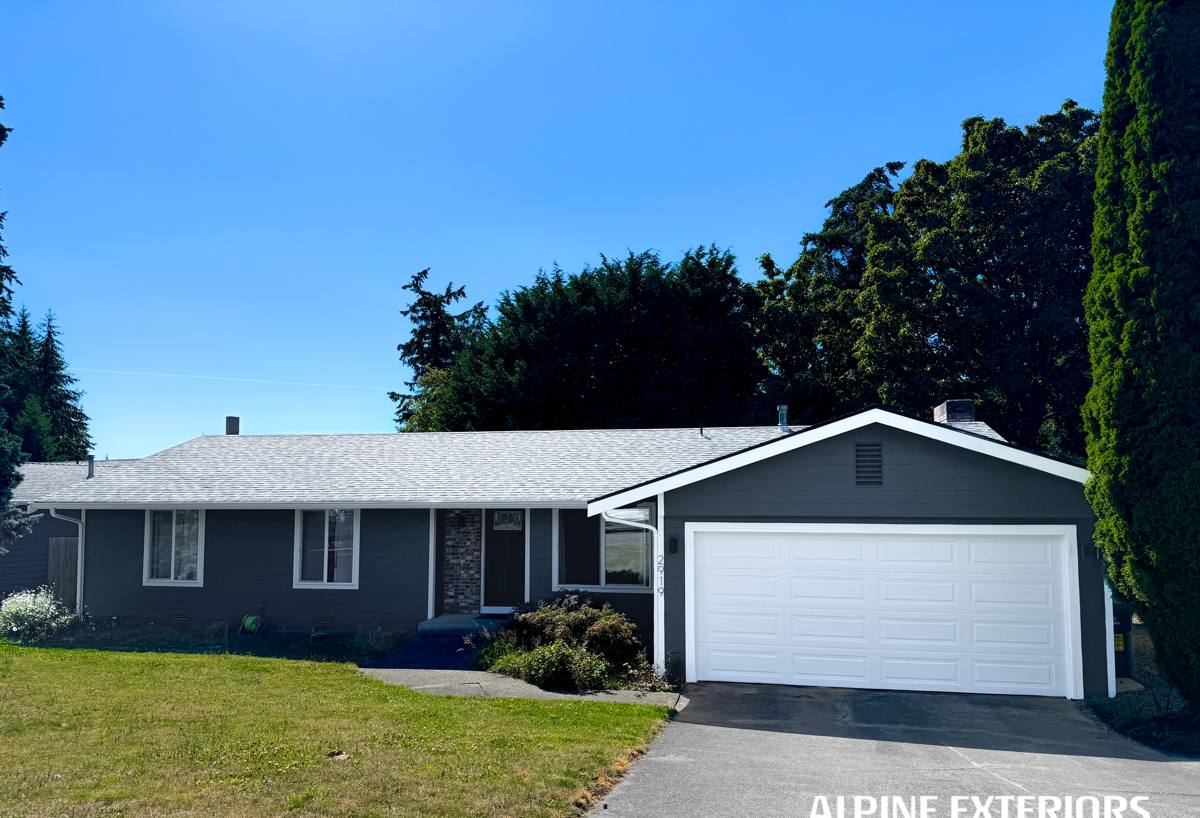
What Lummi Island's Climate Does to Vertical Siding
Three factors drive almost every siding problem we see in this area, and they all apply directly to board and batten work.
Salt Air
Proximity to the water means airborne salt settles on exterior surfaces year-round, not just during storms. Salt is corrosive to exposed metal fasteners and trim, and it accelerates the breakdown of coatings that aren't formulated to resist it. A siding product with a weak factory finish will chalk, fade, or fail at the coating level well before the underlying material would otherwise need replacement.
Driving Rain
Wind off the water doesn't just drop rain — it drives it sideways and forces it into every seam, joint, and batten gap on a wall. Board and batten has more vertical seams than a lap profile, and every one of those seams is a potential entry point for moisture if it isn't detailed with the right gap spacing, fastening pattern, and flashing.
A Long Moss Season
Cool, damp, and shaded conditions for much of the year mean moss, algae, and mildew have a long runway to establish themselves on north-facing walls, under eaves, and anywhere airflow is restricted. Vertical battens create small ledges and shadow lines that can hold moisture and organic growth longer than a flat wall — which makes the coating and the drainage plane behind the siding just as important as the boards themselves.
Board & Batten Done Right: What Correct Installation Involves
The visual result of board and batten is simple, but the assembly behind it has several details that separate a job that lasts decades from one that fails at the seams within a few years.
- A drainage plane behind the siding. A weather-resistive barrier and, where the wall assembly calls for it, a rainscreen gap so any moisture that gets past the surface can drain and dry out instead of sitting against the sheathing.
- Correct batten spacing over the panel joints. Battens need to land squarely over panel seams with enough width to fully cover the joint, not just approximate it.
- Fastener selection and placement. Corrosion-resistant fasteners, set to the manufacturer's spacing and depth specs — overdriven or underdriven fasteners are one of the most common causes of early siding failure we see on re-inspections.
- Flashing at every penetration and transition. Windows, doors, roof-to-wall intersections, and any deck ledger or utility penetration need proper flashing integration, not just caulk.
- Factory-finished material. A coating applied under controlled factory conditions holds up to salt exposure and UV far better than field-applied paint, and it's backed by a real finish warranty.
- Bottom clearance and kickout flashing. Siding held off grade, decks, and roof lines with proper clearance so water doesn't wick into the bottom edge of the boards.
Skip any one of these and the siding may look fine for a season or two before problems show up — usually at the seams, the bottom edge, or wherever moisture had a path in and no path back out.
Why We Install James Hardie for Board & Batten — and Nothing Else
We install James Hardie fiber cement exclusively. For board and batten specifically, that means factory-primed and ColorPlus-finished vertical panel systems designed and engineered for the kind of climate exposure this region deals with. A few reasons this is the standard we hold to:
- Non-combustible material. Fiber cement doesn't feed a fire the way wood-based or engineered-wood products can, which matters for insurance considerations and long-term risk, not just aesthetics.
- Climate-engineered product lines. James Hardie builds region-specific HZ formulations, and Pacific Northwest homes get a product engineered around moisture exposure rather than a one-size-fits-all mix.
- ColorPlus factory finish. A baked-on, multi-coat finish applied in a controlled facility resists the fading and chalking that salt air and UV cause on field-painted or lower-grade coatings — and it comes with its own finish warranty separate from the substrate.
- Real moisture stability. Fiber cement doesn't swell, rot, or delaminate the way wood, primed spruce, or some engineered wood products can when a fastening or flashing detail is imperfect or when the siding stays damp for extended stretches — which, in this climate, it will.
- A strong, transferable warranty that holds up over the decades this siding is meant to last, which matters if you ever sell the home.
We don't install vinyl, LP SmartSide, Cemplank, Allura, primed spruce, or cedar. Each of those products has legitimate uses and loyal customers elsewhere, but we've made a professional call to standardize on one system we can install to spec, warranty with confidence, and stand behind on every home we touch — including the ones facing the water on Lummi Island.
Board & Batten Compared to Other Common Siding Profiles
| Profile | Look | Moisture Behavior in This Climate | Typical Maintenance |
|---|---|---|---|
| Board & Batten (Hardie fiber cement) | Vertical, clean, modern-traditional | Strong when installed with rainscreen and proper batten spacing | Periodic rinse; repaint not required with ColorPlus |
| Horizontal Lap (Hardie fiber cement) | Traditional, widely used | Naturally sheds water down the face; fewer vertical seams | Periodic rinse; repaint not required with ColorPlus |
| Vinyl Board & Batten | Similar look at lower material cost | Prone to warping and gapping under wind and temperature swings | Panels can crack or bow; sections replaced rather than repaired |
| Cedar Board & Batten | Natural wood grain | Absorbs moisture; needs a sound finish to resist rot and salt exposure | Refinishing on a recurring cycle |
Our Process for a Lummi Island Board & Batten Project
Every home on the water has slightly different exposure depending on orientation, tree cover, and elevation, so we don't run a one-size-fits-all install.
- On-site assessment. We look at wall orientation relative to prevailing wind and rain, existing moisture damage, and how the current siding or sheathing has held up.
- Material and logistics plan. We confirm product, color, and batten layout, and we plan delivery and crew scheduling around ferry access where the project location requires it — that logistics step is part of doing work in this area correctly, not an afterthought.
- Tear-off and sheathing check. We inspect the wall assembly once old siding is removed and address any rot or moisture damage found before anything new goes up.
- Weather barrier and drainage plane installation. This is the layer that determines how the wall performs for the next 30-plus years, and we don't shortcut it.
- Panel and batten installation to manufacturer spec. Fastener pattern, batten spacing, and flashing details are followed exactly as engineered, not eyeballed.
- Final trim, caulking, and cleanup. Every penetration sealed correctly, job site cleared of debris and fasteners.
Maintaining Board & Batten Siding in a Salt Air, High-Moss Climate
- Rinse the exterior once or twice a year to clear salt residue, pollen, and organic buildup before it sets in — a garden hose is usually enough.
- Keep gutters clear so overflow doesn't run down the wall face and hold moisture against battens.
- Trim back vegetation and tree cover that keeps north- or shade-facing walls damp longer than they need to be.
- Check caulking around windows, doors, and penetrations every couple of years — caulk is a maintenance item even on siding that itself needs very little upkeep.
- Watch for moss or algae establishing in shaded corners and address it early with a gentle wash rather than letting it spread.
- Have any impact damage or loose trim looked at promptly — small gaps are cheap to fix and expensive to ignore.
What Drives the Cost of a Board & Batten Project
| Factor | Why It Matters |
|---|---|
| Home size and wall complexity | More corners, gables, and dormers mean more cutting, fitting, and batten layout work |
| Existing wall condition | Rot or moisture damage found at tear-off adds repair scope before new siding goes up |
| Color and finish selection | Standard ColorPlus colors versus premium or custom options affect material pricing |
| Access and logistics | Site access, staging area, and delivery logistics — including ferry-dependent locations — affect scheduling and cost |
| Trim and detail work | Corner treatments, window and door trim, and fascia detailing add labor time |
We give firm, itemized quotes after an on-site look — not a ballpark over the phone — because wall condition and access vary enough on this stretch of coastline that a generic estimate isn't useful to you.
Why a Crew That Already Works Lummi Island Matters
Siding work here isn't quite the same as siding work forty miles inland. Crews need to plan around ferry schedules and limited staging space, understand which wall orientations take the worst of the wind and salt, and know what a correctly detailed rainscreen actually needs to look like in a marine climate rather than a drier one. A contractor who's done this work in the Birch Bay and Lummi Island area repeatedly isn't learning those lessons on your home — they've already applied them on others nearby. That experience shows up in the small decisions: where to add extra flashing, how to sequence a job around weather and ferry timing, and which details actually matter once the siding has weathered a few winters.
If you're considering board and batten siding for a home in the Lummi Island area, we're happy to take a look and walk you through what your specific home needs. Reach out for a free, no-pressure estimate using the form below.