 Birch Bay
 Lummi Island Sits Right in the Path of Everything Coastal Siding Has to Survive
Lummi Island is surrounded by saltwater, and that changes what a siding system has to deal with every single day. Salt-laden air corrodes unprotected metal, breaks down cheap finishes faster than inland exposure ever would, and works its way into any gap in the building envelope that isn't detailed correctly. Add wind-driven rain off the Strait of Georgia, long stretches of overcast, damp weather typical of Whatcom County winters, and a heavy tree canopy that keeps north- and west-facing walls shaded and slow to dry, and you have one of the more demanding siding environments in this part of Washington.
Homes in and around Birch Bay face a similar combination of salt exposure and wind-driven rain, which is exactly why we install the same product system on both — siding that's engineered for marine climates, not general-purpose siding that happens to be sold here too.
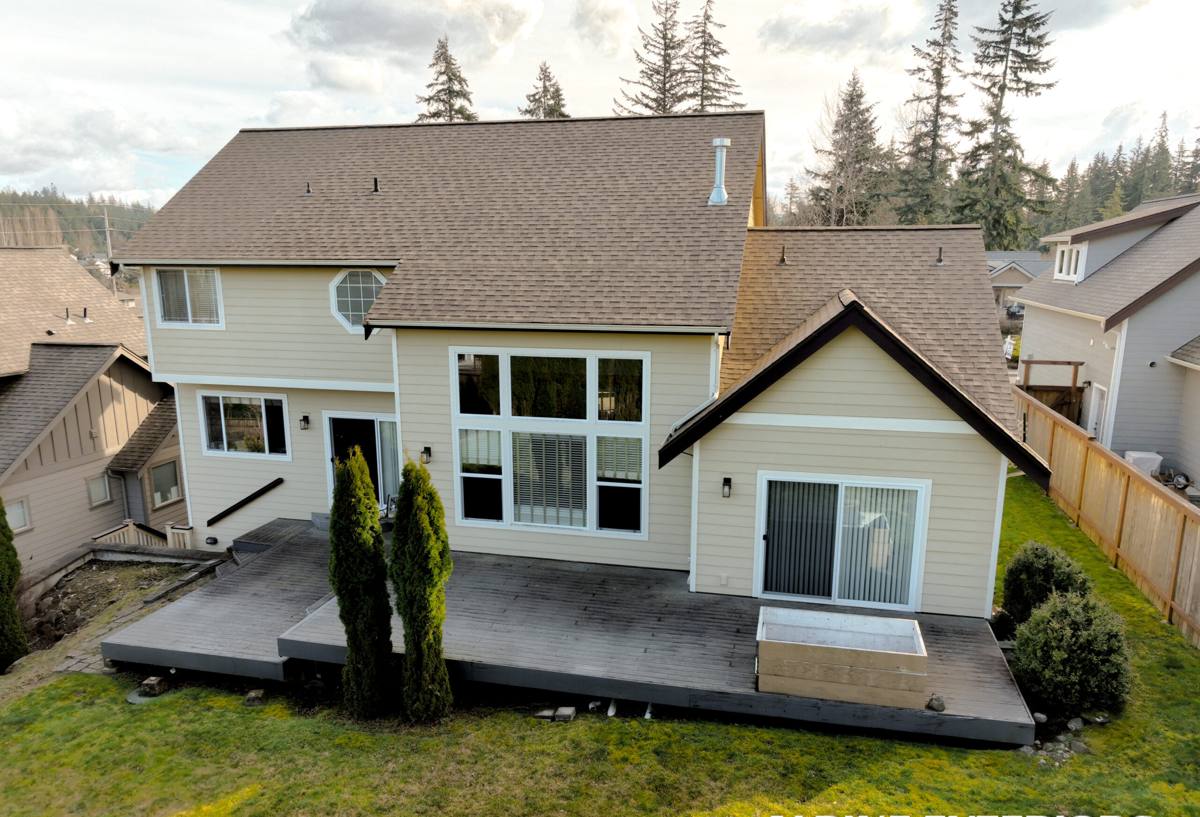
What Fiber Cement Actually Has to Do in a Climate Like This
Fiber cement siding is cement, sand, and cellulose fiber pressed and cured into a rigid, dimensionally stable board. Unlike wood, it doesn't absorb and release moisture with every weather swing, so it doesn't cup, split, or feed rot the way solid wood or many engineered wood products can when they stay damp for weeks at a stretch. Unlike vinyl, it doesn't soften, warp, or go brittle from repeated UV and salt exposure. That stability is the whole reason it holds up on an island where a wall can stay wet for days after a storm and then bake in reflected summer sun a few weeks later.
But fiber cement only performs like that when it's specified and installed correctly for the exposure. There's a real difference between siding that's technically fiber cement and siding that's been installed to actually shed this region's weather.
Climate-Engineered Product Lines
James Hardie makes region-specific HardieZone products — HZ5 and HZ10 — engineered with different moisture and freeze resistance depending on climate zone. Western Washington's coastal belt, including the waters around Lummi Island and Birch Bay, calls for the wetter-climate specification. Using the wrong HardieZone product for the region is a common corner-cutting mistake that shows up years later as premature wear.
Factory-Applied ColorPlus Finish
ColorPlus is baked on at the factory under controlled conditions, which gives it more consistent coverage and better fade and moisture resistance than field-applied paint over raw fiber cement. In a salt-air environment where a site-painted finish tends to chalk and fade faster, that factory finish is a meaningful advantage — and it also means touch-up work, when it's ever needed, uses matched ColorPlus product rather than a guessed paint match.
Where Correct Installation Actually Matters — the Details Nobody Sees Later
Fiber cement siding fails early almost exclusively because of installation mistakes, not because the material itself gave out. In a coastal, high-moisture setting, these details matter more than they would in a dry inland climate:
- Clearances: siding needs a minimum gap above roofing, decks, and grade so it isn't sitting in standing water or splash-back — James Hardie's published clearances exist specifically to keep the bottom edge from wicking moisture.
- Flashing at every penetration: windows, doors, hose bibs, light fixtures, and vents all need proper flashing and a water-resistive barrier behind the siding, lapped correctly so water is directed out, not in.
- Fastener choice and placement: corrosion-resistant fasteners, driven correctly (not overdriven, not underdriven), matter more on a salt-exposed island than almost anywhere else — a rusting fastener head is one of the first visible failure points on older coastal siding jobs.
- Joint and seam treatment: butt joints need to be caulked or flashed per spec, not just butted tight and hoped for.
- Panel gaps at trim: a small manufacturer-specified gap, properly caulked, lets the assembly move without cracking the finish.
None of this is exotic. It's just easy to skip when a crew is moving fast, and the consequences don't show up until a few winters later.
How James Hardie Compares to Other Siding Options for This Kind of Exposure
We get asked fairly often why we don't install vinyl or engineered wood siding on island and coastal properties. Here's the honest comparison, not a sales pitch:
| Material | Behavior in salt air & driving rain | Maintenance burden | Where it tends to struggle |
|---|---|---|---|
| James Hardie fiber cement | Dimensionally stable, doesn't absorb moisture like wood; factory ColorPlus finish resists salt and UV fade | Occasional gentle washing; no repainting on ColorPlus lines | Only when installed with wrong clearances or skipped flashing |
| Vinyl siding | Can warp or distort under repeated heat/UV cycling; wind-driven rain can push moisture behind panels at loose seams | Low, but color can't be refreshed once it fades | Impact resistance and long-term color stability |
| Cedar / primed spruce | Absorbs moisture readily; needs a sound paint film to hold back salt air and rain | Ongoing repainting/staining and caulk maintenance | Extended damp periods promote rot at joints and lower courses |
| Engineered wood (LP SmartSide and similar) | Resin-treated but still wood-based; edge and cut-end sealing is critical in wet climates | Field-applied finish needs monitoring over time | Long-term moisture exposure at unsealed cuts and seams |
This is why we standardized on James Hardie rather than carrying multiple product lines: it's the option we're confident holds up to this specific combination of salt, rain, and shaded, slow-drying wall exposure without asking the homeowner to keep up with repainting.
Our Process for a Lummi Island or Birch Bay Siding Project
- On-site assessment: we look at wall exposure, existing siding condition, moisture barrier status, and which elevations take the worst weather.
- Product and color selection: we walk through HardieZone and ColorPlus options suited to a marine climate, not just what looks good on a sample board.
- Material staging and scheduling: for island properties, we plan delivery and crew logistics around ferry schedules and tide-dependent access so the job doesn't stall mid-install waiting on materials.
- Installation to manufacturer spec: correct clearances, flashing, fastening, and joint treatment at every step — not just the parts that are visible from the street.
- Final walkthrough: we go over the completed work with the homeowner, including basic care and what to expect from the finish over time.
Moss, Algae, and Keeping a Marine-Climate Wall Looking Good Long-Term
Shaded, damp walls in this region grow moss and algae whether the siding is fiber cement, wood, or vinyl — it's a function of the climate, not the material. The difference is how much damage that growth can do. Because fiber cement doesn't absorb water the way wood does, surface moss and algae are mostly a cosmetic issue rather than a structural one, and they wash off. A few practical habits go a long way:
- Rinse shaded, north- and west-facing walls periodically with a garden hose or soft wash rather than a high-pressure washer, which can force water past the finish and into seams.
- Keep shrubs, hedges, and tree branches trimmed back from the siding so walls get airflow and dry out between storms.
- Keep gutters and downspouts clear so roof runoff isn't sheeting down a wall section repeatedly.
- Check caulking at trim and penetrations every year or two, since caulk is the one component that does wear out before the siding does.
Signs Older Siding on Homes in This Area Is Starting to Fail
We see the same patterns repeat on older coastal homes, regardless of what material is on the wall:
- Rust streaks bleeding from fastener heads — a sign of the wrong fastener type or exposed, uncoated steel.
- Soft or spongy spots, usually near the bottom courses or below window sills, indicating trapped moisture behind the siding.
- Paint that's chalking, peeling, or fading unevenly, which is common on field-painted wood or older fiber cement that predates factory finishes.
- Visible buckling or waviness in vinyl panels, often from heat cycling or loose fastening.
- Persistent moss or algae that doesn't rinse off easily, which can point to a wall assembly that isn't drying out between rain events.
None of these are emergencies by themselves, but they're worth having looked at before they turn into a bigger repair.
Why It Matters to Hire a Crew That Already Works This Area
Island and coastal siding work has logistics that inland jobs don't. Material deliveries and crew access on Lummi Island have to work around ferry schedules, which affects how a job gets sequenced and staged. Wall assemblies here need extra attention to flashing and clearance details because the exposure is more demanding than a typical inland Whatcom County property. And every Washington jurisdiction has its own permitting expectations for exterior work, which a crew that's pulled permits here before already understands going in.
A contractor who treats a Lummi Island or Birch Bay job the same as a job in a dry inland subdivision is skipping steps that this climate doesn't forgive. That's the difference between siding that looks right at handoff and siding that's still performing correctly a decade later.
What to Ask Before You Hire Someone to Side Your Home Here
- Do you install to James Hardie's published clearance and flashing specifications, or your own shortcut version?
- Which HardieZone product line do you use for this specific coastal exposure, and why?
- What fastener type do you use, and is it rated for corrosion resistance in a salt-air environment?
- How do you handle scheduling and material delivery for ferry-access properties?
- Can you walk me through how you flash windows, doors, and penetrations before siding goes on?
- What does the manufacturer warranty actually cover, and does it stay valid with your installation method?
If your Lummi Island or Birch Bay home is due for new siding, or you just want a straight answer on what shape your current siding is in, we're happy to take a look. The estimate is free, there's no pressure, and you'll get an honest read on what your home actually needs.