 Birch Bay
 Roofing on Lummi Island Isn't the Same Job as Roofing Inland
Lummi Island sits out in the marine air of Whatcom County, and that changes what a roof has to deal with day to day. A shingle roof a few miles inland might go years between real problems. On the island, the same roof is fighting salt-laden air, wind-driven rain coming off the water, and a moss season that runs longer than most homeowners expect. None of that makes asphalt shingle roofing a bad choice here — it's still one of the most practical, cost-effective roofing systems available, and it holds up well when it's installed and maintained correctly for this specific environment. But "correctly" means something different on the island than it does in a dry inland subdivision, and that's the gap we see homeowners fall into most often: a roof that was installed fine, just not installed for these conditions.
This page covers what asphalt shingle roofing actually needs to hold up on Lummi Island, what a proper installation involves, and how we approach these jobs given the island's climate and logistics.
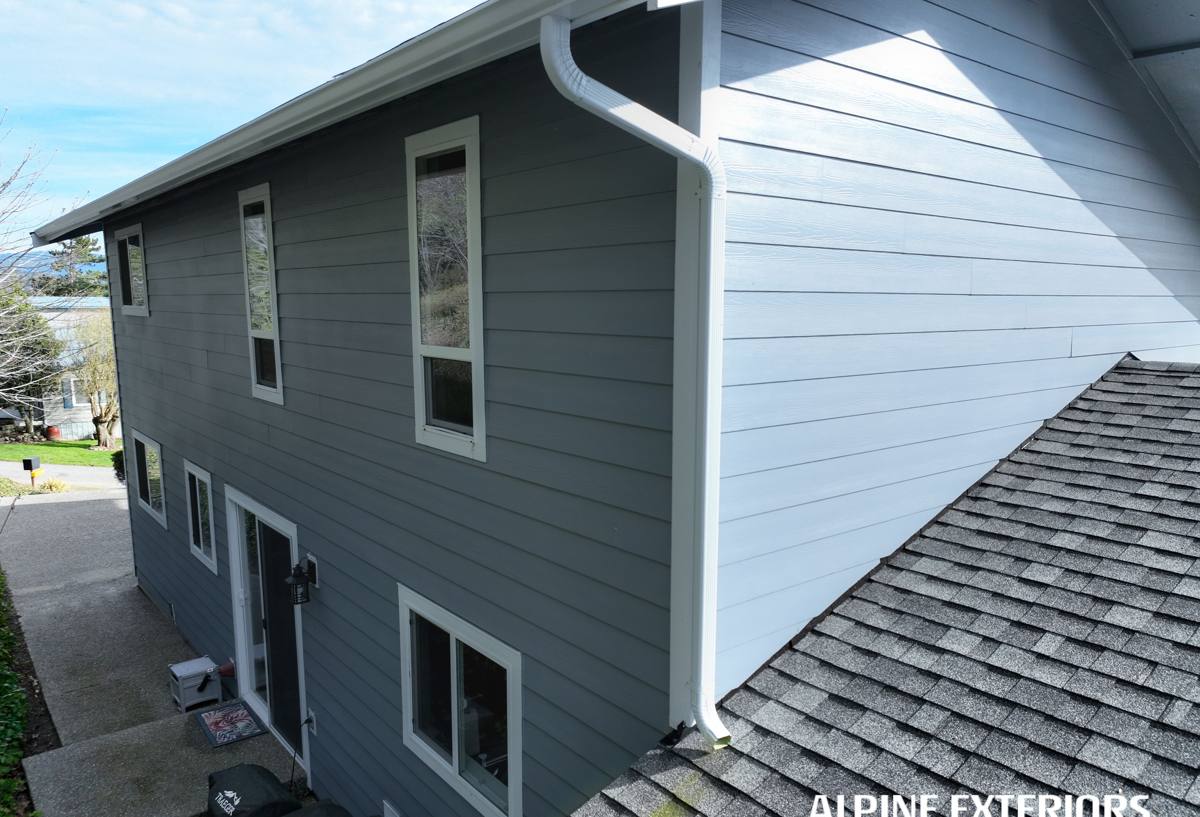
What Salt Air, Driving Rain, and Moss Actually Do to a Shingle Roof
Salt Air
Salt-laden air accelerates corrosion on every exposed metal component of a roof — nails, flashing, vent stacks, valley metal, and gutter hardware. Standard fasteners and lower-grade flashing that would last decades inland can start showing rust and pitting years earlier this close to the water. The shingles themselves aren't directly harmed by salt the way metal is, but a roof is only as good as its weakest component, and on Lummi Island that's almost always the metal, not the shingle mat.
Driving Rain
Wind off the water doesn't just drop rain straight down — it pushes it sideways, up under shingle tabs, and into any gap in flashing or underlayment that wouldn't matter in calmer conditions. A roof detailed for a typical inland install, with minimal underlayment coverage and basic flashing at valleys and penetrations, is exactly the kind of roof that starts leaking in a wind-driven storm even though it looked fine for the first few years.
Moss
Whatcom County's damp, shaded, mild climate is close to ideal moss habitat, and Lummi Island's tree cover and marine moisture stretch the moss-growing season longer than in drier parts of the county. Moss holds moisture against the shingle surface, works its way under tabs and around granules, and over time lifts shingles enough to let water in underneath. It also adds weight and can clog valleys and gutters, backing water up under the shingle edges. A roof that isn't kept clear of moss is aging faster than its warranty assumes, regardless of what shingle brand is on it.
What a Correct Asphalt Shingle Install Involves Here
The shingle itself is only part of the system. On Lummi Island, we pay particular attention to everything underneath and around it.
Underlayment
We use synthetic underlayment rated for the coverage, with self-adhering ice-and-water membrane at eaves, valleys, and around every roof penetration — chimneys, vent stacks, skylights. This is the layer that keeps a roof dry when wind-driven rain gets past the shingle surface, which it will, eventually, on an exposed island roof.
Flashing
Corrosion-resistant flashing matters more here than almost anywhere else in the county. We use flashing material and fasteners chosen for salt-air exposure, not the minimum-spec galvanized hardware that's fine forty miles inland but starts failing early this close to the water.
Ventilation
Proper intake and exhaust ventilation keeps the attic from trapping moisture, which matters for both the roof deck and the shingles above it. Poor ventilation shortens shingle life from underneath — a problem that has nothing to do with the weather outside and everything to do with what's happening in the attic.
Nailing and Sealing
Correct nail placement and count, driven flush (not overdriven or underdriven), is what keeps shingles locked down in sustained wind. This is a basic install standard, but it's the detail most likely to get rushed, and it's the detail that determines whether a roof loses shingles in the next windstorm off the water.
Choosing a Shingle for This Environment
Not every asphalt shingle product performs the same way in salt air and heavy moss pressure. The table below covers the practical trade-offs we walk homeowners through.
| Factor | Standard 3-Tab Shingle | Architectural (Dimensional) Shingle |
|---|---|---|
| Wind resistance | Lower rating; more prone to lifting in driving rain and gusts | Higher rating; better suited to exposed, wind-driven conditions |
| Algae/moss resistance | Available with algae-resistant granules, but coverage varies | Commonly includes algae-resistant granules as standard |
| Expected lifespan in this climate | Shorter, especially without diligent moss maintenance | Longer, with better tolerance for the island's damp cycle |
| Upfront cost | Lower | Moderate premium over 3-tab |
| Appearance | Flat, uniform look | Dimensional, heavier shadow-line look |
We don't push one product line over another — the honest trade-off is upfront cost versus how much wind and moss resistance you want built into the shingle itself. For a lot of Lummi Island homes, especially anything with real wind exposure or heavy tree cover, the architectural shingle's better wind rating and standard algae resistance pays for itself in fewer maintenance headaches, even though it costs more at install.
Maintenance Realities for an Island Roof
A correctly installed roof still needs upkeep here, more than it would inland. This isn't optional maintenance — it's what keeps a roof reaching its expected lifespan.
- Clear moss growth before it establishes under shingle tabs, not after it's already visible from the ground
- Keep gutters and valleys free of needles, leaves, and moss debris so water has a clear path off the roof
- Check flashing and fasteners periodically for early corrosion, especially anything within direct sight of the water
- Trim back overhanging branches that keep sections of roof shaded and damp longer than the rest
- Have the attic checked for proper ventilation if you notice moisture, staining, or musty smells inside
- Address small leaks or lifted shingles right away — on this island, a small gap gives driving rain a way in fast
Repair or Replace?
When Repair Makes Sense
Isolated flashing failures, a section of storm-lifted shingles, or a single leak traced to one clear cause are usually repairable if the rest of the roof is sound and reasonably young. There's no reason to replace a whole roof over a localized problem.
When Replacement Makes More Sense
If moss damage, granule loss, or wind lifting are showing up across multiple areas of the roof rather than one spot, or if the roof is already near the end of its expected life and repairs are becoming frequent, replacement is usually the more honest recommendation. Patching an aging roof piece by piece on an island exposed to this much wind and rain often ends up costing more over time than doing the job right once.
Either way, we'll tell you plainly which situation you're in — we're not going to sell a full replacement when a repair will genuinely hold, and we're not going to keep patching a roof that's past the point where patching makes sense.
How We Approach Lummi Island Jobs
Working on the island adds a logistics layer that doesn't exist for a mainland Whatcom County job — material deliveries, crew, and equipment all have to be planned around ferry access rather than just driving up. We factor that into scheduling up front so a job isn't delayed mid-project waiting on a load of shingles or flashing that didn't make it over.
Once we're on site, the process is straightforward: a full roof assessment (deck condition, existing ventilation, flashing condition, and the extent of any moss or wind damage), a clear explanation of what we're seeing and what it means for repair versus replacement, and — if it's a replacement — a tear-off, deck inspection and repair where needed, underlayment and flashing installed to the standard this environment requires, and a clean, complete shingle install with proper nailing and sealing. We clean up thoroughly, including magnetic sweeps for stray fasteners, before we call the job done.
Why Local Experience Matters for This Job
A roofing crew that hasn't worked exposed marine sites before will often default to inland-standard materials and details — because that's what works everywhere else. On Lummi Island, that shortfall shows up within a few years as premature flashing corrosion, moss establishing faster than expected, or shingles lifting in a storm that a properly detailed roof would have shrugged off. A crew that already understands what this island's air, rain, and moss do to a roof builds in the right underlayment coverage, the right flashing hardware, and the right shingle recommendation from the start, instead of learning it the hard way on your roof.
If you're dealing with an aging roof, storm damage, or just want an honest read on where your current roof stands, we're glad to come out and take a look. The estimate is free, there's no pressure attached to it, and you'll get a straight answer about what your roof actually needs — use the form below to get started.