 Birch Bay
 Storm Damage Roof Repair for Cottonwood Beach Homes
Cottonwood Beach sits right up against the water in Birch Bay, which means the roofs here take a different kind of beating than roofs a few miles inland in Blaine or Ferndale. Wind off the bay drives rain sideways into roof edges and penetrations, salt air works on exposed metal and fasteners year-round, and the shaded, moisture-heavy stretches of the neighborhood grow moss faster than almost anywhere else in Whatcom County. When a storm rolls through and lifts shingles, cracks flashing, or knocks debris loose, the damage doesn't always show up as an obvious hole. It shows up later, as a stain on a ceiling or a soft spot in the decking, after weeks of water finding its way in through a gap nobody noticed.
This page is specifically about storm damage roof repair for homes in and around Cottonwood Beach — what causes it, what a proper repair actually involves, and how we handle the work for homeowners in this waterfront community.
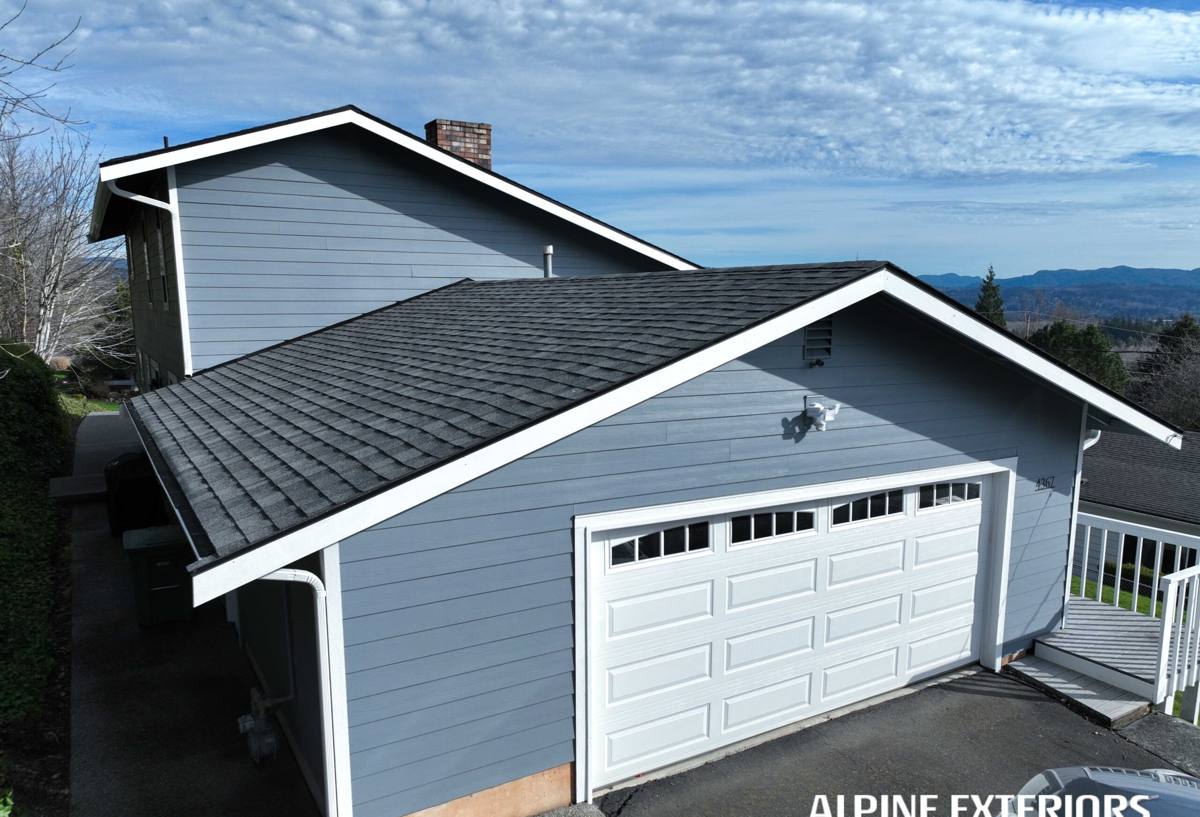
Why Storm Damage Here Behaves Differently
Wind-Driven Rain
Cottonwood Beach's exposure to Birch Bay means wind gusts during a winter storm often come with almost no obstruction. That wind pushes rain up and under shingle edges, ridge caps, and anywhere flashing has even a slight gap. On an inland roof, gravity does most of the work keeping water moving down and off. Here, wind pressure can push water sideways and even upward for a few inches, which is exactly why storm damage on a waterfront roof often starts at the edges — eaves, rakes, and valleys — rather than in the open field of the roof.
Salt Air and Metal Fatigue
Salt-laden air corrodes exposed metal faster than it does a few miles inland. Nail heads, flashing seams, gutter fasteners, and any exposed metal trim are all more prone to rust and early failure near the water. A storm that would barely stress a well-maintained inland roof can be the thing that finally pops a corroded fastener or opens up a seam that salt air had already weakened over several seasons.
Moss and Trapped Moisture
Birch Bay's long, wet, mild winters are ideal moss-growing conditions, and shaded sections of roof — north-facing slopes, areas under tree cover — stay damp longer after a storm than sun-exposed sections. Moss holds moisture against the roofing material, which accelerates granule loss on asphalt shingles and can lift shingle edges just enough for wind-driven rain to get underneath. A roof with moss buildup going into storm season is more vulnerable to wind and water damage than a clean one, even if the shingles themselves are otherwise in decent shape.
Common Storm Damage We See in This Area
- Lifted or torn shingles along eaves, ridges, and rake edges where wind uplift is strongest
- Cracked or displaced flashing around chimneys, skylights, and roof-to-wall transitions
- Granule loss and bruising from wind-blown debris and hail-like impact from branches
- Gutter and downspout damage from wind and falling limbs, which redirects water back toward the roofline and siding
- Punctures or soft decking from falling branches, common where mature trees overhang the roof
- Moss-related lifting that becomes a leak point once wind and rain hit an already-compromised shingle edge
- Ridge cap separation from sustained wind loading during a storm system
What a Correct Storm Damage Repair Actually Involves
1. A Full-Roof Inspection, Not Just the Obvious Spot
The visible damage — a curled shingle, a dented vent cap — is rarely the whole story. Wind and water damage tends to spread from the failure point, so a proper inspection covers the whole roof plane, not just the area a homeowner spotted from the ground. We check flashing, valleys, penetrations, ridge lines, and the underside of the decking where accessible, because a small entry point at the edge can travel a surprising distance before it shows up as a stain inside the house.
2. Checking the Decking, Not Just the Shingles
If water has been getting under the roofing material for any length of time, the plywood or OSB decking underneath can soften. Replacing shingles over compromised decking doesn't fix anything — it just covers the problem back up. Any legitimate storm repair includes checking decking condition at the damage site and replacing any section that's soft, delaminated, or water-stained before new roofing goes back down.
3. Matching Materials and Technique to What's Already There
Patch repairs need to tie into the existing roof correctly — same shingle profile where possible, properly lapped flashing, and fasteners placed to shed water the way the rest of the roof does. A repair that looks fine but is installed with the wrong lap sequence or the wrong fastener pattern will fail again in the next storm, often faster than the original damage took to develop.
4. Addressing the Root Cause, Not Just the Symptom
If moss contributed to the failure, we address the moss, not just the leak. If a fastener corroded and let a section lift, we look at whether nearby fasteners are in similar condition rather than replacing just the one that failed. Storm damage repair done right treats the storm as the trigger, not necessarily the sole cause — and fixes the underlying vulnerability so the next windstorm doesn't reopen the same spot.
Our Process for Cottonwood Beach Storm Repairs
| Step | What Happens |
|---|---|
| 1. Initial contact | You describe what you're seeing — a leak, missing shingles, visible debris damage — and we schedule a time to look at it. |
| 2. On-site inspection | We inspect the full roof, not just the damaged area, and check decking condition wherever we can access it. |
| 3. Written assessment | You get a clear explanation of what's damaged, what's causing it, and what repair options make sense — no pressure to upsell a full replacement if a repair is the right call. |
| 4. Repair scheduling | We work around Birch Bay's weather windows — storm repairs often need to happen between systems, and we plan accordingly. |
| 5. The repair | Damaged materials removed, decking checked and replaced if needed, new materials tied into the existing roof correctly. |
| 6. Final check | We walk the repair with you and make sure the area sheds water the way the rest of the roof does. |
Repair vs. Replacement: How We Help You Decide
Not every storm-damaged roof needs to be replaced, and not every roof can be reasonably patched. The right call depends on how much of the roof is affected, the age and condition of the rest of the roofing, and whether the damage is isolated or symptomatic of broader wear.
| Factor | Leans Toward Repair | Leans Toward Replacement |
|---|---|---|
| Extent of damage | Isolated to one section or a few spots | Spread across multiple roof planes |
| Roof age | Roof is mid-life with plenty of service left | Roof is already near the end of its expected life |
| Decking condition | Decking is sound where checked | Widespread soft or water-stained decking |
| Moss/granule condition | Minor moss, shingles still holding granules | Heavy moss coverage, significant granule loss overall |
| Prior repair history | First storm issue on an otherwise sound roof | Repeated patch jobs over the years |
We'll walk you through where your roof lands on this and give you our honest read — including telling you when a repair is genuinely the smarter money over a replacement.
Insurance and Documentation
Storm damage is often a homeowners insurance claim, and adjusters want to see clear documentation of what happened and when. We provide a written description of the damage we find and photograph the affected areas as part of our inspection, which gives you something concrete to bring to your insurer. We're not a public adjuster and won't negotiate your claim for you, but we can help make sure the physical evidence of the damage is documented before repairs cover it up.
Preventing the Next Storm From Doing the Same Damage
Once a storm repair is done, a few maintenance habits go a long way toward keeping the next windstorm from causing the same kind of failure, especially this close to the water:
- Keep gutters and downspouts clear so wind-driven rain has somewhere to go instead of backing up under the roof edge
- Trim back branches that overhang the roof — falling limbs are one of the most common causes of storm damage in Birch Bay
- Address moss buildup before it spreads, rather than after it's lifted shingle edges
- Have flashing and penetrations checked periodically, since salt air corrodes fasteners and seams faster here than inland
- Don't ignore small issues — a slightly lifted shingle or a minor flashing gap is a much cheaper fix before a storm than after one
Why Local Experience with Cottonwood Beach Roofs Matters
A roofing crew that regularly works Birch Bay and the Cottonwood Beach area knows what to check first — the wind-exposed edges, the shaded moss-prone slopes, the flashing details that corrode faster this close to salt water. That's not something you get from a crew that mostly works drier, more sheltered inland neighborhoods. We know what Whatcom County storms do to waterfront roofs because we see it every storm season, and that experience shows up in faster, more accurate diagnosis and repairs that actually hold up through the next one.
Signs You Shouldn't Wait On
- A ceiling stain that appears or grows after a windstorm
- Shingles visible in the yard or gutter after high wind
- Daylight visible through the roof deck from the attic
- A musty smell in the attic that wasn't there before
- Visibly lifted or curled shingle edges, especially along the roofline facing the water
- Sagging or soft-feeling spots when the roof is walked by a professional
If you're seeing any of these after a storm, it's worth having the roof looked at before the next weather system comes through — small entry points get worse fast under repeated wind and rain.
If a recent storm has left your Cottonwood Beach home with damaged shingles, flashing, or gutters, we're glad to take a look and give you a straight answer on what it needs. Use the form below to request a free, no-pressure estimate.