 Birch Bay
 Roofing in Cottonwood Beach Has to Answer to the Coast
Cottonwood Beach sits close enough to the water that every roof in the area is doing double duty: shedding whatever storm system rolls off the Strait of Georgia this week, and standing up to a steady diet of salt-laden air the other 350 days a year. That combination is harder on a roof than most homeowners realize until they're dealing with curling shingle edges, rusted fasteners, or a moss mat that's been quietly lifting shingle tabs for two winters. A roof that would hold up fine twenty miles inland in Whatcom County doesn't always hold up here, and that's the gap we build for.
This page is about one thing specifically: asphalt shingle roofing for homes in Cottonwood Beach — what the local climate demands from the materials and the install, what a correct job actually involves, and why the details matter more here than they do in a lot of other places.
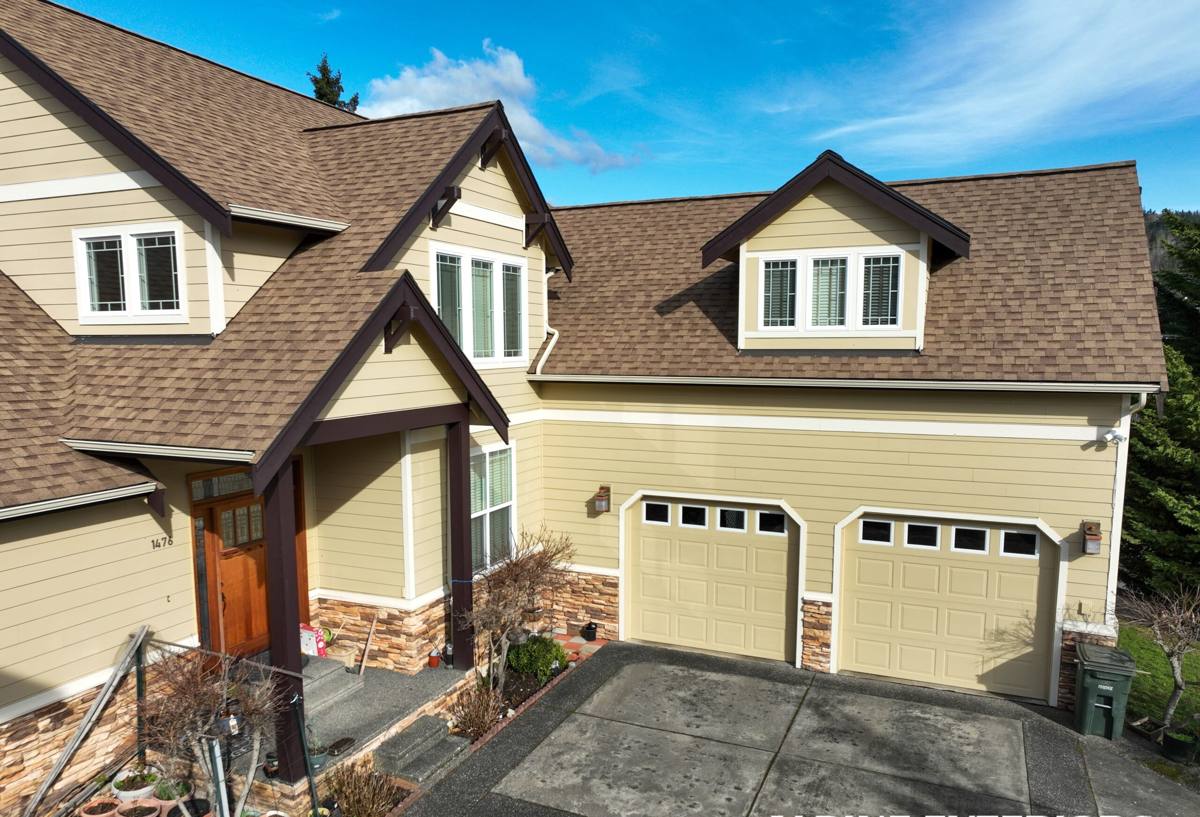
What Salt Air, Driving Rain, and Moss Actually Do to a Roof
Salt Air
Airborne salt doesn't just sit on the surface of a shingle — it works into exposed metal. Nail heads, flashing, drip edge, vent boots, and any exposed fastener are the first casualties. Once corrosion starts on a fastener, it loses holding power, and a shingle that's supposed to survive a windstorm can start lifting at the corners instead. Salt exposure also accelerates the breakdown of the asphalt's protective granule coating over time, which shortens the effective life of the roof even if nothing looks visibly wrong yet.
Driving Rain
Birch Bay storms don't always fall straight down. Wind-driven rain pushes water sideways and upward under shingle tabs, into valleys, and around any penetration — vent pipes, skylights, chimneys — that isn't properly flashed and sealed. A roof that's fine in a light, vertical rain can still leak in a sideways storm if the underlayment, flashing details, and shingle overlap weren't done with that wind direction in mind.
The Long Moss Season
Whatcom County's wet, mild, shaded conditions give moss and algae a long window to establish — often nearly year-round on north-facing slopes or roofs shaded by trees. Moss isn't just cosmetic. As it grows, it holds moisture against the shingle surface, works its way under tab edges, and physically lifts shingles as it thickens. That moisture retention is what turns a normal 20-25 year shingle life into something considerably shorter if the roof isn't kept clean and properly ventilated.
Choosing the Right Asphalt Shingle for a Coastal Property
Not every asphalt shingle product is built the same way, and in a coastal microclimate like Cottonwood Beach, the differences matter more than they would in a drier region. We look at wind rating, algae resistance, and how the shingle is designed to handle sustained moisture — not just its warranty length on paper.
| Shingle Type | Typical Wind Rating | Algae/Moss Resistance | Best Fit For |
|---|---|---|---|
| Standard 3-tab | Lower (60-70 mph) | None unless treated | Budget projects, low wind exposure areas |
| Architectural/laminate | Higher (110-130 mph typical) | Available with algae-resistant granules | Most Birch Bay coastal homes |
| Impact-resistant laminate | High | Available with algae-resistant granules | Homes with tree exposure or storm-damage history |
For most Cottonwood Beach homes, we recommend a mid-to-upper tier architectural shingle with algae-resistant (copper- or zinc-infused) granules. The upgrade cost over standard shingles is modest, and given how long moss season runs here, it's one of the few upgrades that consistently pays for itself in reduced maintenance and a longer service life.
What a Correct Asphalt Shingle Install Actually Involves
A shingle roof is only as good as everything underneath it. The shingles themselves get the attention, but the components most likely to fail first in this climate are the ones you never see once the job is done.
Underlayment
We use a synthetic or ice-and-water shield underlayment rated for the exposure — synthetic for the field of the roof, with self-adhering ice-and-water membrane at eaves, valleys, and around penetrations where wind-driven rain is most likely to find a way in. This is the roof's real waterproofing layer; shingles are the wear surface on top of it.
Flashing
Step flashing at walls and chimneys, valley flashing, and properly sealed vent boots are where most roof leaks in this region actually start — not from worn-out shingle field, but from failed or corroded flashing. We use corrosion-resistant flashing materials given the salt air, and we don't reuse old flashing on a reroof unless it's genuinely still sound.
Fasteners
Standard fasteners corrode faster near the coast. We nail with corrosion-resistant roofing nails, placed per the manufacturer's nailing pattern (not just "close enough"), because under-driven, over-driven, or misplaced nails are one of the most common causes of premature shingle failure in wind events.
Ventilation
A shingle roof needs balanced intake and exhaust ventilation to let the attic breathe. Without it, trapped moisture condenses on the underside of the roof deck, which rots sheathing from the inside and can void a shingle warranty entirely — regardless of how well the shingles themselves were installed.
Our Process for Cottonwood Beach Homes
- Inspection and assessment — We check the shingle field, flashing, decking condition, ventilation, and moss/algae buildup, and document what we find before recommending repair versus full replacement.
- Honest scope and estimate — You get a clear breakdown of what's needed and why, not a one-line number. If a repair will genuinely hold, we say so.
- Tear-off and deck check — On a replacement, we remove old roofing down to the deck and check for soft spots or rot before anything new goes down, since covering a compromised deck just hides the problem.
- Underlayment and flashing installation — Ice-and-water shield at vulnerable areas, synthetic underlayment across the field, new corrosion-resistant flashing.
- Shingle installation — Installed to manufacturer nailing and exposure specs, with attention to valleys, ridges, and penetrations.
- Ventilation check — Intake and exhaust balanced for the attic space, corrected if it wasn't adequate to begin with.
- Final walkthrough — We go over the finished roof with you before calling the job done.
Repair, Moss Treatment, or Full Replacement?
Not every roof problem in Cottonwood Beach means a full tear-off. We look at a few things to figure out where a given roof actually stands.
| Situation | Likely Fit | Why |
|---|---|---|
| Localized moss buildup, shingles otherwise sound | Moss removal + treatment | Addresses the moisture problem without disturbing good shingles |
| Isolated flashing failure or a handful of damaged shingles | Targeted repair | Cheaper and faster when the rest of the roof has useful life left |
| Widespread granule loss, curling, or shingle age near end of expected life | Full replacement | Patching an aging roof rarely holds long-term in this climate |
| Soft or spongy decking discovered during inspection | Full replacement with deck repair | Underlying rot has to be fixed before new roofing goes on |
Maintenance That Actually Extends a Roof's Life Here
A well-installed asphalt shingle roof in Birch Bay's climate still needs some upkeep to hit its full lifespan. This is the short list we give homeowners:
- Have moss and algae growth removed before it thickens — soft-washing rather than scraping or pressure-washing, which damages granules
- Keep gutters clear so water isn't backing up under the eave edge, especially during fall and winter storms
- Trim back overhanging branches that keep the roof shaded and slow to dry, which is exactly what moss needs
- Check attic ventilation isn't blocked by insulation or debris
- Have flashing and vent boots inspected every few years, since these fail well before the shingle field usually does
- Address small leaks or missing shingles promptly rather than waiting — wind-driven rain finds small openings fast
Why Local Experience in Cottonwood Beach Matters
A roofing crew that's worked this specific stretch of coastline knows which slopes hold moss the longest, which wind directions cause the worst wind-driven rain intrusion, and which flashing and fastener choices actually hold up against the salt air instead of failing early. That's not something you get from a general contractor working a roof in Birch Bay for the first time. It shows up in the details — where extra ice-and-water membrane gets used, how vent boots are sealed, which shingle lines are worth the upgrade cost for this specific exposure — and those details are what separate a roof that lasts its full expected life from one that needs attention again in five years.
What Affects the Cost of a Shingle Roof in This Area
| Factor | Why It Matters |
|---|---|
| Roof size and pitch | More surface area and steeper pitches increase material and labor time |
| Number of layers to remove | Tearing off existing layers adds labor and disposal cost |
| Deck condition | Rotted sheathing found during tear-off adds repair cost, but skipping it isn't an option |
| Shingle tier selected | Algae-resistant, higher wind-rated products cost more upfront but reduce maintenance and re-do risk |
| Roof complexity | Valleys, dormers, chimneys, and skylights all add flashing work and time |
| Ventilation upgrades | Adding or correcting intake/exhaust venting is sometimes needed alongside the reroof |
We don't quote a roof off a satellite photo. Every estimate is based on an actual look at the roof, because the factors above vary enough house to house in Cottonwood Beach that a real number requires a real inspection.
Get a Straightforward Look at Your Roof
If you're dealing with moss buildup, a leak that shows up during wind-driven storms, or a roof that's simply getting old, we're happy to come take an honest look. There's no pressure and no obligation — just a clear read on where your roof actually stands and what it would take to fix it right. Use the form below to request a free estimate.