 Birch Bay
 Siding Replacement in Cottonwood Beach: What This Shoreline Community Needs
Cottonwood Beach is one of the waterfront residential pockets in the greater Birch Bay area of Whatcom County, and homes here take on more punishment from the weather than houses set back a few miles inland. Salt-laden air moves in off the water on a near-constant basis, driving rain gets pushed sideways into wall assemblies during fall and winter storms, and a moss and mildew season that can run most of the year keeps shaded and north-facing siding damp far longer than it should be. A lot of the siding on homes in this area is either original to the house or a first-generation replacement that's now well past twenty years old, and at some point a patch job or a fresh coat of paint stops being a real fix — the material itself has simply absorbed too much of that exposure.
This page is about one thing specifically: full siding replacement for Cottonwood Beach properties. What this climate demands from a new siding system, what a correct tear-off-and-replace job actually involves, and why every home we re-side out here gets James Hardie fiber cement and nothing else.
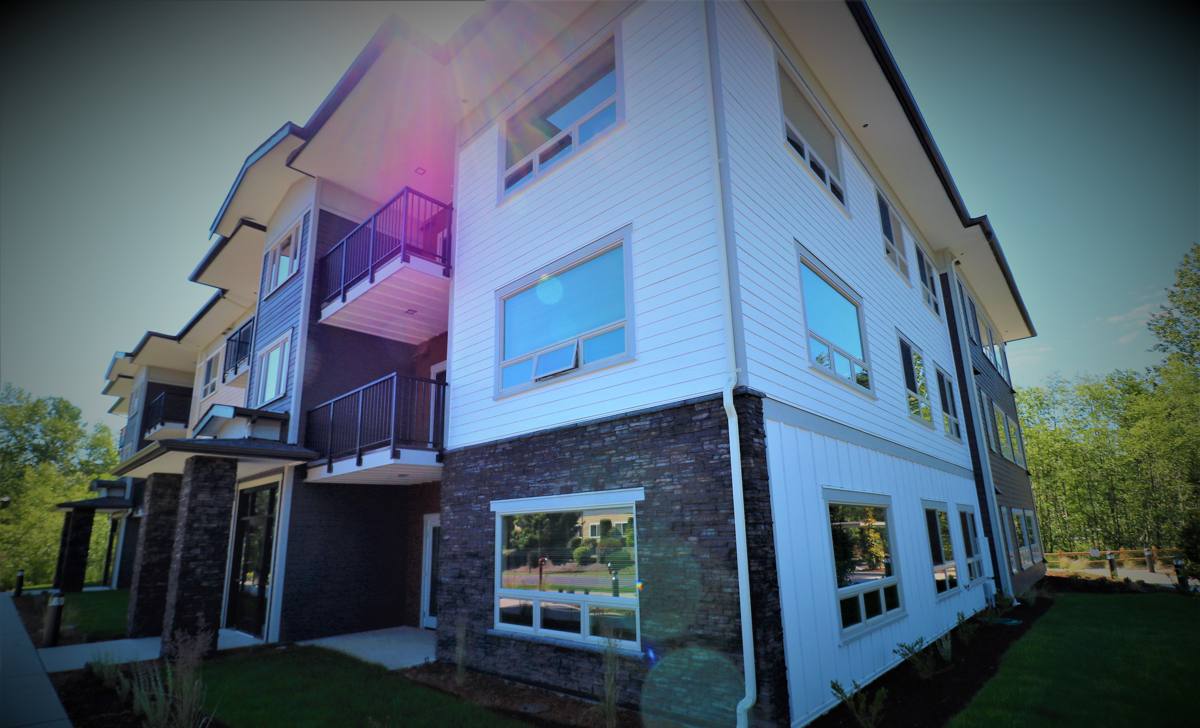
How Salt Air, Rain, and Moss Wear Down Siding Here
Salt Air and Slow Corrosion
Being close to the water means Cottonwood Beach homes deal with more salt exposure in the air than properties farther inland in Whatcom County. Salt accelerates corrosion in fasteners, trim, and any metal flashing tied into the wall assembly, and it breaks down lower-quality paint and finishes faster than a drier climate would. When siding fails prematurely near the water, corroded or under-spec fasteners are frequently part of the story, not just the siding panel itself.
Wind-Driven Rain
Proximity to open water also means more sustained wind, and wind-driven rain doesn't behave like a straight-down shower — it gets forced sideways into seams, laps, and trim joints that would stay dry in a calmer setting. Old siding installed with minimal lap coverage or without real attention to drainage behind the panels is exactly the kind of assembly that starts taking on water in conditions like these, often well before it looks obviously damaged from the street.
Moss, Mildew, and Shaded Walls
Mild temperatures and near-constant moisture add up to a long moss and mildew season across this stretch of the Whatcom County coast. North-facing walls, and anything shaded by trees or a neighboring structure, tend to show it first and worst. Any siding material that's even slightly porous, or that traps moisture against the sheathing behind it, becomes a growth surface over time — and once moss and mildew are established, they hold additional moisture against the wall, which speeds up whatever damage is already happening underneath.
Signs It's Time to Replace, Not Just Repair
A lot of siding problems can be caught early and repaired. Once a home crosses certain thresholds, though, repair stops being cost-effective and full replacement becomes the honest recommendation.
- Soft, spongy, or crumbling siding when pressed, especially near the bottom courses or around window and door trim
- Paint that won't hold anymore no matter how well it's prepped and applied — a sign the substrate underneath is compromised
- Persistent moss or mildew staining that returns within a season or two of cleaning
- Visible warping, cupping, or buckling panels, particularly on the north or water-facing walls
- Interior signs like water staining, musty smells, or soft drywall near exterior walls
- Siding that's original to a home built more than twenty-five years ago and has never been fully replaced
Repair vs. Full Replacement: How We Make the Call
We don't default to recommending replacement just because a homeowner calls about siding. Some damage is genuinely localized and repairable. The table below is a general guide, not a substitute for an on-site look at the specific home.
| Condition Found | Repair Often Makes Sense | Full Replacement Usually Makes Sense |
|---|---|---|
| A few damaged boards from an isolated impact or old flashing failure | Yes, if the surrounding sheathing is sound | Only if damage has spread into adjoining sections |
| Widespread paint failure across most elevations | Rarely a lasting fix on its own | Yes, especially on wood-based siding past its service life |
| Soft or delaminating panels found on multiple walls | No — points to underlying moisture intrusion | Yes |
| Persistent moss/mildew on shaded elevations only | Sometimes, combined with better drainage detailing | Consider if the siding is also nearing end of service life |
| Original siding on a home over 25 years old | Case by case, but limited long-term value | Usually yes — most products in this age range are past their design life |
What a Correct Siding Replacement Involves
Tear-Off and What's Underneath
A real replacement means removing the old siding down to the sheathing, not installing over top of a compromised layer. That step matters most in a climate like this one, because it's the only point in the project where we can actually see and address whatever moisture damage, rot, or failed flashing has been hiding behind the old siding — problems that are common on homes exposed to this much salt air and driving rain over the years.
Drainage Plane and Rain-Screen Detailing
Behind the new siding, a proper weather-resistive barrier and drainage plane give any water that gets past the outer layer a path to drain and dry out instead of sitting against the sheathing. On a shoreline property like this one, that drainage detailing isn't optional — it's the difference between siding that sheds the occasional wind-driven storm without issue and siding that slowly traps moisture behind it year after year.
Flashing at Windows, Doors, and Roof Lines
Most siding failures we find on tear-offs trace back to flashing, not the siding material itself. Every window, door, and roof-to-wall transition needs flashing that laps correctly with the drainage plane and directs water outward, not caulk used as a stand-in for real flashing. Caulk breaks down; properly lapped flashing doesn't rely on staying intact forever to keep water out.
Fastener Spec and Installing to Manufacturer Standard
Fiber cement only performs the way it's engineered to when it's installed to the manufacturer's published spec — correct fastener type, spacing, and penetration depth, proper clearance from grade and roof lines, and joints that are factory-mitered or correctly caulked. A quality product installed loosely will still develop problems in this climate; the installation is what makes the material's engineering actually count for something.
Why We Replace Old Siding With James Hardie Fiber Cement — and Nothing Else
We used to install a broader range of siding products. We narrowed that down to James Hardie fiber cement exclusively, and that decision came from what we kept finding on tear-offs and service calls in exactly this kind of coastal, wet climate — not from a supplier relationship.
- Non-combustible core: Fiber cement doesn't feed a fire the way wood-based siding products can, which matters for safety and can matter for insurance.
- Factory-applied ColorPlus finish: The color is baked on under controlled factory conditions rather than brushed on in the field, and it holds up longer against fading, chalking, and moisture intrusion than site-applied paint does.
- Climate-engineered HZ product lines: Hardie's HZ5 formulation is built for regions with heavy moisture exposure and freeze-thaw cycling, which describes this part of the Whatcom County coast well.
- Dimensional stability: Fiber cement doesn't swell, warp, or cup the way engineered wood siding can when it repeatedly takes on moisture through a wet season.
- Strong transferable warranty: Hardie backs the product with one of the more robust warranty structures in the siding industry, provided installation follows their spec.
We won't install LP SmartSide, vinyl siding, Cemplank, Allura, primed spruce, or cedar. Each of those products has a legitimate place in the market, and plenty of homeowners elsewhere are satisfied with them. On a shoreline property in Cottonwood Beach, though, we've made a professional call that we'd rather stand fully behind one system than offer a cheaper alternative that shifts more long-term maintenance risk onto the homeowner.
What Siding Replacement Costs Depend On
We don't quote a flat per-square-foot number over the phone, because the factors below move the price more than the raw square footage does. This is meant to help you understand what's actually driving a quote, not to replace an on-site estimate.
| Cost Factor | Why It Matters |
|---|---|
| Extent of hidden damage found at tear-off | Rotted sheathing or framing found behind old siding adds repair scope beyond the siding itself |
| Home size and wall complexity | More corners, gables, and trim details mean more labor and material per square foot of wall |
| Siding profile chosen | Lap, board-and-batten, and shingle-style Hardie products differ in material and installation time |
| Number of windows, doors, and penetrations | Each one requires flashing and trim work, which adds labor regardless of overall wall area |
| Site access and elevation | Steep grades, limited staging space, or multi-story walls affect equipment and crew time |
| Existing paint or coating removal needs | Some tear-offs involve disposal considerations depending on the age and type of the old siding |
Our Siding Replacement Process
We start with an on-site assessment of the existing siding, looking specifically for how it's held up against salt exposure and moisture over time, and giving an honest read on what's repairable versus what genuinely needs to come off. From there we put together a clear, written scope and timeline before any work begins. Tear-off, sheathing inspection, drainage plane installation, flashing at every penetration, and fastener spec are handled as standard practice on every job, not offered as optional upgrades. We walk the finished job with the homeowner before calling it done.
Why Hiring a Crew That Already Works Cottonwood Beach Matters
A contractor who works this stretch of the Whatcom County coast regularly already knows how salt air, sustained wind, and prolonged moisture behave differently here than they do even a few miles inland. That familiarity shows up in the details that actually determine longevity — how much lap a flashing detail gets, which fastener grade gets specified, where extra drainage detailing gets added on a shaded or water-facing wall. Those are exactly the decisions that separate siding that lasts three decades from siding that starts showing problems in five years.
Checklist Before Hiring for Siding Replacement Here
- Ask what siding material they install and why, and whether they'll put a written warranty behind it
- Confirm current Washington contractor licensing and active liability insurance
- Ask how they detail flashing and drainage specifically for coastal wind-driven rain, not just which brand they sell
- Get a written scope that spells out tear-off, sheathing inspection, and disposal, not just the new siding install
- Ask how they handle unexpected moisture damage discovered once the old siding comes off
If your Cottonwood Beach home's siding is showing its age or you're just not sure whether repair or full replacement is the right call, we're happy to take a look and give you an honest, no-pressure read. Reach out below for a free estimate.