 Birch Bay
 Building on the Water's Edge in Cottonwood Beach
Cottonwood Beach sits right along Birch Bay's shoreline, and that location shapes almost every decision you'll make about a new home's windows. A house going up here isn't dealing with the same exposure as a lot two miles inland. Wind comes straight off the water, driving rain into wall assemblies that face the bay, and salt-laden air settles on every exterior surface, window hardware included. When we install new-construction windows in this neighborhood, we're not just setting units into rough openings — we're building an envelope that has to hold up against conditions most product warranties assume you won't actually see.
New construction is also a different job than replacement work, and that matters more here than in a sheltered subdivision. On a new build, the window opening, the wall's water management layer, and the window itself all get built at the same time, by different trades, often on different days. If any one of those pieces doesn't get detailed correctly for a marine-exposure site, the mistake gets buried behind siding and shows up years later as rot, staining, or a failed seal — usually on the bay-facing wall first.
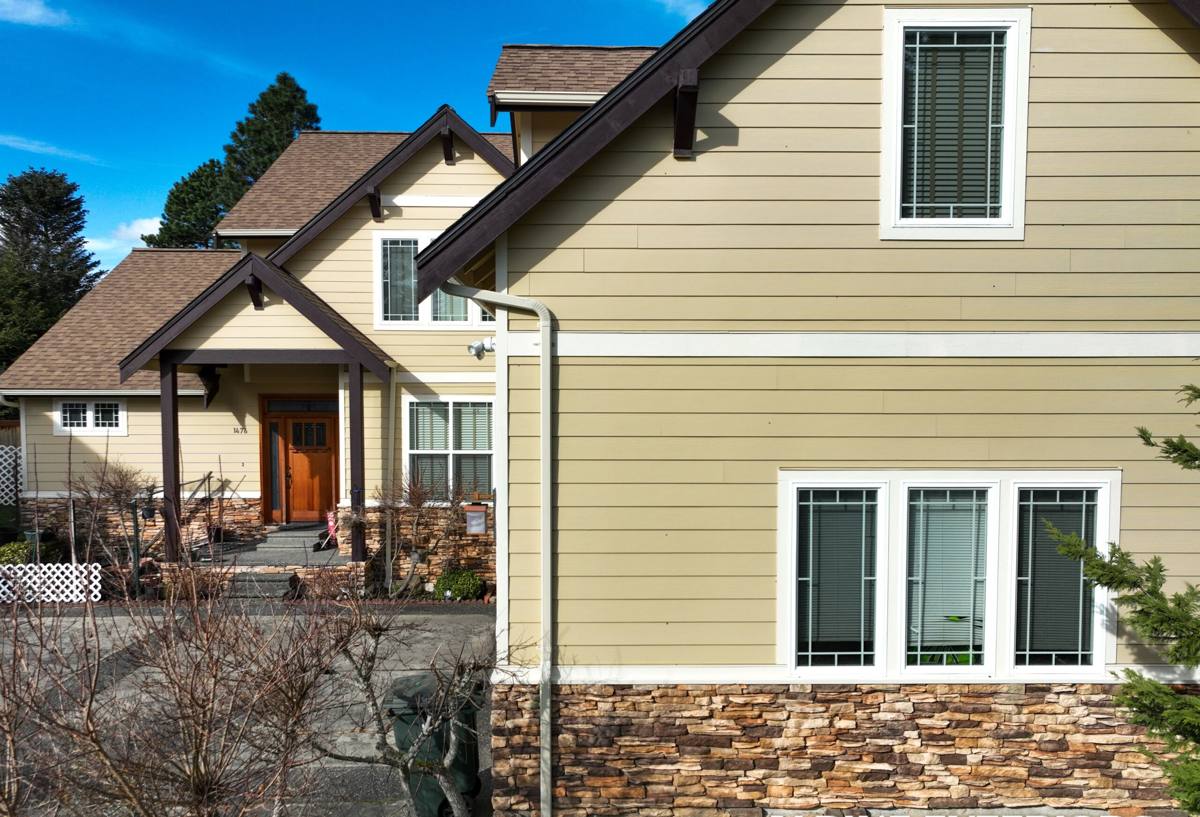
What "New-Construction" Windows Actually Means
New-construction windows have a nailing flange (sometimes called a nail fin) built into the frame. That flange gets fastened directly to the wall sheathing before house wrap and siding go on, which lets us integrate the window into the drainage plane as a continuous system rather than cutting into finished siding later. This is different from replacement or "pocket" windows, which get inserted into an existing frame after the house is already closed in.
The advantage on a new build is control. We get to set the sill pan, lap the house wrap correctly, and flash the head and jambs in the right order, before anything covers it up. Done right, water that reaches the window perimeter is directed back out, never into the wall cavity. Done wrong — flange stapled on top of house wrap instead of properly lapped, no sill pan, tape applied out of sequence — the window can look perfect from inside for years while the wall behind it slowly fails.
The Marine Exposure Problem
Salt Air and Hardware
Salt air accelerates corrosion on anything metal — hinges, locks, cranks, screws, and flashing fasteners. On a standard inland install we don't think twice about stock hardware. On a Cottonwood Beach build facing the bay, we pay attention to which hardware finishes and fastener types actually hold up to sustained salt exposure, because replacing a corroded lock set on a window that's three years old is a preventable annoyance, not a warranty claim most manufacturers will honor.
Wind-Driven Rain
Birch Bay gets weather systems that push rain sideways, not just down. That means water is hitting window assemblies at wall faces and at the head flashing, not just pooling on the sill. Standard flashing details built for a sheltered site assume gravity does most of the work. On exposed elevations here, we treat every window like it will see wind-driven rain at some point every winter, because it will.
Moss and Prolonged Damp
Whatcom County's moss season is long, and moss holds moisture against whatever it grows on. It's less of a direct threat to the window unit itself and more a sign of what the surrounding siding and trim are dealing with — if moss is establishing near a window opening, that's a spot staying damp longer than it should, which is exactly where flashing details matter most.
Getting the Installation Details Right
A window is only as good as the opening it sits in. On every new-construction install, the sequence matters as much as the product:
- Sill pan flashing set first, sloped to drain outward, before the window ever goes in
- House wrap or weather-resistive barrier lapped correctly at the sill, jambs, and head — water sheds down and over, never behind, the layer below it
- Window set plumb, level, and square, with shims at load points, not just at the corners
- Flashing tape applied in the correct order — jambs before head — so every lap sheds water downward
- Head flashing installed with a drip edge, not flush against the wall
- Backer rod and exterior sealant at the trim line, sized and tooled correctly rather than just caulked over gaps
- Fasteners and flange screws chosen for corrosion resistance given the site's salt exposure
None of this is unusual for a competent crew. What's specific to Cottonwood Beach is which elevations get the extra attention — the bay-facing and prevailing-wind walls get treated as high-exposure zones, with the same detailing carried through more carefully than a builder working a typical inland lot might bother with.
Choosing Frame Material and Glass for This Site
Material choice matters more on an exposed coastal lot than it does two streets back from the water. Here's how the common options actually perform under salt air and sustained wind-driven rain, based on how they're built and what they require to stay sound:
| Frame Material | Salt Air Behavior | Maintenance | Where It Fits |
|---|---|---|---|
| Vinyl | Doesn't corrode; UV and impact resistance vary by product grade | Low — rinse off salt residue periodically | Budget-conscious builds, most elevations |
| Fiberglass | Very stable dimensionally, resists corrosion, holds paint well if colored | Low | Bay-facing walls, higher-wind exposures |
| Aluminum-clad wood | Exterior clad resists weather, but any breach in the cladding exposes wood beneath to sustained damp | Moderate — cladding seams need periodic inspection | Interior-facing elevations, sheltered sides |
| Bare wood | Requires diligent finish maintenance to resist salt-driven moisture uptake | High | We steer clients away from this on exposed coastal walls |
Glass packages matter too. A dual-pane, low-E unit with an appropriate gas fill is standard for energy performance in this climate zone. On walls that take direct wind, we also look at the window's design pressure (DP) rating — a number that reflects how much wind and structural load the unit is tested to handle — rather than assuming any window labeled "residential grade" is sized for the exposure it's actually going into.
Whatcom County Code and Energy Requirements
New-construction windows in Whatcom County have to meet current Washington State energy code requirements for U-factor and, depending on the compliance path the builder is using, may factor into the whole-house energy credit calculation. Permits for new residential construction typically require window schedules to be called out on the plans before framing inspection, and final inspection will check that installed units match what was permitted. We coordinate window selection and installation timing with your builder or general contractor so nothing holds up inspection, and we can work directly from architectural plans or field-verify rough openings if you're managing the build yourself.
Our Process for New-Construction Window Installs
For a Cottonwood Beach build, the process generally runs like this:
- Site visit and plan review — we look at elevations facing the bay and prevailing wind versus sheltered sides, and flag any openings that need extra flashing attention
- Product selection — frame material, glass package, and hardware chosen with the site's exposure in mind, not a one-size-fits-all spec
- Coordination with your builder on timing — windows need to go in after sheathing and house wrap are ready but before siding closes the wall
- Installation following the sequence above, with photos of flashing details before they're covered, so there's a record of what's behind the siding
- Final adjustment and walkthrough — operation, seals, and trim confirmed before we call it done
We don't rush the flashing steps to hit a framing schedule. On an exposed lot, that's the part of the job that determines whether the wall stays dry for the next thirty years.
A Checklist for Homeowners Managing Their Own Build
If you're working with your own general contractor and want to make sure the window installer is doing right by a Cottonwood Beach site, ask about these before installation starts:
- Is a sill pan being installed under every window, not just the ones facing the water?
- What's the flashing sequence, and can it be documented with photos before siding covers it?
- What design pressure (DP) rating are the windows on bay-facing walls?
- What fastener and hardware finish is spec'd for salt-air corrosion resistance?
- Does the window schedule match what's on the permitted plans?
Why Local Experience Matters Here
A window crew that mostly works inland jobs isn't wrong about window installation in general — they're just used to a lower baseline of exposure. On a Cottonwood Beach lot, the difference between a standard install and one detailed for the site shows up in year three or four, not on move-in day. We work this stretch of Whatcom County regularly, which means we're not guessing at how hard the wind hits a particular elevation or how long moss tends to hang around on a north-facing wall near the bay — we've seen it on the last job, and the one before that.
If you're planning new-construction windows for a build in Cottonwood Beach or elsewhere around Birch Bay, we're happy to take a look at your plans and talk through what the site needs. Reach out for a free, no-pressure estimate using the form below.