 Birch Bay
 Roofing a Home Near the Water Takes a Different Approach
Cottonwood Beach sits close enough to the water that a roof here does a different job than one a few miles inland. Salt-laden air, near-constant winter moisture, and a moss season that can run half the year all work on a roof at the same time. A roofing job that would hold up fine in a drier part of Whatcom County can fail early here if it wasn't built with this specific exposure in mind. When we talk about "new roof installation for Cottonwood Beach," we mean a system chosen and installed to handle salt, standing moisture, and shade-driven moss growth as a package, not an afterthought.
This page walks through what that actually looks like: how the coastal environment ages a roof, what a correct installation includes, how our process runs from first look to final cleanup, and what to ask any crew before they touch your roof.
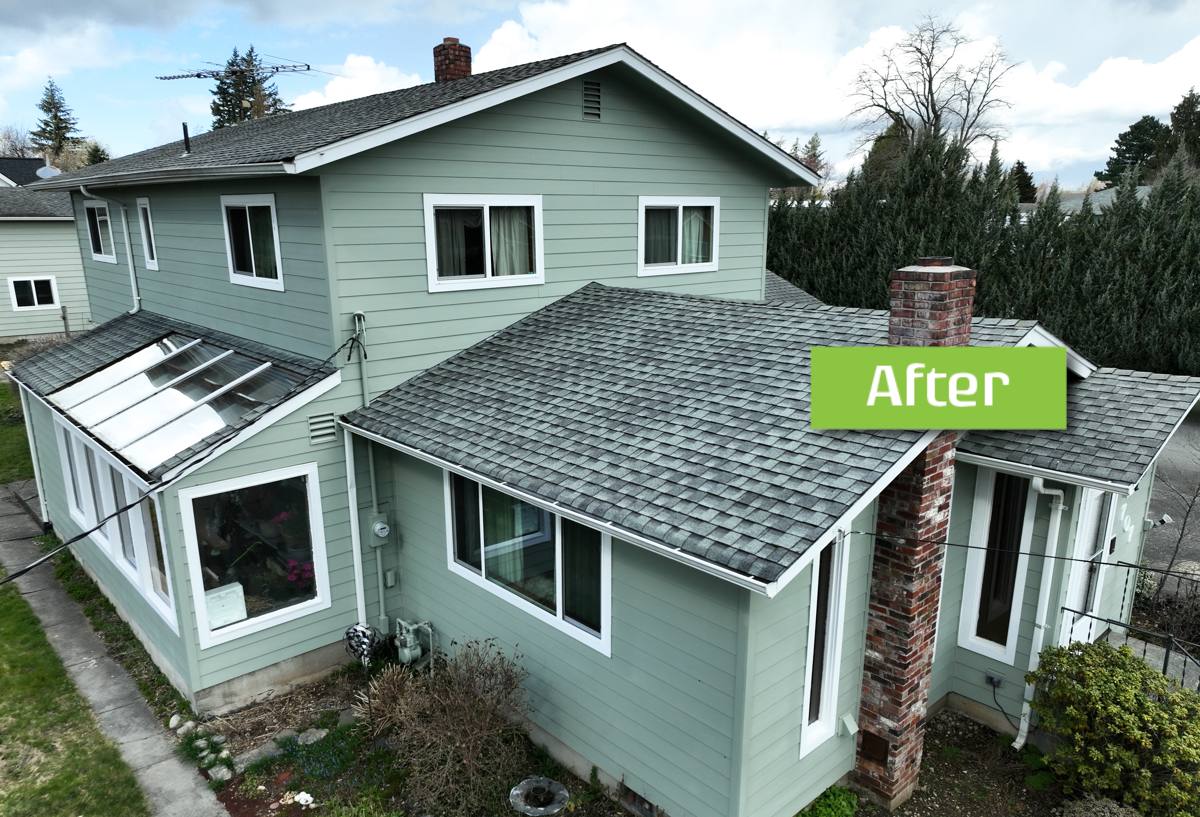
What Salt Air, Driving Rain, and Moss Actually Do to a Roof
Each of these three factors causes a different kind of wear, and they compound each other over time.
Salt Air
Airborne salt is corrosive to exposed metal — flashing, fasteners, vent stacks, and gutter hardware take the brunt of it. Untreated or lower-grade metal components can start showing rust and pitting years before a comparable roof further inland, which is why the metal components matter as much as the shingle itself.
Driving Rain
Storms coming off the water tend to push rain sideways rather than straight down. That means water gets forced up under shingle edges, into ridge caps, and around penetrations like plumbing vents and chimneys — places a roof built for calmer weather isn't always sealed against. Underlayment quality and flashing detail matter more here than in a typical inland install.
Moss Season
Shaded, north-facing, and low-slope sections of roof in this area can stay damp for long stretches, especially under tree cover common to the neighborhood. Moss and algae take hold in that dampness, and once established they hold moisture against the shingle surface, lift edges, and accelerate granule loss. A roof that isn't detailed to shed water quickly and dry out between storms gives moss exactly the conditions it needs.
Signs a Repair Won't Cut It Anymore
Not every roofing problem calls for full replacement. But in a coastal environment like this, certain signs usually mean the roof's underlying protection — not just the surface — has been compromised.
- Granule loss heavy enough that you're finding grit in the gutters regularly, not just after a storm
- Moss or algae that returns within a season or two of cleaning, even after treatment
- Soft spots or sagging in the decking when walked on, especially near valleys or eaves
- Rusted, lifted, or missing flashing around chimneys, vents, and skylights
- Interior staining on ceilings or in the attic after wind-driven storms specifically
- Shingles curling, cupping, or cracking across large sections rather than a few isolated spots
- The roof is at or past the manufacturer's expected service life for this climate zone
If you're seeing two or more of these at once, it's usually a sign the roof's protective layers — not just the shingles — need to be replaced rather than patched.
Choosing the Right Roofing System for This Location
There's no single "best" roofing material for every home — it depends on your roof's pitch, how much shade and moss exposure it gets, your budget, and how long you want to go between maintenance. Here's how the common options compare for a coastal Whatcom County property.
| Material | Salt/Corrosion Resistance | Moss Resistance | Typical Maintenance | Upfront Cost |
|---|---|---|---|---|
| Architectural asphalt shingle (standard grade) | Good, with proper metal detailing | Fair — benefits from algae-resistant granules | Periodic cleaning in shaded areas | Low–Medium |
| Architectural asphalt shingle (algae-resistant, copper-infused granules) | Good | Good | Lower — granules actively resist moss/algae growth | Medium |
| Standing-seam metal | Very good with correct alloy/coating choice | Very good — smooth surface sheds debris and dries fast | Low | Medium–High |
| Synthetic/composite shingle | Good | Good | Low–Medium | Medium–High |
For most Cottonwood Beach homes, we lean toward algae-resistant architectural shingles or standing-seam metal, specifically because both hold up better against the moss cycle without demanding constant upkeep. That said, the right call always depends on your roof's actual shade exposure and slope — a full sun, steep-pitch roof has very different needs than a shaded, low-slope one on the same street.
What a Correct Installation Actually Involves
The shingle or panel you see is the least important variable in how long a coastal roof lasts. Most early failures we're called out to inspect trace back to shortcuts in the layers underneath. A correct installation for this environment includes:
Deck Inspection and Repair
Every board under the old roofing gets checked for soft spots, delamination, and water damage before anything new goes down. Roofing over a compromised deck just hides the problem.
Ice-and-Water Shield at Vulnerable Points
Eaves, valleys, and penetrations get a self-adhering waterproof membrane, not just standard felt. This is the layer that stops wind-driven rain from working its way under the shingles at the spots most exposed to it.
Corrosion-Resistant Flashing and Fasteners
Given the salt exposure, we specify flashing and fastener materials rated for coastal use rather than standard-grade hardware that rusts prematurely near the water.
Balanced Ventilation
Intake and exhaust ventilation have to be sized and balanced correctly. Poor ventilation traps moisture in the attic, which shortens roof life from underneath — often faster than weather does from above.
Algae-Resistant Shingle Selection (Where Applicable)
On shaded sections especially, the granule type matters. Standard granules offer little resistance to the moss and algae growth common in shaded coastal microclimates.
Our Process, Start to Finish
Every roof gets evaluated on its own terms — pitch, shade pattern, attic ventilation, and current damage all factor into the recommendation.
- On-site inspection. We walk the roof and attic, check the decking, flashing, and ventilation, and photograph problem areas.
- Written estimate. You get a clear breakdown of material options, scope of work, and timeline — no pressure to decide on the spot.
- Material selection. We talk through the trade-offs in the table above based on your specific roof, not a one-size-fits-all recommendation.
- Tear-off and deck repair. Old roofing comes off, decking is inspected, and any damaged sections are replaced before new material goes down.
- Installation. Underlayment, flashing, ventilation, and roofing material are installed in that order, with attention to the coastal detailing described above.
- Final walkthrough and cleanup. We inspect the finished roof with you and make sure the property — gutters, landscaping, driveway — is cleared of debris and fasteners.
Ventilation and Moss Prevention Aren't Optional Extras
A lot of roofing estimates treat ventilation and moss prevention as add-ons. In a place with this much shade and rainfall, they're part of the core job. Proper intake and exhaust ventilation keeps the underside of the deck dry, which matters as much as keeping the topside dry. Combined with algae-resistant shingles or a smooth metal surface on shaded sections, correct ventilation is what actually extends the interval between moss cleanings — not just a one-time treatment after installation.
What to Ask Before You Hire Anyone to Roof Your Home
Cottonwood Beach's coastal exposure means a generic roofing job — one built for a drier, more sheltered part of the county — often underperforms here. Before hiring a crew, it's worth asking:
- Do you use corrosion-resistant flashing and fasteners for homes this close to the water?
- What underlayment do you install at eaves and valleys, and is it rated for wind-driven rain?
- How do you size and balance attic ventilation for this specific roof?
- Do you offer algae-resistant shingle options, and do you recommend them for shaded sections?
- Can you walk me through your deck inspection and repair process before installation begins?
- What's included in your written warranty, and does it cover both materials and labor?
- Do you have experience roofing other homes in this specific area, and can you speak to how the local conditions affect the job?
A contractor who can answer these clearly, without hedging, is generally one who's actually worked in conditions like these before.
Why Local Experience in Cottonwood Beach Matters
A roofing crew that primarily works inland jobs may not think twice about standard-grade flashing or skip the extra ventilation detailing that a coastal roof needs — not out of carelessness, but because it simply isn't necessary where they usually work. A crew that regularly works in and around Birch Bay and the wider Whatcom County coastline builds those details into every estimate by default, because we've seen firsthand how salt air, wind-driven rain, and shaded moss growth wear down roofs that weren't specified for it. That's the difference between a roof that needs attention again in a few years and one that goes the distance.
If your roof is showing wear, or you're just planning ahead, we're happy to take a look and walk you through your options. Reach out for a free, no-pressure estimate using the form below — we'll give you an honest read on what your roof actually needs.