 Birch Bay
 Building a Deck That Holds Up in Cottonwood Beach
Cottonwood Beach sits close enough to the water that every outdoor structure on the property deals with the same three things year-round: salt-laden air, driving rain off the Strait, and a moss season that seems to start earlier and last longer every year. A deck built without those conditions in mind will look fine for a season or two and then start showing problems — soft boards, rusted fasteners bleeding through the finish, a slick green film on the walking surface by late fall. A deck built for this specific stretch of Whatcom County coastline is a different project from the start, from the footings up to the railing caps.
This page covers what we build, why we build it that way, and what to expect if you're planning a new deck or replacing an old one in Cottonwood Beach.
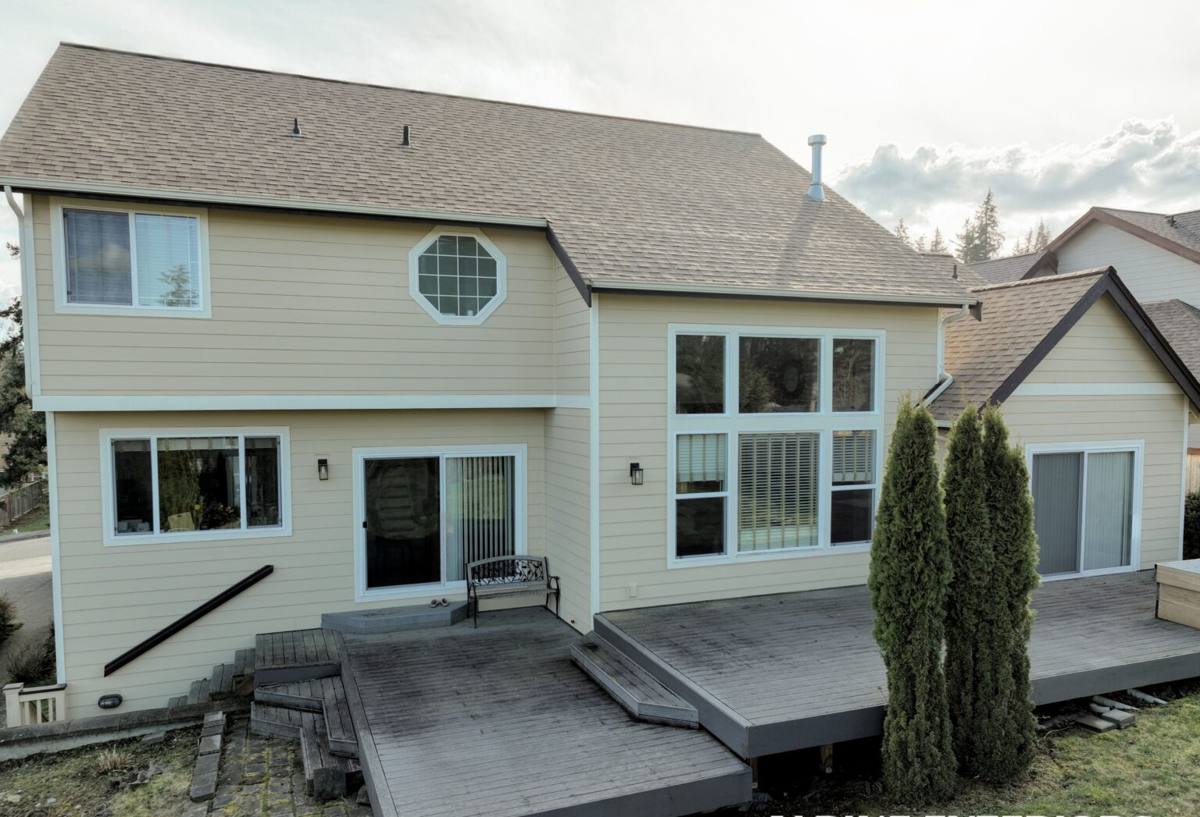
What Salt Air and Moss Actually Do to a Deck
It helps to understand the failure points before talking about the fix, because most of what goes wrong on a beachfront or near-beachfront deck traces back to one of three things.
Corrosion from Salt Air
Airborne salt doesn't just affect boats and railings on the water side of a property — it settles on any exposed metal, including fasteners buried inside the decking. Standard coated screws and joist hardware can start corroding from the inside out within a few years in this environment, long before the wood around them shows any sign of trouble. By the time you see rust streaking on the surface of the boards, the fastener underneath is often already compromised.
Moisture from Driving Rain
Rain here doesn't always fall straight down. Wind-driven rain gets pushed sideways into ledger connections, under railing posts, and into any gap where flashing was skipped or done poorly. Once water gets behind a ledger board or into an unsealed post base, it has nowhere to go, and rot sets in from the inside — which is exactly why so many older decks fail at the house connection first, not out at the far edge.
Moss and Algae Growth
Long, damp winters with limited direct sun create ideal conditions for moss and algae on horizontal wood and composite surfaces alike. Beyond looking bad, a mossy deck surface is a genuine slip hazard, and moss holds moisture against the board longer than it would otherwise sit — accelerating whatever rot or degradation is already starting underneath.
Decking Material Options for This Coastline
There's no single "correct" material for every deck — it depends on budget, how much upkeep the homeowner wants to take on, and how exposed the site is. Here's how the common options actually perform in a Cottonwood Beach setting.
| Material | Salt Air Resistance | Moss/Algae Behavior | Upkeep |
|---|---|---|---|
| Pressure-treated fir/pine | Fair — needs sealed cuts and coated fasteners | Prone to moss without regular cleaning | Annual cleaning and re-staining recommended |
| Cedar | Good — naturally rot-resistant, but surface still needs protection | Still grows moss if left unsealed | Periodic oiling or staining to keep color and protection |
| Composite decking | Excellent — won't corrode or rot | Can still grow surface algae; cleans off more easily than wood | Occasional washing, no staining or sealing |
| PVC/capped polymer | Excellent — fully sealed surface | Lowest moss retention of the group | Lowest — rinse and go |
Composite and capped polymer boards have become the more common choice for homes right up against the marine environment, simply because they remove wood's two biggest weaknesses here — rot and repeated refinishing. That said, plenty of homeowners still want the look and feel of real wood, and a well-built cedar deck with the right maintenance schedule holds up fine. We'll talk through the honest trade-offs for your specific site rather than push one product across the board.
The Structural Details That Actually Matter
Ledger Attachment and Flashing
Where the deck meets the house is the single most important connection on the entire structure, and it's the one place we won't cut corners on flashing. Proper ledger flashing directs water away from the house band board instead of letting it wick in behind the ledger — a detail that matters more here than in a drier inland climate, simply because of how much wind-driven rain this stretch of coast gets.
Footings and Frost Depth
Footings need to be set below frost depth and sized for the soil conditions on site. Sandy or loose soils common in beach-adjacent lots sometimes need larger or deeper footings than a standard inland lot to keep the structure from settling unevenly over time.
Joist Protection
Joist tape over the top of every joist keeps water from soaking into end grain and fastener holes — the exact spots where rot typically starts first on an unprotected frame. It's a small material cost relative to the whole project and one of the best long-term investments in the structure.
Airflow Underneath
Decks built low to the ground or over damp, shaded soil need enough clearance and ventilation underneath to let the structure dry out between rain events. A deck that never fully dries underneath is a deck that rots from below, regardless of what decking material is on top.
Fasteners and Hardware: The Detail Most Decks Get Wrong
This is worth its own section because it's the most common shortcut we see on older or budget decks, and it's the one that causes the most callbacks industry-wide. In a marine air environment, fastener and hardware selection isn't a minor spec — it's the difference between a deck that's structurally sound at year fifteen and one that needs board replacement at year five.
- Stainless steel or coated fasteners rated for coastal/marine exposure, not generic exterior-grade screws
- Hot-dip galvanized or stainless structural hardware (joist hangers, post bases, angle brackets)
- Hidden fastener systems where the decking product supports them, reducing exposed metal on the walking surface
- Matched fastener and hardware metals to avoid galvanic corrosion between dissimilar metals
- Sealed or capped post bases to keep standing water off the base of every post
Our Deck Building Process
- On-site consultation — we walk the property, look at sun/wind exposure, drainage, and how close the build is to salt air or standing moisture, and talk through what you actually want to use the space for.
- Design and material selection — layout, railing style, and decking material chosen against your budget and maintenance preferences, with the trade-offs explained plainly.
- Permitting — we handle the paperwork for the local jurisdiction so you're not chasing it down yourself.
- Demo (if replacing an existing deck) — old structure removed, framing inspected for hidden rot before anything new goes down.
- Framing and footings — footings, posts, beams, and joists built to code with the flashing and joist protection detailed above.
- Decking and railings installed — using the fastener and hardware standards outlined above, regardless of which decking material you choose.
- Final walkthrough — we go over the finished deck with you, including a basic care rundown for whatever material you chose.
Permits and Local Requirements
Deck construction in and around Birch Bay typically requires a permit once the structure passes certain height, size, or attachment thresholds, and setback requirements apply depending on how close the build sits to property lines or shoreline areas. Requirements can vary by exact location and whether the property falls under county or other jurisdictional review, so we confirm the specifics for your address before finalizing a design rather than assuming a blanket rule applies. Handling this correctly up front avoids a stop-work order or a costly redesign mid-project.
Maintenance That Actually Extends the Life of a Cottonwood Beach Deck
Even a well-built deck needs some seasonal attention in this climate. None of this is complicated, but skipping it is how a 20-year deck becomes a 10-year deck.
- Sweep debris and standing leaves off the surface regularly, especially heading into fall
- Clean moss and algae buildup before it gets thick enough to hold moisture against the boards
- Check railing posts and stair connections annually for movement or loosening
- Inspect fasteners for surface rust bleed-through, which signals a corroding fastener underneath
- Keep gutters and downspouts near the deck clear so runoff isn't dumping directly onto the structure
- Re-oil or re-stain wood decking on the schedule appropriate to that product — don't wait until it's visibly gray and dry
Why a Crew That Already Works Cottonwood Beach Matters
A contractor who builds decks across a wide range of inland climates isn't necessarily thinking about salt air corrosion or wind-driven rain by default — those aren't universal concerns, they're specific to this stretch of Whatcom County coastline. A crew that already works Cottonwood Beach and the surrounding Birch Bay area knows which fastener grades hold up here, which decking products actually shrug off the moss season, and how the local permitting process runs, because we've done it repeatedly on this exact coastline rather than learning it on your project. That local track record is also what backs the warranty — if something needs attention down the line, you're calling a crew that's still working in your neighborhood, not tracking someone down from two counties over.
If you're planning a new deck or need to replace one that's showing its age, we're glad to come take a look and talk through options honestly. The estimate is free, there's no pressure, and you can use the form below to get started.