 Birch Bay
 Cottonwood Beach's Siding Problem Starts With Its Location
Cottonwood Beach sits right up against the water on Birch Bay, which means every home here is dealing with a combination most inland Whatcom County houses never see: salt-laden air blowing off the bay, wind-driven rain that hits west- and north-facing walls at an angle instead of falling straight down, and shaded, moisture-holding lots where moss and algae get a long head start every fall and don't fully let go until well into spring. None of that is a problem you can fix with a better paint job. It's a problem you fix by choosing a siding material built to handle sustained moisture exposure and installing it in a way that keeps water moving off the wall instead of soaking into it.
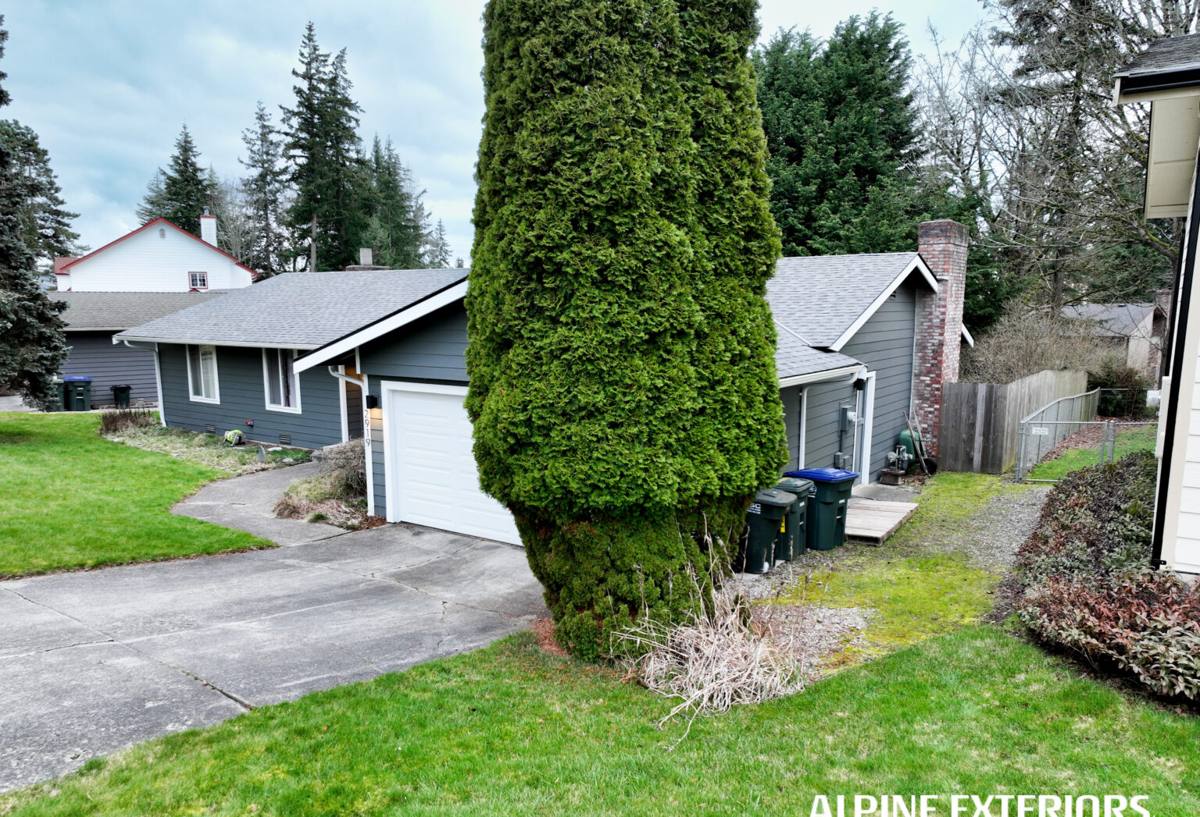
We've worked on homes throughout the Birch Bay area, and Cottonwood Beach's mix of waterfront exposure and tree-shaded lots set back from the beach is its own kind of challenge. Beachfront homes take the brunt of salt spray and wind. Homes tucked back under fir and cedar cover get less wind but more shade, more standing moisture, and more moss creeping up from the north wall. Either way, the siding has to survive years of damp exposure without swelling, delaminating, or feeding mold and moss growth into the wall assembly behind it.
Why Fiber Cement Handles This Environment Better Than the Alternatives
Wood siding — cedar, primed spruce, anything wood-based — is porous by nature. It absorbs moisture, swells, and dries out over and over with every wet-dry cycle Birch Bay throws at it. That cycle is exactly what causes cupping, splitting, and eventually rot at butt joints and lower courses, which is where Cottonwood Beach homes see damage first. Vinyl siding doesn't absorb water the way wood does, but it isn't rigid, it expands and contracts significantly with temperature swings, and it can warp or crack from wind-driven debris in a coastal storm. It's also a petroleum-based product, so it's combustible, which matters more every year as wildfire smoke and dry-season fire risk creep into western Washington summers.
Fiber cement is a different category of material. It's made from cement, sand, and cellulose fibers pressed and cured into a dense, dimensionally stable board. It doesn't absorb bulk water the way wood does, it doesn't expand and contract the way vinyl does, and it's non-combustible — a real advantage for homes near dry brush and tree cover. Properly installed and finished, it holds paint and factory color far longer than wood, resists pest damage entirely, and doesn't provide the same food source for mold and moss that bare or thinly coated wood does. That's the whole reason we standardized on it rather than offering a mix of products: it's the one exterior wall material that consistently holds up to what this coastline does to a house.
How Fiber Cement Compares for a Coastal Whatcom County Home
| Factor | Fiber Cement (James Hardie) | Vinyl | Cedar / Primed Wood |
|---|---|---|---|
| Moisture absorption | Very low; engineered to resist bulk water | None, but seams and panels can trap water behind them | High; swells and dries repeatedly |
| Salt air resistance | Strong; factory finish resists fading and chalking | Moderate; can chalk and become brittle over time | Poor without frequent re-coating |
| Moss and algae resistance | Good, especially with proper coating and standoff | Moderate; smooth surface but seams collect debris | Poor; porous surface holds spores and moisture |
| Fire classification | Non-combustible | Combustible (petroleum-based) | Combustible |
| Typical repaint interval | 15+ years with ColorPlus factory finish | Never painted, but fades/chalks over time | 3–7 years |
| Dimensional stability | High; minimal expansion/contraction | Moderate to low; expands/contracts with heat | Low; swells, cups, and splits |
What "Correct" Installation Actually Means in This Climate
Fiber cement is only as good as the installation behind it. A large share of the siding failures we get called out to inspect in coastal Whatcom County aren't material failures — they're installation shortcuts that let water get behind a perfectly good board. In a location like Cottonwood Beach, where wind-driven rain is a near-annual event and shaded walls stay damp longer, those shortcuts show up faster than they would on a dry inland lot.
Flashing and Water Management
Every horizontal surface — window heads, door tops, trim boards, roof-to-wall transitions — needs proper flashing that directs water out and away from the wall assembly, not just a bead of caulk covering the gap. We install a weather-resistive barrier and flash penetrations before a single course of siding goes up, because once the siding is on, a bad flashing detail can't be seen or fixed without tearing it back off.
Fastening and Gaps
James Hardie specifies exact nailing patterns, fastener types, and minimum clearances above rooflines, decks, and grade. Board ends need proper gaps to allow for seasonal movement, and those gaps need to be caulked with a sealant rated for exterior movement joints — not general-purpose caulk that will crack and open a water path within a couple of seasons.
Caulking and Sealant Choices
In a high-moisture, salt-air environment, the sealant matters as much as the siding. We use exterior-grade, paintable sealants rated for the movement and UV exposure Cottonwood Beach actually sees, applied at every board end, corner, and trim intersection — not just the visible seams.
James Hardie's Climate-Engineered System
James Hardie builds its siding to different specifications depending on the climate it's going into, through what the company calls its HardieZone system. Western Washington, including Birch Bay and the rest of Whatcom County, falls into the HZ5 zone — engineered for climates that see real freeze-thaw cycling combined with sustained damp conditions, as opposed to the hot, humid HZ10 formulation built for the Gulf Coast and Southeast. That distinction matters: the boards going on a Cottonwood Beach home are formulated for the freeze-thaw and moisture cycle this coastline actually experiences, not a generic national product.
On top of the base material, Hardie's ColorPlus finish is baked on in a factory-controlled process rather than field-sprayed after installation. That finish is what resists the fading, chalking, and streaking that salt air and UV exposure cause on field-painted siding, and it's backed by its own finish warranty separate from the product warranty on the board itself.
Choosing Board Profiles and Color for This Setting
Not every wall on a Cottonwood Beach lot needs the same product. HardiePlank lap siding is the standard for most of the wall field and comes in several exposure widths and textures, from smooth to a cedar-mill woodgrain look. HardiePanel vertical siding works well on gable ends, accent walls, or a more modern elevation, and HardieTrim boards handle corners and window and door surrounds in a material that matches the siding's moisture resistance instead of mixing in a wood trim package that weathers at a different rate than the field siding around it.
Color matters more on a shaded, damp lot than people expect. Darker ColorPlus tones show less streaking from windblown organic debris under tree cover, while lighter tones on a sun-exposed, beachfront wall hold up well against UV without the fading a field-applied paint would show within a few years. We walk through the color and profile options with the specific exposure of your lot in mind, not just what looks good on a sample board.
Our Installation Process
The process we follow on every Cottonwood Beach job is the same one we'd want on our own home, adjusted for what that specific lot's exposure and shade pattern call for:
- On-site assessment of wind exposure, shade pattern, existing moisture damage, and any rot or mold already present behind the current siding
- Removal of old siding and inspection of the sheathing and framing underneath for hidden water damage before anything new goes up
- Repair of any damaged sheathing, framing, or flashing found during tear-off — this is where problems that have been building for years usually surface
- Installation of a new weather-resistive barrier and correctly lapped, sealed flashing at every penetration and horizontal surface
- Installation of James Hardie fiber cement siding to manufacturer fastening, clearance, and gap specifications
- Sealant and touch-up work at every joint, corner, and trim intersection using exterior-rated products suited to this climate
- Final walkthrough covering maintenance expectations specific to a shaded, salt-exposed lot
Living With Fiber Cement Through Birch Bay's Moss Season
Even the right material needs a little seasonal attention on a lot like this. Fiber cement won't rot or feed moss the way wood does, but organic growth can still settle on the surface, especially on north-facing walls shaded by fir and cedar cover, or on any wall that doesn't get direct sun and wind to dry it out. The fix isn't complicated: a soft-wash rinse once a year, ideally heading into the wet season, keeps moss and algae from getting established, and keeping gutters clear and shrubs pulled back a few inches from the wall goes a long way toward keeping moisture off the siding surface in the first place. None of this is the kind of maintenance wood siding demands — no re-caulking every year, no re-staining every few seasons — but a coastal, shaded lot still benefits from a yearly look.
Signs Your Current Siding Is Losing the Fight
If your Cottonwood Beach home still has wood, vinyl, or older fiber cement siding, these are the warning signs worth acting on before they turn into a sheathing or framing repair:
- Soft, spongy, or dark-stained areas near the bottom courses or around window and door trim
- Paint that's peeling, bubbling, or failing faster than it used to, especially on north- or west-facing walls
- Persistent moss or algae growth that comes back within weeks of cleaning
- Visible cupping, warping, or gaps opening up at board ends and corners
- Caulk that's cracked, shrunk, or pulled away from joints and trim
- A musty smell or visible mold on the interior side of an exterior wall
- Siding that flexes or feels hollow when pressed, a sign the material behind it has already broken down
Why Local Experience in Cottonwood Beach Matters
A crew that's only worked dry, inland lots doesn't automatically know how to detail flashing for a wall that takes wind-driven rain off the bay, or how much clearance to leave above a shaded, slow-drying grade line. We've priced and installed jobs across Birch Bay and the surrounding Whatcom County coastline, and Cottonwood Beach's specific mix of waterfront exposure on some lots and heavy tree shade on others means every estimate here gets looked at with that exposure in mind — not treated as a generic siding job. That's a big part of why the installation gets the results it's supposed to: the right flashing details, the right clearances, and a finished job set up to actually handle what this coastline does to a house year after year.
If you're planning a siding project in Cottonwood Beach or anywhere else around Birch Bay, we're happy to take a look at your home and walk you through what we'd recommend and why. The estimate is free, there's no pressure, and you'll get a straight answer about what your home actually needs.