 Birch Bay
 Cottonwood Beach Sits Right Where Siding Fails First
Homes close to the water in Cottonwood Beach deal with a version of Whatcom County's climate that's harder on exterior materials than what you'll find even a few miles inland. Salt-laden air off the water accelerates corrosion on fasteners and trim. Driving rain, pushed sideways by wind off the water, finds every gap in flashing and caulk that a calmer inland lot would never expose. And the long, damp moss season here — stretching well beyond what most of the country would call "winter" — means anything that holds moisture against a wall stays wet longer and grows things it shouldn't.
None of that makes Cottonwood Beach a bad place to own a home. It just means the siding on that home has a harder job to do than siding on a comparable house twenty minutes inland, and it has to be installed by someone who treats it that way from the first measurement to the last caulk line.
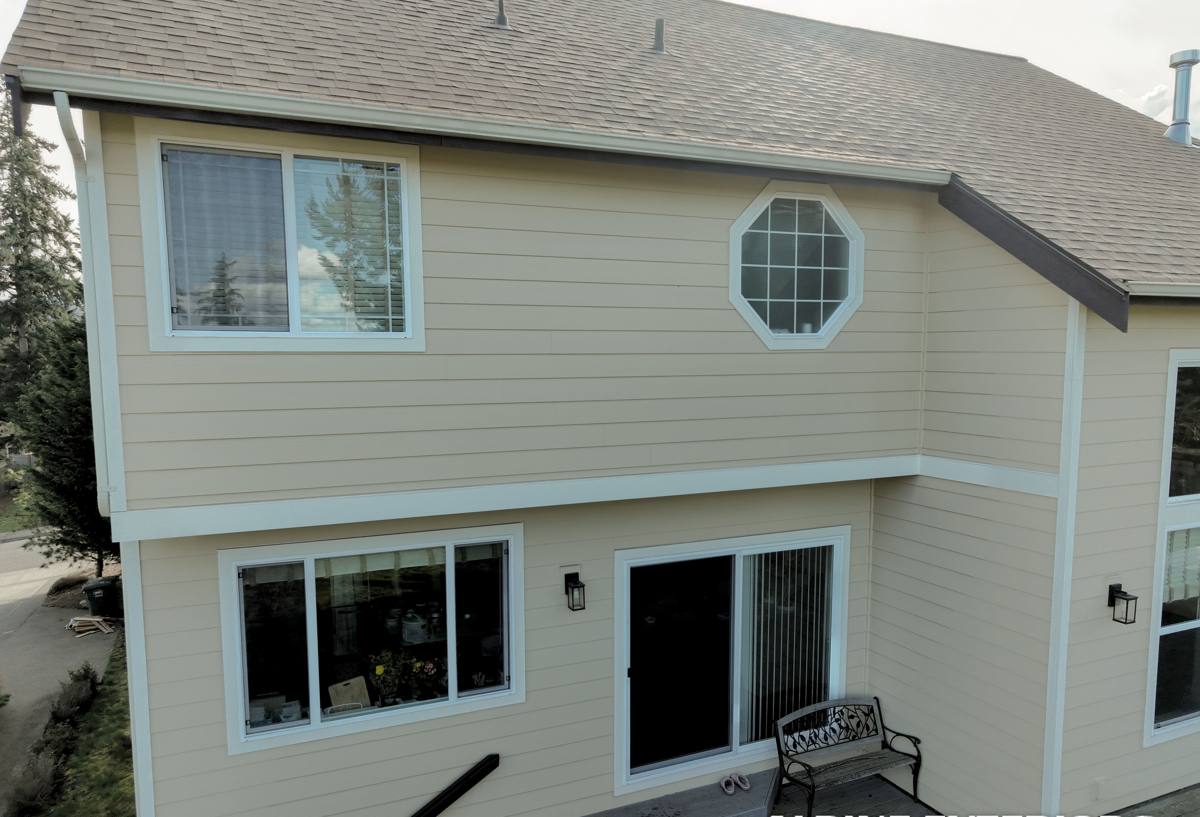
Why We Only Bring James Hardie to This Kind of Site
We install James Hardie fiber cement siding exclusively. We don't install vinyl, LP SmartSide, Cemplank, Allura, primed spruce, or cedar — not because those products have no place anywhere, but because on a shoreline-adjacent property like Cottonwood Beach, the trade-offs stack up against a homeowner fast. Vinyl expands, contracts, and can warp or crack under UV and temperature swings, and its seams give wind-driven rain a place to work. Wood-based sidings, whether cedar or engineered wood panels, need a maintained paint film to keep moisture out, and in a climate with this much sustained dampness, that film fails faster than the marketing suggests. Fiber cement doesn't rot, doesn't feed moss the way wood does, and is non-combustible, which matters to insurers and to homeowners alike.
James Hardie is also the fiber cement manufacturer we've standardized on over other cement-board options. Their ColorPlus factory finish, HZ5 climate engineering, and warranty structure are built specifically around the conditions a marine environment throws at a wall, and that consistency matters more than any single feature in isolation.
The HZ5 Difference
James Hardie engineers its lineup by climate zone, and homes in the Pacific Northwest's wet, temperate belt fall into the HZ5 category — the version of their products formulated for regions with sustained moisture exposure rather than dry heat or hard freeze-thaw cycles. That's not a marketing label; it changes the composition of the board itself. For a Cottonwood Beach home, that engineering is the difference between siding that's merely rated for rain and siding that's actually built for the amount of rain this stretch of coastline sees.
ColorPlus: A Finish That Doesn't Rely on a Painter
A factory-applied ColorPlus finish is baked on under controlled conditions, which gives it more consistent coverage and better fade resistance than a field-painted board ever gets, especially in a climate where a painter has a narrow window of dry days to work with. It also means the color on a Cottonwood Beach home isn't only as good as the weather was on the day it got painted.
What "Correct Installation" Actually Means Here
Fiber cement siding is only as good as the details underneath it. On a site exposed to wind-driven rain and salt air, the parts nobody sees after the job is done — flashing, clearances, fastener choice — matter more than the parts everyone sees.
| Detail | Done Right | Common Shortcut |
|---|---|---|
| Ground and roof clearances | Siding held at the manufacturer's minimum clearance from grade, decks, and roof lines so splash-back and standing water can't reach it | Siding run tight to grade or a low roof, trapping moisture against the bottom edge |
| Flashing at windows, doors, and penetrations | Proper drainage plane and flashing sequence so water is directed out and down, never behind the siding | Caulk used in place of real flashing, which fails long before the siding does |
| Fasteners | Corrosion-resistant fasteners driven to the manufacturer's spec, at the right depth and spacing | Standard fasteners that streak or corrode in salt air, or fasteners driven too deep, cracking the board |
| Joints and butt seams | Sealed and back-primed per Hardie's install guide, staggered so water sheds cleanly | Tight, unsealed butt joints that wick water into the board edge |
Every one of these is a detail that James Hardie specifies in writing, and every one is a detail that can be skipped by a crew moving fast. On a house that isn't sitting a few hundred feet from salt water, a shortcut like that might take a decade to show up as a problem. Near the water, it shows up much sooner.
Our Process for a Cottonwood Beach Project
The steps don't change house to house, but what we're looking for at each one does, because a shoreline-exposed home needs closer attention to moisture and airflow than a comparable house further inland.
- Walk the exterior and assess current siding, trim, flashing, and any signs of existing moisture intrusion or moss buildup.
- Check the water-management details underneath — house wrap, flashing, and drainage plane — and repair or upgrade anything compromised before new siding goes up.
- Confirm the right Hardie product line, plank exposure, and ColorPlus color for the home, with clearances set to spec at grade, roofline, and any decks or porches.
- Install with corrosion-resistant fasteners and manufacturer-specified nailing patterns, sealing and flashing every joint, window, and penetration as we go.
- Final walkthrough to check caulk lines, touch-up needs, and that all clearances and drainage details are correct before we call the job done.
Before we give a quote, we're checking for the things a homeowner usually can't see from the ground:
- Signs of trapped moisture behind existing siding, especially at the base of walls and around windows
- Condition of the house wrap or building paper underneath the current siding
- Moss or algae growth patterns that indicate where a wall stays wet longest
- Roof and gutter drainage that could be dumping water onto siding instead of away from it
- Existing clearance issues at grade, decks, or roof-to-wall intersections
Why a Crew That Already Works This Shoreline Matters
Installing James Hardie correctly on paper and installing it correctly on a windy, salt-air, high-moss property are two different skill levels. A crew that's worked other homes in and around Birch Bay already knows which walls on a shoreline lot take the worst of the wind-driven rain, where moss tends to establish first, and how much clearance actually holds up here versus what's technically the minimum on a spec sheet. That's not something you get from a manufacturer's install manual — it comes from having done the work on this kind of site before and having gone back to see how it held up.
It also matters for something more practical: permitting and inspection expectations in Whatcom County are things a local crew already has a working relationship with, which keeps a project moving instead of stalling on paperwork a homeowner didn't know to expect.
Living With Hardie Siding in a Salt Air, High-Moss Environment
Fiber cement is low-maintenance compared to wood or vinyl, but "low-maintenance" doesn't mean "no maintenance," especially this close to the water. A little attention goes a long way toward getting the full life out of the siding and the finish.
- Rinse the siding down once or twice a year to clear salt residue, pollen, and early moss or algae growth before it takes hold
- Keep gutters and downspouts clear so roof runoff isn't running down the face of a wall
- Trim back vegetation and tree cover that keeps a wall shaded and damp longer than the rest of the house
- Recaulk joints and penetrations if you notice cracking or separation, rather than waiting for a leak to show up inside
- Check clearances at grade periodically, especially if landscaping, mulch, or deck work has crept closer to the siding over time
None of this is heavy work, and it's a fraction of what a wood or vinyl exterior would demand in the same conditions. It's just not zero.
What Affects Cost on a Home Like This
Every project is different, so we don't publish blanket prices, but the factors that move the number up or down are consistent from house to house.
| Factor | Why It Matters |
|---|---|
| Condition of what's underneath | Rotted sheathing, compromised house wrap, or existing moisture damage adds repair work before new siding can go on |
| Home size and wall complexity | More corners, dormers, and trim details mean more cutting, flashing, and labor time |
| Product line and profile | Lap siding, shingle-style panels, and trim boards carry different material costs within the Hardie lineup |
| Access and site conditions | Tight lots, decks, or landscaping close to the walls can slow staging and installation |
| Existing clearance and drainage corrections | Fixing grade, deck, or roofline clearances to spec adds work but prevents problems down the road |
The only way to get a real number is to walk the property, and that's the point of an estimate — not a guess from a photo, but an honest look at what your specific home needs.
If you own a home in Cottonwood Beach and you're thinking about your siding — whether it's showing its age, growing moss faster than you'd like, or you're just planning ahead — we're happy to come take a look and talk through what correct James Hardie installation would involve on your house. The estimate is free, there's no pressure, and you'll walk away knowing exactly what your options are.