 Birch Bay
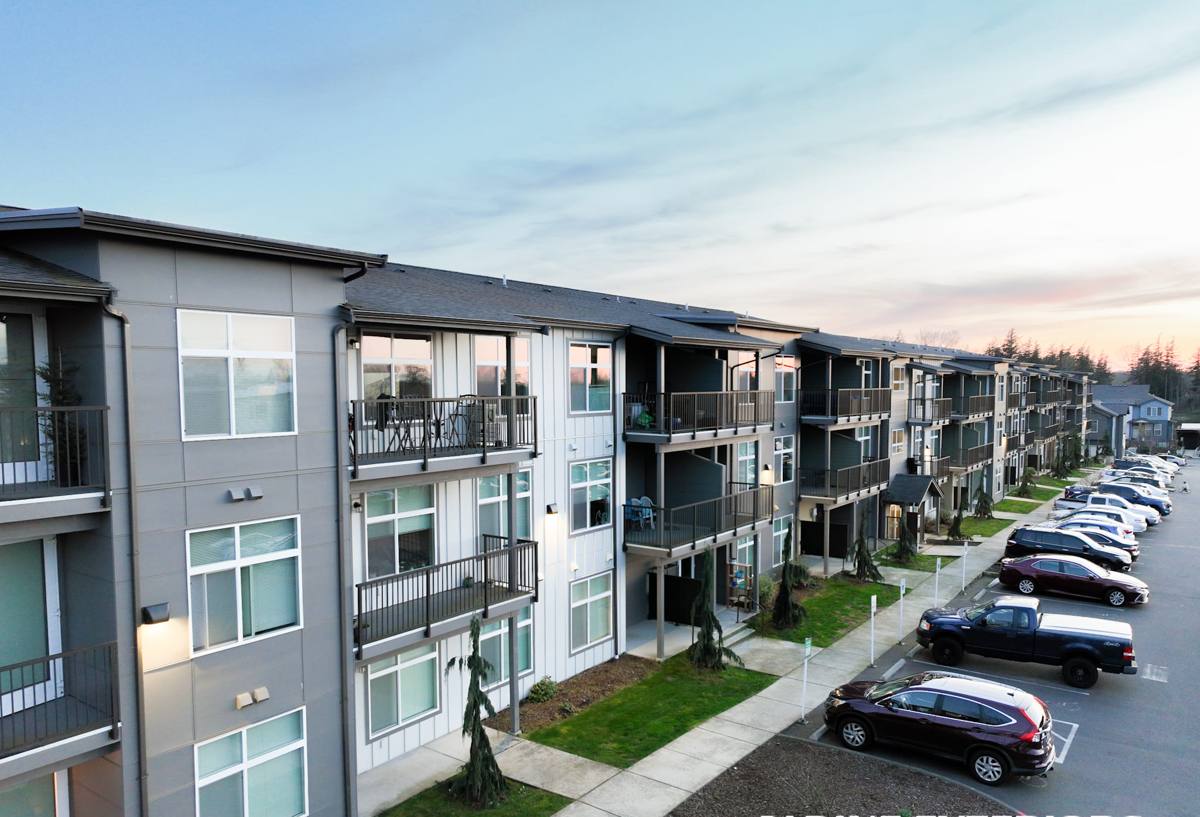
 Cottonwood Beach is one of the low-bank waterfront neighborhoods that make up Birch Bay, and homes sitting this close to the water live under a different set of conditions than a house a half mile inland. Salt air moves off the bay and works on hardware and finishes year-round. Wind off open water drives rain sideways into wall assemblies rather than letting it run off harmlessly. And the shade, dampness, and mild temperatures common to this part of Whatcom County support a moss and mildew season that can stretch across most of the year on north- and west-facing walls. Windows sit right at the center of all of it — they're the weak point in an exterior wall if they're not sized, flashed, and sealed correctly for what this location actually throws at a house.
A fair number of the window jobs we take on in Cottonwood Beach turn into custom work rather than a straightforward stock swap. Older beach cabins built decades ago, additions put on over the years, and homes remodeled to open up a water view all tend to have openings that don't match a manufacturer's standard sizing. We treat that as routine, not a complication — but it does change how the job has to be measured, ordered, and installed.
Why So Many Cottonwood Beach Window Jobs Turn Into Custom Work
A lot of the housing in this neighborhood started as smaller, seasonal beach cabins rather than full-time residences. Many of those have been added onto, insulated, or converted for year-round living over the years, and the window openings often reflect whatever made sense at the time rather than anything a big-box supplier stocks today. On top of that, homes here are frequently oriented to make the most of the water — larger picture windows, corner windows, or window walls facing the bay are common, and those openings are sized for the view, not for convenience.
None of that is unusual for this part of Birch Bay. It just means a project here typically starts with an honest conversation about what "custom" actually involves: field measurement instead of a catalog lookup, a longer lead time since the unit is built to order, and a flashing plan built around the specific shape of the opening rather than a generic template.
What the Location Actually Does to a Window
Salt Air and Hardware
Being this close to open water means salt-laden air is a constant, not an occasional weather event. It accelerates corrosion on hinges, locks, balances, and lower-grade fasteners faster than it would a few miles inland. On a window that's supposed to last decades, that's the kind of wear that shows up first as a sticky lock or a hard-to-operate sash, long before the glass itself is a problem.
Wind-Driven Rain
Open exposure to the bay means storms don't just drop rain straight down — wind pushes it sideways and upward into siding, trim, and window flashing. That kind of pressure finds gaps that would never get tested in a calmer, more sheltered location. A flashing detail that would hold up fine on a sheltered inland lot can fail here if it isn't built for wind-driven water from the start.
Shade, Moisture, and the Moss Season
Low-lying, shaded, and damp conditions near the water support moss and mildew growth across most of the year, especially on north-facing walls and horizontal trim surfaces around windows. It won't compromise a properly detailed window on its own, but it's a sign of how much sustained moisture a window's flashing and sill details need to shed correctly, year after year.
Vacant and Seasonal Homes
Cottonwood Beach still has a mix of full-time homes and seasonal or weekend properties. A house that sits closed up for stretches at a time doesn't get the benefit of regular heating and airflow that helps a window assembly dry out between storms. That can mean condensation and slow moisture buildup around window frames go unnoticed longer than they would in a home lived in every day — which is part of why we recommend an actual look at the frames and sills, not just the glass, on any home that spends part of the year unoccupied.
Common Window Situations We See in This Neighborhood
- Non-standard openings in older beach cabins — framed to whatever dimensions made sense before the home was insulated or converted for year-round use
- Large water-facing windows — picture windows, corner windows, or window walls sized to maximize the view rather than fit a stock dimension
- Additions that don't match the original structure — new openings that need to be sized and detailed to tie cleanly into an older wall assembly
- Failed seals and fogged glass on older units — common on windows original to a decades-old cabin, especially ones with direct bay exposure
- Condensation and soft framing around sills — more common in homes used seasonally, where moisture has more time to sit undisturbed
- Egress and code-driven upgrades — bedrooms added or converted for year-round living where the minimum opening size is set by code, not preference
What a Correct Custom Window Job Involves
Assessment and Field Measurement
We start on site, not with a catalog. That means measuring the actual opening, checking it for square and level, and noting the condition of the framing and sill underneath the existing window — which on an older Cottonwood Beach cabin is sometimes where the real story is. If the unit needs to be custom-built, this is also where we set an honest lead time, since a made-to-order window takes longer to arrive than something pulled off a shelf.
Structural and Framing Check
Larger water-facing windows carry more weight and more wind load than a standard-size unit, and older cabin framing wasn't always built with that in mind. We check whether the opening needs additional structural support before a new unit goes in, rather than finding out partway through the job.
Flashing Sequence
This is the step that matters most given the exposure here. Every custom opening changes how flashing has to be layered — a wide sill needs to slope water outward instead of letting it pool, a corner or window-wall installation needs the vertical and horizontal flashing tied together correctly at the seam, and a resized opening needs new flashing integrated cleanly into the existing wall rather than patched around the old detail. We plan that sequence around the specific opening, not a generic sheet pulled from a manufacturer's installation guide.
Frame Material and Glass Selection
We'll walk through the honest trade-offs for the specific opening rather than defaulting to whatever installs fastest. What matters most here is how the material holds up to sustained salt air and moisture with the least ongoing upkeep, since a larger water-facing window has more surface area exposed to both.
Checklist Before You Order
- Confirm the opening was field-measured, not estimated from old plans or a rough guess
- Ask what the flashing plan is for your specific opening shape, not a generic answer
- Get a realistic lead time in writing before committing to a schedule
- Ask whether the opening or surrounding framing needs repair before the new unit goes in
- If the home is used seasonally, ask how that affects material or maintenance recommendations
- Confirm what's covered under warranty — the window unit and the installation labor are usually separate
Frame Materials for This Exposure
| Material | Salt Air & Moisture Resistance | Maintenance | Notes for Cottonwood Beach |
|---|---|---|---|
| Vinyl | Good — won't corrode or rot | Low | Solid, cost-effective choice for most openings; frame color and size options can be limited on larger custom shapes |
| Fiberglass | Very good — dimensionally stable in temperature swings | Low | Often our first recommendation for larger water-facing windows given its strength-to-weight ratio |
| Aluminum | Fair — can corrode over time without a quality coating | Low to moderate | Narrower sightlines can suit a modern look, but coating quality matters more here than inland |
| Wood / wood-clad | Depends entirely on the cladding and detailing | Higher on exposed wood; lower with a quality exterior cladding | Can still be the right call for interior look when the exterior is properly protected — a trade-off worth discussing, not a default |
Our Process, Start to Finish
- On-site assessment — we measure the opening, check the surrounding framing and sill, and evaluate wind and water exposure specific to the home's position
- Honest recommendation — custom order, modified stock size, or opening repair, explained with the reasoning behind it
- Ordering and lead time — a realistic timeline for the unit to arrive, since custom work isn't a same-week job
- Removal and opening prep — the old unit comes out carefully, and any hidden rot or flashing issues get addressed before the new window goes in
- Installation and flashing — the new unit is set, shimmed, and flashed to a sequence built for its specific shape and this location's wind and rain exposure
- Trim and finish — exterior trim is integrated to match the surrounding siding and architecture
Diagnosing What's Actually Wrong Before Replacing Anything
Not every window problem at Cottonwood Beach means the whole unit needs to go. Sometimes the glass and frame are fine and the failure is in the flashing or sill underneath. We look at the symptom and the cause separately before recommending a full replacement.
| What You Notice | Likely Cause | What We Check |
|---|---|---|
| Fogging or haze between the panes | Failed seal on the insulated glass unit | Whether the glass unit alone can be replaced or the full window needs to go |
| Draft around a closed window | Worn weatherstripping or a settled, out-of-square frame | Whether the frame is still sound enough to reseal and adjust |
| Soft or discolored trim below the sill | Water pooling instead of shedding outward | Sill slope, flashing condition, and whether moisture has reached the framing behind it |
| Sticky lock or hard-to-open sash | Hardware corrosion from sustained salt air exposure | Whether hardware can be replaced on its own or the window has aged out |
| Moss or dark staining above a window | Moisture running off the roof or trim above without being properly diverted | Flashing and drainage path above the opening, not just the window itself |
Why a Local Cottonwood Beach Crew Matters
Manufacturer installation instructions are written for average conditions, and Cottonwood Beach rarely qualifies as average — it's open to the bay, it gets sustained salt air, and it has enough seasonal and older-cabin housing stock that "standard opening" is more the exception than the rule. A crew that has actually measured, flashed, and installed windows in this specific neighborhood knows which parts of the manufacturer's guidance to treat as a floor, not a ceiling, and which details are worth the extra time even when they aren't strictly required somewhere calmer.
That shows up in decisions that don't come up in a sales pitch — how much lap a flashing course needs on a wind-exposed wall, when a sill needs a sloped composite cap instead of relying on caulk, how a seasonal home's window details should be adjusted knowing the house won't always have someone inside running the heat. Those are the calls that decide whether a window is still performing cleanly in fifteen years or showing drafts and soft trim in five.
What to Ask Before Hiring for Window Work Here
- Ask to see examples of custom or non-standard window work they've actually installed, not just stock replacements
- Ask how they sequence flashing for a wind- and water-exposed opening specifically
- Confirm current Washington contractor licensing and insurance
- Get a written scope of work and a realistic lead time before signing anything
- Ask how labor and the window unit are each covered under warranty
If you're dealing with a fogged or drafty window, planning to open up a water view, or just want an honest look at what your home's windows and their framing actually need, it's worth having someone look at the opening in person before you start pricing units. We offer free, no-pressure estimates for window projects in Cottonwood Beach and the rest of Birch Bay — use the form below to get a time on the schedule.