 Birch Bay
 Siding That Has to Work in Blaine's Marine Climate
Blaine sits right up against the water in far northern Whatcom County, and homes here take a different kind of beating than siding fifty miles inland. Salt-laden air moves off the Strait of Georgia and Semiahmoo Bay almost year-round, driving rain comes in sideways during winter storms, and the long gray stretch from late fall through spring keeps north-facing walls damp enough for moss and algae to take hold and stay there. Any siding product installed on a Blaine home has to handle all three at once, every year, for decades — not just look good on install day.
We install James Hardie fiber cement siding exclusively. That is not a marketing preference — it is a decision we made after weighing what actually holds up in this specific environment against what looks similar in a showroom but behaves differently once it is exposed to Whatcom County weather.
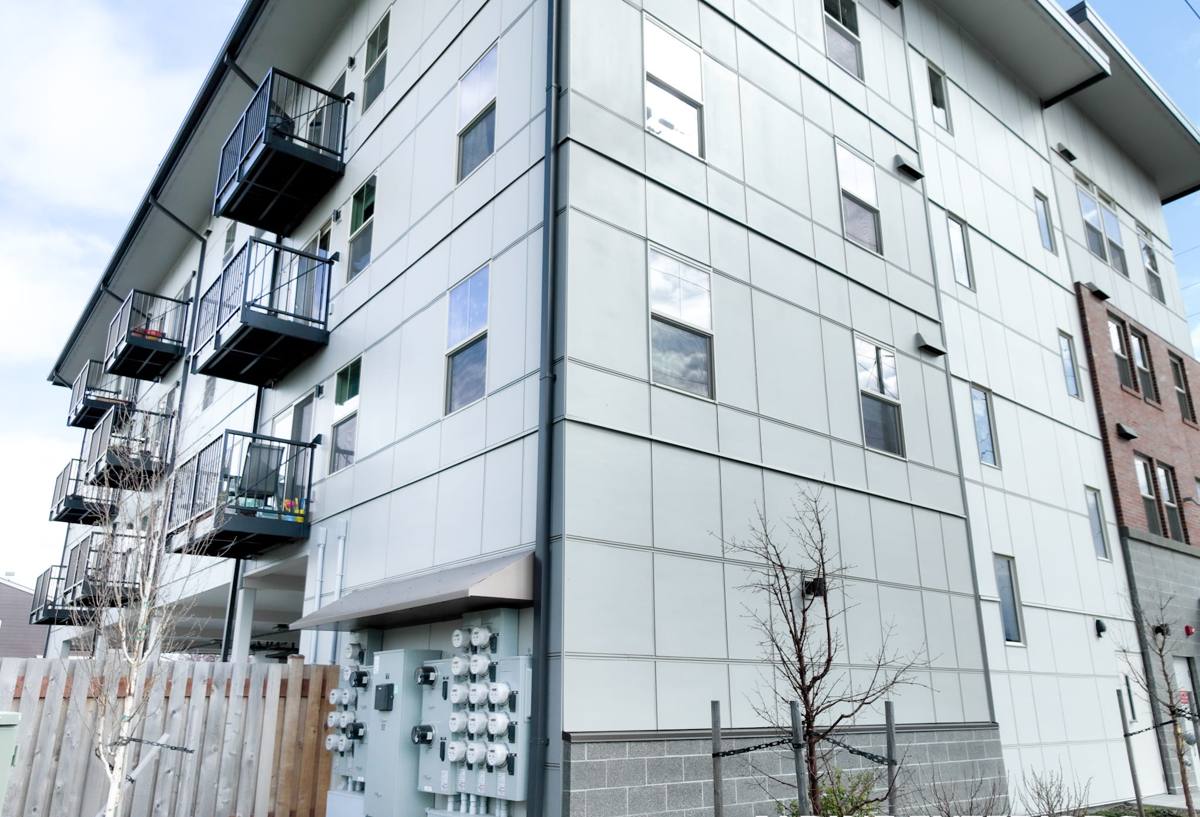
What Blaine's Climate Actually Does to Exterior Siding
Salt Air and Corrosion
Coastal salt exposure does two things to a home's exterior: it accelerates corrosion of exposed fasteners and metal trim, and it leaves a fine residue on siding surfaces that traps moisture and grime. Products that rely on face-nailing with exposed fastener heads, or that use softer trim materials, show this wear faster in a place like Blaine than they would in a drier, inland town.
Driving Rain and Wind-Driven Moisture
Blaine's exposure to weather rolling in off the water means rain doesn't just fall — it gets pushed sideways into walls, especially on west and north elevations. That puts real pressure on butt joints, corner details, and anywhere siding meets a window, door, or trim board. A siding system's water management depends as much on how it's installed as what it's made of, but the base material still has to tolerate repeated wetting without swelling, delaminating, or losing its shape.
Moss, Algae, and Extended Dampness
The long moss season here isn't just a roof problem. Shaded, north-facing wall sections that stay damp for weeks at a stretch are exactly where organic growth takes hold on siding, especially wood-based or wood-look products. Growth that sits against a surface holds moisture longer, which compounds the original problem.
Quick Climate Checklist for Blaine Homes
- Fasteners and trim rated for coastal/marine exposure, not just standard exterior use
- Water management details at every joint, corner, and penetration — not just a good product
- A factory finish that resists moisture absorption rather than relying on field-applied paint alone
- A surface that doesn't provide an easy foothold for moss and algae on shaded elevations
- A warranty structure that actually accounts for coastal Pacific Northwest conditions
Why We Standardized on James Hardie for This Area
James Hardie fiber cement is engineered from cement, sand, and cellulose fiber — materials that don't absorb moisture the way wood or wood-composite products do, and don't corrode. That matters directly in a salt-air, high-rainfall environment like Blaine's. Hardie's HZ5 product line in particular is engineered for cold, wet climates, which fits the Whatcom County coastal belt better than a generic all-climate formulation.
The factory-applied ColorPlus finish is baked on under controlled conditions before the boards ever reach the job site, rather than being field-painted after installation. That finish is formulated to resist fading and moisture intrusion at the surface — which is the layer taking the constant hit from salt air and rain in a place like Blaine. It also means touch-up paint is available that's formulated to match, rather than homeowners guessing at a color match years later.
Fiber cement is also non-combustible, which is a separate but real consideration given wildfire smoke and ember exposure that has become more common across Western Washington in recent summers, even in areas that don't see direct fire risk.
Why We Don't Install Alternatives on Blaine Homes
We get asked about vinyl, LP SmartSide, and other fiber cement brands regularly, and we're direct about why we don't install them here.
Vinyl siding is inexpensive and easy to install, and in a mild inland climate it can perform reasonably well. In a coastal wind and rain environment, it tends to show its limits faster — it can warp or crack in temperature swings, its seams and laps are more dependent on precise installation to keep wind-driven rain out, and it doesn't offer the impact resistance or fire performance of fiber cement.
LP SmartSide and other engineered wood products use resin-treated wood strand technology. It's a legitimate product line, but it is still wood-based at its core, meaning it depends on an intact factory seal and careful field caulking at every cut edge to keep moisture out over time. In a climate with Blaine's rainfall and humidity, that ongoing dependence on perfect seal integrity is a maintenance burden we'd rather not hand a homeowner.
Other fiber cement brands like Cemplank or Allura are chemically similar to Hardie, and we don't dispute that fiber cement as a category performs well here. Our reason for standardizing on Hardie specifically comes down to the manufacturing consistency of ColorPlus finishes, the depth of Hardie's climate-specific engineering (like HZ5), and the strength and transferability of Hardie's warranty program — factors that matter over a 30-plus year ownership horizon, not just at installation.
Cedar and primed spruce siding can look excellent, but real wood requires the most ongoing maintenance of any option — recoating, caulking, and moisture monitoring — which is a harder sell in a climate that stays damp as long as Blaine's does.
Comparing Siding Options for a Coastal Whatcom County Home
| Material | Moisture Behavior | Coastal/Salt Durability | Maintenance Burden | Typical Lifespan |
|---|---|---|---|---|
| James Hardie fiber cement | Doesn't absorb/swell; engineered for wet climates (HZ5) | Strong — non-corroding core material | Low — factory finish, occasional cleaning | 30-50+ years with proper install |
| Vinyl | Doesn't absorb, but seams/laps depend on precise fit | Moderate — can warp/crack over time | Low, but limited repair options if damaged | 20-30 years typical |
| LP SmartSide | Wood-based; depends on intact seal at cuts/joints | Moderate — sensitive to prolonged wetting | Moderate — caulk/seal maintenance ongoing | 20-30 years with diligent upkeep |
| Cedar / primed spruce | Absorbs moisture; needs coating to resist | Lower without frequent recoating | High — recoat/caulk cycle every few years | Varies widely with maintenance level |
What a Correct James Hardie Installation Involves in Blaine
The material is only half the equation. Fiber cement performs the way it's rated to only when it's installed to Hardie's published specifications, and in a coastal environment those details matter more than usual.
Water Management Before the First Board Goes Up
Correct installation starts with a weather-resistive barrier and properly integrated flashing at every window, door, and penetration — installed so water sheds outward and down, never behind the cladding. Given how often wind pushes rain sideways into walls here, this stage of the job determines whether the siding stays dry behind the surface for the next thirty years.
Fastening and Clearances
Hardie specifies fastener type, spacing, and minimum clearance from grade, roof lines, and horizontal surfaces. Clearance matters even more in Blaine, since surfaces close to grade or a walkway stay wetter longer in a marine climate, and low clearance is one of the fastest ways to invite moisture problems at the bottom course of siding.
Joint Treatment and Caulking
Butt joints and trim transitions need to be treated per Hardie's specification, with the correct sealant and gapping — not just caulked shut. Done wrong, joints are the first place driving rain finds its way behind the cladding.
Field-Cut Edges
Any board cut on site exposes raw fiber cement that needs to be sealed with the correct touch-up product before it's fastened in place. Skipping this step on a home exposed to salt air and constant rain shortens the life of that section significantly.
Installation Checklist We Hold Every Blaine Job To
- Weather-resistive barrier installed and inspected before siding starts
- Flashing integrated at every window, door, and penetration
- Correct fastener type and spacing per Hardie's specification
- Minimum clearance maintained from grade, decks, and roof lines
- Butt joints and trim transitions sealed per manufacturer detail
- All field-cut edges sealed with matching touch-up product
- Final walk-through checking reveals, gaps, and finish consistency
Our Process for a Blaine Siding Project
We start with an on-site assessment of the home's current siding, trim, and any moisture damage already present, because what we find at the walls often changes the scope before a single new board goes up. From there we walk through product line, color, and trim options, provide a written estimate, and schedule the work around weather windows that make sense for this climate — we don't rush installation into a stretch of driving rain if we can help it.
During the job, we handle water management details first, then siding, then trim and touch-up, with inspection points along the way rather than only at the end. When the job is complete, we walk the exterior with the homeowner before calling it finished.
Why Local Installation Experience in Blaine Matters
A crew that already works Blaine and the greater Birch Bay area knows which elevations on a given lot type take the worst weather, where moss tends to establish first, and how much clearance and detailing a home actually needs versus the bare code minimum. That local pattern recognition shows up in small decisions — how a corner is flashed, how much clearance is left at a lower course — that don't show up on a spec sheet but matter after a few winters of coastal weather.
It also means a straightforward relationship if a warranty question ever comes up years down the road, rather than tracking down a contractor who did one job in the area and moved on.
What This Means for Your Home's Long-Term Cost
Siding decisions get judged on sticker price at the estimate stage, but the real cost shows up over the ownership period — in repainting cycles, caulk maintenance, repair calls after storms, and how the material holds up to another Blaine winter. A correctly installed Hardie system front-loads a bit more cost into the installation detailing and generally costs less to maintain over the following decades, which is the trade-off we recommend homeowners actually weigh.
If you're planning a siding project in Blaine or anywhere in the Birch Bay area, we're happy to take a look at your home, talk through what your specific elevations are dealing with, and put together a straightforward, no-pressure estimate using the form below.