 Birch Bay
 Siding Repair in Blaine Isn't a Generic Job
Blaine sits right where the Salish Sea meets the Canadian border, and that location shapes everything about how siding ages here. Homes along and near Semiahmoo Bay take on salt-laden air almost daily, and that same marine air pushes driving rain sideways into walls during the fall and winter storm cycle. Add in the shade from Whatcom County's dense tree cover and the moss season that follows, and you've got a set of conditions that wear on siding differently than they would twenty miles inland. A repair crew that only sees this weather occasionally tends to treat every job the same way. A crew that works Blaine regularly knows which walls fail first, which details get skipped during original construction, and what actually holds up once it's patched.
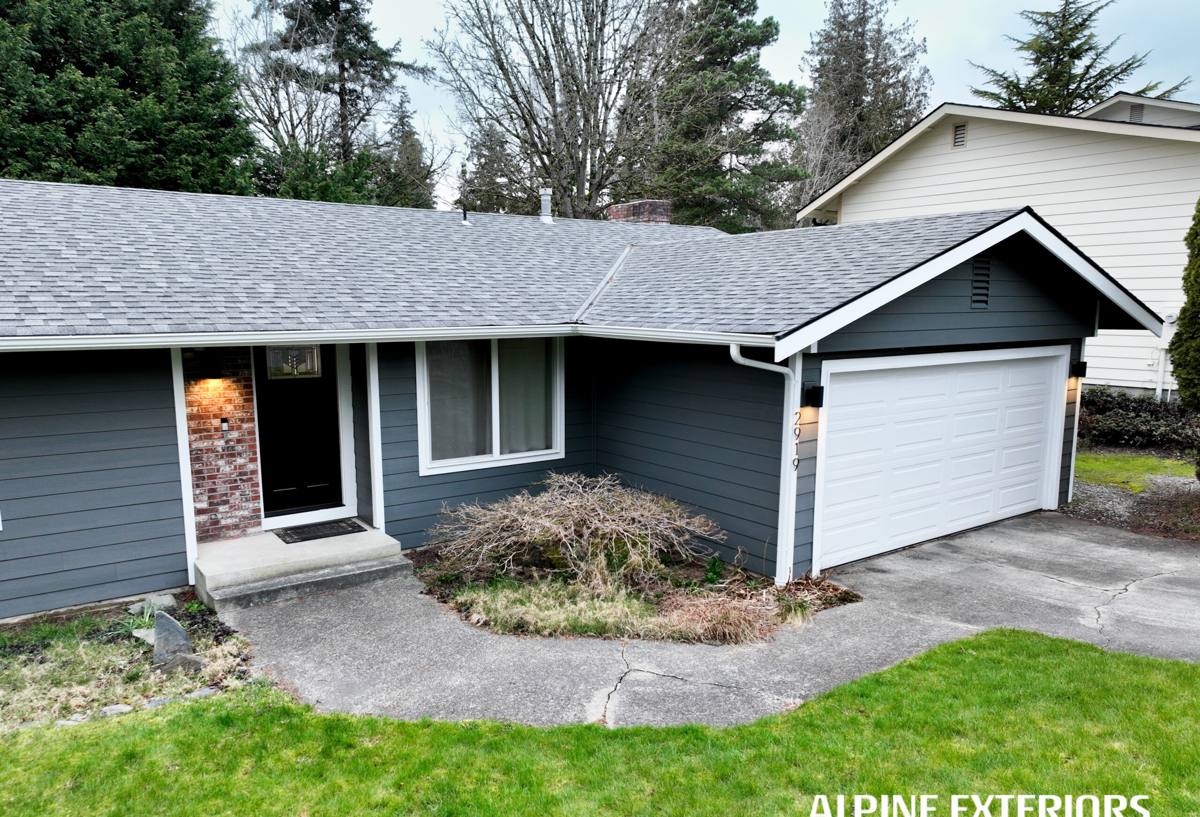
What Salt Air, Rain, and Moss Actually Do to Siding
Each of these three factors damages siding through a different mechanism, and understanding them is the first step in diagnosing a repair correctly instead of just covering up a symptom.
Salt Air
Airborne salt is corrosive to exposed metal fasteners, flashing, and trim hardware. On wood-based siding products, salt-laden moisture also accelerates the breakdown of paint film and primer, which is often the first visible sign of trouble — chalking, peeling, or a dull, weathered look that shows up faster on bay-facing and west-facing walls.
Driving Rain
Wind-driven rain doesn't just wet the surface of a wall — it gets pushed sideways and upward, testing every seam, joint, and piece of flashing on a house. Siding that was installed with tight or missing gaps, undersized flashing, or caulk used in place of proper water management will eventually let moisture behind the cladding. Once that happens, the damage is usually happening in the wall long before it's visible from the outside.
Moss and Algae Season
Whatcom County's tree cover keeps a lot of siding in partial shade for much of the year, and that shade plus persistent moisture is exactly what moss and algae need to establish. Beyond the cosmetic staining, moss holds water directly against the siding surface for extended periods, which is a slow but steady contributor to material breakdown, especially at butt joints, corners, and anywhere caulk has started to fail.
Signs a Blaine Home Needs Siding Repair
Most siding problems in this area don't start as an emergency — they start small and get worse through a wet winter if they're ignored. Homeowners are usually in a good position to spot the early signs during a walk around the exterior.
- Soft or spongy spots when you press on a board, especially near the bottom courses or below windows
- Visible cracking, splitting, or buckling in individual boards or panels
- Paint that's peeling, bubbling, or chalking faster on one side of the house than the others
- Dark streaking or green/black growth that keeps returning after cleaning
- Gaps opening up at seams, corners, or trim where caulk has shrunk or pulled away
- Staining or discoloration on interior walls near exterior corners, which often points to moisture already inside the wall assembly
- Fastener heads showing rust streaks or starting to back out of the siding
Any one of these on its own might just need monitoring. Several showing up on the same wall, or damage that's spreading year over year, is a sign the underlying water management has already failed and a proper repair is overdue.
Repair or Replace? How We Make That Call
Not every damaged section needs a full re-side, and not every problem can be fixed with a patch. The right call depends on how far the damage has spread and what's causing it.
| Factor | Points Toward Repair | Points Toward Replacement |
|---|---|---|
| Extent of damage | Isolated to one wall or a handful of boards | Present on multiple elevations or spreading yearly |
| Cause | Impact damage, a single failed flashing detail, isolated caulk failure | Systemic water intrusion behind the cladding, widespread rot in sheathing |
| Siding material | Existing material is sound and repair sections can be reasonably matched | Existing material (aging wood, old vinyl, deteriorating composite) is nearing the end of its service life |
| Age of siding | Mid-life siding with an otherwise solid installation | Original installation is decades old or was never detailed correctly for this climate |
| Underlying sheathing | Dry, structurally sound once opened up | Soft, delaminated, or showing rot when probed |
We won't recommend a full replacement when a targeted repair will genuinely hold up — but we also won't patch over a wall where the water management has already failed, because that just delays a bigger problem and costs more in the long run.
What a Correct Repair Actually Involves
A siding repair that's done right addresses the cause of the damage, not just the visible symptom. That means the process looks different from simply pulling off a bad board and nailing up a new one.
Inspection and Moisture Check
Before any siding comes off, we look at the full extent of the damaged area and probe for soft or wet sheathing beyond what's visible. Water rarely stays confined to exactly the boards that look bad — checking the surrounding area prevents a repair that fails again in a year.
Correcting the Water Management, Not Just the Cladding
If the original cause was a missing kick-out flashing, an undersized head flashing over a window, or house wrap that wasn't lapped correctly, replacing the siding without fixing that detail just resets the clock on the same failure. We address the water path first.
Matching Material and Finish
Patch repairs stand out if the new material doesn't match the existing siding's profile, exposure, and color. We work to match reveal and profile as closely as possible and are upfront when an exact factory-finish match isn't realistic, so there are no surprises once the work is done.
Proper Fastening and Sealant Details
Given how much wind-driven rain this area sees, fastener placement and the right sealant at terminations matter more here than they would in a drier climate. Correct nailing patterns and code-appropriate gapping keep the repaired section performing the way it should.
Why We Only Repair and Rebuild With James Hardie Fiber Cement
When a repair section needs new material, or when a damaged wall has reached the point where a larger section should be replaced, we use James Hardie fiber cement — and that's the only product we install, full stop. We don't carry LP SmartSide, vinyl, or other fiber cement brands, and that's a deliberate standard, not an oversight.
In a climate that combines salt air, sustained moisture, and heavy moss growth, the material behind the paint matters as much as the paint itself. Fiber cement is non-combustible and doesn't feed moss and algae growth the way some wood-based products can. Hardie's HZ5 product line is engineered specifically for climates with this kind of moisture exposure, and the ColorPlus factory finish is baked on under controlled conditions rather than field-applied, which gives it more consistent resistance to the fading and chalking that salt air accelerates. It also carries a strong transferable warranty when installed to Hardie's specifications — something we take seriously on every job, repair or full re-side.
That doesn't mean every other product is a bad product. It means that after years of doing repair work on this coastline, we standardized on the one system we trust to hold up here without repeat callbacks.
How the Process Works for a Blaine Repair
- We come out and inspect the damaged area in person, including probing for hidden moisture, not just looking at the surface
- We give you a clear explanation of what caused the damage and an honest repair-versus-replace recommendation
- We provide a written estimate before any work begins, with the scope spelled out
- We schedule around the weather — chasing a dry window matters more here than sticking to a rigid calendar date, and we plan for that
- We correct the underlying water management detail, not just the visible siding
- We clean up thoroughly and walk the finished repair with you before we consider the job done
Why a Crew That Already Works Blaine Matters
Siding repair in a marine climate rewards local experience in ways that aren't obvious until you've seen a lot of these houses. A crew that works Birch Bay, Blaine, and the surrounding parts of Whatcom County regularly has already seen how a given era of construction was originally flashed, which builders' details tend to fail first, and how a particular exposure — bay-facing, tree-shaded, wind-exposed — tends to age. That experience shortens the diagnostic process and reduces the odds of a repair that looks fine for one season and fails again the next winter. It also means scheduling around the region's actual weather patterns rather than working off a generic seasonal calendar that doesn't reflect what this coastline actually does.
Maintaining Repaired Siding Between Now and Your Next Inspection
A good repair still needs basic upkeep in this climate, especially with moss season being a near-annual event here.
- Rinse siding periodically to clear off salt residue and organic buildup before it stains or holds moisture
- Keep gutters and downspouts clear so roof runoff isn't dumping extra water onto walls
- Trim back vegetation and tree limbs that keep a wall shaded and damp longer than it needs to be
- Walk the exterior once or twice a year and look for the early warning signs listed above, especially after a hard winter storm season
- Recaulk seams and terminations as soon as gaps appear rather than waiting for a full season of rain to find the weak spot
Catching small issues early is almost always cheaper and less disruptive than waiting for a small repair to become a large one.
Get an Honest Look at Your Siding
If you're seeing soft spots, cracking, persistent moss staining, or peeling paint on a Blaine or Birch Bay home, it's worth having someone look at it before another wet season sets in. We'll give you a straight answer on what's actually going on, whether a repair or a larger fix makes sense, and what it would take to do it right. Reach out for a free, no-pressure estimate using the form below.