 Birch Bay
 Why Blaine Homes Need Windows Built for This Climate
Blaine sits close enough to the water and to the Canadian border that its weather doesn't behave like the rest of western Washington. Homes here take on salt-laden air off the Strait, long stretches of wind-driven rain, and shaded, damp conditions that keep moisture sitting on building surfaces far longer than in drier inland neighborhoods. Windows are one of the first components to show the effects — fogged glass, swollen sashes, corroded hardware, and drafts that show up as a higher heating bill every winter.
An energy-efficient window replacement in Blaine has to do two jobs at once: cut heat loss and air leakage so the home is cheaper and more comfortable to heat, and physically hold up against the coastal, wet conditions that are normal for this part of Whatcom County. A window that's rated well on paper but isn't installed or specified for this environment will underperform here faster than it would forty miles inland.
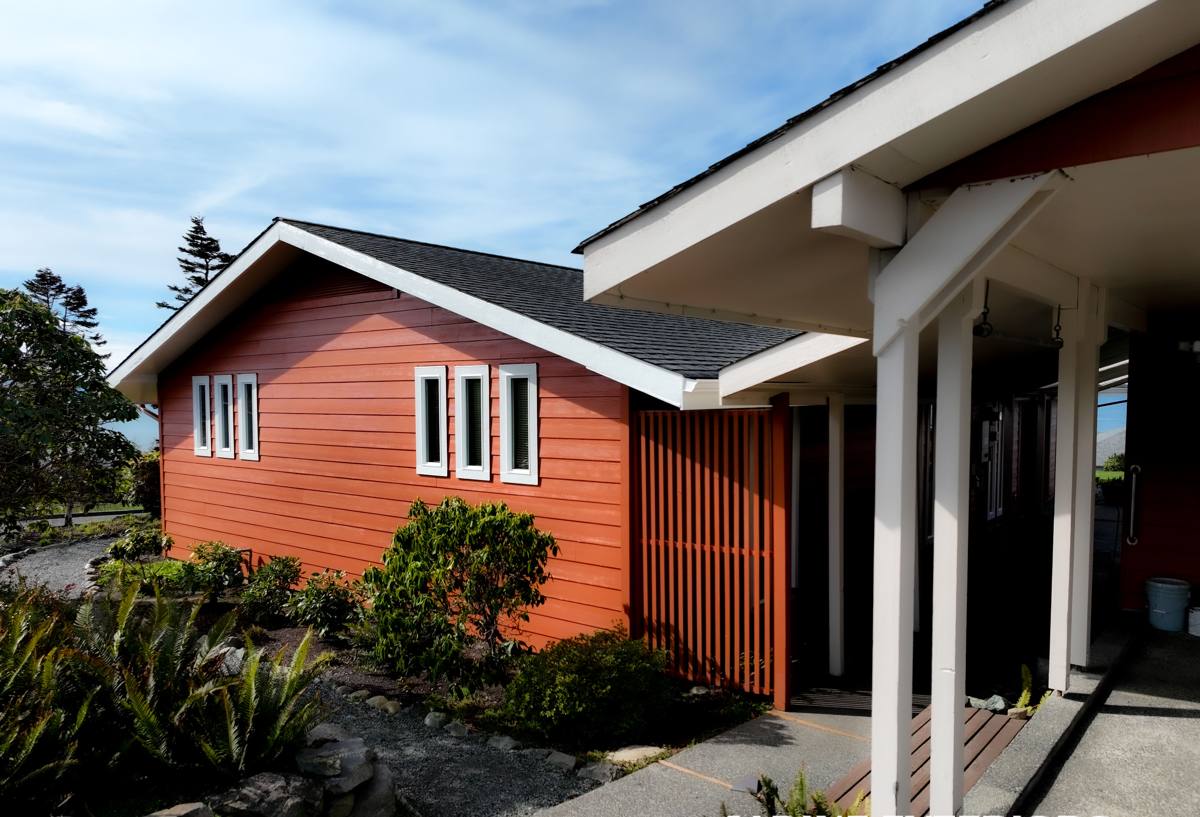
What Blaine's Weather Actually Does to Windows
Salt Air and Corrosion
Proximity to the water means airborne salt settles on exterior surfaces, including window frames and hardware. Over years, salt exposure accelerates corrosion on lower-grade fasteners, hinges, and locking mechanisms, and it can dull or pit certain metal finishes. This is less about any single storm and more about constant, low-level exposure that adds up.
Wind-Driven Rain and Water Intrusion
Rain in this area rarely falls straight down. Wind pushes it sideways against exterior walls, which means window flashing, sealant joints, and sill pans are doing real work, not just sitting there for looks. A window that's watertight in calm conditions can still leak under sustained, wind-driven rain if the flashing details around it weren't done correctly.
Moss, Shade, and Prolonged Moisture
Whatcom County's long moss season isn't just a roof and siding issue — shaded window sills, trim, and the wall assembly directly around a window opening can stay damp for extended stretches in fall and winter. That prolonged moisture is what causes wood trim to soften, paint to fail, and, if water is getting behind the window at all, hidden rot in the framing around it.
What a Correct Window Installation Involves
The window unit itself is only part of the job. Most of the water and air problems homeowners deal with later trace back to installation details, not the window product. A correct installation in this climate includes:
- Removing the old window and inspecting the rough opening and surrounding framing for hidden rot or soft wood before anything new goes in
- Installing a sloped sill pan so any water that does get past the outer seal drains back outside instead of into the wall
- Proper flashing integration with the home's existing weather-resistive barrier, lapped correctly so water sheds downward and outward
- Continuous, compatible sealant at the right joints — not just a bead around the outside trim
- Correct shimming and fastening so the window operates smoothly and the frame isn't stressed or bowed
- Insulating the gap between the window frame and rough opening without overpacking it, which can bow the frame and cause operational problems
- Interior and exterior trim work that sheds water away from the unit rather than trapping it against the frame
Skip any one of these and the window can still look fine for a year or two before a leak, a draft, or soft trim shows the shortcut was taken.
Choosing the Right Frame Material for Whatcom County
There's no single "best" window material for every home — the right choice depends on budget, the home's existing trim style, and how much upkeep the homeowner wants to take on. Here's how the common options actually perform in a salt-air, high-rainfall environment like Blaine's:
| Frame Material | Salt Air Resistance | Moisture Handling | Maintenance | Relative Cost |
|---|---|---|---|---|
| Vinyl | Good — won't corrode or rust | Handles moisture well, no rot risk | Low; occasional cleaning | Lower |
| Fiberglass | Very good — dimensionally stable, resists pitting | Excellent; very low expansion/contraction | Low | Higher |
| Wood-clad | Fair — cladding protects wood, but seams need attention | Good if maintained; vulnerable if the cladding seal fails | Higher; needs periodic inspection | Higher |
| Aluminum | Poor to fair without marine-grade coatings | Conducts cold, prone to condensation | Moderate | Varies |
For most Blaine homes, we steer people toward vinyl or fiberglass for the exposed elevations that take the brunt of the wind and rain. Wood-clad units can still be the right call for a home where matching an existing look matters, but we'll walk through the added maintenance honestly before recommending it — it's a fine product, it just asks more of the homeowner in this climate.
Understanding Energy Performance Ratings
Window energy labels can be confusing, but two numbers matter most for this part of Washington:
- U-factor measures how well the window resists heat loss — lower is better. This is the number that matters most in our climate, since western Washington is heating-dominated for most of the year and the goal is keeping heat inside.
- SHGC (Solar Heat Gain Coefficient) measures how much solar heat passes through the glass. It matters more in sunnier, hotter climates than it does here, though a moderate SHGC can still help with south- and west-facing rooms in Blaine's brighter summer months.
Look for the NFRC (National Fenestration Rating Council) label on any window you're considering — it's the independent, standardized rating, not a manufacturer's marketing number. A window with a strong U-factor and a properly installed frame will do more for your energy bill than upgrading glass alone.
Signs Your Windows Are Costing You Money
Homeowners often live with a failing window for years before replacing it, mostly because the signs show up gradually. Worth checking for:
- Visible condensation or fogging between the panes of a double- or triple-pane window (a sign the seal has failed)
- Cold drafts near the window even when it's fully closed and latched
- Difficulty opening, closing, or locking the window — often a sign the frame has swelled or shifted
- Soft or discolored trim and sill wood, especially on window elevations that stay shaded
- Visible salt residue or corrosion on hardware, hinges, or locks
- A noticeable jump in heating costs without a change in usage
- Peeling paint or finish failure concentrated around the window frame, which often points to trapped moisture
Our Process, Start to Finish
- On-site assessment — we look at the existing windows, the surrounding trim and framing, and the specific exposure each elevation of the home gets to wind and rain.
- Product selection — we go over frame material, glass package, and U-factor options based on your budget and the home's exposure, without pushing you toward the most expensive option by default.
- Accurate measurement — precise sizing so the new units fit correctly without excessive shimming or gapping.
- Careful removal — old windows come out cleanly, and we inspect the rough opening for hidden rot before anything new is installed.
- Correct installation — sill pan, flashing integration, shimming, and insulation done to hold up against wind-driven rain, not just pass a quick visual check.
- Sealing and trim — exterior sealant and trim work designed to shed water, plus interior finishing to match your home.
- Final walkthrough — we test every window's operation and go over care and maintenance before we consider the job done.
Why Hire a Crew That Already Works in Blaine
Window installation looks straightforward until it isn't. A crew that mostly works drier, inland areas may not think twice about flashing details that are non-negotiable here, because they've never had to deal with sustained wind-driven rain testing a window all winter. Working regularly in Blaine and the surrounding Birch Bay and Whatcom County area means we're used to specifying frame materials and installation details for this exact combination of salt air, coastal wind, and prolonged damp weather — not applying a one-size-fits-all approach and hoping it holds up.
It also means we're familiar with the kind of homes common to this area and the trim and siding details they typically pair with new windows, so the finished product looks like it belongs on the house rather than like an add-on.
If your windows are drafty, fogged, hard to operate, or just old enough that you're wondering whether it's time, we're happy to take a look. Estimates are free and there's no pressure — fill out the form below and we'll get back to you to schedule a visit.