 Birch Bay
 Roof Replacement Built for Blaine's Coastal Conditions
Blaine sits right at the edge of the Salish Sea, and that location shapes what a roof has to put up with. Salt-laden air moves in off the water, wind-driven rain finds every weak seam and nail hole, and the long gray stretch of fall through spring keeps roofs damp for months at a time. A roof replacement here isn't just about swapping old shingles for new ones — it's about choosing materials and details that hold up to this specific mix of exposure, moisture, and moss pressure year after year.
We work throughout Birch Bay and the surrounding Whatcom County coastline, and Blaine roofs come with their own patterns we've learned to watch for: fastener corrosion on older roofs facing the water, moss buildup on north-facing slopes shaded by mature trees, and flashing that was never quite sized for how much wind-blown rain this area actually sees.
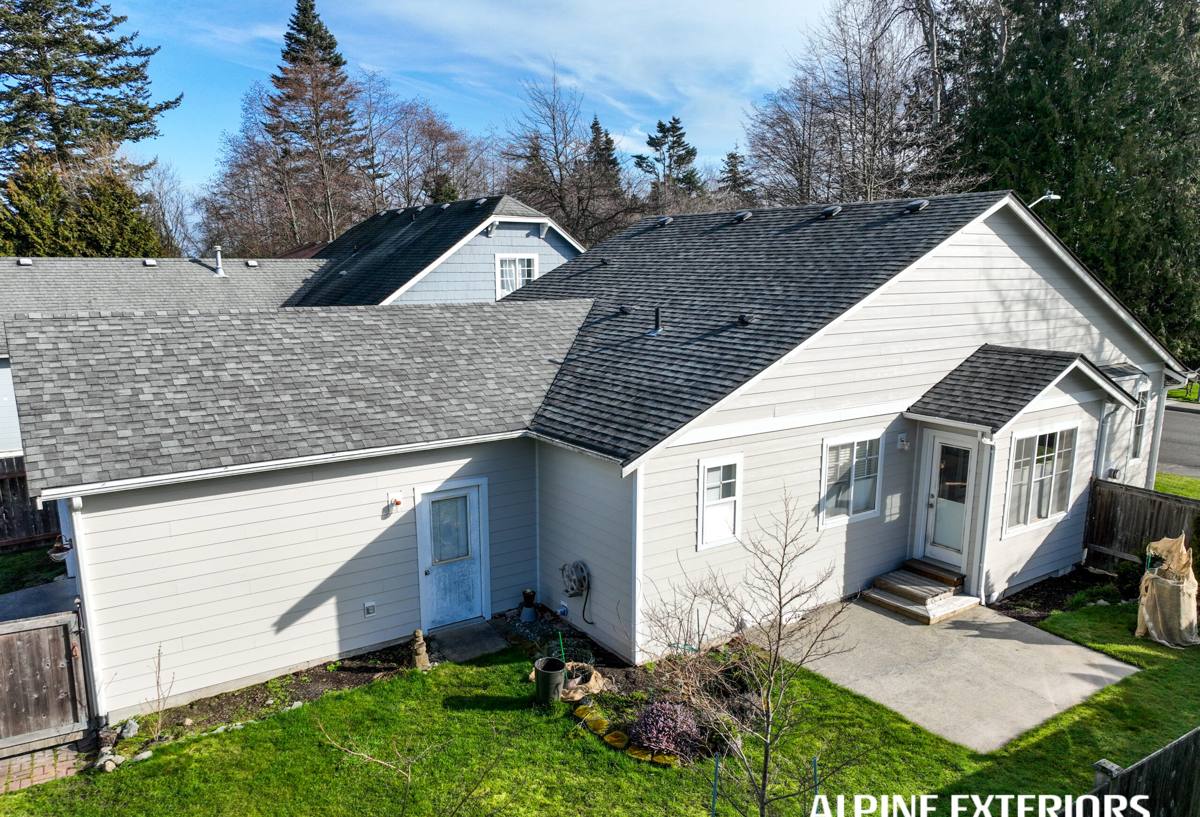
Signs a Blaine Roof Is Due for Replacement
Roofs rarely fail all at once. They give warning signs first, and catching them early is the difference between a planned replacement and an emergency repair during a winter storm.
- Granule loss showing up in gutters or at downspout outlets
- Curling, cupping, or cracked shingles, especially on south and west-facing slopes
- Persistent moss or algae streaking that pressure washing keeps returning
- Soft spots in the roof deck, felt underfoot in the attic or from the ground with binoculars
- Daylight visible through the attic roof boards
- Rusted or lifting flashing around chimneys, vents, and skylights
- Interior ceiling stains that reappear after every heavy rain
- A roof age past 20-25 years for asphalt shingle systems, regardless of visible damage
Any one of these on its own might just mean a repair. Several together, especially on a roof already in its late teens or twenties, usually means the underlying materials are wearing out faster than the surface shows.
Why Coastal Exposure Accelerates the Timeline
Salt air is mildly corrosive to exposed metal, which matters more than most homeowners expect. Nail heads, drip edge, valley flashing, and vent boots all take slow damage from airborne salt combined with constant moisture. On a roof further inland, those components might last the full service life of the shingles. On a Blaine roof facing open water or exposed wind, we often see that hardware degrade years ahead of schedule — which is one reason we don't treat flashing and fasteners as an afterthought during replacement.
What a Correct Roof Replacement Includes
A roof replacement is more than the shingles you see. The parts underneath do most of the actual work of keeping water out, and skipping them is the most common way a "new roof" ends up leaking within a few years.
Tear-Off and Deck Inspection
We remove the old roofing down to the deck rather than layering over it. This lets us actually see the plywood or plank sheathing underneath and replace any sections that have gone soft from long-term moisture — something that's more common in this climate than in drier parts of the state.
Underlayment
Synthetic underlayment goes down as the primary water barrier beneath the shingles. In a region with this much sustained rainfall, we treat underlayment quality as a real line item, not a formality — it's the layer that protects the deck if wind ever drives water past the shingle surface.
Ice and Water Shield at Vulnerable Areas
Eaves, valleys, and areas around penetrations get a self-adhering waterproof membrane in addition to standard underlayment. These are the spots where wind-driven rain and ponding are most likely to find a way in, and they're worth the extra protection.
Flashing
Chimneys, skylights, sidewalls, and valleys all get new flashing rather than reused metal. Old flashing that looks intact can still have pinhole corrosion or gaps behind it that you'd never see without removing it.
Ventilation
Proper intake and exhaust ventilation keeps the attic dry and temperature-balanced, which slows moss growth on the roof surface and prevents condensation issues underneath. A roof can be installed perfectly and still underperform if the attic can't breathe correctly.
Material Choices for Blaine's Climate
There's no single "best" roofing material — the right choice depends on budget, the home's architecture, and how much long-term maintenance the homeowner wants to take on.
| Material | Typical Lifespan | Coastal & Moss Considerations |
|---|---|---|
| Architectural asphalt shingles | 25-30 years | Good value; algae-resistant granule options help slow moss and streaking in shaded, damp areas |
| Standing seam metal | 40-50+ years | Excellent water shedding and wind resistance; needs coatings and fasteners rated for coastal exposure |
| Synthetic/composite shingles | 30-50 years | Resists moisture absorption well; good option where moss and rot have been recurring problems |
| Wood shake | 20-30 years with upkeep | Requires regular treatment and cleaning in this climate; moss and moisture retention are ongoing maintenance items |
For most Blaine homes, algae-resistant architectural shingles hit the right balance of cost, appearance, and durability. Homes with heavy tree cover or a history of chronic moss problems sometimes do better with a metal or synthetic system that sheds moisture faster and gives moss less to hold onto.
Moss: A Long-Season Problem That Needs a Long-Term Answer
Whatcom County's moss season isn't a two-month nuisance — shaded, north-facing, and low-slope roof sections can stay damp enough to support moss growth for much of the year. Moss holds moisture against the shingle surface, and over time that moisture works its way under tabs and around fasteners, shortening the roof's life well before its rated age.
During replacement, we address the conditions that let moss take hold in the first place: trimming back overhanging limbs where it's the homeowner's property to manage, improving attic ventilation so the roof deck dries faster, and selecting shingles with algae-resistant granules on shaded slopes. None of that eliminates moss risk entirely, but it meaningfully slows how fast it returns.
Our Replacement Process
- On-site assessment — we inspect the current roof, attic ventilation, and deck condition, and talk through what we find in plain terms.
- Written estimate — a clear scope of work and pricing before anything is scheduled, no pressure to decide on the spot.
- Material selection — we walk through the tradeoffs for your home's exposure, roofline, and budget.
- Tear-off and deck repair — old roofing removed, deck inspected, any damaged sections replaced.
- Installation — underlayment, ice and water shield, flashing, ventilation components, and final roofing installed to manufacturer specification.
- Final walkthrough — we review the completed work with you and confirm the job matches what was scoped.
Why a Crew That Already Works Blaine Matters
Roofing crews that don't regularly work this stretch of coastline can underestimate what it demands. Fastener corrosion resistance, flashing details around chimneys exposed to driving rain, and ventilation sized for a long damp season aren't things you get right by following a generic spec sheet — they come from having actually seen how roofs in this specific area age and fail. A crew that works Blaine and Birch Bay regularly also knows the practical logistics: permitting expectations, typical roof pitches and access in the area, and how weather windows here actually work for scheduling a tear-off without leaving a home exposed.
That local familiarity shows up in small decisions throughout the job — where extra ice and water shield is worth the cost, which slopes need algae-resistant shingles, and how tight the flashing details need to be around a chimney that takes wind off the water. Those are the details that separate a roof that looks right at handoff from one that still looks right in year fifteen.
Planning and Cost Factors
Every roof replacement is priced based on the specifics of the home, but a few factors consistently move the number:
| Factor | Why It Matters |
|---|---|
| Roof size and number of planes/valleys | More cuts, seams, and flashing points increase labor and material |
| Deck condition | Rotted sheathing found during tear-off adds repair cost not visible beforehand |
| Material choice | Asphalt, metal, and synthetic systems carry different material and labor costs |
| Roof pitch and access | Steep or hard-to-access roofs take longer and require more safety setup |
| Ventilation upgrades | Adding or correcting intake/exhaust venting is worth budgeting for on older homes |
We give a firm written estimate after the on-site assessment — not a phone-quote guess — because deck condition and access can only be confirmed in person.
Get a Straight Answer on Your Blaine Roof
If your roof is showing granule loss, persistent moss, or you're just past the point where patch repairs make sense, it's worth getting an honest, no-pressure look before another wet season sets in. We'll walk the roof, tell you what we actually see, and give you a clear written estimate — free, with no obligation. The form below is the easiest way to get started.